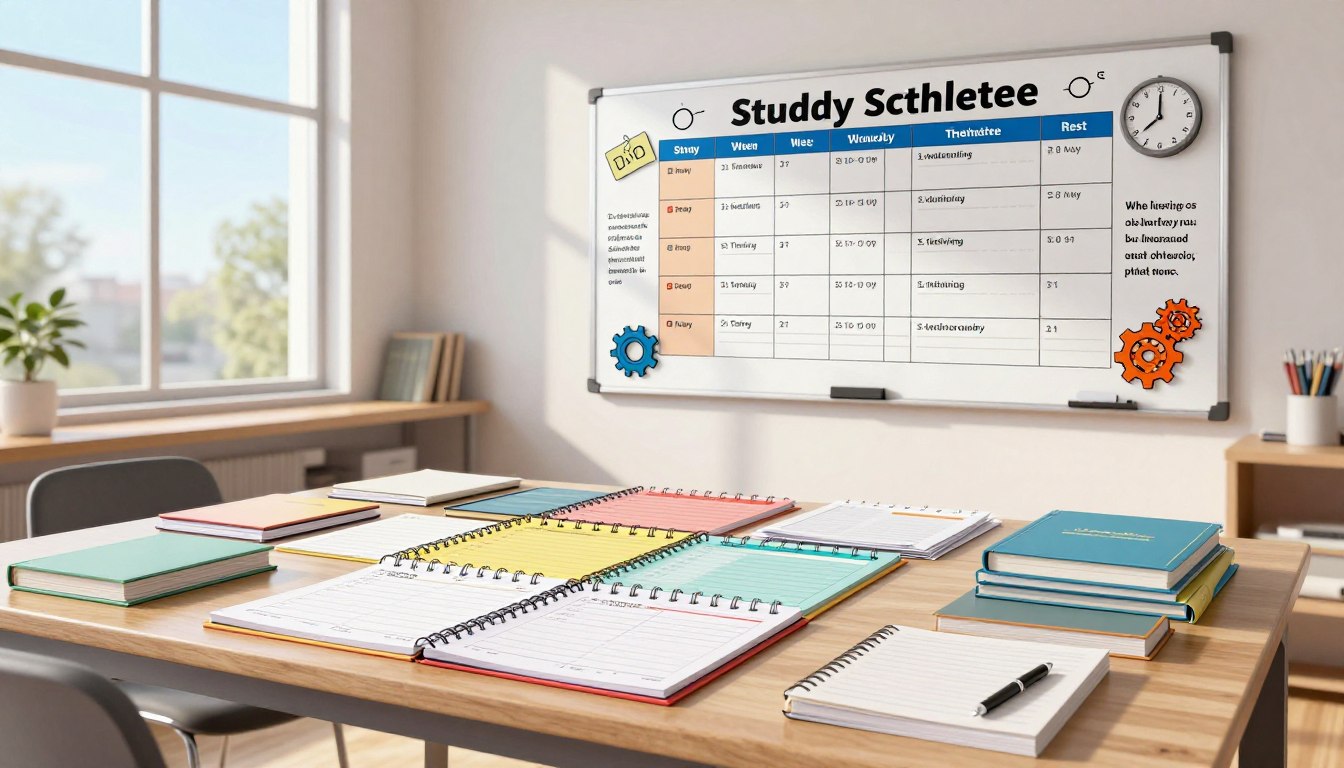
“You don’t have to be great to start, but you have to start to be great.” – Zig Ziglar. For students juggling jobs and academic responsibilities, starting a productive study routine can be a daunting task. Balancing time commitments, maintaining energy levels, and staying focused are just a few of the challenges they face.
Creating an effective study plan requires understanding personal productivity patterns and identifying peak hours. By leveraging tools like FlowScholar, students can optimize their study sessions and make the most of their limited time. This approach enables them to achieve a better balance between their academic and professional life.
Key Takeaways
- Understand your personal energy patterns to maximize productivity
- Identify peak hours for focused study sessions
- Leverage technology tools like FlowScholar to optimize study time
- Create a sustainable routine to prevent burnout
- Set realistic expectations and goals
The Unique Challenges of Working Students
Students who work while pursuing their education encounter unique difficulties that affect their overall well-being. Working students must navigate the complex task of balancing multiple responsibilities, including classes, assignments, work shifts, and personal commitments.
Balancing Multiple Responsibilities
Managing multiple schedules creates a significant cognitive load that can impact overall performance. Working students often face competing priorities that require difficult decisions about time allocation. For instance, they may have to choose between attending a social event or studying for an exam. This constant juggling act can lead to stress and fatigue.
The Reality of Limited Time and Energy
The physical and mental demands of work can deplete energy reserves needed for effective studying. Research shows that working students have significantly less discretionary time than their non-working peers. As a result, working students must be strategic and intentional about their study approaches, making the most of the limited time they have available.
https://www.youtube.com/watch?v=JkHOvJa4_hc
By understanding these challenges, working students can begin to develop effective strategies for managing their time and energy. This includes prioritizing tasks, setting realistic goals, and creating a schedule that balances work, study, and personal life.
Understanding Your Personal Energy Patterns
To create an effective study plan, working students must first understand their personal energy fluctuations throughout the day. People experience natural fluctuations in energy and focus due to circadian rhythms, which affect their cognitive performance at different times. As one source notes, “I get my best work done early in the morning… around midday I start to tire.” Understanding these patterns helps in scheduling study sessions during peak productivity hours.
Identifying Your Peak Productivity Hours
To identify your peak productivity hours, track your energy levels and focus over several days. You can do this by maintaining a simple log or using a productivity app. Note the times when you feel most alert and focused, and when you experience dips in energy. This will help you pinpoint your most productive times. For instance, you might discover you’re more productive in the morning or late afternoon.

How Work Schedules Impact Study Energy
Different work shifts create distinct challenges and opportunities for study scheduling. For example, morning shifts might require you to wake up early, while evening shifts might keep you up late. Physical fatigue from work impacts the mental energy available for studying. It’s essential to account for recovery periods after work shifts, especially those that require high mental engagement, leading to “decision fatigue.” By understanding how your work schedule affects your energy, you can adapt your study approach accordingly.
| Work Shift | Energy Level | Best Study Time |
|---|---|---|
| Morning | High in the morning, low by afternoon | Early morning |
| Afternoon/Evening | Low in the afternoon, recovering by evening | Late evening |
| Overnight | Low in the morning, high by late afternoon | Late afternoon or early evening |
By understanding your personal energy patterns and how they intersect with your work schedule, you can make more strategic decisions about when to tackle different types of academic tasks. For more insights on creating personalized learning plans, visit Upskillist’s blog.
Assessing Your Current Schedule
Assessing your current time commitments is the initial step in developing a study routine that works. To create an effective study plan, you need to understand how you currently spend your time across various activities.
Mapping Your Work and Class Commitments
Begin by mapping out your fixed commitments, including work shifts, class times, and any regular personal activities. Use a calendar to visualize your schedule for the week. Identify the hours you dedicate to these commitments and note any variability in your day-to-day or week-to-week schedule.
Finding Hidden Study Opportunities
Once you have mapped your fixed commitments, look for “hidden pockets” of time that can be utilized for studying. These might include commutes, lunch breaks, or waiting periods. Evaluate the quality of these time blocks for various study activities such as reading, problem-solving, or memorization. Consider how you can adjust your current tasks or activities to create more time for studying.
By carefully assessing your current schedule and identifying areas for adjustment, you can create a more effective study routine that fits your lifestyle.
Creating A Realistic Study Plan for Students With Jobs

To succeed, students with jobs must develop a study plan that is both realistic and flexible. This involves understanding their work commitments, academic goals, and personal energy patterns to create a balanced schedule.
Setting Achievable Academic Goals
Setting achievable academic goals is the foundation of a realistic study plan. Students should break down larger objectives into smaller, manageable tasks that can be accomplished within their limited study time. For instance, if a student aims to complete a research paper, they can set weekly targets for literature review, drafting, and editing. This approach helps in maintaining steady progress and reducing stress.
By aligning daily and weekly study tasks with their long-term academic goals, students can ensure that their study plan is both effective and achievable. Regularly reviewing and adjusting these goals will also help in staying on track.
Establishing Non-Negotiable Study Blocks
Establishing non-negotiable study blocks is crucial for protecting dedicated study time. These are fixed periods in the calendar where the student commits to studying without any distractions or interruptions. Communicating these blocks to employers, friends, and family can help minimize interruptions during these times.
By treating these study blocks as non-negotiable appointments, students can ensure that they have consistent time for focused academic work, even with a demanding work schedule.
Building Flexibility for Work Schedule Changes
Building flexibility into the study plan is essential to accommodate unexpected changes in work schedules, such as shift changes or overtime. Students should identify potential buffer times in their calendar that can be used for studying if their work schedule changes.
Having a contingency plan in place can help students adapt to changes without compromising their academic commitments. This might involve adjusting study times, seeking alternative study spaces, or temporarily adjusting academic goals.
Effective Study Techniques for Busy Students
The key to academic success for working students lies in adopting the right study techniques that suit their busy lives. By leveraging evidence-based methods, students can optimize their limited study time and achieve better learning outcomes.
The Pomodoro Technique for Focused Study Sessions
The Pomodoro Technique is a powerful method for maintaining focus during short study sessions. This technique involves breaking study time into 25-minute intervals, called “Pomodoros,” followed by short breaks. By using this method, students can stay concentrated and retain information more effectively. For example, a student can dedicate four Pomodoros to studying a complex topic, with breaks in between to recharge.
| Pomodoros | Study Time | Break Time |
|---|---|---|
| 1 | 25 minutes | 5 minutes |
| 2 | 25 minutes | 5 minutes |
| 3 | 25 minutes | 5 minutes |
| 4 | 25 minutes | 15-30 minutes |
Active Recall and Mind Mapping
Active recall and mind mapping are two complementary techniques that enhance learning and retention. Active recall involves challenging oneself to retrieve information from memory rather than passively reviewing it. This can be done through flashcards or practice quizzes. Mind mapping, on the other hand, is a visual technique for organizing complex information into a coherent structure. By creating a mind map, students can quickly connect new concepts to their existing knowledge base.
For instance, a student studying for a history exam can use active recall to remember key dates and events, while mind mapping can help organize these events into a timeline, making it easier to review and recall the information.

The Feynman Technique for Deeper Understanding
The Feynman Technique is a method for achieving deeper understanding by explaining complex concepts in simple terms. This technique involves identifying knowledge gaps and filling them through further study. By teaching a concept to someone else or explaining it as if to a child, students can identify areas where they need more practice or review.
For example, a student learning about a complex scientific theory can use the Feynman Technique to break it down into simpler components, ensuring they fully understand each part before moving on to the next.
By incorporating these study techniques into their daily routine, busy students can make the most of their limited study time and achieve academic success.
Managing Digital Distractions While Studying
In today’s digital landscape, creating an environment conducive to focused studying is a significant challenge. With the constant influx of digital notifications, it’s easy to get sidetracked. However, by implementing a few strategies, students can minimize distractions and maximize their study time.
Creating a Distraction-Free Study Environment
One of the most effective ways to reduce digital distractions is to create a dedicated study space. This can be as simple as designating a specific area of your home or library as a study zone, free from distractions like TVs and video games. By establishing a consistent study environment, you can train your brain to associate this space with focused learning.
Using Technology to Block Digital Interruptions
Technology can be both a blessing and a curse when it comes to studying. While it’s essential for research and accessing digital resources, it can also be a significant source of distraction. Tools like website blockers and focus-enhancing apps can help mitigate this issue. For example, apps like “Cold Turkey” can block distracting websites during study sessions, helping you stay on track. Additionally, features like “Do Not Disturb” on your devices can minimize notifications, allowing you to focus.
By combining a distraction-free study environment with the strategic use of technology, students can significantly improve their ability to focus and retain information. This, in turn, can lead to better academic performance and reduced stress. For more information on managing digital distractions, check out this article on preventing homework distractions and learn how to stay focused.
Sample Study Plans for Different Work Schedules
For working students, a well-structured study plan is the key to academic success. Balancing work and study requires a strategic approach to time management. The following sample study plans are designed to help students with varying work schedules create an effective study routine.
Morning Work Shift Study Plan
Students working morning shifts can utilize their evenings and early mornings for studying. A typical day might begin with a 6:00 AM wake-up, followed by a 30-minute study session. After getting ready for work, they can review notes or read assignments during their commute. Upon returning home around 2:00 PM, they can have a quick rest before dedicating time to studying from 3:00 PM to 5:00 PM. After a short break, they can resume studying from 7:00 PM to 9:00 PM, focusing on the most challenging tasks during their peak hours of productivity.
| Time | Activity |
|---|---|
| 6:00 AM | Wake up, 30-minute study session |
| 7:00 AM – 2:00 PM | Work |
| 3:00 PM – 5:00 PM | Study |
| 7:00 PM – 9:00 PM | Study |
Afternoon/Evening Work Shift Study Plan
For students working afternoon or evening shifts, the morning and pre-work periods are ideal for studying. They can start their day with a focused study session from 8:00 AM to 10:00 AM, followed by a break for lunch. After lunch, they can attend class or study some more before leaving for work. Upon returning home around 11:00 PM, they can wind down with a relaxing activity before a nighttime study session from 11:30 PM to 12:30 AM if needed.
| Time | Activity |
|---|---|
| 8:00 AM – 10:00 AM | Study |
| 10:00 AM – 2:00 PM | Attend class or study |
| 2:00 PM – 10:00 PM | Work |
| 11:30 PM – 12:30 AM | Optional nighttime study session |
Weekend Work Schedule Study Plan
Students with weekend work schedules can plan intensive study sessions during the week. They can allocate specific study days during the week, such as Mondays and Wednesdays, for focused studying. On other days, they can review material or work on less intensive tasks. It’s essential to maintain a consistent study plan and adjust as needed to accommodate work commitments.
For more study schedules and resources, consider exploring available tools and templates that can help tailor a plan to your specific needs.
Tools and Resources for Working Students
Working students can greatly benefit from various digital tools designed to optimize their limited study time. These tools range from calendar and planning applications to specialized learning platforms like FlowScholar.
Tools for Managing Study Time
Effective time management is crucial for students. Tools like calendar applications help visualize and plan complex schedules with work, class, and study commitments.
How FlowScholar Can Optimize Your Study Time
FlowScholar’s AI-powered learning platform is specifically designed to help working students study more efficiently. By leveraging AI, FlowScholar provides personalized learning paths that adapt to individual learning styles and needs.
To explore FlowScholar’s capabilities and start optimizing your study time,
Conclusion: Sustaining Your Study Plan Long-Term
Sustaining a study plan long-term requires consistency, flexibility, and self-compassion. As a working student, balancing multiple responsibilities is challenging, but with the right approach, it becomes manageable. The key is to commit to your planned study schedule as much as possible, making it second nature to dive into a state of deep focus.
Regular evaluation and adjustment of your study plan are crucial as work schedules, course demands, and personal circumstances evolve. This flexibility ensures that your study plan remains realistic and achievable. When disruptions occur, it’s essential to recover without abandoning the entire plan. Staying motivated during challenging periods is vital, and celebrating small victories helps maintain momentum.
Leveraging academic support resources, such as FlowScholar, can provide additional help when needed. The skills developed through balancing work and academics are invaluable, enhancing your ability to manage multiple commitments effectively. By embracing these challenges, working students develop unique strengths and capabilities that serve them well in their academic and professional journeys.
In conclusion, maintaining a realistic study plan requires ongoing effort and adaptation. By staying committed, flexible, and compassionate towards yourself, you can achieve your academic goals while managing your work and personal life. Explore how tools like FlowScholar can support your academic success and empower you to reach your full potential.
FAQ
How can I balance my work and study responsibilities effectively?
To balance work and study, create a realistic study plan that takes into account your work schedule, energy levels, and learning style. Identify your peak productivity hours and schedule your study sessions accordingly.
What are some effective study techniques for busy students?
Techniques like the Pomodoro Technique, active recall, and mind mapping can help you stay focused and retain information better. Experiment with different methods to find what works best for you.
How can I manage digital distractions while studying?
Create a distraction-free study environment by turning off notifications, using website blockers, and finding a quiet space to study. Tools like Freedom or SelfControl can help you stay on track.
What are some tips for creating a realistic study plan?
Start by assessing your current schedule and identifying your available study time. Set achievable academic goals and break them down into smaller, manageable tasks. Be flexible and adjust your plan as needed.
How can I make the most of my study time?
Use active learning techniques like summarizing notes, creating concept maps, and self-testing to make the most of your study time. Review your study plan regularly and adjust it to optimize your learning.
What resources are available to help working students manage their time and stay organized?
Tools like FlowScholar, calendar apps, and planning applications can help you stay organized and focused. Take advantage of these resources to optimize your study time and achieve your goals.