“The secret of getting ahead is getting started.” — Mark Twain.
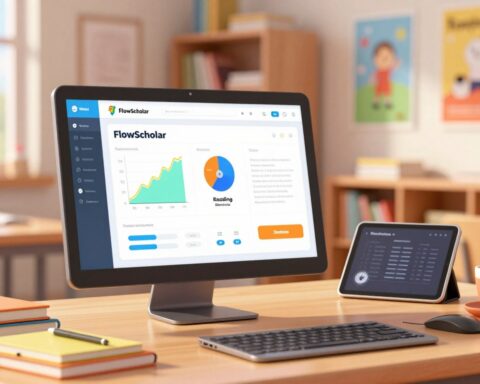
Educators today need systems that free up hours and restore focus to the classroom. FlowScholar.com delivers an AI-powered platform that automates repetitive administrative and planning duties so professionals can reclaim precious time.
By streamlining lesson planning and daily management, FlowScholar reduces the hours spent on non-instructional tasks. That shift lets teachers concentrate on teaching and on students—the real center of education.
Integrating smart tools into the school day is not about cutting corners; it is about improving outcomes. We invite readers to explore the platform at FlowScholar.com and to view practical insights on workflow at this post.
Key Takeaways
- FlowScholar uses AI to cut repetitive work and save time each week.
- Automated planning frees educators to focus on students and teaching quality.
- Adopting smart tools improves work-life balance and professional performance.
- Small hourly gains compound into meaningful weekly improvements.
- Visit FlowScholar.com to see how automation transforms daily workflows.
Understanding the Root Causes of Teacher Burnout
Daily piles of small tasks add up into a larger problem that drains classroom energy. What looks like individual fatigue is often system-level strain. Research and practitioner stories show this clearly.
The Impact of Constant Overload
Meredith, who taught high school English for over 15 years in cities like Dallas and Chicago, points to structural issues in education. When professionals work at peak intensity every day, energy and resilience decline.
Rachel, a fifth-grade educator, felt unprepared even with a curriculum map. The daily grind left her behind and stressed. That pattern undermines learning and harms student outcomes.
“Burnout is rarely a personal failing; it’s a signal that systems need redesign.”
Moving Beyond the Daily Grind
Effective strategies start with task categorization: high-energy creative work vs. low-energy maintenance. Balancing those preserves stamina across a year.
- Recognize which activities demand deep focus.
- Schedule creative units when energy is highest.
- Automate repeatable tasks to free time for instruction.
| Task Type | Energy Required | Frequency | Suggested Strategy |
|---|---|---|---|
| Curriculum design | High | Quarterly | Block time; collaborate |
| Daily grading | Medium | Daily | Streamline with rubrics |
| Administrative tasks | Low | Weekly | Automate or delegate |
Understanding root causes is the first step toward sustainable work systems. For research into systemic drivers, see teacher burnout research. To explore AI-powered workflows, review AI-powered workflows for teachers.
Why You Need Teacher Burnout Lesson Planning Help

A cluttered digital archive often turns weekly preparation into a time sink. Educators collect resources for years and then face decision fatigue when it matters most.
Too many options slow good judgment. Without a clear system, finalizing your weekly lesson plans becomes a repetitive chore that steals hours from instruction and reflection.
Being selective about what stays in your file folders changes the whole dynamic. A simple, consistent system helps you find the best activities for students in minutes—not hours.
- Reclaim time: Remove duplicate files and keep only high-quality resources.
- Work smart: Tag materials by skill, duration, and alignment to the school year.
- See the year: A central system makes weekly choices easier and reduces stress across the week.
Seeking teacher burnout lesson planning help is a proactive step. For a practical approach to capacity-based organization, explore this capacity-based system.
Adopting a Capacity Based Planning Model
Capacity-based planning shifts focus from a long to-do list to energy-aware work blocks that align with real classroom rhythms. This model helps staff match tasks to cognitive peaks and troughs across the week.
Categorizing Your Daily Tasks
High-energy days are for deep work: developing new curriculum resources, designing assessments, or drafting complex unit plans.
Medium-energy periods suit tasks like building slides, writing discussion prompts for a subject, or assembling materials for upcoming lessons.
Low-energy windows handle routine activities: responding to emails, grading completion work, or updating resource lists. These keep momentum without draining stamina.
- Organize the week into high, medium, and low blocks to protect creative time.
- Use simple tools to track progress and keep plans visible.
- Categorize materials and activities to cut decision fatigue and save time on the day-to-day.
“When work matches energy, quality rises and time becomes predictable.”
Streamlining Your Workflow with FlowScholar
Smart automation moves low-impact chores off your to-do list and into a reliable system. FlowScholar’s AI focuses on the repetitive pieces of day-to-day plan creation so educators can return energy to teaching and students.
Automating Repetitive Planning Tasks
FlowScholar.com acts as an AI assistant that drafts lesson plans, organizes materials, and suggests resources. Districts using similar tools report a 25–30% drop in overtime.
Offloading admin tasks can reclaim 5–10 hours a week. That time becomes usable for student feedback, assessment design, or calmer days.
Getting Started with FlowScholar
Start small: generate plans for one subject, review, then expand. Use the system to tag resources and sync weekly activities.
| Benefit | Impact | Time Saved |
|---|---|---|
| Automated lesson plan drafts | Faster plan turnaround | 2–4 hours/week |
| Resource organization | Less search time | 1–3 hours/week |
| Task automation | Lower overtime | 25–30% reduction |
Visit FlowScholar.com to try the tools and see how a digital system can restore time and energy across the school week.
Building Collaborative Planning Communities
Shared ownership of curriculum work turns an isolating task into a time-saving team effort. Schools with active Professional Learning Communities report up to a 35% drop in staff stress. That data shows clear impact when work is shared.

Teams that divide tasks reduce individual workload and produce stronger plans. Rotating facilitation keeps meetings balanced and develops leadership across the grade.
Clear agendas protect meeting time and focus discussion on student learning and curriculum alignment. A shared digital hub makes resources searchable, turning scattered files into a living set of lessons for every subject and grade.
Practical habits:
- Set a concise weekly agenda to safeguard focus and time.
- Rotate facilitators so responsibilities rotate, not concentrate.
- Centralize plans and resources to cut duplicate work across the year.
“Collaborative planning transforms isolated effort into sustained improvement for both staff and students.”
Setting Boundaries for a Sustainable Teaching Life
Simple rules about accessibility reframe expectations and reclaim hours that otherwise vanish after school. Clear boundaries stop the school day from eroding evenings and protect energy for the next day.
Protecting personal time is practical: it reduces stress and improves focus during class. Schools that adopt a “no emails after 5 PM” policy report nearly a 30% drop in staff stress in a single year.
Protecting Your Personal Time
Set firm limits on availability and communicate them to families. A short message about office hours creates predictable expectations and reduces late-night messages.
Schedule grading blocks during contract hours. Designate specific hours each week for task management so work does not creep into evenings.
- Establish office hours: Share them with families and colleagues.
- Block grading time: Keep it inside agreed hours to protect evenings.
- Model behavior: Leaders should respect staff time to make systems stick.
“When systems protect time, educators return to the classroom with more energy and attention for students.”
These strategies are not about doing less; they are about smarter work. Protecting personal hours preserves long-term capacity and sustains a viable career in education.
Refining Your Daily Classroom Management Systems
When entry rituals and transition signals are consistent, the classroom moves with purpose and fewer disruptions. That predictability gives each student a steady cue for behavior and focus early in the day.
Proactive management systems reduce interruptions and preserve instructional minutes. Schools that audit assessment calendars and admin workflows often reclaim 8–10 hours per month for staff, and programs like PBIS can cut discipline referrals by 30–50%.
Use a digital planner to track lesson planning and lesson plans so you stay on track during teaching. Tag resources and materials by standard, duration, and objective; this keeps plans searchable and reduces last-minute scrambling.
Investing time upfront pays weekly dividends: routines for entering the room, clear transitions, and a shared system for activities create calm and boost learning. When these pieces align, teachers return attention to instruction and student needs.
- Establish two entry routines and one transition signal to cut downtime.
- Audit weekly tasks to free up hours each month for instruction.
- Centralize materials and use simple tools to manage plans and tasks.
“Small, consistent systems change how minutes add up across a week.”
Final Thoughts on Reclaiming Your Time and Energy
Intentional changes to workflow turn scattered tasks into steady, recoverable hours.
Reclaiming time and energy is not about doing more; it is about using the right systems to support teaching today. Small routines and clear boundaries free hours each week and protect focus for students and core work.
Start small: set one daily ritual, delegate one repetitive task, and protect a block of time for deep work. These strategies compound across the year into meaningful gains in energy and satisfaction.
For practical steps and a reset plan, see this concise guide on sustaining balance: Overcoming Teacher Burnout: Simple Strategies.
FAQ
What is FlowScholar.com and how does it save time on repetitive planning tasks?
FlowScholar.com is a planning platform that automates routine curriculum tasks and generates reusable materials. It consolidates templates, standards mapping, and printable resources so educators spend less time on admin work and more time on instruction and student relationships.
What are the main causes of educator overload and how do they affect classroom outcomes?
Persistent workload, fragmented systems, and constant after-hours preparation drive chronic fatigue. That erosion of energy reduces instructional quality, stifles creativity, and raises turnover—impacting student learning and school culture.
How can staff move beyond the daily grind without sacrificing student learning?
Shift from firefighting to capacity-based plans: prioritize high-impact routines, delegate or automate low-value tasks, and set predictable weekly rhythms. This sustains instructional quality while protecting staff wellbeing.
Why should schools invest in external planning support and resources?
External tools and shared resources reduce duplicated effort across grade bands and departments. They speed implementation of curriculum changes, improve consistency, and free up hours for coaching, assessment, and lesson refinement.
What is a capacity-based planning model and how does it work?
Capacity-based planning aligns daily tasks to realistic time budgets and staffing. It assigns tasks by priority and available hours, preventing overload by design and making weekly plans achievable.
How should tasks be categorized for practical daily scheduling?
Use three categories: high-impact (direct instruction, feedback), medium-impact (assessment prep, differentiation), and low-impact (printing, repetitive formatting). Automate or delegate low-impact work to conserve energy for core instruction.
How does FlowScholar automate repetitive planning tasks?
FlowScholar offers template libraries, auto-fill standards alignment, and batch creation of materials. These features cut hours from routine prep—lesson sequences, worksheets, and unit overviews are generated quickly and consistently.
What are the first steps to get started with FlowScholar?
Begin by importing curriculum guides, choosing a weekly template, and mapping key standards. Start small—automate one unit or week—and iterate based on classroom feedback to build trust in the system.
How can collaborative planning communities reduce workload across a school?
Shared planning pools redistribute content creation: teams co-author units, swap assessments, and curate resource banks. This multiplies expertise, reduces redundancy, and creates peer accountability.
What boundaries should staff set to maintain a sustainable professional life?
Protect nonworking hours by scheduling planning blocks during the school day, limiting evening email, and using clear protocols for urgent communications. Consistent routines make boundaries easier to uphold.
What strategies protect personal time while meeting curriculum demands?
Block focused work periods during contract hours, use shared templates for recurring activities, and adopt no-meeting windows. These tactics preserve recovery time and reduce weekend catch-up tasks.
Which classroom management systems can be refined to save daily time?
Streamline routines for transitions, use visible schedules, and employ efficient formative-assessment tools. Small, consistent systems reduce disruptions and create more predictable instructional flow.
How can schools measure the impact of time-reduction interventions?
Track metrics such as planning hours per week, frequency of after-hours work, and staff retention. Combine quantitative data with qualitative feedback from staff and students to assess real change.
What quick wins produce immediate relief from overloaded schedules?
Standardize lesson templates, batch-create materials for the week, and set two protected planning blocks during the school day. These steps yield immediate time savings and lower stress.
Which tools and resources complement FlowScholar for comprehensive workflow improvement?
Learning management systems like Google Classroom, assessment platforms such as Formative, and collaboration tools like Microsoft Teams or Slack integrate well. They extend automation and streamline communication across the school.