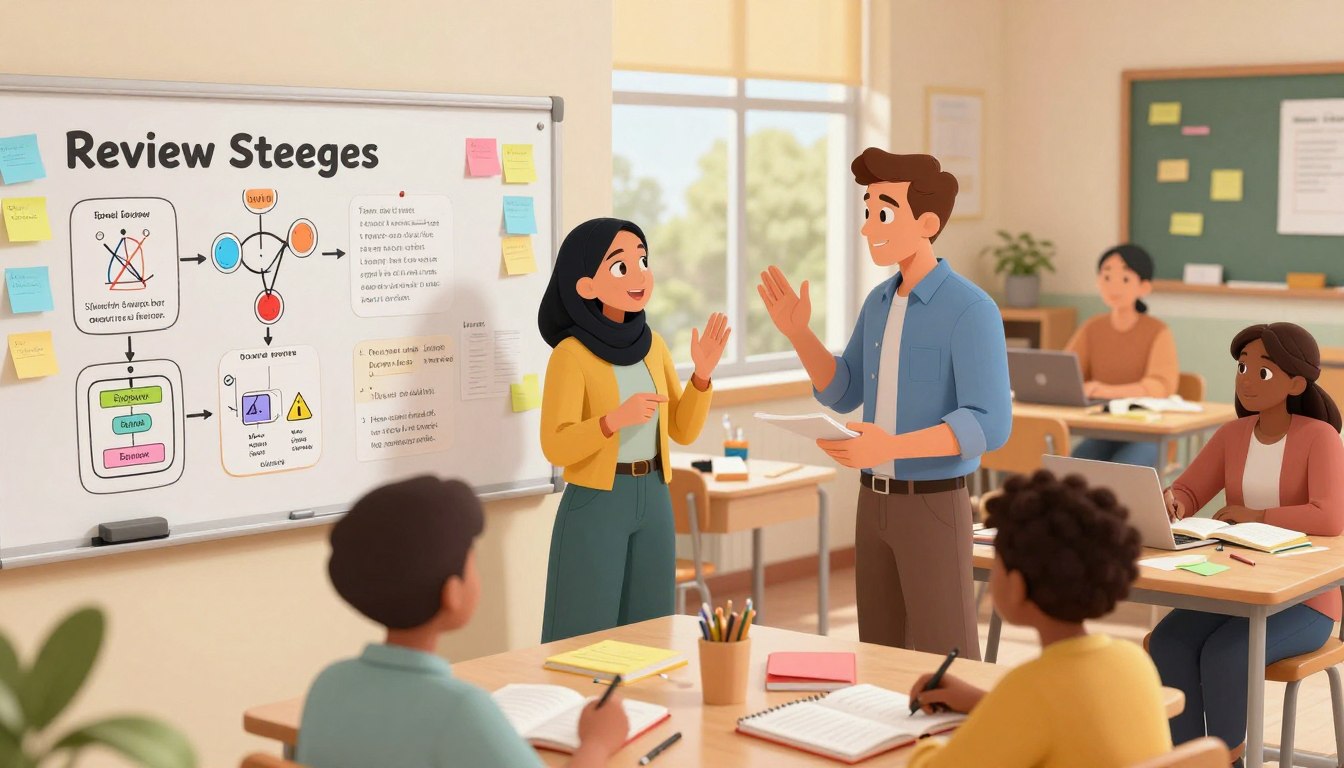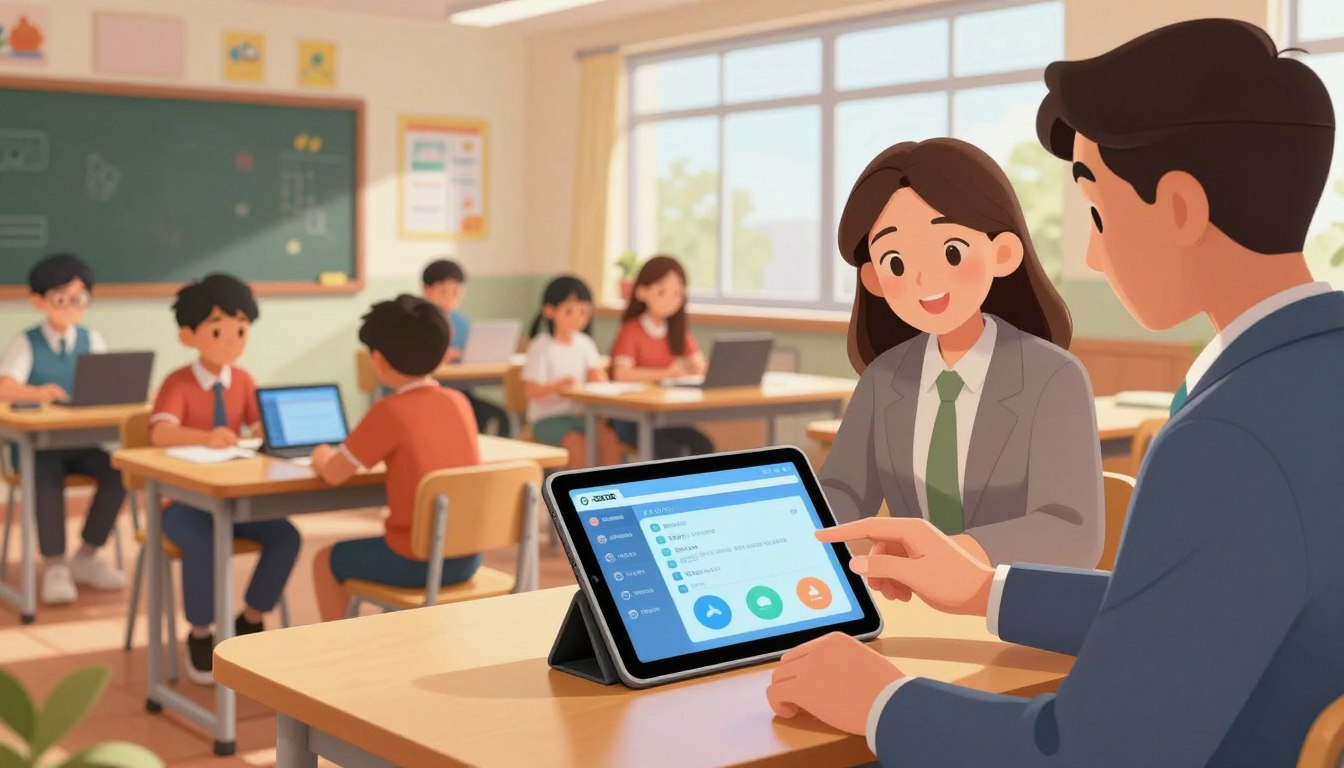
“Education is the kindling of a flame, not the filling of a vessel.” —Socrates. This idea frames why predictable daily structure matters for learners.
FlowScholar delivers AI-powered classroom routine support to help teachers manage time, behavior, and engagement with clarity. The platform pairs smart scheduling with quick feedback and a rewards system to get students focused and productive throughout the school year.
Teachers gain practical management tools that make transitions smoother and group work easier to run. By blending AI insights with familiar strategies—timers, brain breaks, points, and clear expectations—FlowScholar helps build a positive learning environment. Learn more and explore real-world results in this after-school success post, or visit FlowScholar.com to see how the platform can transform teaching practice.
Key Takeaways
- AI enhances daily management to keep students on task and reduce noise and disruption.
- FlowScholar integrates timers, feedback, and rewards for clear behavior management.
- Teachers get streamlined processes that save time and improve classroom management tools.
- Brain breaks and varied activities help maintain attention and boost learning.
- Visit FlowScholar.com to test a system that fits your school and teaching style.
The Importance of Daily Learning Structure
A clear daily structure helps students move through the day with confidence and focus.
Establishing consistent learning patterns is vital for helping students understand expectations. Predictable pacing reduces behavior issues and lowers classroom noise. Teachers who set a steady flow see fewer disruptions and more time on content.
Simple management tools—like the Kadams Time Tracker (available on Amazon)—let teachers manage pacing and transitions. A visible timer keeps groups on task and makes group work easier to run.
A well-organized environment helps diverse learners feel secure. When teachers implement these management tools early in the year, they build a foundation for long-term student success and teacher well-being.
| Benefit | What It Does | Classroom Impact |
|---|---|---|
| Predictable day | Sets expectations for students | Less anxiety, better focus |
| Pacing tools | Manages time and transitions | More instructional minutes |
| Structured environment | Reduces behavior and noise | Stronger learning environment |
Why Every Teacher Needs a Classroom Routine Support Tool
When repetitive tasks are automated, teachers spend more time on what matters most: students. This shift improves daily management and frees teachers to teach.
Benefits of Automation
Automation reduces repetitive admin and manual record-keeping. It streamlines classroom management and lowers noise during transitions.
- More instructional minutes: Less paperwork, more direct teaching.
- Consistent behavior tracking: Faster feedback and fairer reward delivery.
- Better group work: Timers and simple prompts keep students focused.
Saving Teacher Time
Teachers report higher job satisfaction when management tasks run smoothly. Investing in the right tools today saves hours across the school year.
“Automating routine tasks gave the team back planning time and improved student engagement.”
| What | Manual Approach | Automated Outcome |
|---|---|---|
| Timing transitions | Hand-set timers, inconsistent cues | Uniform timers, less noise, more content time |
| Behavior logs | Paper notes, delayed feedback | Instant records, quick feedback, fair rewards |
| Group monitoring | Teacher circulates, uneven oversight | Automated prompts, better group work flow |
Establishing Foundational Classroom Rules
Simple, memorable rules give students a shared language for choices and conduct.
The “3 Be’s”—be safe, be kind, be ready—serve as a clear framework that helps students know what to do and how to treat peers.
Teachers should introduce these expectations on the first day of school. Spend the first week modeling each behavior so every student sees examples in real situations.
Post the rules where everyone can see them. A visible reminder helps students make quick, consistent choices during transitions, group work, and independent time.
Consistent enforcement matters. When adults apply consequences and praise fairly, the learning environment becomes calmer and noise drops. That steady approach makes management simpler for teachers and helps students take responsibility.
Invite students to lead short reviews of the rules. Peer-led reminders build ownership and strengthen classroom management. Over the year, this practice helps build a positive culture that fits different groups and content needs.
“Clear expectations and student leadership create a respectful space where teaching and learning flourish.”
Building Positive Relationships Through Classroom Cheers
Celebratory cheers create quick, positive rituals that strengthen relationships and increase engagement.
When teachers lead a brief cheer, they give students a shared moment of recognition. This practice makes praise visible and simple to replicate.
Celebrating Student Success
Use cheers to validate effort: After a student shares writing or solves a tricky problem, a short chant or clap signals that hard work matters. That boost helps learners try again.
Keep cheers brief and predictable so everyone can join. Teachers model the sound and motion, then invite the class to echo. This builds trust and lowers noise during transitions.
- Recognize kindness and teamwork with a specific shout-out.
- Celebrate progress on group work to reinforce collaboration.
- Pair cheers with small points or tokens in an existing rewards system.
Simple rituals like these are easy to implement and help students feel seen. Over the year, regular recognition improves behavior and deepens the learning environment.
Mastering Attention Grabbing Techniques
A crisp attention signal can cut noise and return learners to focus in seconds.
Call-and-response strategies let teachers regain control without raising voices. These signals are a reliable management method that preserves instructional time and lowers classroom noise.
Practical tip: use a set of 80 call-and-response cards to rotate prompts across the school year. Variety keeps students engaged and prevents the cue from becoming background sound.
Consistency is essential. Teach the sound, model the expected behavior, and practice until every student knows the response. When everyone responds quickly, transitions are faster and group work resumes on time.
- Model the cue and the expected pause.
- Give quick feedback so learners link the signal to action.
- Swap cards monthly to maintain novelty and buy-in.
“A practiced attention cue saves minutes each day and creates a calmer learning environment.”
Incorporating Movement with Brain Breaks
Two- to five-minute movement moments break up long stretches of sitting and sharpen attention.
These short brain breaks help students refocus and digest information after focused work. They are easy to implement and fit any class plan.
Tools like GoNoodle offer hundreds of categorized videos — singing, stretching, dancing, and breathing — that last two to five minutes. Teachers can pick activities that match age and energy levels.
- Refocus: Movement resets attention so students return ready for content.
- Energy management: Short activity reduces fidgeting and lowers noise.
- Behavior benefits: Regular breaks improve overall classroom management and mood.
Used consistently across the school day, brain breaks maintain energy and make group work smoother. Small investments of time yield clearer thinking and a more positive learning environment.
| Break Type | Duration | Classroom Impact |
|---|---|---|
| Movement dance | 2–3 minutes | Boosts heart rate, reduces restlessness |
| Breathing or stretch | 2 minutes | Calms students, lowers noise quickly |
| Interactive song | 3–5 minutes | Increases engagement and recall for content |
Leveraging FlowScholar for AI-Powered Classroom Support
FlowScholar’s analytics surface trends that let teachers fine-tune time, transitions, and behavior strategies.
Data-driven insights make it easier to personalize instruction. The platform creates pathways that meet individual students where they are. Teachers get clear actions to help students progress without extra paperwork.
Personalized Learning Paths
Adaptive plans adjust tasks and pacing for each student. This reduces off-task minutes and boosts mastery. The system pairs quick feedback with targeted activities to keep learning steady.
AI-Driven Routine Optimization
The AI analyzes patterns—timing, group work flow, behavior spikes, and noise. It then suggests small changes: when to use a timer, add brain breaks, or shift seating for better engagement.
Getting Started with FlowScholar
Onboarding is quick. Teachers connect class lists, set simple goals, and the platform recommends schedules, points, and rewards that fit the day. An app and dashboard make adjustments simple to implement.
| Feature | What It Does | Teacher Impact |
|---|---|---|
| Personalized paths | Tailors tasks to student need | More focused learning time |
| Routine optimization | Suggests timing and prompts | Fewer behavior interruptions |
| Analytics dashboard | Shows trends and feedback | Faster decisions, better outcomes |
Visit https://www.flowscholar.com to see how this platform can transform daily management and help students thrive.
Streamlining Group Work and Collaboration
Well-planned group work turns scattered energy into measurable learning gains.
Apps such as GroupMaker speed how teachers form teams so students begin tasks without delay. This reduces transition time and lowers classroom noise.
Parlay and similar platforms deepen discussion by structuring prompts and written collaboration. They let teachers track participation and give quick feedback that nudges student contribution.
Practical benefits:
- Automated grouping saves precious class time and improves management.
- Rearrange groups on the fly to balance skills and behavior.
- Participation logs create fair feedback and guide rewards.
| Feature | What It Does | Teacher Impact |
|---|---|---|
| GroupMaker (app) | Automates team setup | Less prep time, faster starts |
| Parlay (platform) | Structures discussions | Deeper talk, trackable participation |
| Flexible grouping | Adjusts by skill or behavior | Higher on-task rates, fairer outcomes |
“Structured collaboration builds a culture where students feel safe to share and learn.”
Enhancing Student Engagement with Gamification
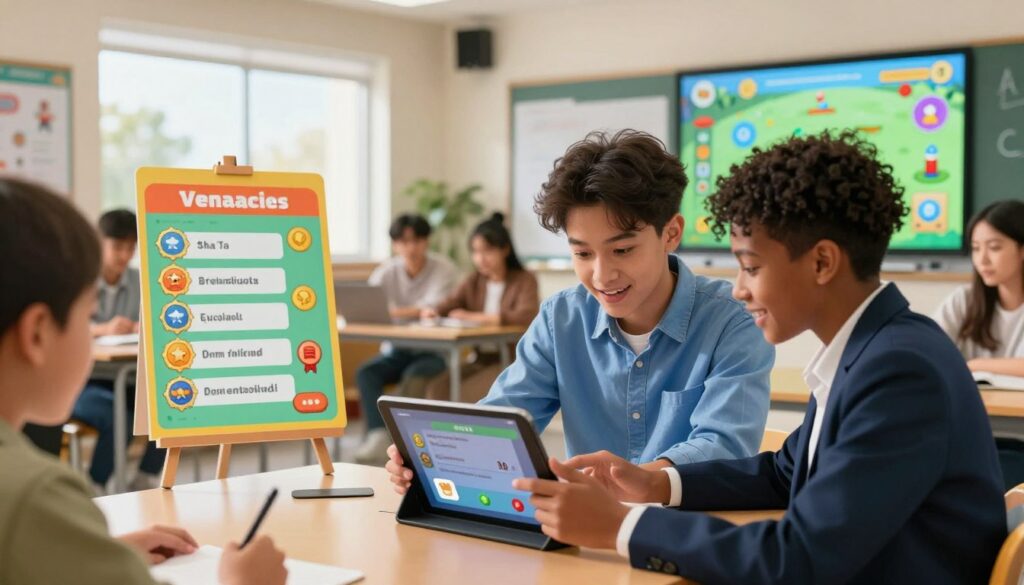
Gamification turns review and practice into a lively challenge that keeps students invested.
Kahoot and similar platforms let teachers build custom quizzes that feel like games. Short competitions make content memorable and give every student a clear reason to participate.
Apps such as Stick Pick spice up discussions by randomly calling on learners, reducing hesitation and widening participation. This method keeps noise and off-task behavior low because everyone stays alert.
These digital tools also serve management needs: track progress, log answers, and deliver immediate feedback. Quick feedback keeps motivation high and helps teachers spot who needs an extra push.
- Variety: Points, timers, and team play mix well with brain breaks.
- Assessment: Teachers can gauge understanding in real time.
- Motivation: Rewards and visible progress encourage steady effort.
“Turn practice into play: small wins each day build confidence and deeper learning.”
Managing Noise Levels in the Learning Environment
Noise levels shape whether students remain focused or drift during collaborative time.
Keeping sound within a productive range is central to effective classroom management. Simple systems give students clear, visible feedback so they can self-regulate and keep work moving.
Self-Regulation Strategies
Bouncy Balls is a popular, free virtual app that tracks ambient sound and adds audible cues when limits are exceeded. It turns monitoring into a shared responsibility and reduces teacher interruption.
- Shift monitoring to students to build self-control and quieter group work.
- Customize thresholds by activity so the system fits each part of the day.
- Pair the visual meter with short brain breaks and a timer to reset attention.
When teachers introduce consistent expectations and simple technology, behavior improves and instructional time returns. For quick classroom screens that help teachers give clear directions, try Give Instruction.
Simplifying Grading and Knowledge Assessment
Instant quizzes and visual dashboards help teachers see what students grasp before the bell rings. Apps like Socrative convert quick polls, exit tickets, and formative checks into clear charts that reveal class-wide trends in seconds.
Teachers use these interactive checks to adapt instruction the same day. That reduces grading time and gives students faster, more meaningful feedback.
Plagiarism checks such as Unplag protect academic integrity for digital work and show whether student responses reflect original thinking. Together, these management tools automate routine tasks and free teacher time for targeted teaching.
- Real-time visuals: Spot misconceptions quickly.
- Interactive quizzes: Make assessment engaging for learners.
- Plagiarism checks: Ensure honest student work.
Automation also improves consistency: grades are fairer, feedback is timelier, and classroom management improves because teachers spend less time on paperwork and more on learning.
“Automated grading gave the team back planning time and delivered clearer feedback to students.”
Explore research on the benefits of AI grading to see how these systems fit into the school day.
Tracking Behavior and Providing Positive Feedback
Positive feedback systems turn small wins into lasting habits for learners.
Tracking behavior helps teachers see trends and give timely praise. When staff record specific actions, students get clear direction about what to repeat.
ClassDojo is a popular app that connects teachers, students, and families. It makes it easy to note skills like teamwork and perseverance. Private messages keep parents in the loop without extra steps.
Effective systems offer varied ways to award points and rewards. That variety lets teachers match feedback to the moment—quick praise, a token, or a class-wide celebration.
- Trackable entries create fair, consistent management across the day.
- Quick, specific feedback helps students repeat positive choices.
- Parent communication strengthens the learning environment and follow-through.
“Consistent praise, tied to clear data, builds confidence and reduces off-task time.”
For practical steps on using AI to enhance behavior tracking and positive reinforcement, see this guide on AI behavior best practices.
Utilizing Digital Tools for Project Management
Digital project platforms help students map ideas visually and move from concept to completion.
Popplet uses mind-mapping and click-and-drop mechanics so students organize thoughts fast. It makes complex topics easier to see and to share.
These management tools let learners add images, links, and notes from other apps. That cuts setup time and keeps content in one place.
When teachers introduce a clear project workflow, student work becomes predictable and trackable. Progress checks and short feedback loops keep teams aligned.
Platforms like Popplet also cater to varied learning styles. Visual learners gain context, while writers attach research and drafts. That variety helps every student stay engaged.
- Plan: Break projects into steps with visual nodes.
- Monitor: Teachers check milestones and give timely feedback.
- Deliver: Students submit linked artifacts and reflect on learning.
“Structured digital maps turn vague ideas into clear action and keep teams moving forward.”
Differentiating Instruction for Diverse Learners
Using interactive platforms, educators shape lessons that match students’ skills and interests.
Nearpod helps teachers design synchronous and asynchronous lessons with videos, quizzes, and interactive slides. These features let a teacher present the same content in multiple ways so every student can access material that fits their needs.
By offering choice—simplified slides, challenge questions, or a quick quiz—teachers give learners entry points that match readiness. Real-time feedback from the app helps a teacher spot who needs a reteach and who is ready to extend learning.
- Variety: mix media, polls, and micro-games to hold attention and reduce off-task behavior.
- Management: use embedded timers and pacing cues so transitions take less time each day.
- Inclusion: multiple paths mean more students engage and fewer fall behind.
For deeper ideas on adaptive platforms and classroom management strategies, explore adaptive learning platforms at adaptive learning platforms.
Best Practices for Implementing New Management Systems
Successful implementation depends on planning, practice, and small, measurable steps.
Start with a clear plan. Map goals, pick one app or tool to pilot, and set a short timeline for training. Small pilots reduce disruption and let staff test a single function—like a timer or points tracker—before scaling.
Model expectations visibly. When adults demonstrate how the system works, learners adapt faster. Consistent use —same cues, same sound prompts, same consequences—builds trust and saves time.
Gather frequent feedback. Ask students and staff what fits and what needs change. Use quick surveys or brief exit checks to collect actionable feedback and spot where the platform or system needs adjustment.
- Introduce one change at a time to preserve clarity.
- Keep observations short and data-driven.
- Adjust settings—timers, thresholds, point values—to improve fit and variety.
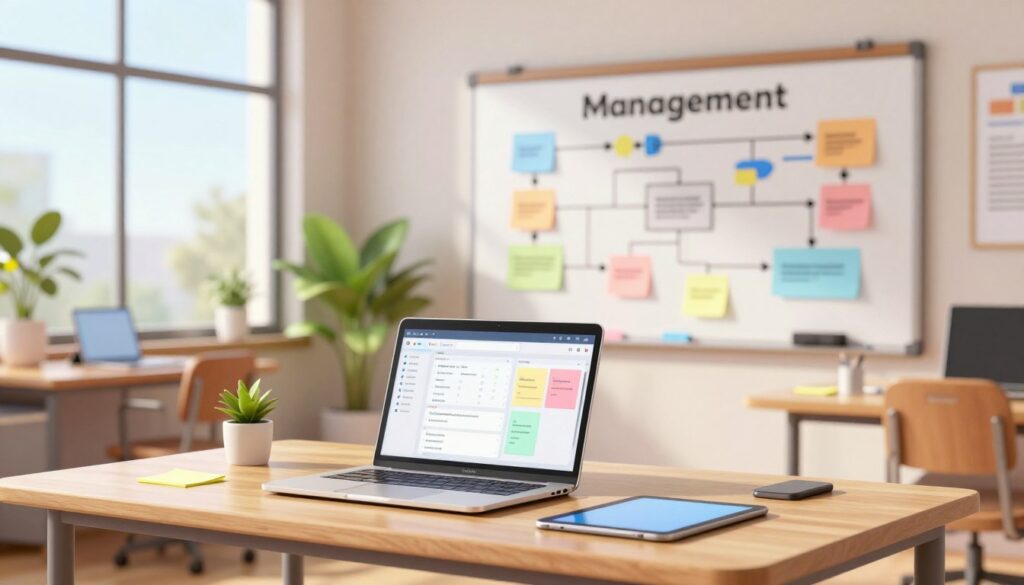
“Consistency and small, iterative changes make new systems last.”
Conclusion
A focused finish to each lesson turns short wins into steady progress for learners.
Effective management is the foundation where every student can thrive. By choosing the right platform and a clear system, teachers streamline daily tasks and amplify teaching time.
Consistency, clear communication, and timely feedback make new approaches stick. Small elements—timers, points, short reflections, and a little variety—create predictable moments that boost engagement.
Explore what fits your style: try the apps and platforms discussed here, then refine settings until they truly fit your needs. Visit https://www.flowscholar.com to see how an AI-powered system can help you build a more organized, effective learning environment for every student.
FAQ
What is FlowScholar.com and how does it help daily learning structure?
FlowScholar.com is an AI-powered platform that helps teachers design and maintain predictable daily schedules. It suggests short activities, transitions, and brain breaks that keep learners focused, reduces planning time, and supports consistent classroom management practices.
Why is a clear daily learning structure important for students?
A clear schedule reduces confusion and anxiety, so students spend more time learning. Predictable routines build independence, improve behavior, and free teachers to deliver instruction instead of managing disruptions.
How does automation on FlowScholar save teachers time?
Automation creates ready-made plans, timers, and prompts for transitions and group tasks. Teachers can quickly customize templates, generate differentiated activities, and deploy rewards systems without starting from scratch each day.
What foundational rules should teachers establish first?
Start with a few simple, positively stated expectations that are easy to teach and model—respect, safe hands, and focused effort. Use consistent cues and reinforce rules with praise and brief reminders.
How can teachers build positive relationships through classroom cheers?
Short, inclusive celebrations—verbal recognition, quick applause, or team cheers—acknowledge effort and progress. These rituals create a supportive atmosphere and motivate learners to repeat positive behaviors.
What are effective attention-grabbing techniques?
Use a consistent signal: a chime, hand signal, or countdown. Vary the cue occasionally to prevent habituation, and pair it with nonverbal expectations so the class responds quickly and quietly.
How do brain breaks improve learning?
Brief movement or mindfulness breaks restore focus and reduce restlessness. Built into transitions, they boost concentration and help students return to tasks with renewed energy.
How does FlowScholar personalize learning paths?
FlowScholar analyzes student needs and suggests tailored activities, pacing, and supports. Teachers receive differentiated lesson suggestions and small-group ideas that match varied skill levels and learning goals.
What can AI-driven routine optimization do for classroom management?
AI highlights which activities or transitions cause delays and offers alternatives to streamline flow. It recommends evidence-based adjustments to minimize downtime and maximize instructional minutes.
How do teachers get started with FlowScholar?
Sign up, choose a grade or subject template, and import your schedule. Customize prompts, set timers, and add behavior or reward preferences. The platform provides step-by-step onboarding and sample plans to launch quickly.
How can FlowScholar support group work and collaboration?
The platform supplies role templates, timing scaffolds, and rubrics to structure teamwork. It also suggests grouping strategies, rotation schedules, and quick checks to keep groups productive and accountable.
What gamification features enhance student engagement?
Points, badges, and progress trackers motivate effort and reward consistent contributions. Gamified challenges and leaderboards—used thoughtfully—encourage participation without fostering unhealthy competition.
What strategies help manage noise in the learning environment?
Establish clear volume levels tied to specific tasks, use visual noise meters or apps, and teach self-monitoring techniques. Consistent reinforcement and brief resets maintain an appropriate sound level.
How can students learn self-regulation skills?
Teach simple tools like breathing exercises, checklists, and short reflection prompts. Model the routines, practice them regularly, and integrate them into transition times so students internalize self-control.
How does FlowScholar simplify grading and assessment?
The system offers quick formative check templates, rubrics, and automated data collection. Teachers can record observations during activities and generate reports that inform instruction and streamline grading.
What tools support tracking behavior and giving positive feedback?
FlowScholar includes behavior logs, point systems, and customizable feedback messages. These tools make it easy to note improvements, celebrate milestones, and share progress with students and families.
Which digital tools work well for project management in class?
Use shared task boards, timers, and cloud-based document collaboration. FlowScholar integrates suggestions for tools and templates that break projects into manageable steps and clarify responsibilities.
How can teachers differentiate instruction for diverse learners?
Provide tiered tasks, adapt materials, and use small-group rotations. FlowScholar recommends scaffolds, extension activities, and assessment options to meet varied needs without overcomplicating planning.
What are best practices for implementing a new management system?
Start small, teach one element at a time, and collect quick feedback. Train students and staff, monitor fidelity, and adjust based on data. Consistency and gradual rollout increase adoption and impact.