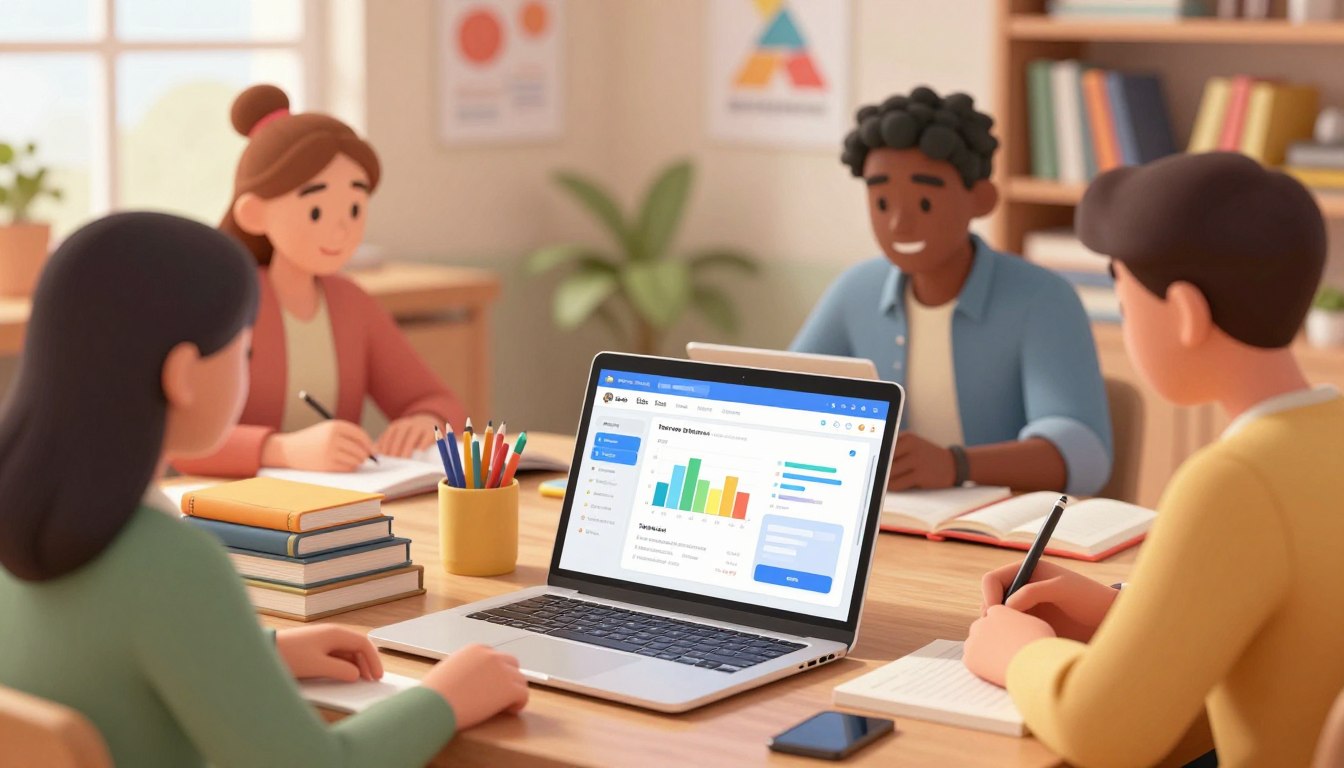
“Education is the passport to the future, for tomorrow belongs to those who prepare for it today.” — Malcolm X.
FlowScholar.com is an AI tool that helps educators build rigorous materials faster. It streamlines content creation so teachers spend less time on formatting and more time coaching students.
The platform produces aligned assessments and practice tests tailored to each grade. Schools can create tests that track student progress and highlight gaps in knowledge.
Preparing for a high school staar test demands focused test prep and clear strategies. FlowScholar supports writing prompts, multiple-choice questions, and varied types of assessment items to strengthen skills.
In short: FlowScholar saves time, raises instructional quality, and helps teachers craft practice that matches grade-level demands. We position the system as a practical partner in improving student performance.
Key Takeaways
- FlowScholar speeds content creation for educators while keeping quality high.
- Teachers can produce aligned assessments and practice tests by grade.
- The system supports varied question types and writing prompts.
- Schools gain tools to monitor student progress and performance.
- FlowScholar reduces time on prep so teachers can focus on instruction.
Understanding the STAAR Assessment Landscape
Statewide assessments set the bar for academic readiness by measuring what students know at each grade level.
The State of Texas Assessment of Academic Readiness launched in spring 2012, created by the Texas Education Agency to measure comprehension from elementary through high school. Every assessment aligns to the Texas Essential Knowledge and Skills; this ensures content maps to clear standards and grade expectations.
Core Subjects and Standards
Students must show mastery in core subjects: reading, math, science, social studies, and writing. Each grade includes targeted standards that define essential knowledge and skills.
Testing Formats and Requirements
Tests include multiple-choice items, short answers, and extended writing prompts. Most assessments have a four-hour time limit; end-of-course English exams allow up to five hours.
- The staar test serves as a cornerstone for the state texas education system.
- Understanding question types helps teachers target instruction and improve student performance.
- Analyzing assessment data guides schools in tracking progress and tailoring preparation.
Challenges Educators Face with Test Preparation
Creating valid, grade-aligned test items takes teachers far more time than most schedules allow.
Many teachers report that ensuring student academic readiness for the staar test adds pressure to daily planning. Time spent writing questions reduces time for instruction and feedback.
Meeting diverse needs across grades forces frequent adjustment of assessments. Schools must align content to state texas standards while teaching core subjects like social studies and writing.
Common issues:
- Heavy time demands for quality tests and practice tests.
- Difficulty generating questions that measure knowledge skills accurately.
- Tracking progress across multiple grades without a central system.
“Teachers need tools that free time and sharpen assessment quality.”
| Challenge | Impact | Quick Fix |
|---|---|---|
| Time to build tests | Less instructional time | Use templated item banks |
| Aligning to standards | Inconsistent grade coverage | Adopt standards-mapped questions |
| Monitoring progress | Hard to target interventions | Implement a central tracking system |
For teachers exploring AI tools to save time and scale assessment work, see build GPT-powered educational tools for teachers.
Streamlining Your Workflow with a STAAR Practice Generator
A streamlined workflow converts teacher input into varied, grade‑appropriate exam items fast.
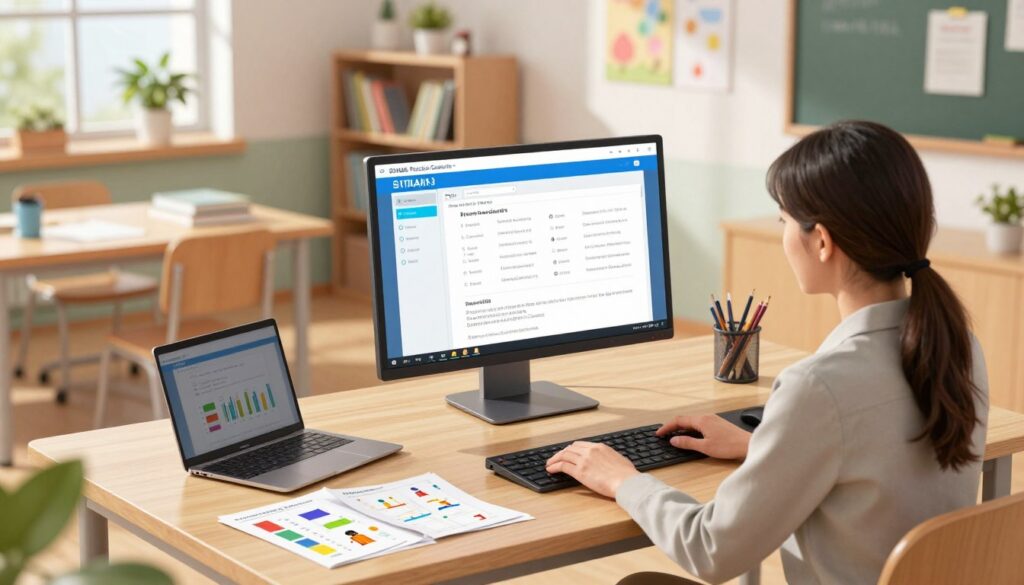
Automating content creation helps schools produce high-quality test questions that map to standards. This reduces manual drafting and keeps alignment consistent across grades.
Teachers can generate targeted practice tests for writing and math in minutes. The result: more focused test prep and faster feedback for students.
Benefits of automation
- Frees time so educators coach and analyze results.
- Creates varied question types to boost engagement.
- Scales assessment content across multiple grades and classrooms.
“Automating the assessment workflow lets teachers support learning instead of spending hours creating single test questions.”
| Need | Automated Solution | Impact |
|---|---|---|
| Aligned items | Standards-based item generation | Consistent coverage across grades |
| Time constraints | Instant practice tests | More instructional minutes |
| Student engagement | Varied question types | Improved skills and performance |
Key Features for Creating Tailored Assessments
A focused assessment toolkit turns standards into clear, usable tests for classrooms.
Customizable Rubrics
Teachers can design rubrics that match writing prompts and short-answer items. Rubrics align criteria to score bands so feedback is fast and actionable.
This helps students know what to improve, and it makes grading consistent across grades and subjects.
Alignment with TEKS Standards
Every assessment maps to the Texas Essential Knowledge and Skills. That ensures content reflects the essential knowledge skills for each grade.
Items target the exact question types students will face on a staar test and on high school exams.
Seamless LMS Integration
Integration with a school’s LMS distributes practice tests and collects results without extra steps. Teachers save time; the system centralizes data for quick review.
Staff can track student progress and tailor content to address gaps in skills and performance.
| Feature | Benefit | Impact on Students |
|---|---|---|
| Custom Rubrics | Clear scoring, fast feedback | Improved writing and exam readiness |
| TEKS Alignment | Standards-mapped items | Consistent coverage across grades |
| LMS Integration | Automated distribution | Real-time progress tracking |
“Tailored assessments reduce prep time and raise the quality of feedback for every student.”
Enhancing Student Readiness Through Targeted Practice
When students work on skills tied to their grade standards, their understanding and test results both improve.

Targeted practice builds confidence and sharpens knowledge skills across grades. Short, focused sessions help students tackle specific question types and strengthen writing and critical thinking.
Consistent practice tests let teachers spot gaps quickly. The platform supports high school and earlier grades with assessments that mirror exam rigor.
Regular engagement with varied content deepens subject mastery. Educators can monitor progress and tailor instruction to each student.
“Focused preparation turns weak areas into measurable growth.”
| Focus | Benefit | How the Platform Helps |
|---|---|---|
| Standards-linked items | Clear learning targets | Auto-mapped questions by grade |
| Varied content types | Stronger skills and writing | Multiple item formats and rubrics |
| Progress tracking | Targeted interventions | Individual reports and analytics |
- Teachers save time and focus on instruction.
- Students gain steady improvement in tests and exams.
- Schools see measurable performance gains over time.
Integrating Digital Tools into Your Classroom Strategy
A clear digital strategy turns scattered tests into a coherent system that supports each student’s growth. Schools that adopt a focused platform convert isolated checks into steady signals for instruction.
Teachers can assign digital practice tests that mirror the testing interface, so students build comfort with online timing, navigation, and question formats. This familiarity reduces exam day anxiety and improves performance.
Real-time dashboards let staff monitor student progress and identify gaps by grade and standard. Quick data enables targeted feedback and faster interventions when a student struggles with specific questions.
- Make tests part of the learning loop — assign, review, and reteach.
- Use short, frequent practice tests to track progress without heavy time costs.
- Align digital items to standards so each grade sees relevant content.
“Integrated tools turn assessment into actionable insight — not extra work.”
When a platform reduces time on admin and boosts feedback, students get more guided instruction and better preparation for the staar test and future digital exams.
Conclusion
Conclusion
FlowScholar offers a focused platform that helps each school streamline assessment work and free time for instruction. It centralizes item design and keeps alignment clear so teams can act on results faster.
By automating the creation of practice tests, teachers reclaim hours for targeted teaching and writing feedback. The system supports reliable tests across grades and helps schools raise performance on the staar test with consistent materials.
Visit FlowScholar.com to start building high-quality practice test items and see how our tools support teachers and classrooms. For standards guidance, review these standards rubrics.
FAQ
What is FlowScholar.com for STAAR prep and how does it help teachers?
FlowScholar.com is a platform designed to speed up creation of aligned test materials for state assessments. It helps educators design targeted assessments, build item banks, and develop scoring rubrics so teachers spend less time on admin and more on instruction. The system supports high school and middle school standards while aligning content to Texas Essential Knowledge and Skills (TEKS).
Which core subjects and grade levels are supported?
The platform covers core subjects commonly tested in Texas, including math, reading, writing, science, and social studies across multiple grades. It offers subject-specific question types and standards mapping to help teachers create practice tests that reflect the knowledge and skills expected on state exams.
How does FlowScholar handle different testing formats and requirements?
FlowScholar supports multiple item formats—selected response, griddable, short answer, and extended response—and mirrors the layout and timing commonly used in state assessments. Educators can configure accommodations, time limits, and scoring rules to match classroom or testing conditions.
What common challenges does the tool address for educators preparing students?
The platform tackles time constraints, inconsistent item quality, and alignment gaps. It streamlines content creation, ensures items meet TEKS standards, and helps teachers generate balanced assessments that reveal learning gaps and guide targeted instruction.
How does the platform automate content creation to save time?
Built-in templates, item banks, and adaptive content engines let teachers produce assessment items quickly. Automated alignment checks and batching features reduce manual review, and export tools create printable or LMS-ready versions for seamless distribution.
Can teachers customize rubrics and scoring guides?
Yes. The system allows creation and editing of customizable rubrics tied to specific standards or performance levels. Teachers can set point distributions, add exemplar responses, and apply rubrics to multiple assessments for consistent scoring and clearer feedback.
How closely are items aligned with TEKS and other state standards?
Items are tagged to TEKS objectives and reviewed for fidelity to state expectations. Alignment metadata makes it simple to build standards-based assessments, track coverage across curricula, and produce reports that show student mastery relative to required skills.
Does FlowScholar integrate with learning management systems (LMS)?
The platform offers seamless LMS integration, enabling grade sync, single sign-on, and assignment distribution. Integration reduces duplicate data entry and ensures assessment results populate existing gradebooks and analytics dashboards.
How can the platform improve student readiness through targeted practice?
By using diagnostic reports and item-level analysis, teachers can identify weak skills and assign focused practice. Adaptive playlists and differentiated assessments personalize review, while progress reports track gains and inform intervention strategies.
What digital tools and resources are available for classroom integration?
FlowScholar provides interactive item types, multimedia support, formative assessment tools, and printable packets. It also includes analytics, progress monitoring, and teacher-facing dashboards to inform instruction and facilitate blended learning.
Is there support for test prep content that balances rigor and accessibility?
Yes. The platform emphasizes high-quality items that match cognitive demand while offering scaffolds and accommodations to make content accessible. Teachers can modify items or add supports to ensure equitable readiness for all students.
How do educators measure impact and student performance over time?
The system generates longitudinal reports, item analysis, and cohort comparisons to reveal trends in performance. These insights help educators refine instruction, prioritize standards, and demonstrate growth to stakeholders.