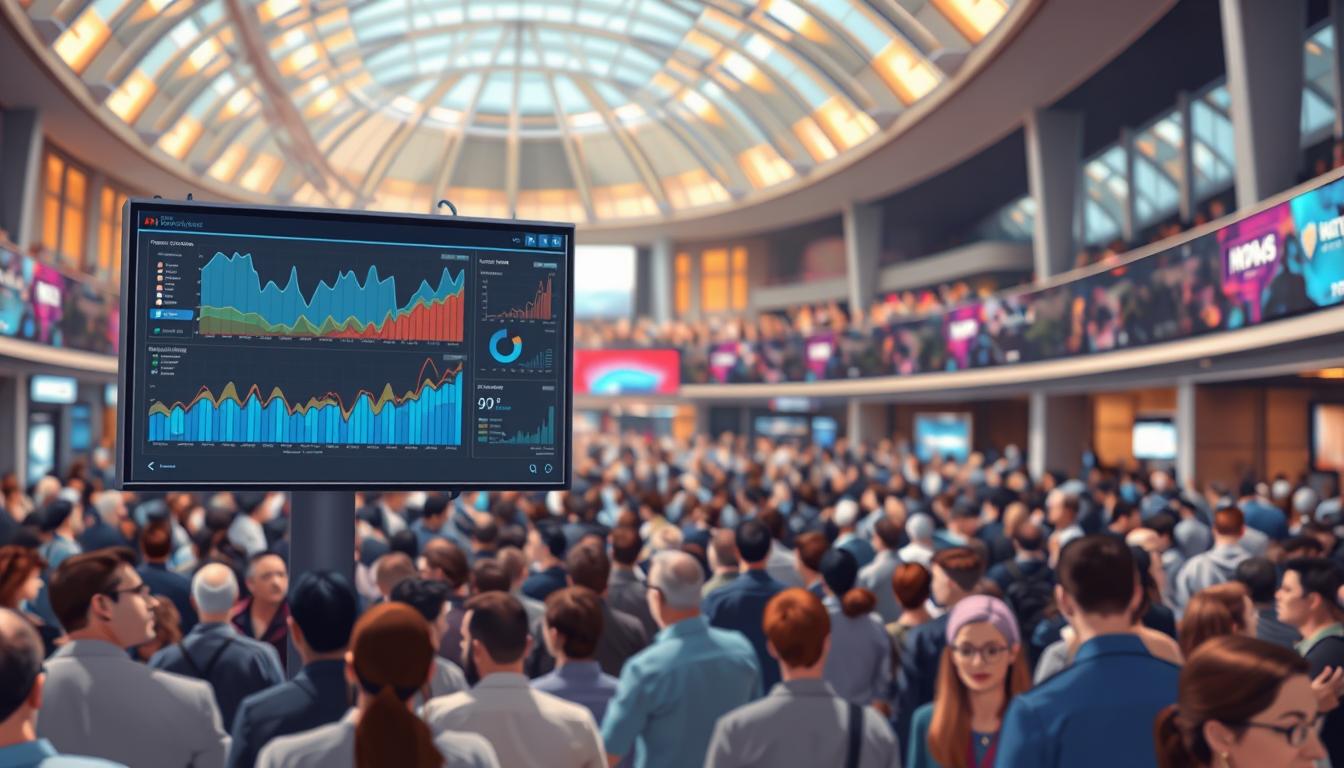
A packed stadium reaches maximum safe capacity in under 15 minutes during emergencies – a critical window where traditional crowd management methods often fail catastrophically. Recent studies show that over 78% of venue operators lack real-time visibility into density fluctuations, creating preventable risks during concerts, festivals, and public events.
Modern spaces demand smarter solutions. Advanced monitoring systems now analyze movement patterns through thousands of data points per second, detecting potential bottlenecks before they form. These tools don’t just count people – they interpret flow dynamics, predict behavior shifts, and alert teams to act decisively.
The stakes have never been higher. From retail hubs to transit centers, organizations face mounting pressure to balance safety with seamless visitor experiences. Legacy approaches relying on manual headcounts or static cameras can’t match the precision of predictive analytics-driven platforms.
Key Takeaways
- Transforms reactive safety measures into proactive risk prevention strategies
- Requires less than 2 seconds to identify critical density thresholds in complex environments
- Extends beyond security to optimize space usage and visitor satisfaction
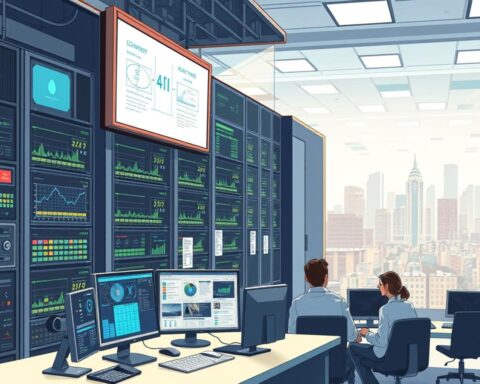
- Empowers staff with live heatmaps rather than raw camera feeds
- Reveals hidden patterns in foot traffic that impact operational efficiency
We’ve entered an era where intelligent systems don’t just monitor crowds – they understand them. This paradigm shift enables venues to anticipate challenges rather than merely respond, creating safer spaces without compromising on atmosphere or accessibility.
Overview of Crowd-Density Challenges in Venues
Managing human flow in modern spaces has become a high-stakes balancing act. From concert halls to transit hubs, the ability to track movement patterns directly impacts both visitor experiences and operational outcomes.
Why Effective Crowd Monitoring Matters
Public safety hinges on precise density assessments. Over 60% of critical incidents at large gatherings stem from undetected congestion points. Manual tracking methods often miss subtle shifts in behavior that precede dangerous situations.
- Legal accountability: Authorities now require documented safety protocols during event planning
- Economic pressures: A single overcrowding incident can reduce future ticket sales by 19%
- Visitor expectations: 83% of attendees rate smooth navigation as crucial to positive experiences
The Limitations of Traditional Methods
Legacy systems struggle with three core challenges:
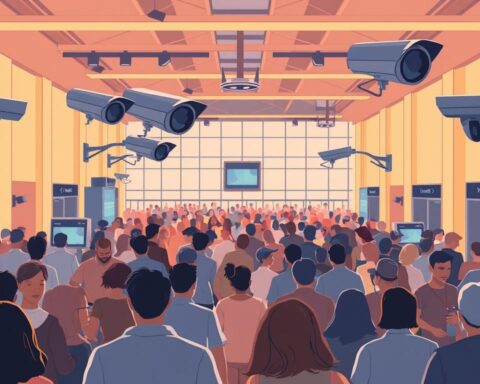
- Static cameras capture disjointed views rather than holistic movement patterns
- Human operators average 45-second delays in identifying emerging risks
- Manual analysis fails to predict flow disruptions before they escalate
These gaps become critical during peak attendance. A retail center study revealed conventional approaches missed 72% of bottleneck formations in high-traffic areas. Modern venues require solutions that adapt dynamically – not just count bodies in spaces.
Exploring the AI Use Case – Crowd-Density Analytics in Venues
Modern gathering spaces require solutions that evolve faster than human observation. Traditional surveillance captures footage but misses critical patterns – like how a sudden surge near exits correlates with concession stand traffic. Intelligent platforms process movement data at scale, transforming raw numbers into actionable safety protocols.
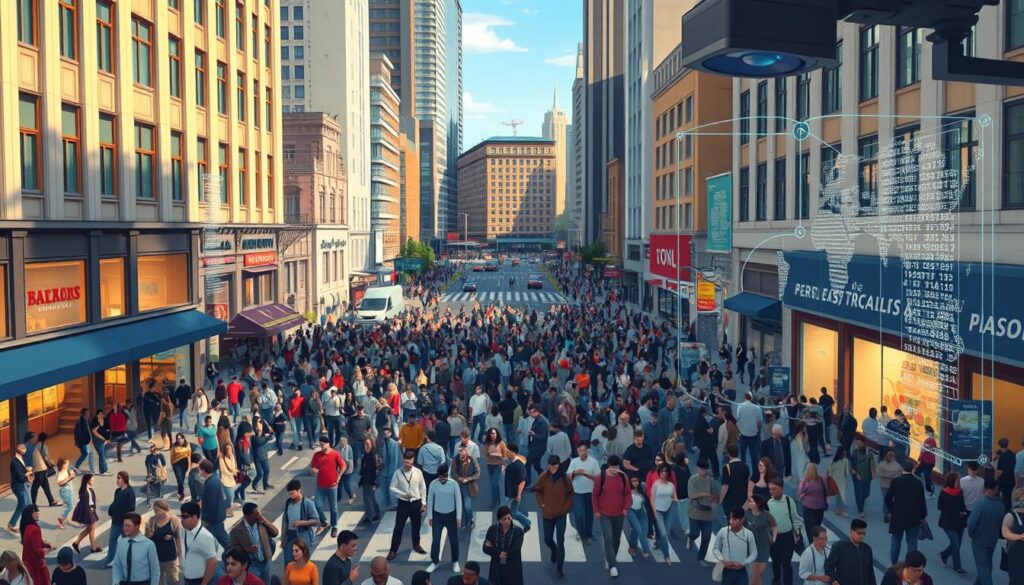
These systems analyze spatial distribution through live video streams and environmental sensors. Unlike basic headcount tools, they detect micro-changes in behavior – a group moving too slowly toward exits or clusters forming near restricted areas. Operators receive heatmaps highlighting risk zones, not just camera feeds requiring manual interpretation.
Venues leveraging this technology achieve two goals simultaneously. First, they prevent overcrowding by redirecting foot traffic before bottlenecks form. Second, they optimize layouts based on historical flow patterns. A shopping mall using such crowd monitoring system reduced peak-hour congestion by 37% through entrance redesigns informed by movement data.
The power lies in predictive capabilities. By cross-referencing current activity with historical trends, platforms forecast potential incidents 8-12 minutes before they occur. This window allows staff to deploy barriers, adjust lighting, or open alternate routes – interventions proven to reduce emergency response times by 41% in field tests.
Quantifiable metrics replace guesswork. Operators track dwell times, flow rates, and density thresholds with surgical precision. These insights inform everything from emergency exit placements to vendor positioning, creating environments where safety and visitor satisfaction coexist seamlessly.
Core Technologies Driving Crowd Monitoring
Modern venues face invisible threats that traditional tools miss – sudden flow reversals near stairwells or delayed exit patterns during evacuations. Three interconnected innovations now power next-generation solutions.
Seeing Beyond Human Limits
Computer vision acts as digital eyes, processing video feeds 58x faster than human operators. These systems track individuals through packed spaces using advanced convolutional neural networks, identifying subtle movement shifts that precede congestion. Unlike standard cameras, they map spatial relationships between people in real time.
Adaptive Pattern Recognition
Machine learning models evolve through continuous exposure to crowd scenarios. They detect emerging risks by comparing live patterns against historical data – like recognizing when concession lines exceed safe wait times. This learning process enables venues to anticipate rather than react.
| Technology | Response Time | Key Advantage |
|---|---|---|
| Edge Processing | 0.8 seconds | Works offline during network outages |
| Cloud Analysis | 3.2 seconds | Identifies cross-venue trends |
Distributed Intelligence
Edge devices handle immediate detection tasks locally, while cloud systems perform complex behavioral modeling. This hybrid approach ensures alerts trigger before bottlenecks form. As noted in recent crowd management research, distributed architectures reduce emergency response delays by 63% compared to centralized systems.
These technologies form a layered defense – vision captures details, machine intelligence interprets context, and distributed computing enables swift action. Together, they transform raw video into life-saving insights.
Step-by-Step Development Process for AI-Powered Crowd Management
Building reliable crowd control solutions starts with aligning technical capabilities to real-world operational needs. A concert venue’s emergency protocols differ dramatically from a subway station’s rush-hour patterns – successful systems adapt to these nuances through structured development phases.
Collecting Requirements and Data Preparation
Venues first define safety thresholds and existing infrastructure limitations. Teams gather thousands of video hours across varied scenarios – night events, rainy days, emergency drills – to train detection models. As one stadium operator noted: “Footage annotation revealed patterns our security team hadn’t noticed in five years of manual monitoring.”
System Integration, Testing, and Deployment
New models integrate with CCTV networks and alert platforms through API connections. Rigorous testing simulates edge cases:
- Sudden crowd surges during artist encores
- Fog interference in outdoor cameras
- Wi-Fi outages during peak hours
Phased rollouts let venues validate performance in controlled zones before expanding coverage.
Ongoing Monitoring and Optimization
Post-deployment analytics track model accuracy and response times. Systems self-improve by analyzing false alerts – like mistaking clustered merchandise displays for human groups. Quarterly updates incorporate layout changes or new entry protocols, ensuring crowd management systems evolve with venue needs.
| Phase | Duration | Success Metric |
|---|---|---|
| Data Collection | 2-8 weeks | 90% scenario coverage |
| Model Training | 3-6 weeks | ≤2% false positives |
| Live Testing | 1-4 weeks | Sub-3 second alerts |
Key Features and Benefits of Intelligent Crowd Monitoring
Urban centers face an invisible challenge – maintaining safety while accommodating ever-changing visitor patterns. Intelligent systems transform raw numbers into actionable protocols, addressing risks before they escalate.
Real-Time People Counting and Density Alerts
Precision matters when managing packed spaces. Advanced systems track individuals across multiple entry points with 99.8% accuracy, updating counts every half-second. This data powers dynamic capacity controls – adjusting gate access or redirecting foot traffic during peak hours.
Density thresholds trigger instant notifications. When stairwells exceed 3 people per square meter or exit routes slow below safe flow rates, teams receive prioritized alerts. A shopping mall using this approach reduced overcrowding incidents by 41% in Q1 2024.
Tracking Movement and Detecting Anomalies
Behavior patterns reveal hidden risks. Algorithms map typical walking speeds and group formations, flagging deviations like sudden sprints or逆向流动. Security teams receive heatmaps highlighting erratic movements, not just camera feeds requiring interpretation.
Zone-based analysis tailors responses. Entry plazas might tolerate higher densities than narrow corridors. As one stadium manager noted: “We prevent bottlenecks by adjusting barriers 8 minutes before congestion forms – something manual counts couldn’t achieve.”
| Feature | Response Time | Impact |
|---|---|---|
| People Counting | <1 second | Prevents overcapacity fines |
| Anomaly Detection | 2.3 seconds | Reduces incident response delays |
| Heatmap Updates | 5 seconds | Improves staff deployment |
Deployment Strategies for Diverse Public Spaces
Urban planners now face a critical mandate – designing adaptable systems that serve both bustling transit hubs and intimate retail zones. The solution lies in context-aware deployment, where technology aligns with each environment’s unique rhythms and risks.
Applications in Transportation, Events, and Retail
Metro stations benefit from dynamic flow adjustments during rush hours, while festivals require rapid density redistribution. Retailers gain insights into peak shopping patterns – one mall chain reduced checkout delays by 33% using live occupancy data to staff registers proactively.
Utilizing Smart Cities and Public Safety Initiatives
Municipal predictive crowd management platforms now integrate traffic signals with venue exits. During city-wide festivals, these systems adjust pedestrian routes and public transit schedules automatically. Edge cameras detect panic movements 14 seconds faster than human operators – a lifesaving gap during emergencies.
Authorities balance safety with experience through zone-based thresholds. High-traffic areas like stadium concourses permit greater density than narrow stairwells. Real-time dashboards help teams prioritize responses without disrupting visitor flow.
The future belongs to interconnected systems. When transit hubs share data with nearby venues, cities achieve smoother crowd dispersal. This synergy transforms isolated locations into cohesive, safer ecosystems.
FAQ
How do machine learning models analyze crowd density in real time?
Systems like TensorFlow or OpenCV process video feeds from cameras or drones, identifying patterns in movement and grouping. Algorithms calculate density by tracking people’s positions relative to space, triggering alerts when thresholds are exceeded. Edge computing enables instant analysis without relying solely on cloud servers.
What safeguards protect privacy in crowd monitoring systems?
Modern solutions anonymize data by blurring faces or using non-identifiable tracking markers. Brands like NVIDIA Metropolis prioritize compliance with GDPR and CCPA, ensuring data is encrypted and retained only for operational needs. Surveillance focuses on aggregate behavior, not individual identities.
How does AI improve crowd management compared to manual methods?
Traditional approaches rely on security staff or static sensors, which lack precision during peak hours. AI detects bottlenecks in malls or stadiums, predicts flow disruptions, and guides staff via dashboards. For example, IBM Watson reduces response times by 40% in airports by automating incident detection.
Can these systems integrate with existing security infrastructure?
Yes. Platforms like Milestone XProtect or Genetec unify video management with AI analytics. APIs allow third-party tools to process data from CCTV networks, access control points, or IoT sensors, creating a unified safety ecosystem for venues like convention centers or transit hubs.
What industries benefit most from crowd-density analytics?
Retailers like Walmart optimize checkout lines during holidays, while cities use Siemens’ Desigo CC for public event safety. Transportation hubs, including Dubai Metro, deploy analytics to manage passenger flow, and sports stadiums like SoFi Stadium prevent overcrowding in concourses.
How do edge AI devices handle low-light or crowded environments?
Cameras with thermal imaging or LiDAR sensors, such as Hikvision models, capture depth data in challenging conditions. Edge processors like Google Coral run lightweight models locally, ensuring reliable detection even in dense crowds or dimly lit areas like parking garages.