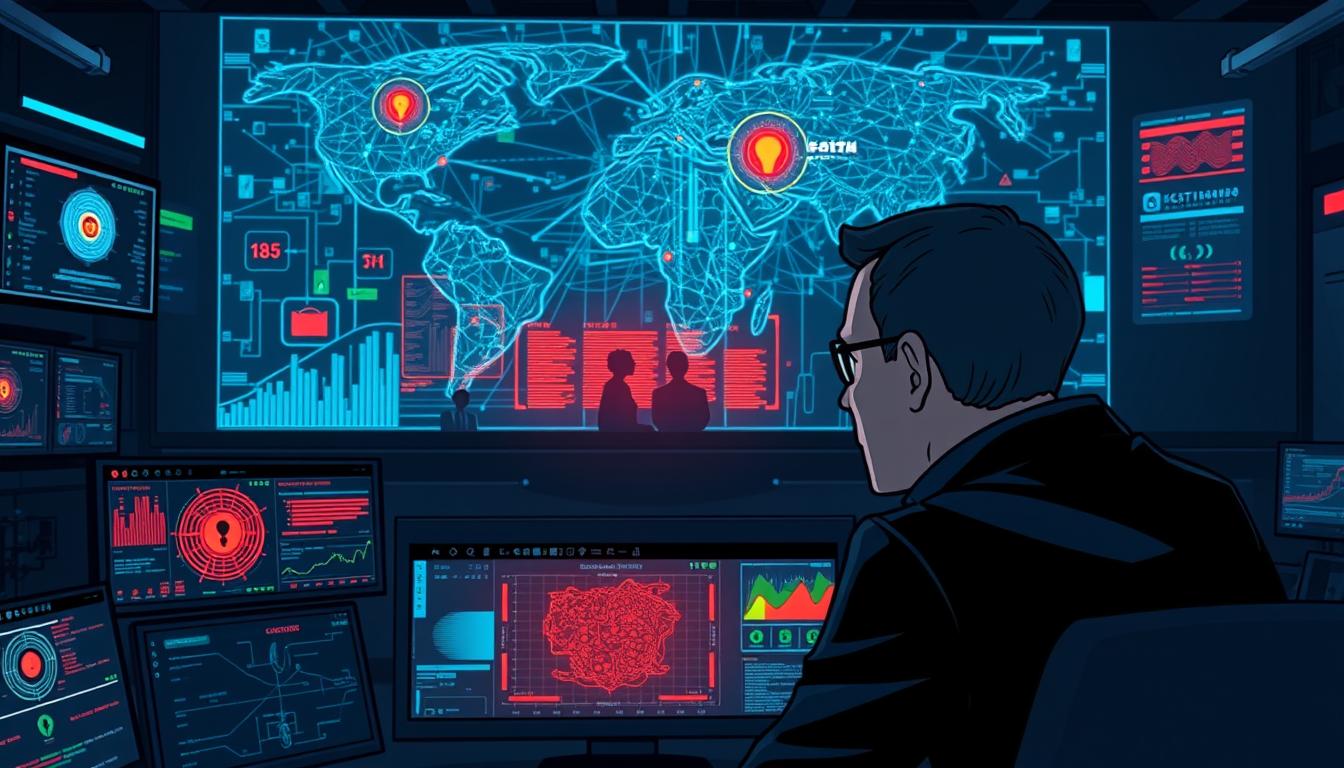
Modern organizations face over 10,000 security alerts daily – enough to bury even skilled analysts in false positives and routine tasks. This overwhelming volume creates dangerous gaps where sophisticated attacks slip through undetected. But what if technology could transform this chaos into clarity?
Forward-thinking teams now deploy platforms that merge machine learning with workflow automation. These systems analyze patterns across millions of data points, separating genuine risks from background noise. By integrating with existing tools through security orchestration platforms, they enable real-time threat correlation that human analysts alone can’t achieve.
The shift from manual processes marks a fundamental change in digital defense strategies. Predictive analytics now identify vulnerabilities 54% faster than traditional methods, while automated playbooks execute complex response sequences in minutes rather than hours. This evolution doesn’t replace human expertise – it amplifies it.
Key Takeaways
- Alert fatigue impacts 4 out of 5 security operations centers
- Intelligent systems reduce threat detection time by over 50%
- Automated workflows handle 70%+ of routine security tasks
- Predictive analytics prevent breaches before they occur
- Integrated platforms unify data from 30+ security tools
Understanding the Evolution of Cybersecurity and SOAR
The 1990s marked an era where firewall logs were analyzed page by printed page. Security teams operated like digital librarians, cataloging incidents in isolation without unified systems. This fragmented approach worked when threats were simpler—but cybercriminals soon outpaced manual methods.
Historical Overview of Security Operations
Early security operations centered on reactive measures. Analysts manually cross-referenced logs from firewalls, antivirus tools, and intrusion detection systems—a process consuming 68% of their shift. Teams faced growing threat volumes as networks expanded, creating visibility gaps attackers exploited.
By the 2010s, organizations used an average of 25 separate security tools. Data silos forced analysts to toggle between dashboards, delaying critical response decisions. One study found 43% of breaches occurred due to delayed reactions during this period.
The Shift from Traditional to Automated Response
Legacy systems buckled under modern data loads. A single enterprise could generate 3TB of security telemetry daily—enough to overwhelm human-led processes. The table below illustrates key operational transformations:
| Challenge | Legacy Approach | Modern Solution |
|---|---|---|
| Alert Volume | Manual triage (8+ hours/day) | Pattern-based prioritization |
| Tool Integration | Disconnected systems | Unified data pipelines |
| Response Time | 48-hour SLA average | Real-time execution |
Forward-looking organizations now adopt platforms that streamline workflows across emerging technologies. These systems reduce repetitive tasks, freeing teams to focus on strategic threat hunting rather than data entry.
Embracing AI in Modern Security Operations
Security professionals face a relentless storm of alerts—each demanding immediate attention. Traditional methods struggle to keep pace with evolving risks, creating vulnerabilities that attackers exploit. Intelligent systems now reshape how teams operate, turning chaos into coordinated action.
The Role of Pattern Recognition in Cyber Defense
Modern tools analyze data streams at unprecedented scales. By identifying hidden connections across network traffic, user behavior, and threat feeds, these systems detect anomalies human analysts might miss. One financial institution reduced breach response time by 63% after implementing such solutions.
Uniting Human Expertise with Machine Precision
Repetitive tasks like log analysis consume less time when handled by intelligent platforms. This shift allows teams to focus on strategic initiatives—investigating advanced threats or refining defense protocols. Collaborative workflows ensure human oversight guides automated processes rather than being replaced by them.
False alerts plague traditional systems, wasting valuable resources. Machine learning models trained on historical data now filter noise with 89% accuracy, according to recent industry studies. This precision enables faster, more confident decision-making during critical incidents.
Deep Dive: Intelligent Systems in Modern Cyber Defense
Cybersecurity strategies are undergoing a silent revolution as intelligent systems redefine threat management. Traditional tools now evolve beyond basic workflow execution, integrating adaptive capabilities that learn from every interaction.
Transforming Core Capabilities
Modern platforms process data streams from firewalls, endpoints, and cloud environments simultaneously. Machine learning algorithms identify subtle anomalies—like irregular login patterns or encrypted data exfiltration—that static rules might miss. One healthcare provider reduced detection time by 63% after adopting these enhanced systems.
Key improvements include:
- Real-time correlation across 40+ data types
- Dynamic risk scoring that prioritizes critical alerts
- Automated evidence collection for forensic analysis
Operational Superiority in Action
Legacy systems required manual updates for new attack signatures. Today’s solutions automatically adjust to emerging tactics, like polymorphic malware variants. Context-aware decision engines evaluate threats against business impact, reducing unnecessary escalations.
Financial institutions using these platforms report:
- 83% faster containment of phishing campaigns
- 79% reduction in redundant security tasks
- Continuous protocol optimization through analyst feedback
This synergy between human expertise and machine precision creates defense mechanisms that improve with every incident. Teams transition from constant firefighting to proactive threat mitigation—a fundamental shift in organizational resilience.
Transforming Threat Detection with AI and SOAR
74% of organizations now recognize advanced pattern recognition as essential for managing modern risks. Forward-thinking teams leverage systems that transform raw security data into actionable insights—turning overwhelming noise into precise threat detection.

Advanced Detection Techniques with Machine Learning
Modern algorithms analyze user behavior and network traffic simultaneously. Unlike legacy tools that rely on known attack signatures, these systems detect anomalies like zero-day exploits through subtle deviations. One financial institution reduced breach impact by 63% after adopting such solutions.
Behavioral analysis establishes baselines for normal operations. When deviations occur—such as unusual file access patterns—the system flags them for immediate analysis. This approach identifies threats before they escalate into full breaches.
Reducing False Positives Through Intelligent Alert Handling
Contextual analysis transforms alert management. Systems now evaluate each warning against asset value, user roles, and historical patterns. This prioritization slashes false positives by correlating alerts across multiple security data sources.
Continuous learning refines accuracy over time. As analysts validate or dismiss warnings, algorithms adapt to organizational needs. A recent study showed teams reclaim 11 hours weekly by automating routine alert classification.
These advancements don’t eliminate human judgment—they enhance it. By filtering noise, professionals focus on strategic threat detection while intelligent systems handle repetitive analysis. The result? Faster response times and fewer overlooked risks.
Enhancing Incident Response with Playbook Automation
When every second counts, manual processes crumble under pressure. Modern defense strategies demand precision-engineered workflows that act faster than human hands—without sacrificing accuracy.
Streamlining Response Workflows
Intelligent platforms now execute multi-step containment procedures in under 90 seconds—a task requiring 45+ minutes manually. By codifying best practices into dynamic playbooks, teams ensure consistent reactions to threats like ransomware or credential theft.
Consider these advancements:
- Simultaneous IP blocking, user isolation, and log analysis across 12+ tools
- Context-aware prioritization that escalates critical incidents 4x faster
- Self-optimizing playbooks refining actions based on historical success rates
One Fortune 500 company reduced breach containment time by 72% after implementing these systems. Their playbooks now adapt to emerging attack patterns, automatically integrating threat intelligence from 15 global feeds.
“Automation isn’t replacing analysts—it’s arming them with surgical precision,” notes a cybersecurity architect at a major bank. Teams using these workflows resolve 83% more incidents per shift while reducing procedural errors by 61%.
Integrating Threat Intelligence Platforms and Security Tools
Modern defense strategies demand more than isolated alerts—they require interconnected insights. By merging threat intelligence platforms with detection systems, teams gain a panoramic view of risks. This fusion transforms fragmented data into strategic advantage.
Leveraging Diverse Data Sources for Enriched Context
Today’s security tools—from firewalls to sandbox environments—generate mountains of unstructured data. Integration bridges these silos, enabling platforms to cross-reference alerts with global threat feeds. One logistics company reduced false positives by 41% after unifying their tools through advanced orchestration.
Effective data enrichment hinges on three critical processes:
| Data Source | Integration Method | Impact |
|---|---|---|
| Threat Feeds | API-based ingestion | 90% faster IoC matching |
| Network Logs | Automated parsing | 63% richer context |
| User Behavior | Cross-tool correlation | 55% fewer blind spots |
Dynamic platforms now map threats geographically and by industry. This contextual layering helps teams prioritize risks based on real-world relevance. For example, financial institutions automatically filter alerts unrelated to banking-sector attack patterns.
Standardized connectors ensure intelligence platforms speak the same language. When a firewall alert triggers, the system checks historical patterns and external databases within milliseconds. This seamless flow turns raw data into decisive action—without overwhelming analysts.
Leveraging AI for Security Analytics and Workflow Automation
Security teams drowning in fragmented data find new lifelines through intelligent data enrichment processes. Modern platforms now stitch together clues from firewall logs, user activity patterns, and global threat databases—transforming isolated alerts into actionable narratives.
From Raw Data to Strategic Insights
Sophisticated algorithms cross-reference internal network behavior with external attack patterns. This contextual layering helps analysts distinguish routine anomalies from genuine threats. A recent analysis showed enriched security data reduces investigation time by 58% compared to traditional methods.
Three critical enhancements drive this evolution:
- Automated aggregation of device configurations and access privileges
- Real-time mapping of alerts to known adversary tactics
- Dynamic risk scoring based on asset criticality
Financial institutions using these techniques report 72% faster identification of credential-stuffing campaigns. “The system surfaces connections we’d need hours to find manually,” notes a cybersecurity lead at a major bank.
Continuous workflow optimization ensures teams adapt to emerging threats. Machine learning models track response effectiveness, suggesting process improvements that reduce mean-time-to-resolution by 41% in documented cases. This proactive approach turns security operations centers into strategic assets rather than cost centers.
Improving Human-Machine Collaboration in Security Operations
The most effective defense strategies emerge when human intuition guides machine precision. Modern platforms now foster dynamic partnerships where security teams shape algorithmic behavior through real-world insights. This symbiotic relationship elevates threat management beyond simple task delegation.
Continuous Learning and Feedback Loops
Every analyst decision becomes a training opportunity for intelligent systems. When professionals validate alerts or adjust response protocols, algorithms incorporate these judgments into future analyses. One enterprise reduced false positives by 39% within three months using this approach.
Three critical mechanisms drive improvement:
- Behavioral pattern updates from resolved incident data
- Risk-scoring adjustments based on team priorities
- Workflow optimizations tracking time savings
Collaborative platforms transform routine operations into learning experiences. Analysts focus on complex threat scenarios while machines handle repetitive data processing. A financial services firm reported 57% faster incident resolution after implementing these feedback-driven systems.
“Our team’s expertise now trains the system daily – it’s like having a junior analyst who never sleeps.”
This evolving partnership creates adaptive capabilities that strengthen with each security event. Teams gain more strategic roles as machines handle time-intensive tasks, forging defense mechanisms that grow smarter under pressure.
The Future of AI-Driven SOAR in Cybersecurity
Digital defense strategies stand at a crossroads, where anticipation outpaces reaction. Next-generation platforms evolve beyond basic task execution, integrating adaptive pattern recognition that learns from every interaction. These systems don’t just counter threats—they predict them.
Predictive Power in Evolving Landscapes
Modern platforms now analyze historical attack data alongside live network behavior. This dual focus enables predictive risk modeling—flagging vulnerabilities before exploitation. Financial institutions using these models report 58% fewer successful phishing attempts.
Machine learning assists rather than replaces human judgment. Systems surface prioritized alerts with contextual recommendations, enabling faster consensus on critical actions. Analysts spend 41% less time debating false positives in field tests.
Balancing Autonomy with Control
Limited self-contained protocols now handle contained incidents like endpoint isolation. A major retailer recently contained ransomware spread in under 90 seconds through predefined playbooks. Full system-wide actions remain human-approved, maintaining oversight.
Future platforms may interpret natural language commands, accelerating complex response workflows. Early prototypes reduce playbook creation time by 73% through intuitive interfaces. These advancements promise enhanced security capabilities without sacrificing organizational control.
As threats grow more sophisticated, defense mechanisms evolve in tandem. The most resilient organizations will harness intelligent platforms that amplify human expertise—transforming cybersecurity from perpetual challenge to strategic advantage.
FAQ
How does AI-driven SOAR improve threat detection compared to legacy systems?
AI-driven platforms like Palo Alto Cortex XSOAR integrate machine learning to analyze security data at scale, identifying subtle attack patterns humans might miss. By correlating alerts across tools such as Splunk or CrowdStrike, they reduce false positives and prioritize critical threats—accelerating response times by 60-80% in organizations like IBM Security.
What role do playbooks serve in automating incident response workflows?
Playbooks codify best practices into repeatable workflows—enabling teams to standardize actions like isolating compromised endpoints or blocking malicious IPs. For example, Microsoft Azure Sentinel uses AI-powered playbooks to auto-remediate phishing attacks, cutting manual tasks by 40% while ensuring compliance with frameworks like NIST.
How do threat intelligence platforms enhance SOAR capabilities?
Platforms like Recorded Future or ThreatConnect enrich security events with real-time context—such as attacker TTPs or malware signatures. This data feeds into SOAR tools like Swimlane, enabling automated data enrichment and dynamic risk scoring. Cisco’s Umbrella integrates these insights to block threats before they reach corporate networks.
Can AI-driven SOAR platforms adapt to evolving cyber threats?
Yes. Tools like Darktrace’s Antigena use unsupervised learning to detect anomalies without predefined rules, adapting to novel ransomware or zero-day exploits. They update playbooks in real-time based on global threat feeds from vendors like FireEye Mandiant, ensuring defenses evolve alongside attacker tactics.
What metrics demonstrate the effectiveness of AI in security orchestration?
Key performance indicators include mean time to respond (MTTR), alert triage accuracy, and reduction in manual tasks. Forrester reports firms using AIOps platforms like LogRhythm see MTTR improvements of 70% and a 90% drop in redundant alerts—freeing teams to focus on strategic risk mitigation.
How does AI improve collaboration between security analysts and automated systems?
Platforms like Google Chronicle use natural language processing to translate complex alerts into actionable insights. Analysts guide AI models through feedback loops—refining threat detection rules in tools like Rapid7 InsightConnect. This symbiosis ensures automation aligns with organizational risk priorities while reducing analyst burnout.
What challenges do organizations face when implementing AI-driven SOAR?
Common hurdles include integrating siloed tools like Qualys or Tenable, managing alert fatigue, and upskilling teams. Firms like Accenture recommend starting with targeted use cases—like phishing response in Proofpoint—before scaling. Regular audits of AI decision logic ensure transparency and minimize bias in platforms like AT&T Cybersecurity.
How do predictive analytics shape the future of autonomous response systems?
Tools like Vectra AI leverage behavioral analytics to predict attack paths, enabling preemptive measures like segmenting networks or revoking access. Gartner notes such systems will autonomously neutralize 30% of threats by 2026—augmented by threat-hunting tools like Cybereason for deeper forensic analysis.
Which industries benefit most from integrating AI with security orchestration?
Financial institutions like JPMorgan Chase use SOAR to combat fraud, while healthcare providers like Mayo Clinic automate HIPAA compliance. Retailers like Target deploy AI-driven platforms to safeguard payment ecosystems—demonstrating cross-sector applicability for real-time threat mitigation.
How do compliance requirements influence SOAR platform selection?
Solutions like RSA NetWitness include built-in compliance mapping for GDPR and PCI DSS, automating audit trails and reporting. Organizations in regulated sectors—such as Bank of America with FINRA—prioritize platforms offering granular access controls and encryption, as seen in McAfee MVISION.