“Education is the most powerful weapon which you can use to change the world.” — Nelson Mandela. That conviction opens our view of planning: effective lessons shape futures, and teachers deserve tools that respect their time.
Many U.S. teachers work up to 54 hours a week and juggle administrative duties with creative planning. FlowScholar.com offers a practical guide to modern planning that helps educators save time and focus on learning objectives.
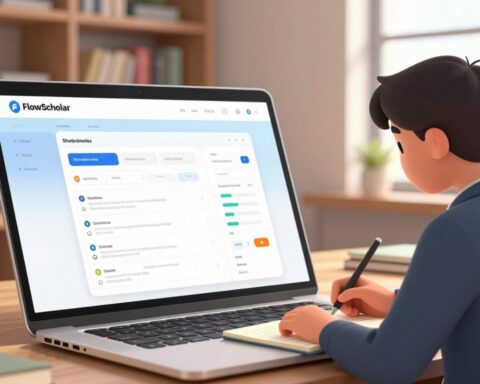
The platform combines an intuitive tool with features and options for video, writing, unit materials, and student activities. Educators can list tasks, align lesson plans with standards, and build plans that support diverse learners. We examine how this approach reduces cognitive load and improves teaching quality.
Key Takeaways
- Save time: Streamline repetitive tasks to reclaim instructional hours.
- Organize lessons and unit materials with clearer plans and objectives.
- Use video and writing tools to boost engagement and varied learning.
- Align plans to standards while keeping support for diverse learners.
- Visit https://www.flowscholar.com to explore the platform and its options.
The Growing Demand for Efficient Lesson Planning
Teachers across the United States report rising workloads that squeeze planning time and creativity. The result: less time for direct teaching and less room to design strong lessons.
The Time Strain on Modern Educators
Many teachers work long weeks—often up to 54 hours—yet less than half that time goes to students. That imbalance forces educators to juggle grading, meetings, and administrative tasks instead of refining lesson plans.
Limited time leads to rushed lessons and uneven learning outcomes. Teachers managing multiple grade levels face added complexity when creating unit plans that meet standards.
The Shift Toward Digital Assistance
Because planning is finite, educators increasingly adopt digital tools and templates to streamline daily lesson planning. Smart templates save minutes on routine tasks and free teachers to focus on students.
AI-driven planning and a solid unit plan generator help align lessons with standards and specific grade level needs. The shift toward digital assistance makes plans more flexible and keeps instruction consistent across subjects.
Understanding the Multi-Subject Classroom Resource Generator
When lessons span reading, math, and science, teachers need a unified way to plan. A multi-subject tool helps educators design and organize learning goals across subjects and grades.

What it does: These platforms let teachers create cohesive unit content, store lesson plans, and reuse templates for consistent curriculum delivery.
- AI-powered lesson plan assistants ensure plans align with standards and learning targets.
- Digital systems simplify planning workflows so every lesson is purposeful.
- Saved templates speed up prep and support diverse students across subjects.
| Platform | Core Feature | Best Use |
|---|---|---|
| The School House Anywhere (TSHA) | Unit mapping | Cross-grade planning |
| Planboard | Daily lesson tracking | Busy schedules |
| Google Classroom | Content sharing | Student collaboration |
| Common Curriculum | Standards alignment | Curriculum design |
Key Benefits of Integrating AI into Your Teaching Workflow
AI tools let teachers offload routine work so they can focus on instruction and student growth.
Reducing Cognitive Load for Teachers
Integrating AI into your teaching workflow significantly reduces cognitive load. It helps educators save time on repetitive planning tasks and small administrative duties.
High-quality lesson plan tools can generate a unit plan tailored to goals and student needs. That means fewer late nights and clearer daily objectives.
- Automated lesson creation frees teachers to observe students and deepen learning.
- Structured plans let educators manage multiple lessons and adapt quickly to changes.
- AI acts as a creative partner—refining plans and suggesting strategies to support diverse learners.
Result: Less time on tasks, more time for teaching and meaningful interactions with students. In short, AI-driven planning helps educators save time while keeping learning focused and effective.
Essential Features to Look for in Planning Software
A strong planning platform helps educators map standards, assessments, and materials in one place.
Alignment with State Standards
Look for software that links each lesson to state standards and specific grade level objectives.
Standards alignment keeps lessons measurable and defensible during reviews and parent meetings.
Customization Options
Customization should let teachers add video, writing prompts, and worksheets to unit plans.
Flexible templates save time while letting educators adapt content for varied student levels.
Exporting and Sharing Capabilities
Export to PDF or DOC so plans travel with you; Wayground AI-style tools let users set unit lengths from five to thirty days and export files easily.
Sharing features support collaboration with colleagues and distribution to parents or administrators.
- Design plans that meet diverse student objectives.
- Use integrated assessments to track progress.
- Choose a platform with clear templates to reduce planning time.
Strategies for Balancing Technology and Hands-On Learning
Successful educators pair movement and real-world tasks with technology that organizes—not replaces—teaching. Use a lesson plan generator that supports offline activities so hands-on learning stays central.
Let AI structure the unit: it can sequence lessons, list materials, and flag standards. This saves planning time while teachers design active, kinesthetic activities.
Design lessons that prioritize interaction. Let students experiment, build, and move; use digital tools to handle logistics, timing, and assessment prompts.

Keep plans flexible. A clear plan allows quick pivots when an activity sparks deep inquiry. Flexibility helps meet standards without losing authentic learning.
- Use tech for tracking and sharing, not for replacing hands-on tasks.
- Embed short digital check-ins to measure progress during active activities.
- Rotate between maker-style projects and focused screen time to sustain engagement.
Result: Students stay engaged in meaningful activities while teachers keep control of teaching. For ideas on building tools that support this balance, explore how to build GPT-powered educational tools that assist planning without overshadowing learning.
How to Streamline Your Curriculum Across Different Grade Levels
Start by mapping the essential skills that connect one grade to the next. This view creates a clear spine for any unit and keeps content focused on growth.
Adapting Content for Mixed-Age Groups
Identify core standards that repeat across grades. Use those as anchors for lessons and assessments. That makes individual lesson plans easier to adapt.
Create one flexible plan that includes tiered activities. Each task should offer simpler and more advanced entry points for students. This saves time and preserves quality.
Digital tools simplify organization. A single plan can hold differentiated activities, materials, and checks for understanding. Shareable plans let colleagues reuse and refine the work.
- Focus on transferable skills, not only discrete content.
- Design short formative checks to measure learning across grade levels.
- Keep a running list of scaffolded activities for quick reuse.
For practical, free support in creating adaptable lesson plans, explore a free AI lesson plan tool that helps educators build cohesive plans aligned to standards.
Maintaining Educator Control and Teaching Integrity
Preserving a teacher’s instructional voice starts with hands-on editing of any suggested lesson plan. Educators should treat AI output as a draft, not a finished plan.
Review every unit and lesson for alignment with standards and local curriculum. Customize videos, writing prompts, and worksheets so they match students’ needs.
The teacher remains the final authority: select materials, set objectives, and approve assessments before use. A reliable platform supports that judgment by making edits simple and transparent.
- Use a clear list of objectives to guide planning and to shape assessments.
- Keep a short checklist to verify topics, tasks, and materials for each plan.
- Treat templates as time-savers—not replacements for pedagogical choices.
When teachers use AI for planning, they preserve integrity by curating content and protecting learner goals. This approach keeps support tools practical, trusted, and firmly under educator control.
Why FlowScholar.com is the Ideal Multi-Subject Classroom Resource Generator
FlowScholar.com centralizes planning so teachers can build coherent units across subjects in minutes. The platform reduces the administrative load and helps educators focus on what matters: student learning.
FlowScholar stands out because it blends the American Emergent Curriculum (AEC) approach with practical tools. That mix lets teachers create lessons that link literacy, math, science, civics, art, and social-emotional learning.
Features and options include editable templates, standards mapping, and ready-made materials. These elements let teachers create a lesson plan or an entire unit quickly while keeping content adaptable to a given topic or grade.
“FlowScholar helps educators save time and raise instructional quality.”
Use the platform to save time on planning and to maintain high curriculum standards. Visit https://www.flowscholar.com to explore templates, materials, and the support your team needs to transform planning into meaningful learning.
Conclusion
When plans reflect purpose, instruction becomes more consistent and responsive.
This guide shows how modern AI tools can reshape how educators approach daily planning and unit organization. By using these tools, teachers can make each lesson plan align with goals and student needs while preserving teaching integrity.
Keep human review: treat AI output as a draft and edit to match your style and standards. Explore vetted options — for an overview of the best AI tools for teachers see recommended solutions. For building AI-supported courses, review how to create an AI-powered course.
Consistent use of these approaches helps teachers manage unit requirements more efficiently, produces better plans, and improves outcomes for all learners.
FAQ
How does FlowScholar.com help teachers prepare classroom materials across multiple subjects?
FlowScholar.com streamlines lesson planning by offering curriculum templates, editable lesson plans, and subject-specific task banks. Teachers can generate standards-aligned units, customize objectives, and export materials for print or digital use — saving time while maintaining instructional quality.
What time savings can educators expect when using FlowScholar?
Many teachers report cutting planning time by half through reusable templates, auto-filled assessments, and integrated worksheets. The platform centralizes tools like video links, writing prompts, and rubrics so educators spend less time searching and more time teaching.
Does FlowScholar align lessons with state or national standards?
Yes. The platform includes alignment options for common state standards and national frameworks. Users can tag objectives to standards, generate assessments tied to those standards, and track coverage across a unit or grade level.
Can teachers customize activities for different grade levels and mixed-age groups?
Absolutely. FlowScholar offers adjustable difficulty settings, differentiation prompts, and scaffolded task sets that adapt content for mixed-age classrooms or multiple grade levels while preserving learning goals.
What customization options are available for lesson design?
Educators can edit learning objectives, modify assessment formats, add multimedia, and tailor worksheets. The platform supports multiple output formats — PDFs, Google Classroom imports, and editable Word documents — for flexible delivery.
How does FlowScholar support assessment and student tracking?
FlowScholar provides formative and summative assessment templates, grade-book exports, and reflection prompts. Teachers can create rubrics, record outcomes, and generate progress reports that align to standards and instructional objectives.
Are there collaboration and sharing features for teams and departments?
Yes. The platform allows teachers to share units, co-edit lesson plans, and export resources for colleagues. Department leads can curate shared libraries of templates, assessments, and instructional guides to ensure consistency.
How does the platform balance technology with hands-on learning?
FlowScholar emphasizes blended strategies: it recommends authentic, hands-on activities alongside digital tools, provides printable manipulatives and lab guides, and offers pacing suggestions to integrate experiential learning.
Is educator control and instructional integrity preserved when using AI features?
FlowScholar positions AI as an assistant, not an author. Teachers retain full control over final content, can edit generated materials, and choose when to apply suggestions. The system is designed to reduce cognitive load while protecting pedagogical integrity.
What export and sharing capabilities exist for parent communications and IEP documentation?
The platform supports customizable letters, progress summaries, and printable IEP-aligned lesson notes. Exports to PDF and shareable links make it easy to communicate learning objectives and assessments with families and support staff.
Can FlowScholar integrate with learning management systems and classroom tools?
FlowScholar offers integrations with Google Classroom, Microsoft Teams, and common LMS platforms for seamless assignment posting, grade syncing, and content embedding, reducing administrative overhead.
What types of content and materials are included in the platform?
The library includes unit plans, lesson templates, worksheets, rubrics, video collections, writing prompts, project outlines, and assessment banks across core subjects — designed to support varied learners and instructional models.
How does FlowScholar address accessibility and diverse learner needs?
The platform includes universal design suggestions, differentiated task options, and accessible formats like large-print PDFs and alt-text recommendations. Teachers can tailor supports for English learners and students with special needs.
Is there training or support available for teachers new to the platform?
FlowScholar provides onboarding guides, video tutorials, and live webinar sessions. Schools can access professional development modules focused on planning strategies, standards alignment, and efficient use of features.
How secure is teacher and student data on FlowScholar?
FlowScholar adheres to industry-standard security practices, including encrypted data storage and role-based access controls. The platform follows privacy guidelines to protect student information and school data.
What pricing or licensing models are available for schools and districts?
The platform offers individual teacher licenses, school-wide plans, and district packages with volume pricing. Custom enterprise options include admin dashboards, content curation, and dedicated support.
How does FlowScholar support long-term curriculum planning across grades?
FlowScholar helps map standards across terms, create vertical articulation documents, and generate scope-and-sequence plans. This makes it easier to ensure skill progression and reduce content gaps between grade levels.
Can educators save and reuse lesson templates and assessment items?
Yes. Users can save custom templates, build item banks of assessments and tasks, and quickly apply them to new units, which accelerates planning and maintains consistency.
Where can teachers find sample units or case studies that show real classroom use?
The platform’s content library features curated sample units and case studies from practicing educators. These examples illustrate lesson flow, assessment strategies, and classroom management tips for different subjects and grades.
Does FlowScholar offer a free trial or demo for schools evaluating the platform?
FlowScholar typically provides a free trial and live demos. Schools can request a pilot to explore features, test integrations, and assess impact on planning time and instructional outcomes.