“Education is the most powerful weapon which you can use to change the world.” — Nelson Mandela. This idea frames the practical work educators face today: making policy and goals matter in daily lessons.
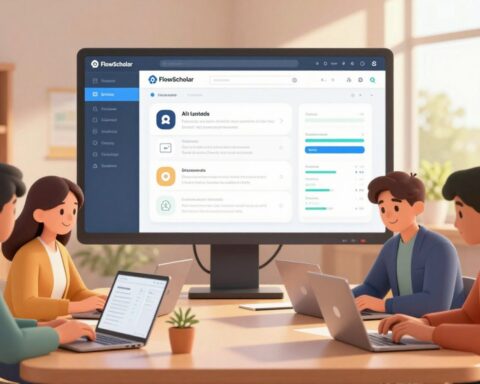
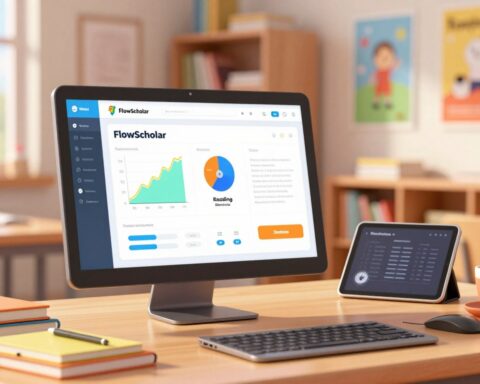
FlowScholar offers a clear path from abstract requirements to real lesson plans. By using AI, the platform gives teachers actionable guidance that aligns instruction and assessment to measurable learning goals. It helps teachers save time and focus on the skills students need.
With 41 states adopting Common Core, many schools share a common framework. FlowScholar translates state standards and standards-based learning into specific examples and projects that match each grade and subject. The result is better student understanding and more consistent progress toward success.
Key Takeaways
- FlowScholar simplifies how teachers convert standards into lesson plans.
- AI-driven resources tailor instruction to each student’s level.
- 41 states use Common Core, creating a shared curriculum framework.
- The platform links assessment, lesson design, and skills practice.
- Visit https://www.flowscholar.com to explore tools that help teachers and students succeed.
Understanding the Role of Standards in Modern Education
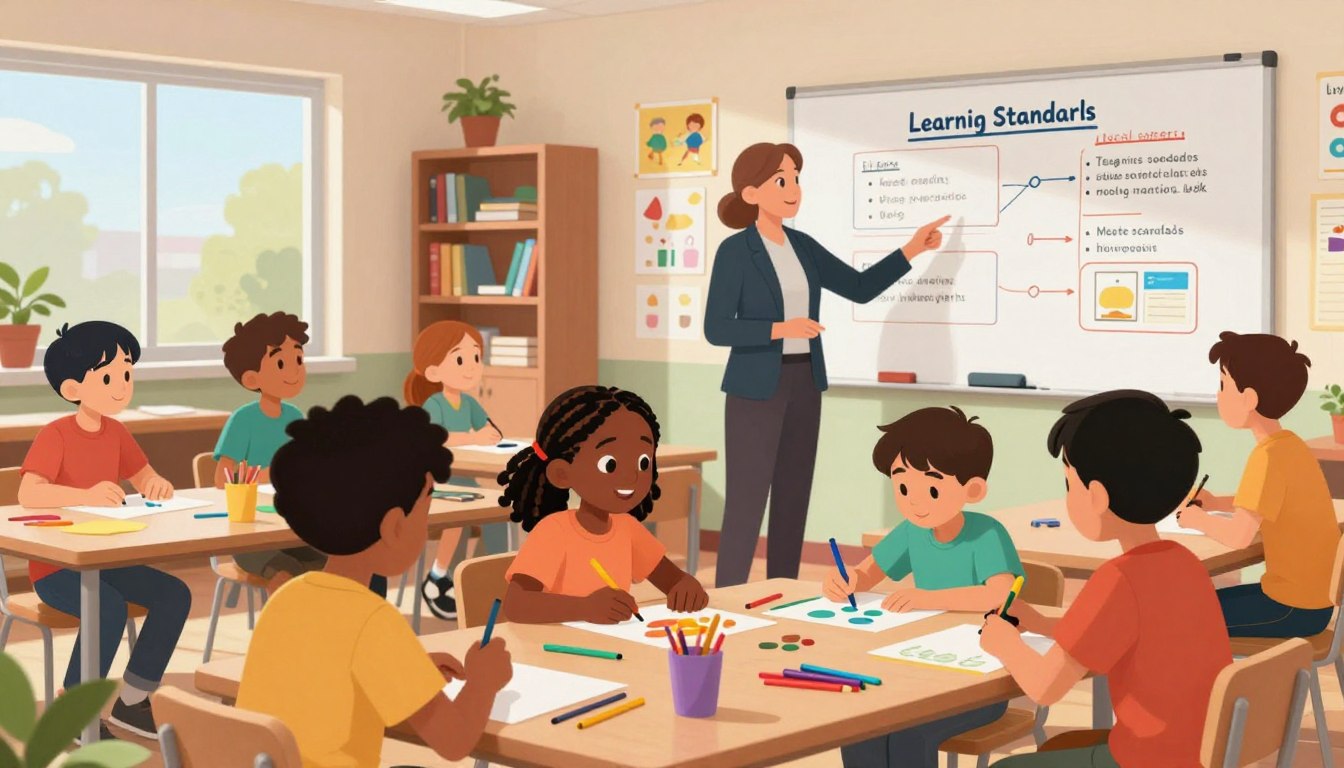
Standards give teaching a common language; the challenge is shaping that language into useful learning steps. When teachers map curriculum expectations to daily instruction, lessons gain clarity. This improves how students learn and how teachers measure progress.
Research supports clear proficiency scales. Marzano (2006) recommends a 0–4 rubric to define mastery. That scale tells a teacher what a student must do to reach each level.
“A concise proficiency scale makes goals visible and assessment actionable.”
Practical strategies help balance state mandates with individual needs. FlowScholar offers resources that align instruction, assessment, and lesson plans while saving time. Learn more about the role of standards in education.
- Define clear goals: link a standard to one measurable skill.
- Use a 0–4 scale: set expectations for each grade and level.
- Apply targeted assessment: check understanding and guide action.
Visit FlowScholar to see tools that help teachers translate complex concepts into meaningful plans and support student success.
How FlowScholar Helps Teachers Turn Standards into Classroom Activities
Educators can use AI to translate expectations into focused lessons that students actually grasp. FlowScholar supplies structured prompts, example projects, and aligned assessments so teachers spend less time planning and more time teaching.
The Power of AI in Lesson Planning
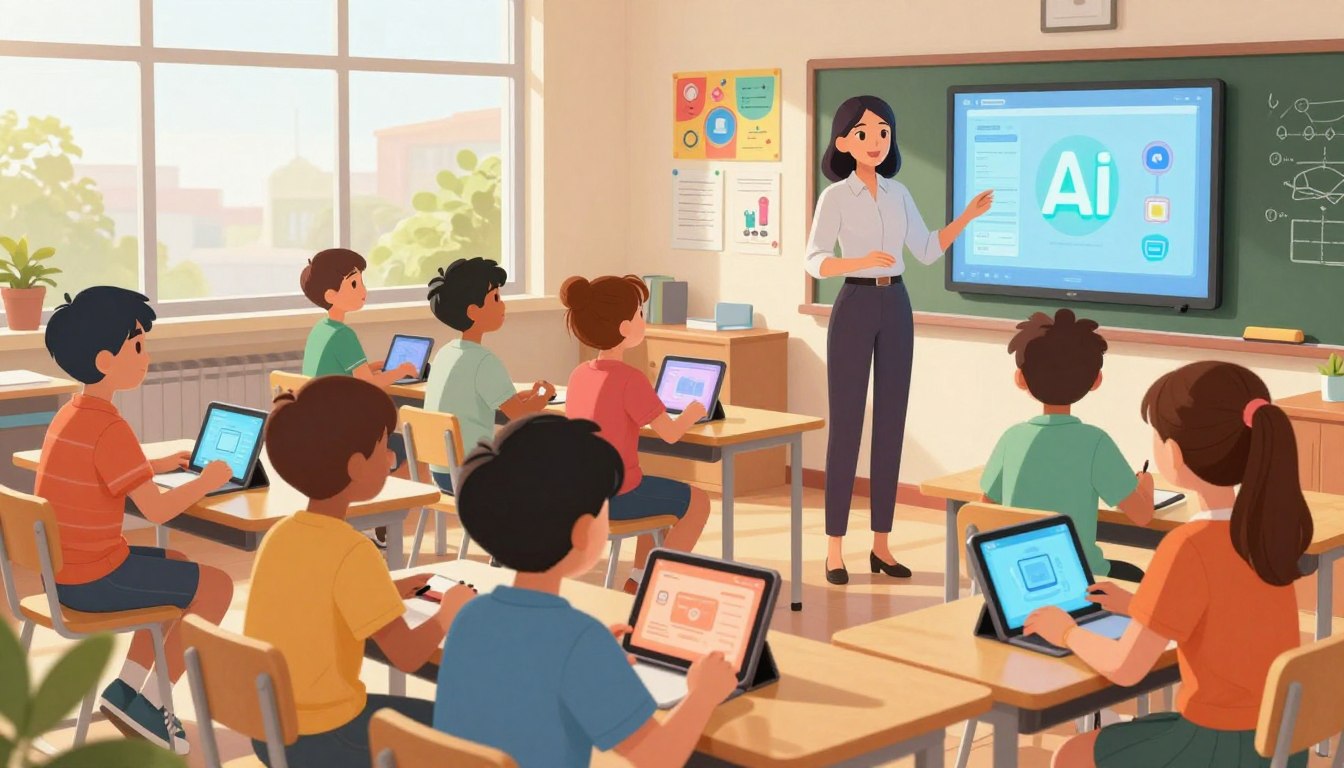
AI speeds alignment: the tool automates mapping a standard to specific lesson plans and assessment items. That reduces guesswork and helps every teacher match instruction to the learning level of their students.
“Develop curricula that tend to the specific interests of students.”
Streamlining Curriculum Alignment
FlowScholar highlights the most critical skills students need. Teachers gain clear steps to build lessons that focus on high-impact work and measurable goals.
- The AI at FlowScholar automates alignment with rigorous state standards.
- Teachers save time and ensure each lesson ties to a single standard and assessment.
- Use the platform to design projects and assessments that help students learn and succeed.
Explore how AI can improve planning and results: see our demo and resources, or follow this unlocking the future update to learn more.
Breaking Down Complex Standards into Manageable Learning Goals
Complex expectations become usable when skills are uncluttered and sequenced. This approach helps students move from partial understanding to steady mastery. Teachers save time when they teach one clear target at a time.

Identifying Essential Skills for Student Progress
Start with a single skill: pick the prerequisite that unlocks later learning. Map that skill to a short lesson and a simple assessment.
- Breaking down complex standards is vital for long-term student success and the curriculum’s coherence.
- States like Alabama and Florida offer extended standards to guide teachers who adapt instruction for diverse learners.
- Our AI at FlowScholar helps unpack each standard and create manageable goals aligned to state standards.
- Focus on essential skills that matter in school, life, work, science, and real-world tasks.
Ready to simplify planning? Explore a productive framework for project work at productive project-based framework and learn about adaptive tools at adaptive learning platforms. Visit https://www.flowscholar.com to see how our technology turns complex expectations into clear, measurable steps for classroom success.
Aligning Instructional Strategies with Student Needs
Effective instruction matches the needs of each student with clear, measurable learning targets. IDEA requires that IEPs include measurable goals so every student receives appropriate, standards-based instruction.
FlowScholar’s AI helps teachers design strategies that respond to diverse learning profiles. The platform maps a single standard to targeted lessons, suggested supports, and short assessments.
Teachers gain time and clarity: data-driven suggestions reduce planning load and boost instructional precision. This alignment keeps the lesson focused on essential skills and curriculum goals.
- IDEA-aligned goals: create measurable targets for individual student success.
- Adaptive plans: use AI to match instruction to student needs and state standards.
- Practical resources: bridge abstract standards and daily learning with clear steps.
Discover how to optimize instruction and assessment with an education AI tool: visit https://www.flowscholar.com to integrate standards-based learning and support classroom success.
Preparing Students for Success Through Targeted Assessments

Smart assessment design clarifies gaps so teachers can focus instruction where it matters most.
Formative checks offer low-stakes practice and quick feedback. Teachers can use brief quizzes, exit tickets, or peer reviews to spot misconceptions. These techniques support ongoing learning and reduce surprise at test time.
Formative Assessment Techniques
Practical tips: mix quick checks with collaborative tasks. Kalena Baker recommends interactive formats like escape rooms to lower anxiety and rehearse test questions.
Designing Summative Projects
Summative projects should align with a single standard and clear goals. Use rubrics tied to standards so students see what mastery means. Summative work shows long-term learning and readiness for state tests.
Building Student Confidence
Consistent feedback builds confidence. Our AI at FlowScholar helps teachers design assessments linked directly to standards and track progress over time.
- Balance formative and summative checks for full picture of student progress.
- Use creative practice to reduce test anxiety and improve skills.
- Leverage AI tools to align instruction and meet state goals.
| Focus | Example | Outcome |
|---|---|---|
| Formative | Exit tickets, quick polls | Immediate feedback and adjustment |
| Summative | Project with rubric | Measure mastery of a standard |
| Confidence | Practice escape-room task | Reduced anxiety; improved performance |
For practical guidance on formative strategies, see effective formative assessments and visit FlowScholar to access assessment libraries and AI planning tools.
Conclusion: Elevating Your Teaching Practice with AI
With smart planning software, teachers can prioritize what each student needs next. FlowScholar helps shape focused instruction and clear goals so daily work has purpose.
Use AI to streamline planning and align lessons with state standards while keeping assessment simple and actionable. This saves time and centers learning on progress that matters.
We invite educators to explore the platform and track student growth across units. Visit https://www.flowscholar.com to start setting measurable goals and improving outcomes for every student.
FAQ
How does FlowScholar.com help teachers map grade-level standards to lesson plans?
FlowScholar.com uses AI-driven tools to analyze state standards and recommend clear learning goals, instructional steps, and assessment options. Teachers receive lesson plan templates, suggested materials, and time estimates tailored to grade and subject, reducing prep time and improving curriculum alignment.
Can FlowScholar adapt recommendations for different student skill levels?
Yes. FlowScholar provides differentiated strategies and scaffolds for mixed-ability groups—from foundational skill practice to extension projects. Teachers can adjust pacing, modify assessments, and select interventions that support student growth and mastery.
What role does assessment play in the platform’s approach?
FlowScholar emphasizes both formative techniques and summative projects. The platform supplies quick checks, rubrics, exit tickets, and performance task ideas so teachers can monitor progress, adjust instruction, and document student achievement against learning targets.
How does AI support lesson planning without replacing teacher judgment?
AI offers evidence-based suggestions—learning objectives, question prompts, sequencing, and resource lists—while teachers retain full control. The system accelerates planning and surfaces options, enabling educators to apply professional knowledge and classroom context.
Are resources aligned to specific state standards and subjects like science or math?
FlowScholar aligns resources to state and national standards across core subjects, including science, math, ELA, and social studies. Each resource notes the relevant standard, suggested grade level, and skills targeted so teachers can match curriculum expectations precisely.
How long does it take to convert a standard into a classroom-ready lesson using FlowScholar?
Typical conversion takes minutes for a single lesson plan and slightly longer for multi-day units. The platform provides time estimates for activities and pacing guides so teachers can plan efficiently and balance instruction with assessment.
What examples of classroom projects or assessments does the platform provide?
FlowScholar offers project-based units, labs, portfolios, and performance tasks with rubrics and student-facing prompts. Examples include inquiry labs for science, problem-solving tasks for math, and research projects for ELA that emphasize real-world application.
Can teachers export lesson plans and share them with colleagues or administrators?
Yes. Teachers can export editable plans, PDFs, and assessment artifacts for collaboration, parent communication, or administrative review. Sharing supports department alignment and professional learning communities.
How does FlowScholar support formative assessment techniques in daily instruction?
The platform suggests quick checks for understanding, targeted questioning sequences, peer-assessment protocols, and data trackers. These tools help teachers gather actionable evidence and adjust lessons to meet student needs in real time.
What training or professional development does FlowScholar offer for effective use?
FlowScholar provides webinars, step-by-step guides, and exemplar lesson libraries that model best practices. Training focuses on instructional design, standards-based assessment, and using data to inform instruction, helping teachers integrate the platform confidently.