“Education is the most powerful weapon which you can use to change the world.” — Nelson Mandela. This idea frames why strategic systems matter today.
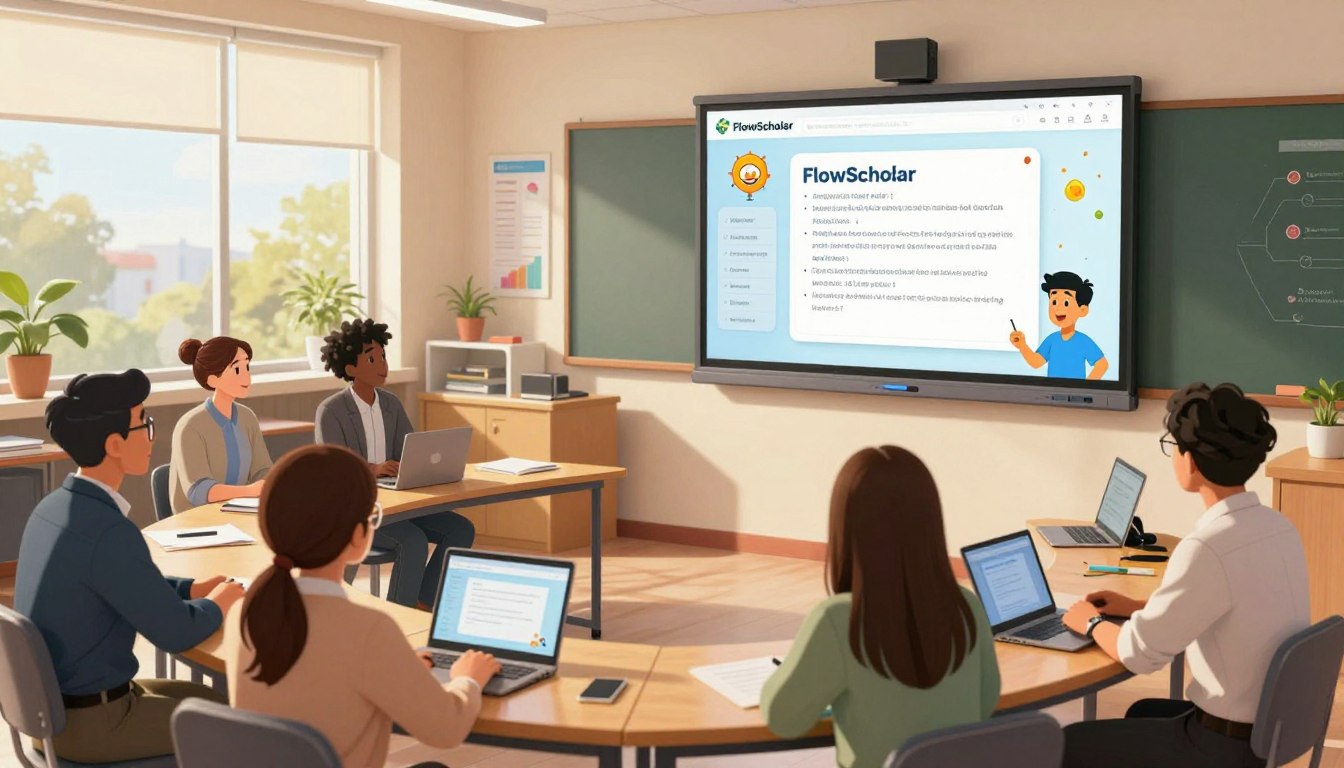
FlowScholar.com helps schools streamline planning and reduce administrative time so educators can focus on student learning. A 2023–24 RAND report found 58% of K–12 principals use AI in daily work, signaling broad change.
The platform centralizes content, data, and communication to support lesson planning, assessments, and feedback. Leaders gain actionable insights that improve classroom instruction and teacher work-life balance.
Explore practical strategies like the Focus First approach to prioritize high-impact tasks and manage time. Visit https://www.flowscholar.com to learn more about comprehensive solutions designed for modern school leadership.
Key Takeaways
- FlowScholar centralizes information to save time and support lesson planning.
- Principals increasingly use intelligent platforms to guide decisions and data use.
- Streamlined communication helps teachers deliver more personalized learning.
- Schools can reduce administrative tasks and focus on student outcomes.
- Practical methods like priority-focused routines boost classroom impact.
The Evolving Role of AI in Modern Educational Leadership
Generative language models are changing how administrators handle daily work. These systems are trained on billions of pieces of content to spot patterns and produce useful responses. Leaders can use that capability to reduce repetitive tasks and free up time to support staff and students.
Understanding Generative AI
Large Language Models (LLMs) act like a digital intern: they draft emails, summarize reports, and suggest lesson plans. Oversight matters—outputs must match district standards and assessment expectations.
The Shift in Administrative Workflows
Workflow change means calendars, attendance, and communication move from manual spreadsheets into intelligent platforms. This shift reduces routine tasks and improves turnaround on feedback and resources.
- Automate routine communications and basic writing tasks while keeping review steps.
- Use data-driven summaries to guide planning and professional development.
- Balance efficiency gains with policies that protect student privacy and data security.
| Area | Traditional Process | With Generative Models |
|---|---|---|
| Schedule Management | Manual spreadsheets and emails | Automated summaries and suggested adjustments |
| Communication | Individual messages sent by staff | Drafted templates and prioritized threads |
| Planning & Content | Time-consuming lesson plans and resource curation | Draft lesson plans and aligned content suggestions |
| Data Use | Manual report creation | Instant insights and visual summaries |
FlowScholar.com provides the framework to manage these workflows, offering governance, training, and clear policies so schools harness benefits while protecting students and maintaining standards.
Why School Leaders Need a Teacher Productivity AI Tool for School Leaders
Leaders who adopt targeted software can reclaim hours spent on newsletters, reports, and repeat correspondence. That recovered time allows principals to focus on coaching, policy, and strategic planning.
FlowScholar.com serves as the premier teacher productivity AI tool for school leaders by converting routine tasks into structured workflows. When educators use automated grading and feedback, they gain time to build stronger student relationships and tailor instruction.
Administrators also get reliable data and clear insights to guide improvement plans and meet state standards. The platform supports lesson creation, aligned assessments, and consistent communication—so information flows without friction.
- Reduce clerical hours and free staff to focus on instruction.
- Generate standards-aligned lesson and assessment drafts quickly.
- Use data-driven summaries to inform long-term planning and development.
| Need | Manual Approach | With FlowScholar.com |
|---|---|---|
| Newsletters & Emails | Drafted repeatedly by hand | Template drafts and prioritized threads |
| Grading & Feedback | Time-intensive scoring | Automated feedback with editable prompts |
| Lesson & Assessment Planning | Built from scratch | Standards-aligned drafts and resources |

Key Features and Benefits of FlowScholar for Your Institution
FlowScholar blends real-time analytics with curated resources to reduce routine work and help educators focus on instruction. The platform supports personalized pathways, simplifies lesson planning, and surfaces trends leaders can act on.
Personalized Learning Support
Adaptive analytics identify strengths and gaps for each student so instruction matches need. Educators gain access to more than 100 resource types and instant translation into 15 languages via integrated content partners like Eduaide.Ai.
Streamlining Lesson Planning
Lesson planning becomes faster when teams curate high-quality content that aligns with standards. FlowScholar helps teachers assemble materials, draft lessons, and share routines—saving time and improving classroom coherence.
Data-Driven Insights
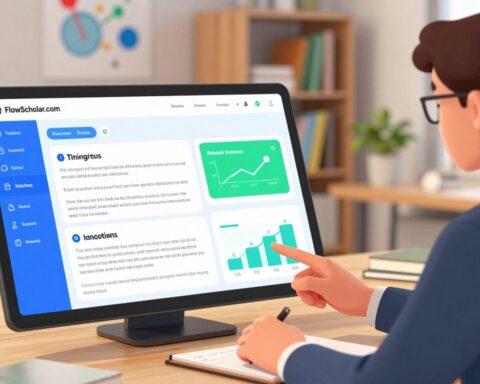
Leaders receive clear reports that reveal patterns in performance and attendance. These insights guide targeted interventions and professional development, so resources go where they matter most.
- Personalized learning: tailored activities that meet diverse needs.
- Faster planning: reusable templates and aligned content.
- Actionable data: trend detection to prioritize support and training.
FlowScholar.com offers these features to keep institutions at the forefront of educational technology. Learn how to build GPT-powered educational offerings via this short guide: make GPT-powered educational offerings.
Strategic Implementation of AI Tools in K-12 Environments
A strategic rollout pairs technical safeguards with hands-on professional learning to make adoption sustainable.
Establishing Responsible Governance and Training
FlowScholar.com supports implementation with built-in governance and training modules that guide policy, privacy, and daily use. These elements reduce risk while keeping the focus on meaningful classroom activities.
“Select secure, elegant solutions as a first step toward successful integration.”
Districts should favor flexible guidelines over rigid rules. Jessica Garner recommends adaptive policies that evolve as needs change. Jennie Magiera highlights professional learning and communities where educators share proven practices.
- Provide short, practical training so teachers gain confidence and save time.
- Work with vendors to set governance that protects student data and encourages innovation.
- Create consistent expectations so lesson planning and routine tasks align across classrooms.
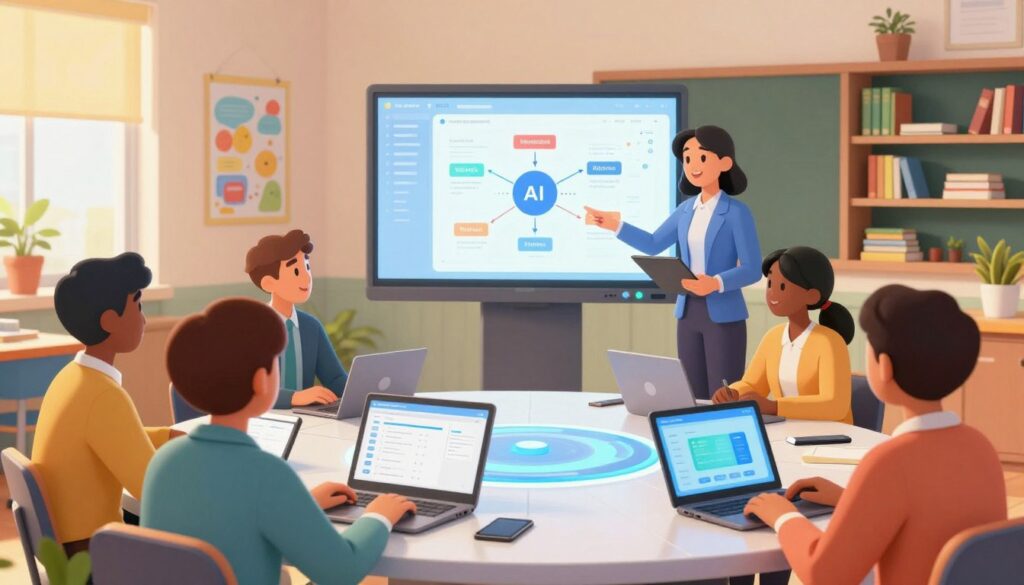
Explore a practical implementation checklist, and read more about AI implementation in schools or join workshops on teaching AI skills workshops to build local capacity.
Conclusion: Empowering Educators for a Future-Ready Classroom
Conclusion: Empowering Educators for a Future-Ready Classroom
Future-ready schools center on measurable impact: better learning outcomes, less friction, and smarter use of data.
Empowering educators with FlowScholar.com prepares a modern school to meet tomorrow’s challenges. It gives teachers the time and resources to focus on students and deeper learning while preserving privacy and governance.
We recommend piloting the platform to see specific classroom and administrative gains. Visit FlowScholar.com to start your journey toward a more productive and innovative school environment today, and read guidance on empowerment in this short piece: how to empower educators.
Responsible adoption—clear data practices, ongoing training, and iterative pilots—ensures these tools boost student growth and professional satisfaction.
FAQ
What is FlowScholar and how does it help school leaders support teacher productivity?
FlowScholar is a platform that streamlines lesson planning, content creation, and classroom workflows. It centralizes resources, automates repetitive tasks like grading templates and email drafts, and surfaces data-driven insights so educators spend more time on instruction and student feedback. Leaders gain clearer visibility into staff workload, professional development needs, and classroom impact.
How does generative intelligence work within FlowScholar?
Generative intelligence in FlowScholar creates draft lessons, formative assessments, and differentiated activities based on standards and student profiles. It proposes content iterations, suggests scaffolds for diverse learners, and generates presentations or handouts. Administrators can review and adapt outputs to align with curriculum and policy before deployment.
What changes should leaders expect in administrative workflows after adopting FlowScholar?
Expect reduced time on routine tasks—scheduling, resource curation, and basic reporting—and more capacity for coaching and strategy. The platform integrates with existing systems to minimize manual data entry and offers templates that standardize lesson plans and communications across departments.
Can FlowScholar personalize learning for students with varying needs?
Yes. The system uses assessment data and teacher input to recommend differentiated activities, scaffolds, and pacing options. It supports individualized pathways and formative checkpoints so educators can adjust instruction based on progress and targeted feedback.
How does FlowScholar assist with lesson planning and content development?
FlowScholar provides structured lesson templates aligned to standards, adaptable unit maps, and ready-to-use activities. It can auto-generate objectives, learning outcomes, and printable materials, reducing planning time while preserving instructional quality and coherence.
What kind of data-driven insights does the platform offer?
Leaders receive dashboards on student performance trends, instructional effectiveness, and workload distribution. Insights highlight gaps, curriculum alignment issues, and professional development opportunities, enabling evidence-based decisions at the classroom and district level.
How should K-12 institutions implement FlowScholar responsibly?
Begin with a pilot that includes governance policies, privacy safeguards, and clear usage guidelines. Provide role-based training for administrators and staff, establish data-sharing protocols, and set review cycles to evaluate impact on student outcomes and teacher workload.
What training and support are available for educators and administrators?
FlowScholar offers onboarding workshops, asynchronous tutorials, and coaching resources focused on lesson planning, assessment design, and using analytics. Ongoing support includes help center documentation, webinars, and professional development aligned with school goals.
How does FlowScholar address data privacy and compliance?
The platform adheres to common K-12 privacy standards and integrates with district policies. It supports secure data handling, role-based access, and audit logs so leaders can manage permissions and ensure compliance with local and federal regulations.
Can FlowScholar integrate with existing platforms and gradebooks?
Yes. FlowScholar is designed to connect with common learning management systems, student information systems, and gradebooks to sync rosters, assessment results, and standards mappings—minimizing duplicate work and preserving data integrity.
What measurable benefits should districts expect after adoption?
Districts typically see time savings on planning and administrative tasks, improved alignment between instruction and standards, higher quality formative assessments, and clearer evidence of student growth—enabling targeted interventions and more strategic professional development.
How does the platform support feedback and communication across staff and families?
FlowScholar streamlines communication with templated emails, progress summaries, and customizable reports for families. It also facilitates internal feedback loops—peer reviews and administrator coaching notes—so teams can iterate on practice more efficiently.