“Education is the most powerful weapon which you can use to change the world.” — Nelson Mandela.
Millions of families faced a sudden shift in routines, and many adults became makeshift educators. Jennifer Weiner wrote that this transition will be messy but manageable, and that reassurance guides our approach.
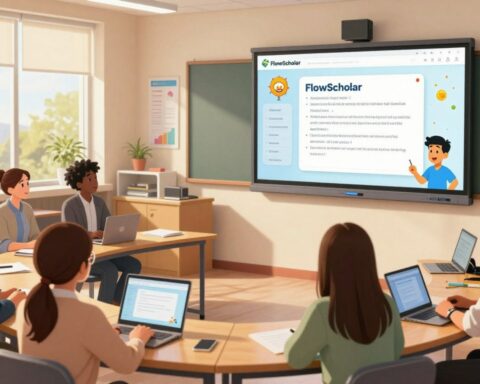
FlowScholar offers an Education AI Tool that turns complex curriculum into clear, step-by-step explanations. We design resources that respect emotional balance while promoting focused learning.
By blending strategy, examples, and AI-driven prompts, FlowScholar helps users build a reliable routine and reduce daily friction. Visit https://www.flowscholar.com to see how the platform simplifies planning and supports steady progress.
Key Takeaways
- Transitioning roles can be messy; expert guidance makes it manageable.
- FlowScholar’s AI breaks down curriculum into clear steps for better understanding.
- Tools support both academic rigor and emotional well-being.
- Practical routines reduce stress and boost consistent learning.
- Visit FlowScholar to explore resources that simplify daily academic tasks.
Creating an Effective Learning Environment at Home
Designing flexible spaces gives students tangible control over where and how they work. Small, intentional choices help kids focus and reduce friction during study time.
Designing Flexible Workspaces
Flexible layouts let students select a spot that fits the task: a quiet corner for reading or a table for writing. Teacher Kayla Dornfeld notes that choice can account for a quarter of academic benefits by boosting engagement and productivity.
“Flexible classrooms that allow students to choose their learning space increase engagement and productivity.”
Utilizing Household Resources
Simple items—pillows, cardboard, or a used bookshelf—create distinct zones for different instruction. California teacher Laura Bradley recommends setting clear parameters so kids stay focused while keeping autonomy.
- Reading + Writing corners: Stock a small library with books that match your child’s level for independent practice.
- Creative breaks: Drawing and play help students process complex ideas and make learning feel supportive.
- Task-specific zones: Use separate spaces for math versus art so students associate setting with instruction.
Practical strategies and varied resources encourage routine and make it easier for children to transition between activities with confidence.
Establishing a Productive Daily Rhythm for Students
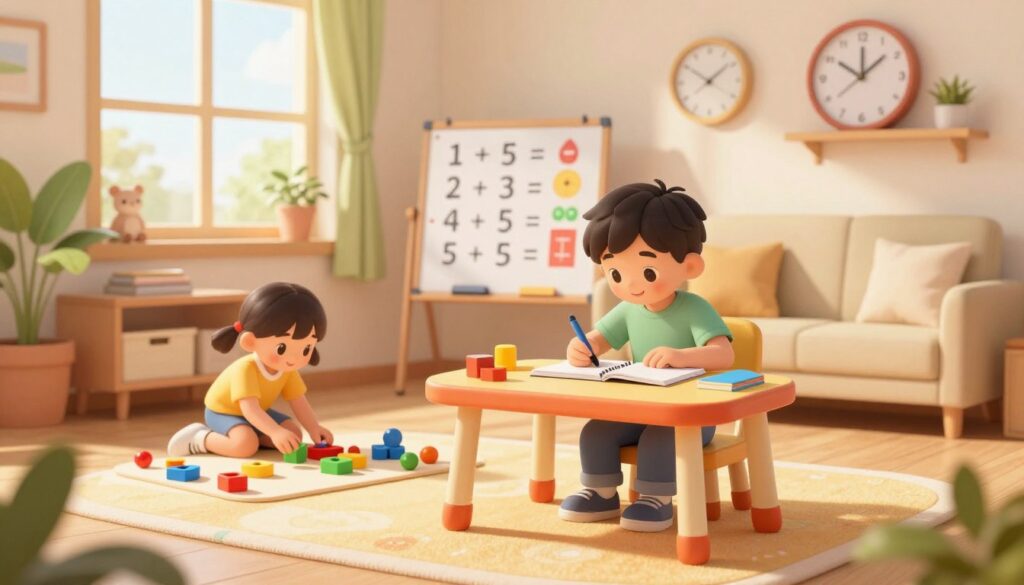
When a child’s day follows a dependable rhythm, the brain learns when to engage and when to rest. This simple pattern reduces friction and gives students a predictable flow.
Customize timing: Researcher Daniel Pink notes 15% of people are larks and 15% are owls. Tailor a schedule to match each child’s peak energy.
Start later when needed. The American Academy of Pediatrics finds adolescents remember more and perform better with a later start time—ideally not before 8:30 a.m.
- Build regular breaks for reading and writing to help the brain process new material.
- Use a family calendar to map activities and give kids a clear sense of the day.
- Swap social media for library books or word games to keep play structured and engaging.
“Different biological clocks mean schedules should bend to the learner, not the other way around.”
| Focus Block | Duration | Example Activity |
|---|---|---|
| Deep Work | 30–45 min | Writing or problem sets |
| Active Break | 10–15 min | Play, short walk, word games |
| Review | 15–20 min | Reading, library books, recap |
How FlowScholar.com Helps Parents Explain School Topics at Home
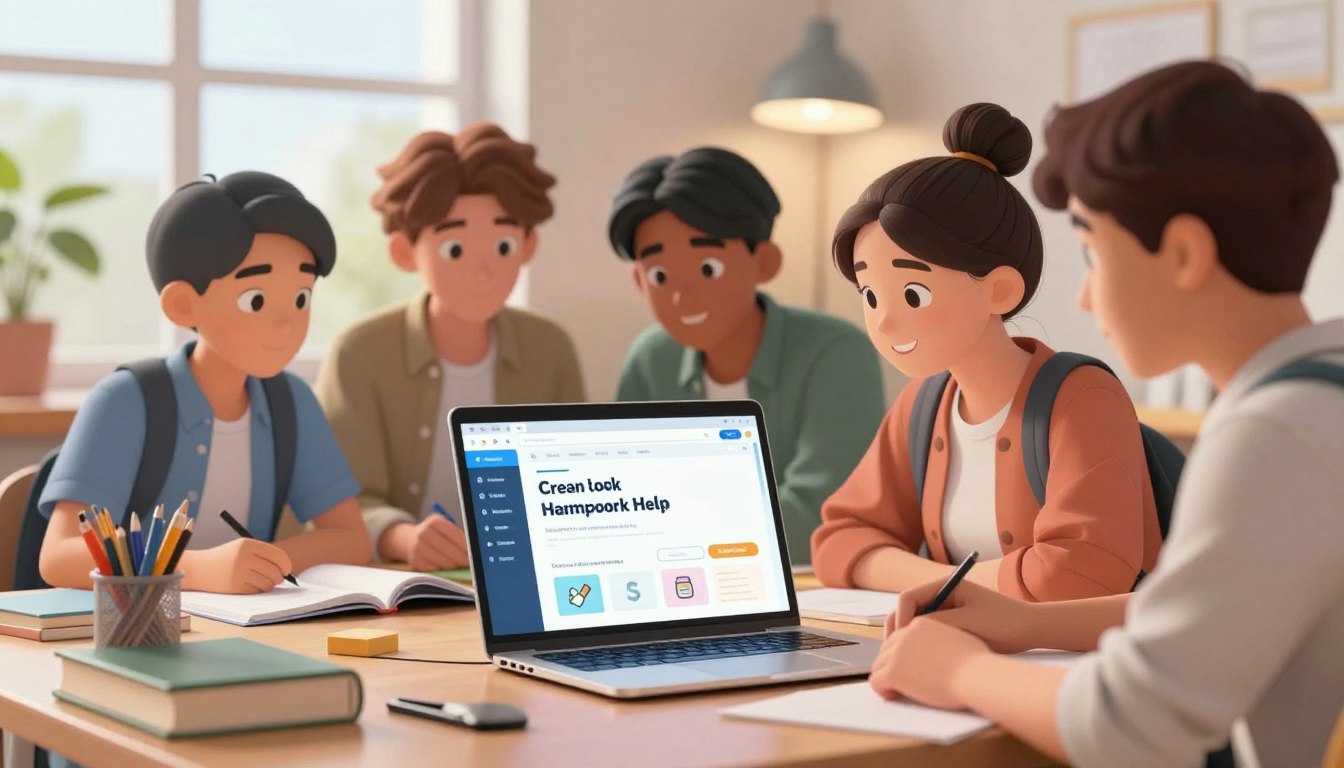
Smart tools can reduce prep time while making complex ideas accessible to a child. FlowScholar’s Education AI Tool focuses on clear, bite-sized steps that help kids stay engaged and confident.
Simplifying Complex Concepts with AI
FlowScholar.com breaks dense information into short chunks so a teacher or parent can guide reading and writing tasks without feeling overwhelmed. This approach turns a long assignment into a series of quick wins during the day.
Integrating the platform into your schedule creates an opportunity to make learning interactive. The AI personalizes instruction and suggests activities that match a child’s pace and current skill level.
- Bite-sized explanation: AI converts a difficult topic into manageable steps to help kids grasp key ideas.
- Targeted support: Students receive tailored prompts that simplify writing and boost reading confidence.
- Less prep time: Families get ready-made resources and strategies to make learning more fun.
“The Institute for Social and Emotional Learning suggests using creative check-ins, such as emoji-based mood tracking, to gauge how a child is feeling.”
We recommend short breaks and quick mood checks—small habits that protect the brain and keep instruction productive. Visit https://www.flowscholar.com to see how the tool can help kids, children, and families turn a frustrating afternoon into a focused, fun session.
Implementing Active Learning Strategies for Better Retention
Simple shifts in practice can make complex information stick for kids.
Active learning asks learners to do more than listen. It asks them to teach, test, and create. These small moves change how the brain encodes new material.
The Power of the Protege Effect
When students teach a topic to someone else, they deepen understanding. Asking a child to explain a concept to a sibling or a parent turns review into rehearsal.
Research shows this technique boosts long-term retention and clarifies weak spots. Try short teaching sessions after reading or writing practice.
Encouraging Productive Struggle
Give kids challenges that stretch ability without causing frustration. This builds tenacity and problem-solving skills.
Praise effort and process rather than talent; that cultivates a growth mindset and helps children persist when material becomes hard.
Moving Beyond Passive Note-taking
Active strategies—writing summaries, drawing diagrams, or role-playing—help students process information more deeply than passive notes.
Short breaks and varied activities keep attention high. Use quick quizzes or oral summaries to convert tasks into practice that lasts.
- Example: Have a child teach a 5-minute recap after a reading session.
- Try: One drawing or one paragraph of writing to explain a key idea.

| Strategy | Action | Time | Benefit |
|---|---|---|---|
| Protege Effect | Teach a concept aloud | 5–10 min | Stronger recall |
| Productive Struggle | Challenge with prompts | 10–20 min | Problem resilience |
| Active Output | Draw or write summary | 5–15 min | Deeper processing |
For more on adaptive methods that tailor tasks and time to each learner, explore adaptive learning platforms. These tools can help kids make learning both efficient and meaningful.
Managing Emotional Well-being and Motivation
When the emotional climate is steady, kids show more curiosity and persistence. A calm environment gives a child a clearer sense of safety and focus.
Patrick Mardian suggests caregivers protect their own mental health by listening to music or reading books during a long day. This small habit helps adults stay cool and model steady responses.
The American Academy of Pediatrics recommends unstructured play because it lets kids practice social-emotional skills and creative problem-solving. Free play also gives the brain a chance to recover between analytic tasks.
- Weave music and art into the daily schedule to boost focus and language skills.
- Build short breaks for reading, writing, and play to refresh attention.
- Reserve time for passion projects so kids develop intrinsic motivation and fun learning routines.
“Unstructured play is vital for brain development.”
Practical step: use library books or podcasts to make breaks restorative and social. For guidance on mental-health practices, see the mental health action guide. To explore workshops that teach these strategies, consider our AI workshops and seminars.
Conclusion: Embracing Your Role as a Supportive Educator
Every brief interaction—reading a paragraph or asking one question—builds a stronger learner.
Adopt practical routines that turn ordinary moments into focused practice. Use active strategies like the protege effect and short writing or reading tasks to sharpen skills and reinforce information.
Families and people who guide kids can make steady progress in a single day by breaking work into clear steps. Encourage a child to share one example of their work; this boosts confidence and deepens learning.
Visit https://www.flowscholar.com to try the Education AI Tool designed to help parents explain school topics more clearly and support students with targeted strategies and ready-made activities.
FAQ
How does FlowScholar.com help parents explain school topics more clearly at home?
FlowScholar.com offers concise lesson plans, visual aids, and step-by-step explanations that turn complex curriculum into manageable learning tasks. It recommends age-appropriate activities, reading lists, and writing prompts, and it suggests apps and music or drawing prompts to make lessons engaging. The platform also provides quick assessments so caregivers can gauge progress and adjust instruction without needing a teaching degree.
What are simple ways to create an effective learning environment at home?
Start by designating a flexible workspace with good lighting and minimal clutter. Rotate seating options—desk, couch, floor cushion—and add a small shelf for books and supplies. Use household resources such as kitchen timers for focused work blocks, index cards for vocabulary, and a whiteboard or notebook for planning. A predictable rhythm of study, break, and play helps students settle into productive habits.
How can caregivers design flexible workspaces that support different subjects and moods?
Design flexible zones: a quiet area for reading, a hands-on table for experiments or drawing, and a cozy corner for audio learning with headphones. Keep materials accessible—math manipulatives, art supplies, and a library of level-appropriate books. Change the setup weekly to match the day’s tasks or the child’s energy, which keeps learning fresh and adaptive.
Which household resources are most useful for learning without extra cost?
Everyday items become powerful learning tools: cereal boxes for measuring and sorting, jars for science experiments, family photos for storytelling, and recipe cards for reading and fractions practice. Public libraries, community music programs, and free online videos expand resources further. FlowScholar highlights resourceful activities that use common items and encourage creativity.
What does a productive daily rhythm look like for students?
A productive rhythm balances focused study, active breaks, and creative time. Aim for 25–45 minute learning blocks for middle and upper elementary students, interspersed with movement or play. Start with a short warm-up—reading or a quick review—then tackle a core lesson, followed by practice and a reflective wrap-up like journaling or explaining the idea aloud.
How can FlowScholar simplify complex concepts using AI?
FlowScholar uses AI to generate plain-language explanations, visual summaries, and scaffolded practice tasks tailored to a child’s grade level. The AI can produce analogies, stepwise examples, and mini-assessments that pinpoint gaps. Teachers and caregivers receive ready-to-use prompts and extension activities that translate abstract ideas into concrete learning moments.
What is the protege effect and how does it boost learning?
The protege effect occurs when a student teaches a concept to someone else; the act of teaching deepens understanding and retention. FlowScholar leverages this by suggesting simple “teach-back” activities: have the child explain a topic to a sibling, record a short video lesson, or create illustrated instructions. These tasks reinforce knowledge and build communication skills.
How should caregivers encourage productive struggle without causing frustration?
Productive struggle means giving children challenges that are just beyond their current skill level while offering timely support. Use prompts that nudge—questions, hints, or a checklist—rather than solutions. Celebrate small wins and model problem-solving steps. FlowScholar supplies graduated tasks and troubleshooting cues to keep struggle constructive and confidence growing.
Why move beyond passive note-taking, and what are practical alternatives?
Passive note-taking often leads to shallow recall. Alternatives—like concept maps, summarizing aloud, creating practice tests, and hands-on projects—engage deeper cognitive processes. Encourage students to convert notes into questions, teach a peer, or apply ideas in a mini-project. FlowScholar provides templates and examples to convert notes into active study tools.
How can caregivers support emotional well-being and motivation during learning?
Emotional support begins with predictable routines, clear expectations, and regular breaks. Prioritize brief physical activity, social time, and creative outlets like music or drawing. Use praise that focuses on effort and strategy, not just outcomes. FlowScholar recommends mood-check prompts and short mindfulness or movement breaks to sustain motivation and reduce stress.
What role do books, libraries, and reading practice play in academic success?
Regular reading builds vocabulary, comprehension, and critical thinking. Libraries provide diverse texts, research resources, and free programs. Encourage daily reading rituals, a mix of independent and shared reading, and writing responses to books. FlowScholar curates book lists by level and topic and suggests library-based activities to reinforce learning.
How can families and teachers coordinate to support a child’s learning rhythm?
Establish shared goals, a consistent schedule, and simple communication channels—weekly check-ins or a shared planning document. Align home tasks with classroom priorities when possible. FlowScholar offers templates for family-teacher plans and quick tools for tracking skills, which help everyone focus on growth and reduce duplication.
What strategies help children practice writing and math more effectively?
Short, frequent practice beats infrequent marathon sessions. For writing, use prompts tied to interests, peer feedback, and scaffolded editing checklists. For math, apply real-world problems, manipulatives, and timed fluency drills paired with concept exploration. FlowScholar supplies leveled practice sets and step-by-step explanations to scaffold skill development.
How can music, play, and drawing be integrated into learning?
Music aids memory and pattern recognition; play fosters exploration and problem-solving; drawing clarifies thinking and aids recall. Integrate them by turning facts into songs, using role-play for historical events, or asking students to sketch science processes. FlowScholar includes activity ideas that blend arts and academic goals for multisensory learning.
Where can caregivers find reliable resources and tools recommended by FlowScholar?
FlowScholar curates a mix of proven resources: public library programs, Khan Academy, PBS Kids, National Geographic Kids, and education-focused apps. It highlights printable templates, low-cost manipulatives, and community offerings. The platform emphasizes trustworthy, evidence-based tools that align with classroom standards and family schedules.