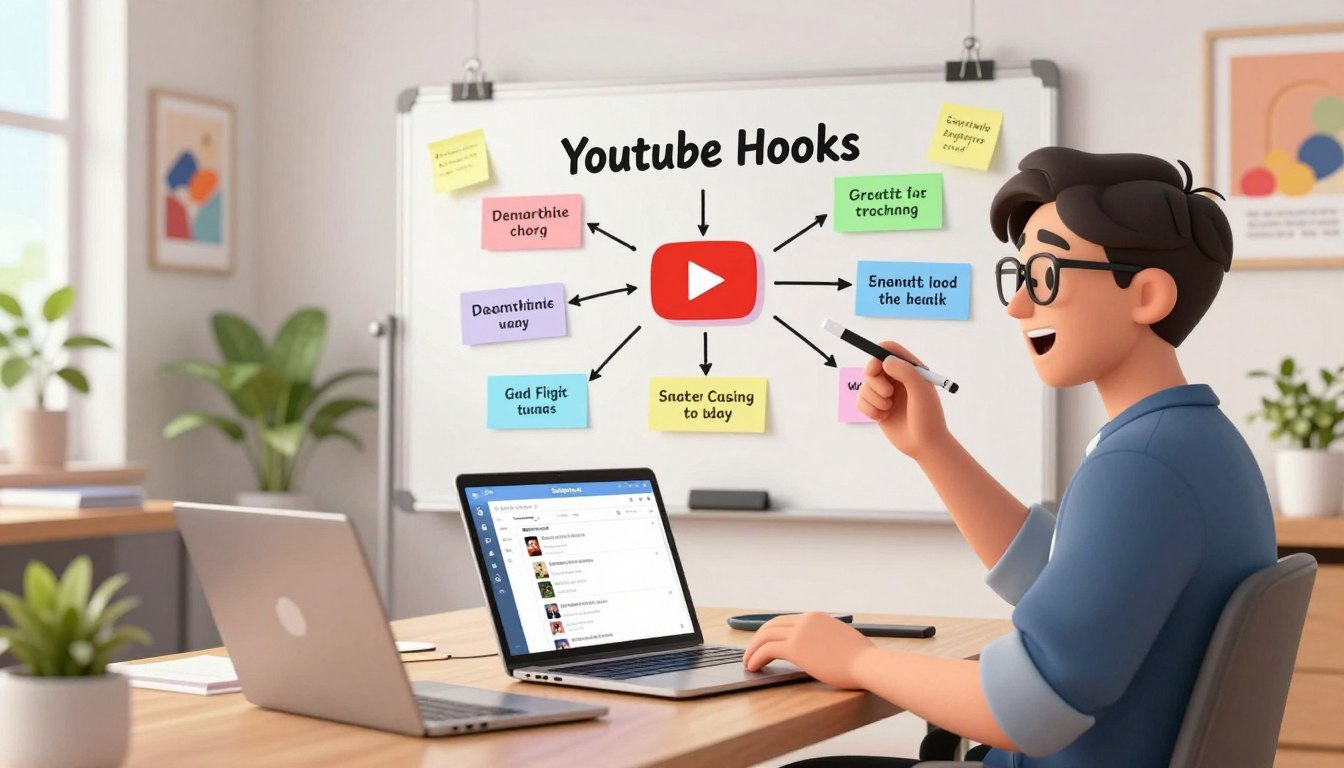
“The secret of getting ahead is getting started.” — Mark Twain.
Mark Twain’s line frames a simple truth: first impressions decide fate in seconds. For SaaS founders, that first eight seconds of a youtube video can make or break interest.
Scriptos.ai helps product teams analyze their messaging and sharpen a hook that wins attention fast. With clear data and creative ideas, teams turn short intros into assets that pull viewers toward the next video.
This brief guide shows how to structure an intro, use viewer psychology, and apply practical steps so people stop scrolling. We explain a strategic way to refine messaging and make each second count.
Key Takeaways
- Eight seconds matter: optimize the opening to capture attention quickly.
- Scriptos.ai offers analytics to sharpen product messaging and increase engagement.
- Craft a hook that feels personal to your audience and relevant to their needs.
- Structure intros so viewers want to watch your next video.
- Use data-driven ideas and creative moves to reduce churn and boost conversions.
- For practical prompts and examples, see this useful tip on improving hooks: this tiny AI prompt.
The Critical Role of YouTube Hooks
The opening seconds of a video decide whether people stop or scroll within a single breath.
The three-second rule is straightforward: that tiny window determines if a viewer stays. For creators, this is the narrowest chance to promise value and hook attention fast.
The Three Second Rule
First impressions form quickly. In those first beats you must signal relevance. If the opening lacks clarity or urgency, people will move on before they can experience the content.
Impact on Watch Time
YouTube weighs the first 30 seconds heavily when calculating audience retention. Data shows many viewers click away near the 30-second mark.
- The three-second rule gives creators a clear priority: grab attention immediately.
- Without a strong hook, the audience rarely reaches the value later in the video.
- Test different ideas to learn which openings improve watch time and keep people until the end.
Why SaaS Founders Struggle with Video Intros
A common mistake for SaaS teams is leading with product details instead of the user’s urgent problem.
Technical talk beats the point. Founders describe features before they show why those features matter. That sequence makes a short video feel like a pitch, not a promise.
When videos miss specific pain points, viewers do not feel seen. The result: high bounce rates and weak engagement.
Content that diverges from real user context feels distant. People switch off because the opening does not match their experience.
Long-winded intros compound the problem. If the core value is buried, the audience rarely reaches the payoff.
Simplifying the message fixes this quickly. A tight hook that names the problem and hints at the outcome converts more viewers into active users.
Finally, many founders lack a repeatable intro framework. Inconsistent openings lead to uneven performance across channels; structured templates reduce guesswork and improve results.
For tactical next steps on turning attention into revenue, see this monetization guide.
How to Create YouTube Hooks Using Scriptos.ai
Refining a short intro starts with a clear map of who the product actually helps. Scriptos.ai provides a methodical way for founders to test wording, tune value, and stop people from scrolling.
Analyzing SaaS Product Messaging
Use the Products SaaS feature at https://www.scriptos.ai/try/products-saas to run a deep analysis of positioning and copy.
Actionable insight: identify words that match how your audience describes problems. That match increases the chance viewers stay for the payoff.
Refining Your Value Proposition
Turn findings into a concise promise: name the problem, hint at the result, and state value in one line.
When the value is clear, a strong hook leads naturally into the main content—no jargon, only relevance.
Integrating Scriptos.ai Insights
Integrate AI-driven suggestions to test variations across videos and measure retention.
- Make sure messaging aligns with brand voice.
- Test several openings and track which phrasing keeps most viewers.
For a practical prompt that improves openings try this short formula: this quick formula.
Analyzing Your Product Positioning for Better Messaging
Positioning starts with a clear answer to one simple question: who benefits most from the product?
Founders who analyze SaaS product positioning stop guessing about audience needs. They map features to outcomes and test which phrases resonate.
Use Scriptos.ai to run a structured review of your product messaging. The tool highlights words that match user intent and flags inconsistent claims across pages.
Clarity reduces friction. When messaging is consistent, teams write video openings, landing copy, and ads that speak to the same audience. That alignment makes marketing more efficient and builds trust faster.
| Analysis Step | What Scriptos.ai Shows | Practical Outcome |
|---|---|---|
| Audience language | Keywords your users use | Tighter headlines and intros |
| Value clarity | Which benefits read clearly | Higher conversion on landing pages |
| Consistency check | Conflicting claims across channels | Unified brand identity |
“Analysis turns intuition into repeatable messaging that scales.”
Leverage these insights to sharpen product messaging and attract the right customers. Small changes to positioning often yield large gains in retention and conversion.
Teasing the Outcome to Drive Viewer Retention
Opening with a tangible result—then delivering the how—keeps viewers invested through the whole video.
Showcasing Real Results
Lead with proof: name a clear result early—such as a 1,000-signup milestone without ads—to give the audience a concrete reason to stay.
Social proof makes the promise believable. When people see a specific outcome, curiosity grows. That curiosity forms an open loop: the intro hints at the payoff and the body resolves it.
- Announce the result in the first 8–10 seconds to set expectations.
- Use a brief clip or screenshot to back up the claim.
- Structure the middle of the video to reveal the steps behind the win.
Teasing results early also boosts the chance a viewer will follow to the next video. Delivering a fair payoff keeps the relationship strong; misleading claims hurt long-term credibility.
Honest, repeatable promises are a vital part of retention strategy—make the hook real, and make the part that follows worth the watch.
Addressing Specific Pain Points in Your Opening
Naming one daily frustration that your target faces turns strangers into attentive viewers quickly.
Address a single, specific problem in the first line to make the audience feel seen. When that problem matches a real work challenge, attention follows.
For B2B marketing video examples, lead with a common struggle—lost momentum, inconsistent posting, or unclear ROI. This signals relevance instantly.
A short, solution-oriented hook that highlights a real-world obstacle shows competence and builds trust. Viewers stay longer when they expect practical value.
- Research day-to-day experiences; use exact phrases your audience uses.
- Keep the opening tight—one sentence that names the pain and hints at a result.
- Position the video as a direct answer, not just entertainment.

Using Pattern Interrupts to Stop the Scroll
Interrupting the expected flow—visually or audibly—makes people stop and orient to your message.
A pattern interrupt is a deliberate break in the ordinary rhythm of social clips. It forces the brain to pause and reassess the video. Use that pause to deliver a tight hook that promises value fast.
Visual Disruptions
Try a sudden cut to an unexpected scene, a close-up, or a brief silent frame. These visual moves break monotony and give the viewer a reason to keep watching.
Auditory Changes
Shift volume, drop into silence, or switch audio styles for one beat. This forces attention and buys you time to introduce core content.
Use interrupts sparingly: the transition from the break to the main topic must be seamless so people understand why they should stay. When done well, these ways increase engagement and extend watch time.
| Interrupt Type | Example | Benefit |
|---|---|---|
| Visual jump | Unexpected cut to close-up | Immediate attention grab |
| Silence | 1–2 second pause | Curiosity spike |
| Audio swap | Change music or tone | Reorients viewer expectation |
| Mixed | Visual + audio surprise | Stronger retention |
“A well-placed interrupt is not random—it’s a strategic cue that signals why the video matters.”
Leveraging Surprising Facts to Build Authority
A single surprising statistic can shift a viewer from casual skimmer to engaged listener in seconds. Start a video with an unexpected number and you buy a moment of concentrated attention.
Real facts cut through noise: a typical cloud can weigh over one million pounds. Or note that Bangladesh has about 164 million people—more than Russia’s 144 million. Those details make an intro feel researched and credible.
When the audience pauses, they assume the presenter knows what they are talking about. That trust is the foundation of authority. We recommend choosing facts that link directly to the topic so curiosity leads to meaningful engagement.
Use data-backed lines to bridge into your main point. A tight, well-timed hook that challenges assumptions prompts viewers to stay for context and proof.
“Well-chosen statistics convert curiosity into credibility.”
- Pick niche-relevant facts to keep interest meaningful.
- Lead with proof so the rest of the video feels earned.
- Use the surprise to map quickly from claim to solution.
The Importance of Clarity in Your Product Copy
Simple language is the bridge between product features and customer outcomes.
Clear copy shortens the path from first glance to action. Readers decide in seconds whether to watch a video or scroll past. Clear messaging signals relevance and reduces friction.
Removing Technical Jargon
Strip dense terms that only engineers use. Replace them with plain benefits that explain what the user will get.
Clarity makes your brand more approachable. It improves the odds that a viewer understands the core value within the first eight seconds. That clarity also makes it easier to craft a compelling hook that promises a tangible result.
Scriptos.ai helps teams spot complex phrasing and recommends simpler, benefit-led lines. Use the tool to test variations and measure which wording lifts retention and conversions.
Practical checklist:
- Name the outcome before the method.
- Use one short sentence to state the value.
- Swap jargon for everyday words your customers use.

| Problem | Complex Phrase | Clear Rewrite |
|---|---|---|
| Feature overload | “Modular microservices architecture” | “Built to scale as you grow” |
| Unclear benefit | “Optimized throughput” | “Saves time on manual tasks” |
| Audience mismatch | “Enterprise-grade API endpoints” | “Works with tools your team already uses” |
“Clarity is not simplistic—it’s strategic. It turns strangers into users.”
For a practical reminder on timing and first impressions, see the three-second rule.
Testing and Iterating Your Video Intros
Treat every intro as a hypothesis to test—then use data to decide what stays.
Testing and iterating your video intros is the only way to understand what works for a specific audience and brand voice. Successful creators run small experiments and track watch time closely to see which openings keep people watching.
Analyze past videos to generate new ideas for the next video based on viewer behavior. Note which lines improved retention and which felt weak.
Keep a simple log: variant, metric, result. Over time, this record reveals patterns and accelerates learning.
Consistency matters, but remain ready to pivot when the data signals a better path. Small changes in the first few seconds often yield big gains in total watch time and viewer experience.
“Iterative testing turns guesswork into a signature style your audience recognizes.”
- Experiment weekly with one variable.
- Measure watch time and drop-off points.
- Apply winning ideas across similar videos.
Aligning Your Content with Viewer Expectations
Viewers expect a clear promise when they tap play; meeting that promise keeps trust intact.
Define what people will get in the first sentence. Make the value obvious so the audience knows why they should keep paying attention.
When the opening promise matches the main content, retention improves. If the delivery falls short, the creator loses credibility and future views drop.
- State the outcome early so people know whether to watch.
- Align the hook, the body, and the conclusion—make each part earn the promise.
- Deliver on the intro to protect reputation and encourage repeat viewers to the end.
Practical step: write one-line expectations before filming and test them. For quick phrasing help try a hook generator.
“Consistent delivery turns a single watch into a lasting relationship.”
Conclusion
Good video beginnings are testable assets—small edits can lift retention dramatically.
Crafting effective hooks is a strategic process that blends data with a clear sense of audience need. Use Scriptos.ai to sharpen messaging, tighten value, and keep brand voice consistent.
Remember: the first few seconds decide whether a viewer stays. Treat each intro as an experiment—measure watch time, iterate quickly, and apply the best variants across similar videos.
Focus on delivering real value and honoring the promise in your opening line. When the intro matches the payoff, trust grows and performance improves—one repeatable step at a time.
FAQ
What is Scriptos.ai and how does it help craft stronger video intros?
Scriptos.ai is an AI-driven writing assistant that analyzes product messaging and audience signals to generate concise, compelling openings. It helps founders distill value propositions, suggest pattern interrupts, and test alternative phrasings to improve retention and watch time.
Why are the first three seconds of a video so important?
The Three Second Rule reflects viewer attention behavior: most viewers decide within seconds whether to continue. A focused, outcome-driven intro increases early engagement, reduces drop-off, and boosts the algorithmic signals that drive distribution.
How does a stronger hook affect watch time and channel performance?
A persuasive hook raises average view duration by keeping viewers past the initial dropout window. Higher retention improves session time and recommendation likelihood, which in turn increases organic reach and subscriber growth.
What common mistakes do SaaS founders make in video openings?
Founders often lead with product features, technical jargon, or team history instead of the viewer’s problem and the clear outcome. That misalignment causes slow starts, weak viewer resonance, and poor retention.
How can Scriptos.ai analyze SaaS product messaging effectively?
Scriptos.ai scans landing pages, value props, and customer feedback to identify core benefits and friction points. It maps those insights to audience intents and suggests intros that highlight relevance and urgency.
What techniques refine a value proposition for video format?
Effective techniques include focusing on a single measurable outcome, using plain-language benefits, and previewing results. Short, specific claims paired with social proof or a quick demo increase credibility.
How do you integrate Scriptos.ai insights into a content workflow?
Integrate by exporting suggested intros, testing them in short-form drafts, and iterating based on retention metrics. Use the tool to generate variants, then run A/B tests to find the phrasing that holds attention best.
How should founders analyze product positioning to improve messaging?
Start with customer outcomes, competitive differences, and common objections. Translate technical features into practical benefits and prioritize clarity over cleverness to align expectations quickly.
What does "teasing the outcome" look like in an intro?
Teasing the outcome means promising a clear benefit or result within the first seconds—e.g., how to cut onboarding time in half—so viewers know what they’ll gain by watching to the end.
Can real results or case studies boost viewer retention?
Yes. Brief, specific results—percent improvements, customer quotes, or quick before/after visuals—create trust and motivate viewers to stay to learn the method behind the result.
How do you address specific pain points in an opening line?
Use audience language: name the pain, quantify its impact, then offer a concise promise. This direct approach validates the viewer’s experience and positions the video as a solution-focused resource.
What are pattern interrupts and why do they work?
Pattern interrupts are deliberate changes in visuals, pacing, or audio that break passive scrolling behavior. They reset attention and create a cognitive pause, increasing the chance a viewer will engage.
How can visual disruptions be used without feeling gimmicky?
Use contrast—rapid cuts, motion shifts, or striking on-screen text—tied to a relevant message. When aligned with content, these techniques enhance clarity rather than distract from it.
When should auditory changes be applied in an intro?
Apply subtle auditory shifts—pause, music stinger, or vocal emphasis—at the moment the core value is stated. This highlights the promise and signals importance without overwhelming the message.
How do surprising facts build authority in the first seconds?
A concise, data-backed fact or counterintuitive stat positions the creator as knowledgeable and earns curiosity. Pair the fact with a promise to explain it, and viewers are more likely to continue watching.
Why is clarity in product copy crucial for video intros?
Clarity prevents early confusion. Simple, benefit-focused language ensures viewers immediately understand relevance, which supports quicker decisions to watch longer and engage with the brand.
How can founders remove technical jargon without losing precision?
Translate features into outcomes: replace terms like “API orchestration” with “connects your tools automatically” and add a brief metric or scenario to preserve specificity while increasing accessibility.
What’s an effective process for testing and iterating video intros?
Generate multiple short variations, run small-scale A/B tests, monitor retention curves and engagement events, then iterate on wording and pattern interrupts based on measured lifts.
How should creators align content with viewer expectations?
Frame the video by matching the viewer’s intent—educational, tactical, or case study—then deliver on that promise within the first 15 seconds. Consistent fulfillment builds trust and repeat viewership.
Which metrics are most useful when optimizing intros and watch time?
Key metrics include early retention (0–15s), average view duration, audience retention curve, and click-through rate from thumbnails and titles. These indicate whether the intro and promise are resonating.
Can improved intros impact brand perception beyond a single video?
Yes. Clear, outcome-driven intros reinforce the brand’s positioning as a helpful authority. Over time, consistent messaging strengthens trust, increases subscriptions, and drives higher-quality leads.
What quick tips help craft a stronger opening line today?
Lead with the viewer’s pain, promise a specific outcome, use plain language, and add one quick proof element. Keep it under 10 words when possible to maximize instant clarity.