“The aim of marketing is to know and understand the customer so well the product fits him and sells itself.” — Peter Drucker
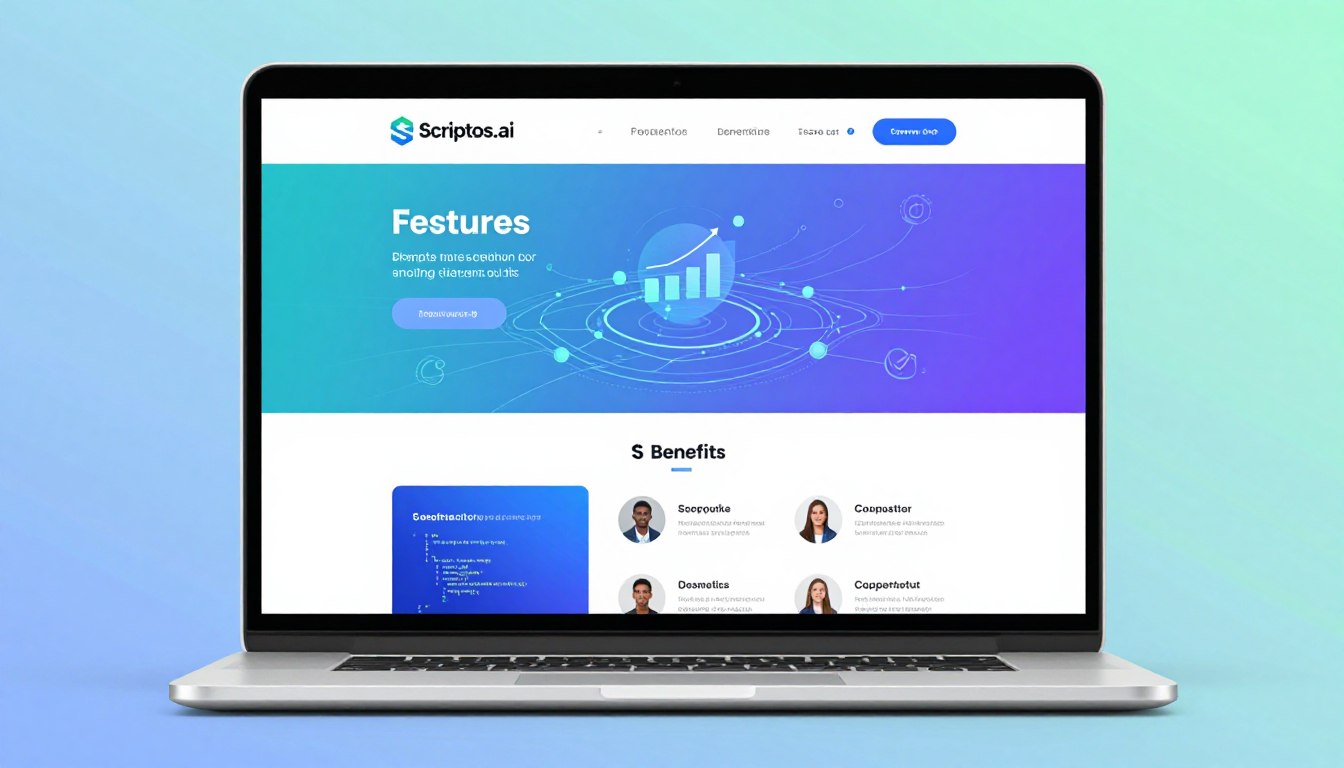
Scriptos.ai guides founders to turn technical capability into clear value that converts. The platform helps teams sharpen a hero section and the overall page so a visitor sees relevance at a glance.
The approach is practical: analyze positioning, refine messaging, and align images and size to strengthen the clear value proposition. Founders and product owners use the platform at https://www.scriptos.ai to move from vague claims to persuasive statements that speak to a target audience.
Expect concise tactics for page design, social proof, and conversion rate lifts. This short guide shares best practices for B2B SaaS teams who want every landing and page element to work toward measurable growth.
Key Takeaways
- Scriptos.ai turns technical points into customer-focused value.
- Refine the hero section to boost clarity and conversion rate.
- Align images, message, and size to improve user experience.
- Use social proof and clear value propositions to stand out.
- Product owners gain faster insights with the Products SaaS tool.
Defining High-Converting SaaS Landing Pages
High-converting landing pages are where clear strategy meets deliberate user experience. This is the spot where product strategy and design work together to drive measurable growth.
Unbounce reports a median conversion rate of about 3.8% for SaaS pages, while top performers often hit double digits. The gap comes down to clarity, trust signals, and fewer points of friction.
Successful pages address 4–6 stakeholders. They speak to technical buyers and executives with a single, focused value proposition. Social proof and obvious next steps guide the user through a short journey that encourages action.
- Clarity: quick headline, focused subtext, and simple visuals.
- Trust: case studies, logos, and testimonials placed near CTAs.
- Testing: measure conversion rates to find and fix friction.
Adopting these best practices lets teams bridge the performance gap. With steady refinement, a page moves from average to industry leader and turns visitors into qualified leads.
Mastering Feature Benefits, SaaS Copy, Landing Page Messaging, and Product Marketing
A clear shift from technical specs to customer outcomes changes how visitors respond. This section presents a tight framework teams can apply to convert capabilities into meaningful value.
The Feature-Benefit Transformation Framework
Transform specs into outcomes: map each technical point to a measurable result for the user. Use the Before-After-Bridge (BAB) structure to show the current pain, the improved state, and the path to get there.
“The secret to impactful SaaS copy lies in the nuanced art of transforming technical capabilities into emotional benefits.”
Aligning Copy with User Intent
Address the full buying committee: technical users need clarity, executives need ROI. Build a messaging hierarchy that surfaces the most critical pain at the top of the page.
- Match headlines to search intent and common objections.
- Keep every block of text tied to the core value proposition.
- Focus on outcomes that drive conversion and retention.
Building a Foundation with Strategic Positioning
Strategic positioning clarifies who you serve and why they should care—before any design work begins.
Unclear messaging is the leading cause of underperforming landing pages for many B2B teams. Talia Wolf reminds teams that emotion and strategy matter as much as layout.
Begin by mapping primary pain points for your target audience. Then align product features to specific gains so the value proposition stands apart from competitors.
Positioning requires a firm grasp of the buyer journey. Each section of the page should answer one key question for the ideal customer, reducing doubt and boosting conversion.
- Anchor design: use your proposition to guide visual and copy choices.
- Map pains to gains: show how the product resolves concrete problems.
- Test and iterate: apply best practices and measure results.
| Stage | Focus | Outcome |
|---|---|---|
| Discovery | Target audience & pain points | Clear positioning brief |
| Alignment | Value proposition & design | Consistent page messaging |
| Optimization | Tests & metrics | Higher conversion and growth |
Designing Hero Sections That Drive Immediate Action
The hero area must show value fast—visitors decide in seconds. A compact hero on a landing page should visually demonstrate what the product does and why it matters within 3–5 seconds.

Visualizing Product Value
Use micro-animations or simple workflow images to show transformation. Notion and Linear use motion to illustrate outcomes rather than long explanations.
Keep image size balanced so the main message stays visible without scrolling. This improves user experience and boosts conversion rates.
Optimizing Headline Clarity
High-performing headlines stay under eight words. A short H1 forces clarity and removes jargon.
Follow the headline with a supporting subheadline that states the clear value proposition in plain language.
Strategic Placement of Trust Signals
Logos, security badges, and customer quotes belong near the primary CTA. Nielsen found that ~83% of people trust recommendations from acquaintances; social proof matters.
Test different placements and button colors. Small changes in layout or image choice often move conversion rates more than new copy.
| Element | Purpose | Quick Guideline |
|---|---|---|
| Headline | State the value | Under 8 words; clear and direct |
| Image | Show transformation | Use workflow visuals; balance size |
| Trust signals | Build credibility | Place near CTA; include logos/testimonials |
Crafting Content That Resonates with Buying Committees
Content that wins B2B deals answers four to six distinct concerns in a single flow. A well-structured landing page maps each stakeholder—finance, IT, operations, and end users—to clear signals they trust.
Start with the primary decision-maker and layer detail downward. Lead with a concise value proposition, then reveal ROI figures, technical docs, and use cases for evaluators.
Use frameworks such as PAS (Problem‑Agitation‑Solution) to address specific pain points. Short, targeted blocks let different readers find relevant information fast without breaking the main message.
Trust grows with evidence: add real metrics, case examples, and social proof near CTAs so committees can justify decisions quickly. Daniel Kahneman’s work reminds teams that clear emotional cues help logical evaluators choose.
Make the page a resource: include calculators and spec sheets to build confidence before a sales call. For practical guidance on design and structure, see designing B2B product pages.
Leveraging Scriptos.ai for Product Analysis
A fast audit with Scriptos.ai reveals which statements on your page actually move prospects toward signup. The tool converts competing claims into ranked insights so teams can act quickly.

Improving Messaging Clarity with Scriptos.ai
Scriptos.ai provides a focused platform for founders to test positioning and sharpen their value proposition. It highlights the lines that confuse customers and those that increase conversion rates.
The Products SaaS area at Products SaaS surfaces which statements map to real customer gains. Teams save time by getting prioritized suggestions instead of guessing.
- Analyze: scan multiple landing pages to find inconsistent claims.
- Prioritize: rank the phrases that drive conversion and reduce friction.
- Iterate: apply small edits, measure change in conversion rates, repeat.
| Action | Outcome | Estimated Time Saved |
|---|---|---|
| Positioning audit | Clear value alignment across the page | 3–5 hours |
| Messaging scorecard | Prioritized edits that lift conversion | 2–4 hours |
| Cross-page analysis | Consistent language for customers | 4–6 hours |
Scriptos.ai acts like a mentor: it guides founders through positioning choices and helps teams focus on the claims that matter most. For practical prompts on refining strategy, see a short set of AI prompts on AI prompts for product strategy.
Technical Performance and Mobile Optimization
Mobile traffic now dominates visits, so performance must lead design decisions. With 83% of visits on mobile and desktop converting about 8% better, technical choices shape conversion outcomes more than visual polish alone.
Slow load times drive bounce: studies show a jump of roughly +123% when load moves from 1s to 10s. Teams should target Core Web Vitals—LCP under 2.5s and CLS below 0.1—to protect conversion and user experience.
Optimize images with modern formats like WebP or AVIF, enable lazy loading for below‑the‑fold content, and serve assets via a CDN. Server-side rendering or pre-rendering can cut time to first meaningful paint for global visitors.
Mobile-first design means more than responsive shrinking. Touch-optimized CTAs, simplified forms, and quick flows close the conversion gap between phones and desktops. Monitor performance continuously and treat technical metrics as essential best practices for any b2b saas landing page.
Implementing AI-Powered Personalization Strategies
AI now tailors on‑site experiences that match a visitor’s intent in real time. For B2B teams, that means higher relevance on every landing page and measurable lifts in revenue and retention.
Effective programs can drive a 5–15% revenue lift and cut CAC by up to 50%. Personalized CTAs alone perform about 202% better than generic buttons, so aligning calls-to-action with visitor intent is a clear priority.
Teams should combine source-based rules (paid, organic, email) with firmographic signals via IP identification to tailor hero text, social proof, and offer framing. Tools like Clay, Claude, and n8n speed research and help generate scalable variants that slot into existing page templates without heavy engineering work.
Best practice: rotate industry-relevant testimonials and run continuous A/B tests on personalized variants. This platform-agnostic approach improves conversion rates and lowers acquisition costs while keeping the design simple and the user journey clear.
Conclusion
A clear end-goal for any high-performing landing page is to make value obvious in seconds.
Mastering the shift from technical detail to customer outcomes takes ongoing research and focused positioning. Start by auditing your current product positioning and messaging, then prioritize the claims that matter most to customers.
Use tools like Scriptos.ai to speed analysis and rank what moves the needle. Combine design, technical performance, and AI personalization to lift conversion rate and trust through social proof.
Act, test, and iterate: adapt your approach for the buying committee, measure results, and refine continuously. For practical structure and examples, see this guide on what is a SaaS landing page.
FAQ
What is the core value of Turn SaaS Features into Benefits with Scriptos.ai?
Scriptos.ai helps teams convert technical capabilities into clear customer outcomes. It analyzes functionality, suggests concise benefit statements, and aligns wording with buyer intent so messaging drives higher engagement and conversion.
How does Defining High-Converting SaaS Landing Pages improve results?
Clear structure and prioritized value reduce friction. High-converting pages focus on one main outcome, use strong headlines, supportive visuals, and a single call to action to guide visitors toward decision with confidence.
What is the Feature-Benefit Transformation Framework?
The framework maps each capability to a customer problem, then expresses the outcome in plain language, quantifies impact where possible, and tests variations to identify the most persuasive phrasing for target buyers.
How can teams Align Copy with User Intent?
Start with research: search queries, support tickets, and sales calls. Segment visitors by intent—awareness, evaluation, purchase—and tailor headlines and CTAs to match those needs at each stage.
Why is Building a Foundation with Strategic Positioning important?
Strategic positioning defines who the offering is for, why it’s different, and the measurable value. That clarity informs all creative choices and shortens the buyer’s path from interest to action.
What makes an effective hero section in Designing Hero Sections That Drive Immediate Action?
An effective hero presents a clear promise, supports it with a relatable visual, and offers an immediate next step. The headline must state the primary value; the subhead and CTA remove ambiguity.
How does Visualizing Product Value help conversions?
Visuals translate abstract capabilities into tangible outcomes—dashboards, before/after scenarios, or short demos reduce cognitive load and build trust faster than text alone.
What are best practices for Optimizing Headline Clarity?
Use plain language, state the main outcome, and avoid jargon. Test short versus descriptive headlines and prioritize messages that resonate with real customers over clever phrasing.
Where should trust signals be placed for Strategic Placement of Trust Signals?
Place logos, testimonials, and credentials near the hero, above-the-fold CTAs, and next to claims that require validation. Repeating brief proof points across the page sustains credibility.
How do you Craft Content That Resonates with Buying Committees?
Address multiple stakeholders by highlighting outcomes relevant to each role—ROI for executives, usability for product teams, security for IT—and include data and case studies to support claims.
How does Leveraging Scriptos.ai for Product Analysis speed messaging work?
Scriptos.ai parses product descriptions, extracts key customer problems, and proposes concise messaging variants. It streamlines iterations and surfaces high-impact language based on usage patterns.
How can Improving Messaging Clarity with Scriptos.ai be measured?
Measure uplift via A/B tests on headlines and CTAs, monitor time on page and engagement rates, and track conversion metrics tied to the revised copy. Small clarity gains often yield measurable conversion increases.
What technical factors matter in Technical Performance and Mobile Optimization?
Page speed, responsive layout, and accessible interactive elements are critical. Optimizing images, reducing script load, and ensuring fast server response time directly improve user experience and conversion.
How do Implementing AI-Powered Personalization Strategies affect user experience?
AI personalization tailors copy, visuals, and CTAs to visitor context—industry, behavior, or referral source—making content more relevant and increasing the likelihood of conversion without extra manual segmentation.