“Education is the passport to the future, for tomorrow belongs to those who prepare for it today.” — Malcolm X
Educators often face tight schedules and a crowded class agenda. FlowScholar.com aims to cut planning friction and reclaim precious class time with ready-to-use resources.
The platform surfaces targeted strategies that help a teacher design short, high-impact activities. These tools support classroom management, engagement, and swift adaptation across subjects.
When minutes matter, a reliable repository reduces prep stress and boosts instructional quality. FlowScholar integrates analytics and practical routines so we can plan, execute, and review with clarity.
Explore how structured planning and AI-informed recommendations transform daily practice — and see why many professionals share success stories on LinkedIn and in focused workshops at Miloriano.
Key Takeaways
- FlowScholar reduces prep time with curated resources.
- Short activities can maximize engagement within limited class time.
- AI-driven suggestions help tailor tasks to diverse learners.
- Analytics guide quick adjustments and continuous improvement.
- Practical tools support both management and instructional goals.
The Importance of Quick Lesson Ideas for Teachers
Routine interruptions and heavy demands make it hard to deliver consistent, meaningful instruction every day. A 2021 NEA report highlights growing teacher burnout and the need for stronger support systems in school. Practical supports help a teacher manage daily classroom demands with less stress.
When students feel held by clear lesson plans, they engage more deeply with new material. Simple structures at the start and end of a class create reliable cues that boost learning and behavior.
High-quality lesson structure signals safety and belonging. In that environment, students take intellectual risks and teachers regain energy for instruction. This balance keeps teachers invested in their craft and students reaching academic goals.
- Start and close with purpose: those minutes anchor each lesson.
- Use compact routines: they reduce decision fatigue and protect class time.
- Prioritize clear supports: they sustain student engagement across the school day.
Energizing Classroom Openers to Start the Day
An effective opener signals expectations and invites every student into the day’s content right away. Brief routines focus attention, reduce transition noise, and prepare kids to engage.
Rapid Review Techniques
Henry Seton, a high school world history teacher, uses a 90-second rapid review. Students write key words they remember from prior units. This one-minute check shows what students know and what gaps remain.
“Students who take a pretest before a lesson outperform their peers by 49 percent.”
Informational Hooks
Professor Curtis Chandler recommends informational hooks to surface misconceptions about the topic. UCLA instructor Rebecca Alber asks provocative questions to deepen thinking and spark discussion.
- Low-stakes pretests or vocab splashes engage every student on entry.
- One-minute writes give teachers a fast snapshot of prior knowledge.
- Short prompts set clear goals and connect to upcoming lesson plans.
| Type | Time | Purpose |
|---|---|---|
| Rapid Review | 90 seconds | Assess prior knowledge; warm up thinking |
| Pretest | 2–3 minutes | Predict performance; guide pacing |
| Informational Hook | 1–2 minutes | Debunk misconceptions; spark discussion |
Effective Ways to Close a Lesson
A deliberate wrap-up turns scattered notes into measurable understanding and next steps. Short closers give teachers quick evidence of what students retain. They also set the tone for the next class.
Reflective Closing Prompts
Simple prompts help kids summarize their thinking in one or two sentences. Try a two-dollar summary: students write the value of the lesson in a few clear words. This pushes concise writing and reveals understanding fast.
- Rating scale: Rebecca Alber asks students to rate their understanding from 1 to 10 — a great way to audit a lesson and guide next steps.
- Game-to-paper: Shannon Kenyon uses Rock, Paper, Scissors; winners write the main idea on paper.
- Interactive quiz: Nikki Cobb-Struzynski has students create Kahoot! questions to review unit content.
- Beach ball discussion: Eman Bekheet tosses a ball with prompts so students answer one reflective question aloud.
| Activity | Format | Time (minutes) | What teachers learn |
|---|---|---|---|
| Rating Scale | Written / Quick poll | 1 | Student confidence and gaps |
| Rock, Paper, Scissors → Paper | Pair game + written | 2–3 | Main idea clarity |
| Create a Kahoot! | Digital quiz creation | 5–10 | Question quality and recall |
| Beach Ball Prompts | Oral discussion | 2–4 | Depth of reflection and participation |
These activities give students a chance to reflect and let the teacher gather immediate feedback. Every minute spent on these prompts helps students consolidate learning and lets educators adjust lesson plans. When you ask students to write, you help them stop and evaluate progress. That practice keeps the classroom focused and confident at the end of the day.
Using Games to Reinforce Academic Concepts
Games turn abstract goals into hands-on practice that sticks with students.
Physical play and low-tech tools make complex material more vivid. Exploragons and Magformers let students build shapes and see geometry in three dimensions.
Simon Says can anchor astronomy vocabulary while kids move around the room. Charades with prepared slips of paper helps students act out words they’re studying.
A whiteboard flip is a great way to assess understanding instantly: all students reveal answers to the whole class at once.
- Beach ball throws review questions and include every student.
- Manipulatives and games reduce burnout and refresh the school day.
- These activities build community and support varied learning styles.
| Game | Target | Time |
|---|---|---|
| Exploragons / Magformers | Geometry visualization | 5–10 min |
| Simon Says (content-driven) | Astronomy terms | 3–5 min |
| Charades (vocab) | Action / definition recall | 5–8 min |
| Whiteboard Flip | Formative check | 1–2 min |
Quick Lesson Ideas for Teachers Using AI Tools
AI can rewrite how a teacher sculpts a single class, turning a rough plan into targeted activities in minutes.
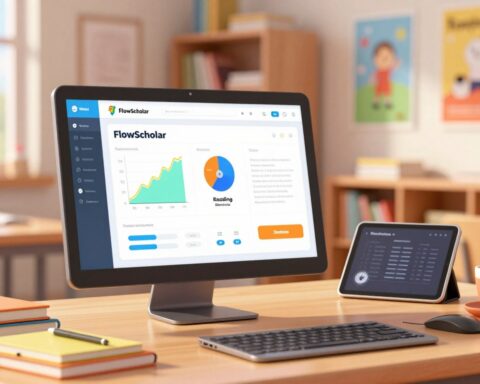
FlowScholar.com offers an AI workflow that personalizes content to match what students need right now. Use the platform to adapt a topic, add scaffolds, and produce a clear plan that fits your classroom pace.
Personalizing Content with FlowScholar
FlowScholar’s suggestions reflect student questions and interests. Teachers can enter a prompt and get multiple ways to present a complex topic.
One example: supply a short prompt and receive a scaffolded activity, a two-minute write, and a small paper reflection — all tailored to what students take as gaps.
Saving Planning Time
Automating routine steps frees up time to focus on student thinking and feedback.
“By removing repetitive drafting, teachers can prioritize coaching and assessment.”
- Speed: instant outlines and sample words to explain tricky content.
- Adaptability: options for mixed-ability groups and kids who need extra support.
- Practicality: ready-to-use lesson plans that fit a busy school day.
In short, FlowScholar.com is a modern way to enhance instruction and keep students engaged when planning time is limited.
Building Community Through Interactive Activities
Small, structured interactions transform a room of strangers into a cooperative learning community.
Concentric circles and similar formats are a great way to build connection. These activities ask students to move around room and speak with different partners.

When a teacher uses these structures, they allow students to share their thinking on the content they are studying. That safe exchange reduces anxiety and increases participation in class.
“Structured interaction gives every student a clear way to contribute.”
- They encourage meaningful discussion and social skill growth.
- Each activity is simple to run and fits most topics.
- Teachers can use prompts or one question to guide each rotation.
Result: students form relationships, feel valued, and engage more deeply with learning. In practice, these methods become an essential part of any teacher’s toolkit.
Managing Transitions with Short Brain Breaks
Planned brain breaks give students a predictable way to shift gears during a busy school day. These short pauses reduce restlessness and preserve instructional time.
Movement Breaks
Use brief movement routines, like GoNoodle videos, to reset energy mid-class. When students get a controlled burst of motion, they return calmer and more ready for the next lesson.
Movement breaks are a practical way to handle transitions between subjects. They prevent the chaos that can happen when kids have excess energy and nowhere to put it.
- Short brain breaks are a vital way to help students manage energy during the day.
- These activities give students time to reset, improving focus in the next lesson.
- They are a game-changing strategy for teachers who need fast transitions in the classroom.
“Well-timed movement can be the difference between a productive class and a frustrated one.”
Make these breaks part of the routine: one-minute stretches, a short game, or a guided breathing set. Over time, students learn the cue and the classroom regains steady focus for deeper learning.
Creative Whiteboard Activities for Spare Minutes
Portable whiteboards let the whole class show thinking in a single, visual moment. Use short activities to keep students engaged during spare minutes between transitions.
Try a live alphabet game: name items tied to the topic by letter. The whole class writes answers on the board and holds them up.
Another low-prep option: give a squiggle or shape and ask kids to add details until it becomes a complete drawing. This sparks creativity and reinforces vocabulary with minimal setup.
- One-minute word sprint: students write as many words on paper or board as they can about what they’re studying.
- Fast quiz game: pose a single question and have the whole class reveal an answer at once.
- Rotation challenge: quick prompts let every student contribute before recess or lunch.
| Activity | Time | What teachers learn |
|---|---|---|
| Alphabet topic game | 2–3 minutes | Vocabulary breadth |
| Squiggle drawing | 1–2 minutes | Creativity & engagement |
| One-minute word sprint | 1 minute | Recall speed |
Result: these board strategies turn idle time into purposeful learning fun. Keep a few activities in your back pocket and the school day stays productive and lively.
Strategies for Formative Assessment on the Fly
Formative checks let a teacher see learning patterns in real time and act before confusion grows. These brief probes take little time but yield clear data about student understanding.
Ask students two direct questions: what is clear and what is cloudy about the lesson. Have them write one or two words on a slip of paper or a sticky note.
Use a simple paper handout to collect responses. Sorting those notes gives a rapid map of who needs help and who can move ahead.
- One-question exit ticket to capture a key understanding.
- Two-word summary: main idea + remaining question.
- Mini self-rating on a three-point scale.
“Formative assessment turns everyday activity into guidance for future lesson plans.”
Embed these methods into the day so teachers always have current evidence. For practical techniques, consult this formative assessment strategies.
Leveraging Technology for Classroom Support
Smart classroom tools can turn a busy period into an opportunity to support every learner.
FlowScholar.com is one such platform: an AI-driven workflow that helps teachers design a game or activity that reinforces content and meets student needs.
How it helps:
- Streamlines planning so teachers spend more time with students and fewer hours drafting materials.
- Creates an interactive game or formative check that engages students and reveals gaps in understanding.
- Adapts content to group needs, offering multiple ways to present a topic and answer common questions.

A thoughtful type of technology blends planning, assessment, and play. When used well, these tools personalize feedback and free teachers to coach small groups.
“Digital tools should expand what a classroom can do, not replace the teacher’s judgement.”
Explore FlowScholar.com and other platforms to find the right ways to support students, save time, and improve outcomes.
Conclusion
A few intentional changes can turn idle minutes into meaningful learning moments. These small moves boost engagement, clarify outcomes, and restore time for focused instruction.
Visit https://www.flowscholar.com, to explore AI-driven templates and scaffolds that simplify planning and support student growth. By adopting concise routines and targeted checks, educators save time and sharpen classroom impact.
Start small: try one new routine this week, measure results, and adapt. Over time, these adjustments compound into stronger participation and clearer progress.
Thank you for your dedication. We encourage you to experiment, refine what works, and keep students at the center of every decision.
FAQ
What is FlowScholar.com and how does it help when teachers need fast classroom support?
FlowScholar.com is an online resource that supplies concise, actionable classroom activities and planning tools. It helps teachers save preparation time by offering adaptable prompts, rapid-review techniques, and short activities that align with standards and learning goals.
Why are brief activity plans important in daily teaching?
Short plans let educators respond to changes in timing, keep students engaged, and maintain momentum across lessons. They support pacing, reduce planning stress, and provide varied entry points for different learners without sacrificing instructional quality.
What are effective ways to start the day to energize students?
Begin with a quick review, a thought-provoking question, or a 3–5 minute informational hook tied to the day’s objective. These openers build curiosity, activate prior knowledge, and set a clear purpose for learning.
What rapid review techniques work well in a busy classroom?
Use exit-ticket riffs in reverse, flash quizzes, paired recall, or one-minute summaries. Each method reinforces retention while taking minimal time and can be adapted for whole-class or small-group formats.
How can teachers create impactful informational hooks?
Present a surprising fact, a short video clip, or a real-world scenario that connects to students’ interests. The hook should pose a question or problem that the lesson will address, anchoring attention quickly.
What are practical ways to close a lesson so students reflect and retain learning?
Employ reflective prompts such as “One thing I learned,” “A question I still have,” or a quick application task. These closures consolidate understanding and guide subsequent instruction.
Can you give examples of reflective closing prompts teachers can use in minutes?
Try sentence stems like “Today I can…” or a two-sentence summary requirement. Alternatively, ask students to write a next-step action or score their confidence on the objective.
How can games reinforce academic concepts without wasting class time?
Choose short, targeted games—matching, timed rounds, or team challenges—that require students to apply specific skills. Set clear rules and time limits so games remain focused and instructional.
How do AI tools speed up planning and personalize content?
AI platforms can generate differentiated prompts, adjust difficulty, and produce quick assessments based on standards. They reduce repetitive tasks, freeing teachers to tailor materials for student needs more efficiently.
What features should teachers look for when using FlowScholar or similar tools to personalize content?
Prioritize tools with curriculum alignment, editable templates, student-level differentiation, and easy export options. These features enable rapid customization and seamless integration into daily routines.
How can short activities build classroom community?
Use collaborative quick-writes, paired problem-solving, or group reflection tasks that require sharing and listening. Repeated low-stakes interactions foster trust and cooperative norms over time.
What are simple brain breaks that support transitions and focus?
Implement one- to two-minute movement breaks, breathing exercises, or standing stretches. These reset attention, reduce restlessness, and are easy to insert between lesson segments.
How can teachers use movement breaks without losing instructional time?
Keep them brief, structured, and linked to the lesson (e.g., a concept-based gesture). Schedule them predictably so students know expectations and transition back quickly.
What whiteboard activities work in spare minutes to reinforce skills?
Quick tasks include timed problem rounds, collective mind maps, or warm-up prompts that students respond to individually or in small groups. Whiteboard work encourages visible thinking and immediate feedback.
How can formative assessment be conducted on the fly?
Use thumbs-up/thumbs-down, quick polls, exit slips, or spot checks during activities. These techniques provide instant insight into comprehension and guide next steps without formal grading.
Which tech tools best support rapid formative checks and classroom management?
Look for platforms that offer instant polling, quick quizzes, and easy reporting—Google Forms, Kahoot!, and Socrative are practical examples. Choose tools that integrate with existing workflows and protect student data.