“If you can’t explain it simply, you don’t understand it well enough.” — Albert Einstein.
This article shows practical ways to open a speech so listeners stay for the rest. A strong opening shapes the message and sets context for the audience. We focus on clear examples, types of attention getters, and the purpose behind each choice.
Readers will learn how a well-crafted statement, a surprising fact, or a vivid scene can spark curiosity and build a quick connection. Short questions and bold words guide listener interest and invite a response.
Whether preparing a formal presentation or casual talk, understanding how to start speech effectively is the first step toward stronger speeches. The guide offers tips and a simple framework to shape the opening part and keep people focused on the topic.
Key Takeaways
- Open with purpose: choose a quote, fact, or scene that supports your message.
- Use short, strategic lines to spark curiosity in your audience.
- Match the type of opener to the speech context and listener needs.
- Design each opening word to lead naturally to the rest of the presentation.
- Practice transitions so the start flows into the main points with ease.
The Importance of a Strong Script Attention Grabber
The opening moment of any speech sets the frame for how people will value the message that follows. The first few seconds decide audience attention and the tone of the entire presentation.
Think of a hook like a song intro: if it is not catchy, listeners will drift. A deliberate attention getter helps secure audience attention and signals readiness.
Research shows the first minute is critical for credibility. Use proven attention getters for speeches to set expectations and make information land as intended.
When a speaker chooses the right opener, people see competence and feel invited into the topic. That bridge between message and listener needs transforms ordinary speeches into meaningful moments.
- A strong opener shapes how the audience perceives your message.
- Professional presentations require a plan to win audience attention.
- Select getters speeches that match your goals and the people in the room.
Psychological Triggers That Keep Viewers Watching
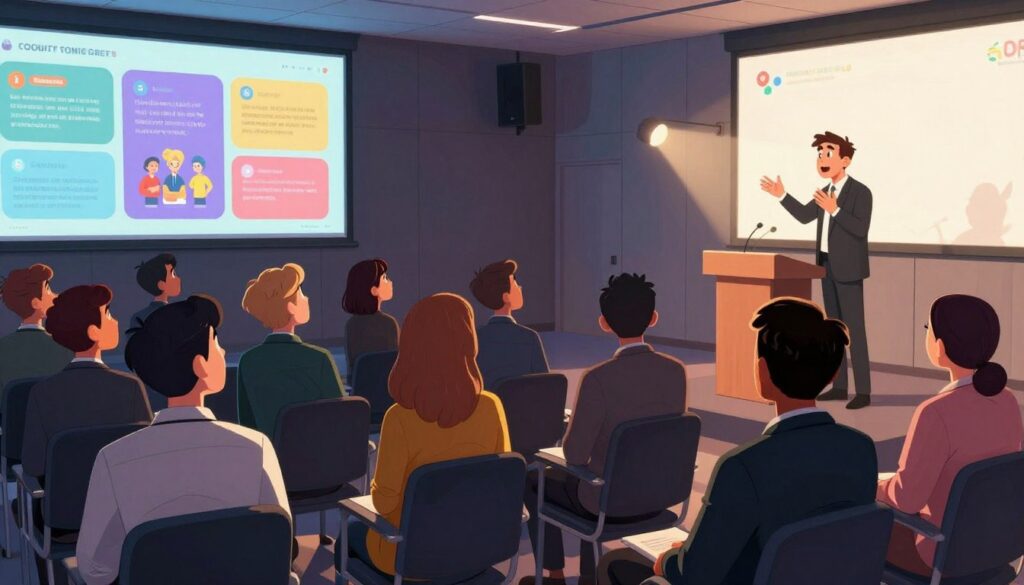
Small psychological cues determine whether people stay with a speech or drift away. Modern audiences face constant digital competition; research shows this clearly. Gloria Mark, PhD, reports the average screen-focused attention span is about 47 seconds.
The Science of Attention Spans
Short windows of focus are real: a February 2023 episode of “Speaking of Psychology” highlighted how quickly people lose focus. Speakers must plan openings and midpoints with this in mind.
Building Emotional Connections
Emotional hooks work where facts fail. When a presenter links the topic to personal stakes, people stay engaged longer. A well-placed question pauses the room and resets focus.
- Use one clear emotional image early to bond the audience to the speech.
- Introduce a short, reflective question to recapture wandering attention.
- Balance data and story: science keeps credibility; story keeps people invested.
We also recommend studying proven attention getters speeches and applying them with intent. For deeper tactics on short-form hooks and viewer psychology, read this guide on viral hooks.
Proven Techniques for Crafting Compelling Openings
A single vivid image or a pointed question can shift a room from passive to curious.
Start with a rhetorical question to make listeners process the topic immediately. Patrick Henry used a chain of questions in 1775 to spark an emotional response; that method still works in modern speeches. A tight, well-placed rhetorical question turns people into active participants rather than passive listeners.
Using Rhetorical Questions
Use one clear question that frames your message. Keep it short and direct so the mind forms an answer.
This technique primes the audience to follow your argument and raises curiosity before you deliver the rest.
The Power of Storytelling
Tell a brief, vivid story to build connection. The human brain can process memorable images in as little as 13 milliseconds, so a quick scene sticks.
Pair a personal anecdote with a clear purpose; that combination creates empathy and keeps people invested in the speech.
Incorporating Startling Facts
Open with a surprising fact to give listeners a reason to stay for the rest of the presentation.
Use one bold statement or quote to provide context—Martin Luther King Jr. used a historical quote to ground his message and magnify its impact.
“Give me liberty, or give me death!”
Quick comparison:
| Technique | Primary Effect | Best Use |
|---|---|---|
| Rhetorical Question | Shifts audience from passive to active | Debates, persuasive speeches |
| Story | Builds emotional connection | Keynote, fundraising, team talks |
| Startling Fact | Provokes curiosity and credibility | Data-driven talks, policy briefings |
Practical tips: Match the type of opener to context, test the wording aloud, and use one strong device rather than many. When these getters are combined correctly, audience attention and interest rise quickly.
Leveraging Technology to Streamline Your Writing Process
Use modern tools to reduce friction in drafting a speech. AI can speed idea testing and help you land the right opening line for your message. With a smarter workflow, the team can focus on delivery while the tool handles structure and wording.

Using a Copywriting AI Tool for Better Hooks
One effective way is to use a professional copywriting AI tool like Scriptos.ai as a content generator. It suggests variations, tightens phrasing, and offers examples tuned to your topic and people who will listen.
Benefits at a glance:
- Save time refining the core message so audience attention starts strong.
- Test different types of attention getters speeches without lengthy rewrites.
- Keep information concise so the presentation flows naturally toward the main points.
Scriptos.ai acts as a practical example of how technology improves quality. Visit this AI writing tools guide for a broader view, or explore fast ways to monetize speaking and coaching on Miloriano.
“Good tools do not replace judgement; they refine it.”
Common Mistakes That Kill Audience Engagement
A poorly chosen opener often dissolves audience interest before the main point arrives.
Failing to use a strong attention getter is common; without a clear opener, the audience drifts fast. A flat statement or a forced quote can kill curiosity and make the speech feel inauthentic.
Poor stories and off-target rhetorical question examples show how quickly people turn away. A story that misses the topic or a response question that is too complex confuses listeners instead of inviting participation.
Ignore context and you lose impact: using the wrong types of getters for the room alienates people. Many speakers forget the audience profile and slip into clichés that weaken interest.
- Test your opener with a sample audience before the event.
- Choose a single clear statement or short question tied to the topic.
- Avoid forced quotes; use authentic lines that earn curiosity.
- Keep response questions simple so people can reply quickly.
Good attention comes from relevance and respect. With a planned opening and these tips, speeches become a tool for connection rather than a source of frustration.
Adapting Your Message for Different Platforms
Different platforms shape what the audience expects in the first thirty seconds. Speakers must change their opener to fit the medium and the people who will listen.
Tailoring Content for Social Media
Social posts reward immediacy. Use a quick question or a bold statement to spark comments and shares.
Keep lines tight: short phrases and one clear call to action work best. A short story trimmed to a single image or beat can create rapid engagement.
For ideas on stretching one message across formats, see how to repurpose content across platforms.
Adjusting Tone for Formal Presentations
Formal settings demand a structured opener. Start with a clear statement that frames the topic and signals relevance to the audience.
Use examples that link the opener to the main points and test transitions so the presentation flows without friction.
We find that a measured tone, backed by a concise example, preserves audience attention and builds credibility. For ideas on monetizing speaking and short-form content, explore ways to monetize a TikTok brand with AI.
Rule of adaptation: choose one opener type per platform—then refine it to fit the people and the room.
Final Thoughts on Mastering Your Script Delivery
Mastering delivery turns a neat opening into a memorable experience for every listener. Clear pacing, confident tone, and purposeful words make your message stick. When a speaker practices transitions, the audience follows the argument and the speech lands as intended.
We reviewed practical ways to start a speech—from a rhetorical question to a short story or a vivid scene. Use one simple example or fact that ties to your topic; that builds curiosity and creates a real connection with people and listeners.
Final step: refine the opener so the rest of the presentation flows. Apply these tips, test your lines, and make the chosen attention getters speeches earn interest. Visit https://www.scriptos.ai to try AI tools that speed drafting and sharpen delivery.
FAQ
What makes a script opening truly effective?
An effective opening combines clarity of purpose, an immediate promise of value, and a hook that aligns with the audience’s needs—such as a surprising fact, a focused question, or a compact story. Start by defining the outcome you want viewers to experience, then lead with one compelling element that delivers that outcome within the first 5–15 seconds.
How can writers use psychological triggers to keep viewers watching?
Use proven triggers: curiosity (pose a question that invites discovery), emotion (share relatable stakes or conflict), social proof (cite credible examples), and scarcity (hint at limited opportunity). Sequence these elements so interest builds: open with curiosity, deepen with emotion, and reinforce with credibility to sustain attention through the middle.
When are rhetorical questions most effective in an opening?
Rhetorical questions work best when they surface a pain point or provoke thinking without requiring an immediate answer. Use them to create cognitive tension that the rest of the piece resolves. Keep them short, precise, and directly relevant to the viewer’s situation to avoid distraction.
What role does storytelling play in a hook?
Storytelling humanizes ideas and creates emotional investment. A tight, vivid anecdote or a microcase—focused on conflict, consequence, and a pivot—draws viewers into the narrative arc. Deliver the story concisely and connect it clearly to the main message or lesson to maintain momentum.
How can startling facts be incorporated without feeling gimmicky?
Use startling facts that are directly tied to your thesis and backed by credible sources. Present the fact briefly, then immediately explain its relevance and implication. This validates the surprise and channels the listener’s curiosity toward your solution or argument.
Can AI tools reliably improve hooks and openings?
Yes—when used strategically. AI can generate multiple hook variations quickly, surface headline-worthy facts, and suggest phrasing that resonates with target audiences. Treat outputs as drafts: refine tone, verify facts, and adapt language to your brand voice before publishing.
What common mistakes reduce audience engagement in openings?
Common pitfalls include vague promises, long-winded intros, overused clichés, and misaligned tone. Other killers are failing to state value early, burying the main idea, or using jargon that alienates viewers. Fixes: shorten openings, clarify benefits, and test different leads with real audiences.
How should openings differ across platforms like social media versus formal presentations?
Social media demands immediacy—use bold visuals, ultra-short hooks, and direct calls to action. Formal presentations allow more context: begin with a crisp overview, a relevant anecdote, or a striking statistic, then map the agenda. Always tailor pacing, language, and level of detail to platform norms and audience expectations.
How do you adjust tone for a formal presentation while keeping energy high?
Maintain professional diction and structured logic, but use vivid examples, precise analogies, and measured storytelling to sustain engagement. Vary sentence rhythm, ask strategic questions, and punctuate with concise, memorable statements to keep attention without sacrificing formality.
What metrics should creators track to judge if an opener works?
Measure immediate audience behavior: view-through rate, drop-off points in the first 10–30 seconds, click-throughs, and social shares. Combine quantitative data with qualitative feedback—comments, direct responses, and A/B test results—to understand why a hook succeeded or failed and iterate accordingly.
How long should an effective opening be for video content?
Aim for 5–15 seconds for short-form content and 15–45 seconds for longer formats. The goal is to deliver a clear promise and reason to stay within the natural attention window of the platform and audience. Test shorter and slightly longer versions to find the sweet spot for your viewers.
Are there examples of strong openings that professionals can model?
Yes—use real-world examples like TED Talk openings that pose a crisp problem, investigative journalism leads that start with a revealing stat, or brand videos that open with a human moment. Analyze these for structure: how they create tension, state stakes, and preview payoff, then adapt those patterns to your message.
What practical steps can writers take to improve their hook-writing skill?
Practice by writing multiple lead variations for the same idea; test them with small audience samples; study high-performing openings across media; and keep a swipe file of effective lines. Iterate quickly: draft, measure, refine, and repeat—prioritizing clarity and relevance over cleverness.