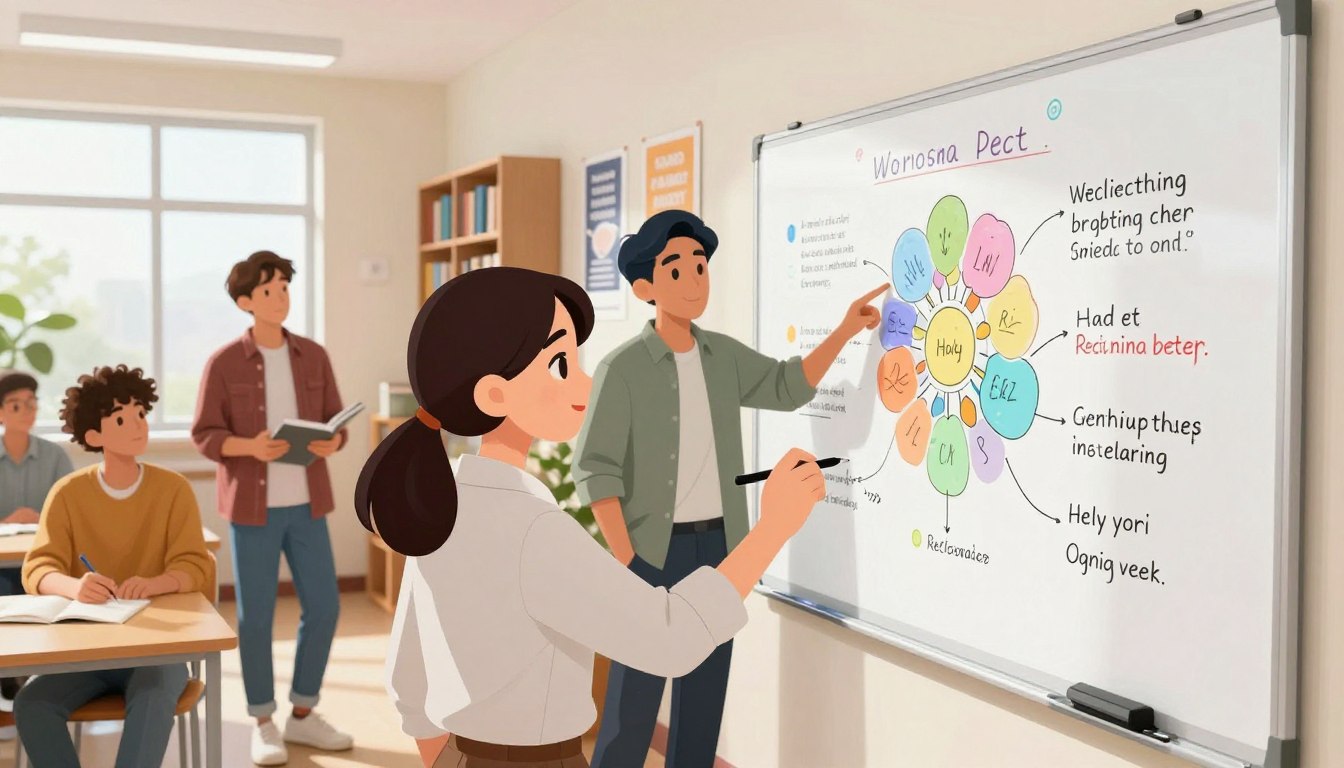
“Education is the kindling of a flame, not the filling of a vessel.” — Socrates.
FlowScholar.com acts as a clear guide in a crowded digital classroom. Recent data shows 54% of learners use AI tools weekly, and 86% have tried multiple platforms to aid their study. This trend underscores a demand for smarter, faster ways to grasp complex concepts.
FlowScholar uses advanced systems to turn dense material into simple, actionable explanations that support diverse learning styles. It helps students move from confusion to clarity with structured study paths and adaptive recommendations.
Explore how FlowScholar streamlines understanding and builds sustainable habits—visit FlowScholar insights and go to https://www.flowscholar.com to access the platform.
Key Takeaways
- FlowScholar simplifies complex topics into clear, bite-sized explanations.
- Over half of learners use AI weekly, signaling a shift in study behavior.
- The platform adapts to individual learning patterns and supports diverse concepts.
- Structured planning and review foster long-term mastery and better retention.
- Visit FlowScholar.com to see how the system helps students achieve academic goals.
The Evolution of Modern Study Habits
Study habits have shifted from lone memorization to connected, active workflows that fit modern schedules.
Digital solutions and classroom practice now blend. Young learners use a mix of platforms and methods to manage time and recall. This change emphasizes active learning over passive repetition.
Practical benefits appear quickly: clearer goals, frequent checks, and flexible pacing. Many adopt online tools to schedule sessions, test recall, and track progress.
As curricula grow more complex, accessibility and immediate feedback matter more. Students who adapt build resilient routines that carry beyond exams into careers and daily work.
- Interactive platforms replace rote methods with engagement and practice.
- Integrated tools help manage time, note-taking, and revision.
- Active learning encourages deeper retention and better problem solving.
| Old Habit | Modern Practice | Outcome |
|---|---|---|
| Rote memorization | Frequent retrieval practice | Stronger long-term recall |
| Single-source textbooks | Multi-format resources | Broader understanding |
| Last-minute cramming | Spaced, scheduled review | Reduced anxiety, better grades |
| Solo study sessions | Guided, interactive practice | Higher engagement |
Why Students Need an AI Topic Explanation Tool for Students
When class workloads spike, reliable digital guidance turns long, unfocused sessions into short, productive steps.
The Shift Toward Digital Assistance
Digital assistants now help manage reading, practice, and planning. They save time and give tailored answers that match each student’s pace.
Tools like Khanmigo and ReadAlong break down complex reading and math content into clear steps. That makes learning less stressful and more consistent.
Benefits of Instant Clarity
Immediate feedback speeds up study. Students get personalized explanations that answer specific questions and reduce homework bottlenecks.
Teachers and parents can use these tools to boost critical thinking and build stronger planning habits. Over time, this improves understanding and core skills.
| Need | What instant clarity provides | Outcome |
|---|---|---|
| Heavy workload | Step-by-step guidance | Save time, less stress |
| Confusing content | Personalized answers | Better understanding |
| Limited practice | Immediate feedback | Faster mastery |
Breaking Down Complex Concepts into Manageable Parts
When dense material is segmented, comprehension grows and study time becomes more efficient.
Platforms like ReadAlong show how breaking complex concepts into smaller pieces supports early literacy and better reading comprehension. These tools let learners pause, repeat, and focus on specific sentences that cause confusion.
When students engage with guided sections, they can isolate difficult passages and work through them step by step. This approach turns a long chapter into short, clear tasks that build momentum.
We design paths that reduce intimidation. By simplifying the learning process, students gain confidence and can tackle advanced material with less anxiety.
- Isolate problem areas: target weak spots without redoing all content.
- Step-by-step progress: small wins encourage steady study habits.
- Scaffolded reading: support for learners who struggle with traditional texts.
How FlowScholar Simplifies Academic Challenges
FlowScholar turns classroom friction into clear, spoken guidance that learners can act on immediately.

Real-time Voice Explanations
Real-time voice explanations guide each step of a problem. Students hear concise answers and can replay a short segment until it clicks.
This approach reduces wasted study time and improves understanding of tough concepts.
Visualizing Solutions
Visual cues map complex steps into clear diagrams and annotated screens. Charts and worked examples turn abstract ideas into concrete content.
Identifying Knowledge Gaps
Built-in assessments flag weak areas and suggest focused practice questions. Personalized content helps refine writing, math, and problem-solving skills.
- Personalized paths: tailored practice that saves time.
- Virtual assistant features: planning and in-session guidance.
- Progress tracking: data that highlights what to review next.
| Feature | What it does | Benefit |
|---|---|---|
| Voice explanations | Spoken, step-by-step guidance | Faster comprehension |
| Visual solutions | Diagrams and worked examples | Clearer problem solving |
| Knowledge gap reports | Targeted question sets | Efficient practice |
| Progress tracking | Session-level insights | Better study planning |
With over 1,000,000 learners worldwide, these tools help students turn each challenge into a manageable learning step and succeed in education.
Enhancing Critical Thinking Through Interactive Learning
Engaging multimedia projects push learners to connect evidence, craft narratives, and defend conclusions.
Interactive learning environments—like Toontastic 3D—invite students to build scenes, characters, and plots. This process strengthens writing and storytelling skills while sharpening analytical thinking.
Open-ended questions guide reflection. When a student must explain choices or revisit a scene, they practice breaking down complex concepts and justifying decisions.
We find that study with interactive tools prepares learners to face modern academic and professional challenges. Project creation lets students apply knowledge across subjects and develop durable skills.
- Promotes inquiry by prompting deeper questions.
- Links reading, research, and creative writing in one activity.
- Builds transferable critical thinking and collaboration skills.
The result: a culture of curiosity where learners move beyond rote recall to a richer, evidence-based understanding.
The Role of Visuals in Understanding Difficult Subjects
Clear graphics and inline marks help learners spot patterns and link concepts quickly.
Visual aids convert dense content into steps that guide study and build understanding. Visual learning supports memory by pairing words with images. We recommend tools like Wixie that let users draw, label, and highlight on-screen elements.
Annotating Screen Content
Annotating turns passive reading into active practice. When students mark diagrams, they create a map of relationships between ideas.
We provide tools that let learners draw diagrams and add notes. These features make it easy to answer questions, track progress, and revisit tricky concepts.
- Organize thoughts: layered notes reduce clutter and focus study.
- Visual links: charts show how ideas connect across content and reading passages.
- Multi-modal work: drawing plus text supports varied learning preferences.
| Visual Feature | Benefit | Best Use |
|---|---|---|
| Inline annotation | Clarifies the moment of confusion | Close reading and problem steps |
| Diagram drawing | Reveals relationships between concepts | Complex systems and processes |
| Highlighting layers | Prioritizes key facts and questions | Revision and quick review |
Personalized Feedback for Faster Mastery
Precise corrections during practice shrink the gap between confusion and competence.
Personalized feedback is a cornerstone of effective learning. Platforms like ReadAlong give real-time corrections that help students refine reading and core skills quickly.
When learners receive immediate input, they save study time and avoid repeating the same mistakes. Short, focused practice sessions become more productive.
We design our tools to surface strengths and weak spots. That lets each session target what matters most and makes progress measurable.
- Immediate corrections reduce wasted time and boost retention.
- Customized paths let students build confidence at their own pace.
- Focused practice turns small wins into lasting skills.
The result: guided study that helps students move from frustration to steady mastery—efficient, motivating, and sustainable.
Bridging the Gap Between Classroom and Home Study
Seamless transitions between in-class activities and home study create routines that sustain learning over time.
Bridging the gap between class and home is essential to keep pace and build confidence. A clear plan helps students carry classroom momentum into independent review without losing focus.
We recommend reliable tools that organize assignments, calendars, and note links. Notion AI helps many learners manage school work and schedules while saving valuable time.

When class discussions map directly to an at-home checklist, homework becomes purposeful. This reduces late nights and lowers stress.
- Unified environment: one place to store notes, deadlines, and reading lists.
- Faster transitions: quick review sessions that match classroom pacing.
- Balanced routines: consistent study habits that protect personal time.
“A consistent bridge between school and home turns short practice into lasting mastery.”
Our commitment is simple: equip students with practical systems and resources so they can study smarter, meet school demands, and keep time for other priorities.
Essential Features to Look for in Educational AI
Effective educational platforms pair simple navigation with reliable results to save study time and lower friction.
Ease of Use and Accessibility
Intuitive design means fewer barriers to practice. Clear menus, readable fonts, and keyboard navigation keep sessions short and focused.
Accessibility matters: captions, high-contrast modes, and mobile access expand reach. These features help students return to learning with less friction.
Accuracy and Reliability
Trustworthy information is essential. Accurate answers, source references, and consistent performance build confidence during study.
Look for reliable feedback loops that flag weak spots and suggest a next step. That stepwise support improves skills and writing through targeted practice.
- Look for: clear explanations, step-by-step guidance, and concise answers to common questions.
- Prefer: robust planning and assistant features that save time and improve long-term education outcomes.
- Choose: solutions that help students by combining accurate information with practical practice.
“The best features reduce busywork and help students focus on real learning.”
| Feature | Benefit | Outcome |
|---|---|---|
| Navigation | Faster access | More study time |
| Reliable content | Trustworthy answers | Better retention |
| Planning tools | Organized sessions | Consistent progress |
Strategies for Using AI Tools Responsibly
Thoughtful interaction with learning platforms teaches how to ask better questions and check facts.
Use tools as a guide, not a shortcut. Treat quick answers as a starting point. Verify facts and cite sources when work will be shared or graded.
Encourage critical thinking during every study session. Pause to reframe questions, test assumptions, and compare multiple features or sources.
- Ask clarifying questions that reveal reasoning, not just final answers.
- Flag and correct errors—teach reviewing as part of the process.
- Be transparent: note when external help influenced a draft or solution.
Ethics and habit-building matter. Regular practice in verification and citation builds academic integrity and prepares learners for professional standards.
| Action | Why it matters | Result |
|---|---|---|
| Use as a guide | Prevents overreliance on ready-made answers | Stronger independent thinking |
| Verify facts | Reduces errors and improves credibility | Better grades and trust |
| Note assistance | Maintains transparency in work | Clearer learning records |
| Practice critique | Builds judgment and analytical thinking | Long-term mastery |
Moving Beyond Simple Answers to Deep Understanding
True learning happens when short solutions give way to sustained inquiry and deliberate practice.
FlowScholar encourages a commitment to depth. Quick answers can start a study session, but durable understanding requires layered practice and reflection.
We provide tools that let students explore complex concepts through interactive content and targeted exercises. These features save time and focus each session on what matters most.
Regular practice refines writing and analytical skills. Students who ask sharper questions and revisit material build stronger reasoning and clearer reading habits.
- Engage with guided practice to move past memorized answers.
- Use focused content to develop transferable skills and confidence.
- Let questions drive study—curiosity leads to mastery.
Explore curated learning resources that connect features and practice to real progress. When students deepen their understanding, they meet academic demands and future challenges with resilience.
Integrating Technology with Hands-on Exploration
Combining screen-based study with physical experiments turns abstract ideas into lived skills.
Practical application helps learners move from passive reading to active practice. Short projects let students test concepts, reflect on results, and iterate quickly.
We pair digital resources with simple, real-world tasks that fit classroom schedules. This balance reduces screen fatigue and boosts engagement.
- Bridge digital study and practical work to make learning relevant.
- Use brief, hands-on experiments to reinforce key ideas.
- Encourage ownership by having learners design quick, repeatable activities.
Practical routines save time and create momentum. When these practices become daily habits, they form a dynamic study environment that supports long-term success.
Explore recommended best tools that help bridge digital lessons and classroom labs.
| Method | How it works | Outcome |
|---|---|---|
| Digital modules | Short lessons and guided prompts | Quick concept framing |
| Hands-on tasks | Experiments, models, and practice | Deeper skill retention |
| Blended routine | Daily micro-projects tied to lessons | Higher engagement and transfer |
Preparing for the Future of Digital Education
Equipping learners for tomorrow requires combining smart platforms with real study routines and ethical habits.
Mastering tools helps students sharpen critical thinking and improve academic performance. When learners adopt clear steps and planning, they save time and gain clarity in class and school work.
We provide resources that guide study, organize information, and break big concepts into manageable steps. These features support better writing, reading, and problem solving across subjects.
Using tools responsibly builds confidence. Students who check answers, reflect on reasoning, and plan practice sessions can tackle homework and complex problems with less stress.
- Step-by-step paths: clear steps that focus practice and build skills.
- Planning features: calendars and session prompts that save time.
- Organized content: notes and outlines that boost understanding.
“When tools help students learn with responsibility, they become lifelong thinkers and doers.”
FlowScholar helps students reach their potential by blending helpful features with guidance on how to use tools responsibly. Whether planning a project or deepening understanding, these ways of working prepare learners for success in education and beyond.
Conclusion
A focused routine that blends smart guidance with deliberate practice helps learners reach lasting mastery.
Make learning manageable by breaking goals into short sessions and using reliable tools to guide review. Clear steps shorten distractions and accelerate progress.
When learners adopt steady study habits, they gain confidence and deeper understanding. Use resources that surface quick answers, then turn those moments into practice and reflection.
We invite readers to explore resources at FlowScholar and discover how the right tools support lasting gains in education. Stay curious—your future in learning is within reach.
FAQ
How does FlowScholar.com help students break down difficult topics into simple explanations?
FlowScholar uses clear step-by-step breakdowns, plain-language summaries, and progressive examples to turn complex subjects into manageable parts. It combines concise explanations with visual aids and practice prompts so learners build understanding steadily rather than memorizing answers.
What changes have driven the evolution of modern study habits?
Fast access to information, mobile learning, and collaborative platforms have reshaped how people study. Learners now prefer bite-sized lessons, interactive practice, and on-demand clarification—methods that prioritize active understanding and efficient time use.
Why do students need an explanation assistant like FlowScholar?
Instant clarification reduces confusion and saves study time. A reliable assistant gives targeted examples, adapts to a learner’s level, and points out gaps in knowledge so users can focus on mastery rather than guesswork.
How has the shift toward digital assistance impacted learning effectiveness?
Digital aid enables real-time feedback, tailored pacing, and multimedia support. These features increase retention and confidence by matching instruction to a learner’s needs and offering alternate formats—text, audio, and visuals—for diverse learning styles.
What are the key benefits of instant clarity when tackling tough material?
Quick clarification prevents misconceptions from taking root, keeps momentum during study sessions, and reduces anxiety. It also makes review more productive by targeting the exact point of confusion.
How does FlowScholar break down complex concepts into manageable parts?
The platform segments topics into logical steps, defines essential terms, and uses analogies and worked examples. Each segment builds on the previous one, allowing learners to progress confidently from basics to advanced ideas.
What features enable FlowScholar to simplify academic challenges?
Core features include concise explanations, adaptive examples, visual diagrams, and real-time voice walkthroughs. Together they create a multimodal learning path that addresses different preferences and accelerates comprehension.
How do real-time voice explanations enhance learning?
Spoken walkthroughs reinforce concepts through pacing, emphasis, and tone. They help learners who absorb information auditorily, clarify steps during problem solving, and allow multitasking during review.
In what ways does visualizing solutions aid understanding?
Diagrams, annotated screenshots, and step-by-step visuals reveal relationships and processes that text alone can obscure. Visuals reduce cognitive load and make abstract ideas concrete, which speeds up recall and application.
How does the system identify knowledge gaps?
Through targeted practice questions, performance tracking, and diagnostic prompts, FlowScholar flags recurring errors and weak areas. It then suggests focused review materials to close those gaps efficiently.
How does interactive learning enhance critical thinking?
Interaction—through questions, simulations, and problem variations—forces learners to test assumptions, evaluate options, and justify solutions. This moves them from passive reception to active analysis, improving reasoning skills.
What role do visuals play in understanding difficult subjects?
Visuals clarify structure, show stepwise progression, and reveal patterns. They support memory by creating mental models and enable learners to compare approaches quickly when solving problems.
How does annotating screen content support study sessions?
Annotation lets users highlight key steps, add personal notes, and link concepts to examples. This practice fosters deeper processing and creates a tailored study record for efficient review later.
How does personalized feedback accelerate mastery?
Feedback that targets specific mistakes and offers corrective paths shortens the learning loop. Personalized tips, alternate explanations, and suggested practice adapt to the learner’s pace and focus efforts where they matter most.
How does FlowScholar bridge the gap between classroom and home study?
By providing on-demand clarification, aligned examples, and review tools, the platform reinforces classroom lessons at home. It maintains continuity with assignments and helps learners apply concepts independently.
What essential features should users look for in educational assistants?
Prioritize ease of use, clear navigation, reliable content, and adaptive feedback. Look also for multimodal explanations—text, audio, and visuals—and privacy measures that protect study data.
Why are ease of use and accessibility critical in educational platforms?
Simple interfaces reduce friction and encourage regular use. Accessibility ensures learners with different needs can engage fully, which improves outcomes and fosters inclusive learning environments.
How can users ensure accuracy and reliability when relying on digital explanations?
Choose platforms that cite sources, use vetted content, and update material regularly. Cross-check answers with class materials and trusted references to confirm correctness and context.
What strategies promote responsible use of explanation assistants?
Use them to supplement learning—not replace effort. Verify outputs, practice independently, and cite assistance when required. Treat the service as a study partner that guides thinking rather than a shortcut to finished work.
How does FlowScholar help learners move beyond simple answers to deep understanding?
The platform emphasizes process over solutions: it shows reasoning, asks probing follow-ups, and offers varied examples. This approach builds transferable skills and durable comprehension.
How can technology be integrated with hands-on exploration?
Combine digital explanations with labs, projects, and physical models. Use online guidance to plan experiments, then test ideas in real contexts—this cycle reinforces theory through practice.
How should learners prepare for the future of digital education?
Develop active learning habits: evaluate sources, practice regularly, and learn to use digital aids critically. Focus on problem solving, communication, and adaptable skills that technology will augment rather than replace.