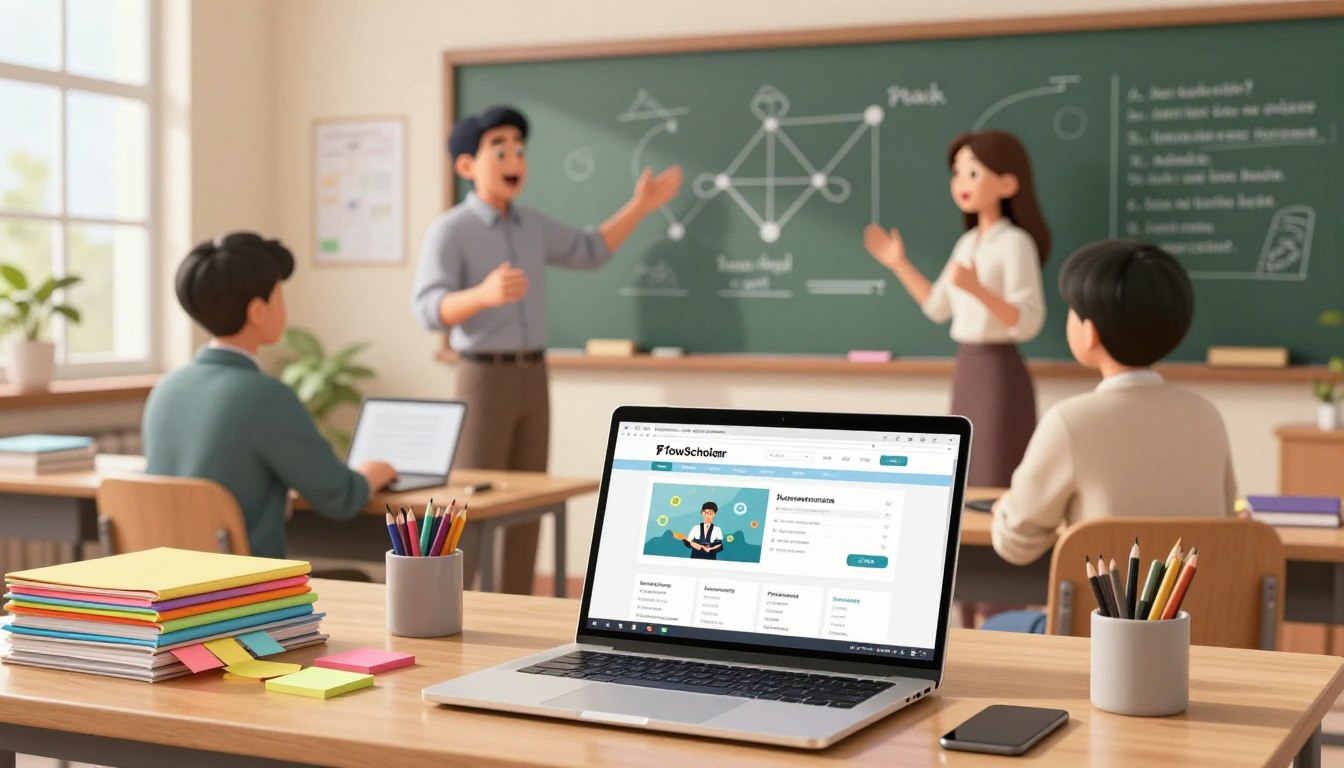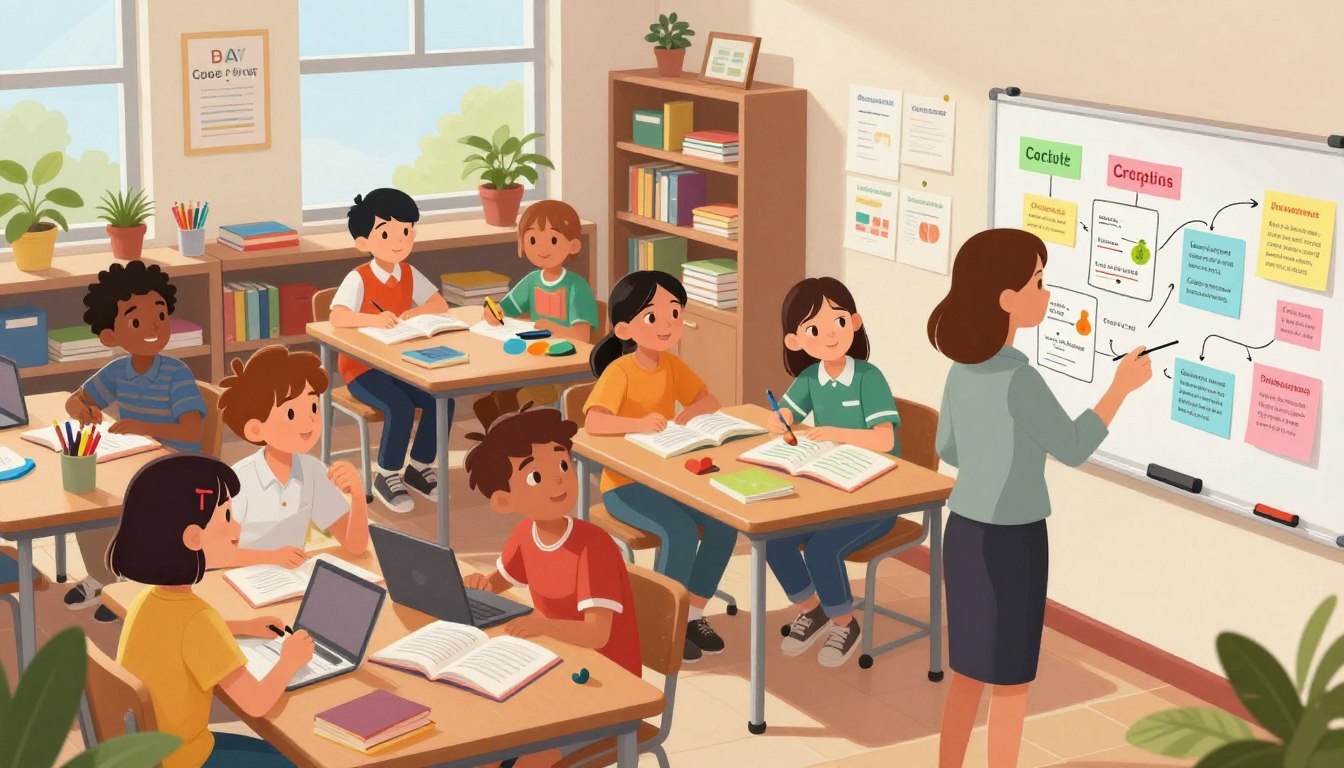
“Education is the most powerful weapon which you can use to change the world.” — Nelson Mandela. This idea frames a practical shift: planning should empower, not exhaust. FlowScholar.com for middle school teachers promises a clearer path to that goal.
Busy teachers face a constant tension between rising demands and limited time. The platform centralizes the lesson process and reduces administrative load. It helps each teacher reclaim focus for learning and teaching.
By blending AI with proven pedagogy, FlowScholar speeds curriculum building. Educators can generate lesson plans, tweak content, and maintain a steady flow of instruction across grades.
Practical result: fewer hours spent on paperwork and more on classroom impact. This introduction previews how smart tools transform planning into a strategic, repeatable process.
Key Takeaways
- FlowScholar.com for middle school teachers streamlines lesson planning.
- AI assists the process while preserving teacher control.
- Less time on admin means more time for learning.
- The platform supports consistent lessons and curriculum alignment.
- Educators can scale quality content across subjects quickly.
Understanding the Modern Classroom Struggle
Today’s students navigate a flood of digital stimuli that constantly erodes focus. This creates a gap between intent and attention that affects every lesson.
The Impact of Distractions
Many students enter class already mentally fragmented. Research shows that an over-stimulating school environment reduces sustained focus on a single lesson.
As a result, students are more likely to shut down when asked to do difficult work. This trend shortens attention spans and increases off-task behavior.
Why Traditional Methods Fail
Traditional lecturing often ignores the need to teach self-regulation. When teachers deliver long blocks of content, engagement can fall by the end of the period.
Effective classroom management now requires a shift in the teaching process: move from covering tasks to building skills. Practical practice, clear structure, and short cycles of feedback help students stay engaged and finish meaningful work.
- Focus on short, active lessons that teach attention skills.
- Replace long lectures with guided practice and checkpoints.
- Design tasks that let students apply skills before the end of class.
Why FlowScholar.com for Middle School Teachers Changes Everything
A clear process transforms fragmented prep into focused, student-centered lessons. The Finding Flow Solutions program gives a structured path that helps students reach flow during class work.
Teachers gain vital support to manage time and energy. The platform reduces repetitive planning tasks and centers each lesson on meaningful content.
Practical benefits are immediate: fewer late nights, sharper lesson design, and better classroom management. Students respond to clear tasks that build deep concentration.
- Immersive learning: create lessons that keep students engaged.
- Simplified planning: focus on core content and teaching impact.
- Fewer classroom issues: clear tasks support smoother routines.
- Curriculum fit: lessons designed for the unique needs of middle learners.
Adopting this system gives teachers the power to reclaim time and reduce planning work. That shift changes how learning happens—predictably and sustainably.
The Science Behind Flow Theory in Education
Optimal learning happens at the intersection of challenge and ability; flow explains how to reach that intersection in class.
Defining the Optimal Learning State
Psychologist Mihaly Csikszentmihalyi developed the concept of flow in the 1970s to describe a state of total immersion. Research shows students grow fastest when fully absorbed in a demanding activity.
When a lesson balances difficulty and skill, the student experiences deep focus. They often lose track of time—an indicator that the teaching and content hit the mark.
“People are happiest when they are in a state of flow.”
- Design lessons so tasks match student ability.
- Use practice cycles that raise challenge gradually.
- Monitor time as a signal of engagement.
| Task Challenge | Skill Level | Classroom Indicator | Teacher Action |
|---|---|---|---|
| Low | High | Boredom | Increase challenge |
| Balanced | Matched | Absorption | Maintain pace |
| High | Low | Frustration | Provide scaffolds |
Shifting Your Mindset Toward Collaborative Productivity
A collaborative mindset reframes the classroom as a lab where teacher and students test strategies together.
When the teacher models experimental thinking, each lesson becomes a shared project. This invites students to try time management techniques and own their productivity.
Every lesson is an opportunity to explore new ways of working. That approach builds curiosity and intellectual humility during complex content delivery.

By treating productivity as a joint venture, teachers can better support students who struggle to stay on task. Collaboration turns the planning process into ongoing, small experiments in learning and teaching.
| Role | Focus | Strategy | Outcome |
|---|---|---|---|
| Teacher | Guide | Model time strategies | Clear routines |
| Students | Ownership | Test and reflect | Improved focus |
| Both | Experiment | Adjust lessons | Sustained flow |
Establishing Clear Goals and Immediate Feedback
Clear goals and prompt feedback change how a classroom operates. When students see targets and get fast responses, learning becomes practical and steady. This approach saves time and aligns lesson work with purpose.
Visualizing Success
Ms. Johnson posts concise success criteria on a whiteboard at the start of each lesson. The content lists what to finish by the end of the day. Students know the task, the standard, and the next step.
Her method is simple and research-backed: color-coded cards let teachers give instant signals without stopping class. That visual system helps students maintain focus and stay on task.
Real-Time Progress Tracking
Providing immediate feedback is a powerful way to pivot instruction based on what students need. Quick checks let teachers adjust pacing, add supports, or raise challenge in the moment.
- Immediate feedback keeps the lesson moving and preserves flow.
- When students know what success looks like, they complete activities with clearer purpose.
- This management process builds a supportive experience and helps reach the end goals.
“Immediate feedback turns small errors into learning opportunities.”
Balancing Academic Challenge with Student Skill Levels
Mr. Patel arranges lab tasks so every student faces the right level of push and support.
Tiered challenges let students build skills step by step. Scaffolding breaks complex problems into smaller tasks that students can master quickly.
This approach keeps the class in the Goldilocks Zone—where challenge matches ability and flow becomes possible. When a task feels achievable, learning deepens and confidence grows.
Research shows that solving a problem once seen as impossible boosts willingness to try harder content. That momentum matters: teachers who adapt lessons in real time help students progress faster.
| Strategy | Teacher Action | Expected Result |
|---|---|---|
| Tiered Tasks | Provide easy, moderate, and advanced options | More students engage; varied pacing |
| Scaffolding | Break task into steps with supports | Reduced frustration; steady skill growth |
| Real-time Adjustment | Modify lesson time or hints during class | Preserved flow state; better outcomes |
Practical tip: start each lesson with a quick diagnostic task. Use results to assign tiers and monitor time. Small shifts in difficulty keep tasks productive and learning consistent.
“When challenge fits skill, students move from attempt to achievement.”
Explore practical examples and further strategies by visiting a short post on unlocking the future.
Fostering Autonomy and Ownership in Your Classroom
Giving students real choice turns assignments into personal projects that matter. This shift builds a stronger sense of purpose and improves overall engagement.
Encouraging Student Choice
Ms. Rivera lets her high school history students select their project focus. The result: deeper ownership and clearer motivation toward course content.
Research shows that autonomy helps students develop the skills needed to manage time and tackle complex tasks. When learners steer their own research projects, they invest more effort and show richer understanding.
- Ms. Rivera’s model demonstrates how teachers can offer choice within a clear framework.
- Providing options keeps lessons flexible while preserving learning goals.
- Student agency turns routine tasks into meaningful lessons and builds a lasting sense of competence.
| Practice | Teacher Role | Student Outcome |
|---|---|---|
| Project choice | Provide topics and rubrics | Higher motivation; deeper learning |
| Guided research | Offer checkpoints and feedback | Improved skills; sustained flow |
| Flexible pacing | Set clear deadlines | Better time management; ownership |
Bottom line: when students have a real voice, lessons become more dynamic and meaningful. That sense of agency leads to better outcomes across the classroom.
Designing Flow-Friendly Daily Routines
A predictable morning routine primes students to enter class ready to focus. Begin with a two- to three-minute mindfulness exercise that centers breath and attention.
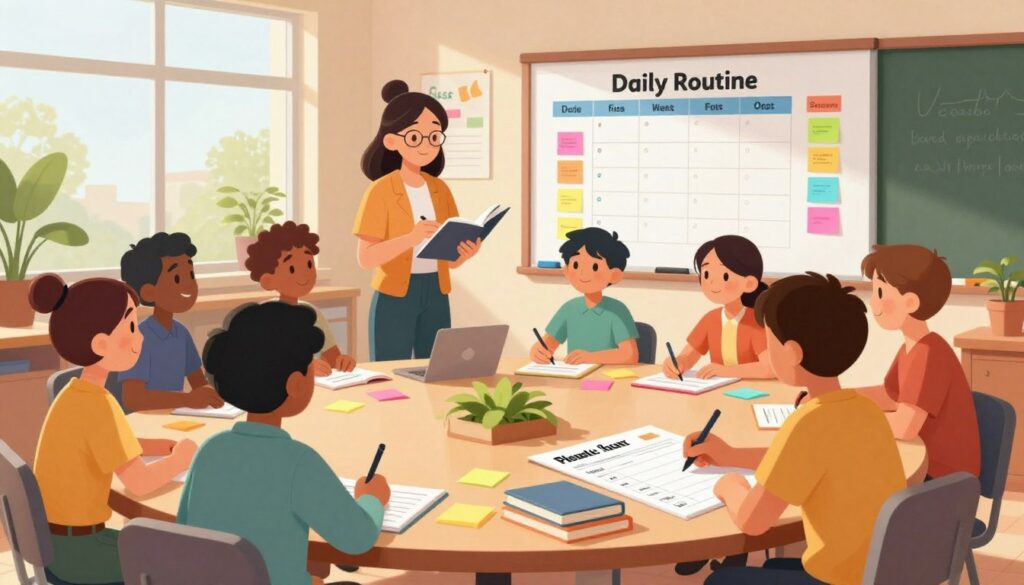
Structure the lesson start: announce the goal, set a short timer, and launch a focused warm-up. This signals the transition from hallway noise to productive work.
Teachers should arrange the classroom space to reduce distractions. Clear surfaces, defined work zones, and easy access to materials make it simpler for each student to engage with content.
Research shows short reflection at the end of the day improves retention. Use a two-question exit prompt that asks what students learned and which activity sustained their flow.
- Start with a brief centering practice.
- Keep the lesson goals visible and time-boxed.
- End with quick reflection to consolidate understanding.
| Routine | Purpose | Teacher Action |
|---|---|---|
| Morning centering | Focus | 2–3 minute mindfulness |
| Structured launch | Clear expectations | Display goal and timer |
| End reflection | Consolidation | Two-question exit ticket |
Outcome: consistent design and simple practices help students access flow more reliably and let teachers keep lessons aligned to skill and challenge. For a short model of a focus-first routine see focus-first routine.
Leveraging Technology to Streamline Lesson Planning
When planning becomes faster, teachers reclaim time to refine instruction and coach students.
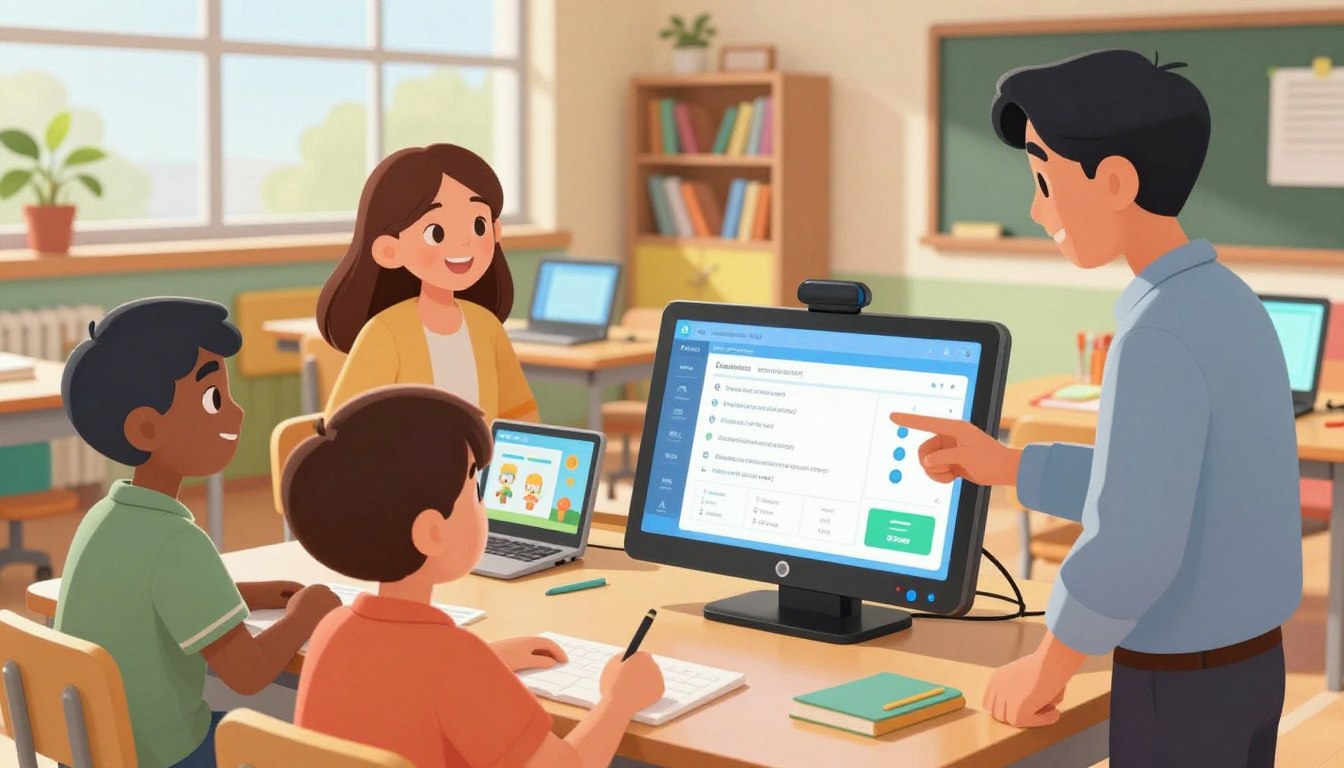
Digital platforms turn scattered notes into a single teaching space. That saves time and reduces the problem of planning fatigue in middle school and high school settings.
Research shows automation of routine steps lets a teacher spend more energy on student support and real-time feedback. The result: stronger classroom management and richer learning moments.
The right tool helps design a lesson quickly, adapt content for diverse learners, and track work across units. It also creates a consistent way to store resources and share plans with colleagues.
- Rapid lesson design: build high-quality lessons that reach every student.
- New perspective on classroom management: use data to solve the planning problem.
- Efficient learning space: organize content so teaching stays sustainable through the year.
By integrating these tools, teachers reach the end of their day with more energy and a clearer path to improve instruction. This practical step makes classrooms more resilient and focused on what matters: students.
Conclusion
Adopting small, intentional changes can shift a classroom from busy to purpose-driven. Start with one routine or a single task design that supports deep flow.
When a teacher pairs clear goals with simple tools, the learning space becomes calmer and more productive. Use a planning tool like FlowScholar to manage lesson resources and free time for student interaction.
Focus on refining your content and small cycles of feedback. This keeps teaching nimble and responsive to student needs.
Achieving a steady flow state takes practice—experiment, be patient, and adjust. Over time you will see more confident, engaged learners and a stronger classroom culture.
FAQ
What is FlowScholar.com for Middle School Teachers and how does it speed up lesson planning?
FlowScholar.com for Middle School Teachers is a planning platform designed to reduce prep time across subjects by providing templates, research-backed strategies, and ready-to-use activities. It centralizes objectives, resources, and assessment options so teachers spend less time hunting for materials and more time refining instruction and feedback.
How does this approach address classroom distractions and attention issues?
The platform applies flow theory to structure lessons with clear goals, focused challenges, and immediate feedback—elements shown to boost engagement. By breaking tasks into manageable steps and offering routines that minimize idle transitions, it reduces downtime and channels student attention into sustained work.
Why do traditional planning methods often fall short in today’s classrooms?
Traditional methods can be rigid and resource-heavy, lacking frequent checks for student understanding or adaptable challenge levels. Flow-focused planning emphasizes agility: short cycles of instruction, formative feedback, and differentiated tasks that match student skill levels for more consistent progress.
What research supports using flow theory in education?
Decades of cognitive and educational research link focused states—where challenge and skill align—to deeper learning and better retention. Flow-based practices borrow from that evidence by designing tasks that are neither too easy nor too hard, integrating formative feedback, and creating predictable routines that promote concentration.
How can teachers shift their mindset toward collaborative productivity with students?
Shift begins with redefining roles: teachers become facilitators who set goals and coaches who calibrate challenge. The platform encourages co-created success criteria, peer feedback structures, and student-led reflection so classrooms become productive teams rather than one-way lecture spaces.
What tools help establish clear goals and give students immediate feedback?
Flow-friendly tools include objective-aligned checklists, exit tickets, quick formative quizzes, and visual progress trackers. These features let teachers signal next steps instantly and allow students to self-assess, promoting ownership and faster instructional adjustments.
How does real-time progress tracking work in this system?
Real-time tracking aggregates formative checks and task completion into dashboards. Teachers see patterns across students and groups, spot misconceptions early, and adapt lessons on the fly. Students view personal progress markers that motivate small, attainable wins.
How can teachers balance academic challenge with varying student skill levels?
Use tiered tasks, flexible grouping, and scaffolded supports. The platform provides differentiated templates that set a shared goal while offering multiple entry points—so every student faces an appropriate challenge that encourages flow without frustration.
What strategies foster student autonomy and ownership?
Offer meaningful choices in tasks, embed self-assessment routines, and include goal-setting checkpoints. When students select topics or formats and reflect on progress, they develop agency and persistence—key ingredients for sustained engagement.
Can daily routines be designed to promote flow, and what do they look like?
Yes. Flow-friendly routines include predictable openings (clear objective and warm-up), focused work windows with minimal interruption, brief feedback loops, and reflective closings. Consistency builds cognitive space for deep work and reduces transition losses.
How does technology streamline lesson planning without adding complexity?
Technology automates repetitive tasks—aligning standards to objectives, generating assessment items, and offering searchable activity libraries. When designed simply, it saves time while preserving teacher control, letting educators customize rather than rebuild lessons.
Is this approach suitable for both middle and high school classrooms?
Yes. The core principles—clear goals, matched challenge, immediate feedback, and structured routines—scale across age groups. Templates and activities are adaptable to developmental differences, making the approach effective in diverse secondary settings.
How quickly can a teacher implement these methods and see results?
Teachers often notice improvements in engagement and smoother transitions within weeks when routines and feedback cycles are consistently applied. Deeper shifts in achievement typically emerge over several months as habits and expectations solidify.
What professional supports are available to help teachers adopt this model?
The platform includes step-by-step guides, exemplar lessons, micro-credentials, and community forums where educators share strategies. These supports shorten the learning curve and provide practical examples for classroom application.
How does this system align with curriculum standards and state requirements?
Resources map to common standards and allow teachers to tag lessons by state objectives. This alignment ensures lesson plans meet accountability requirements while still prioritizing student-centered practices and meaningful assessment.