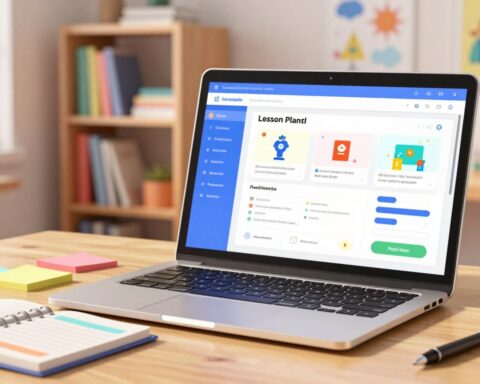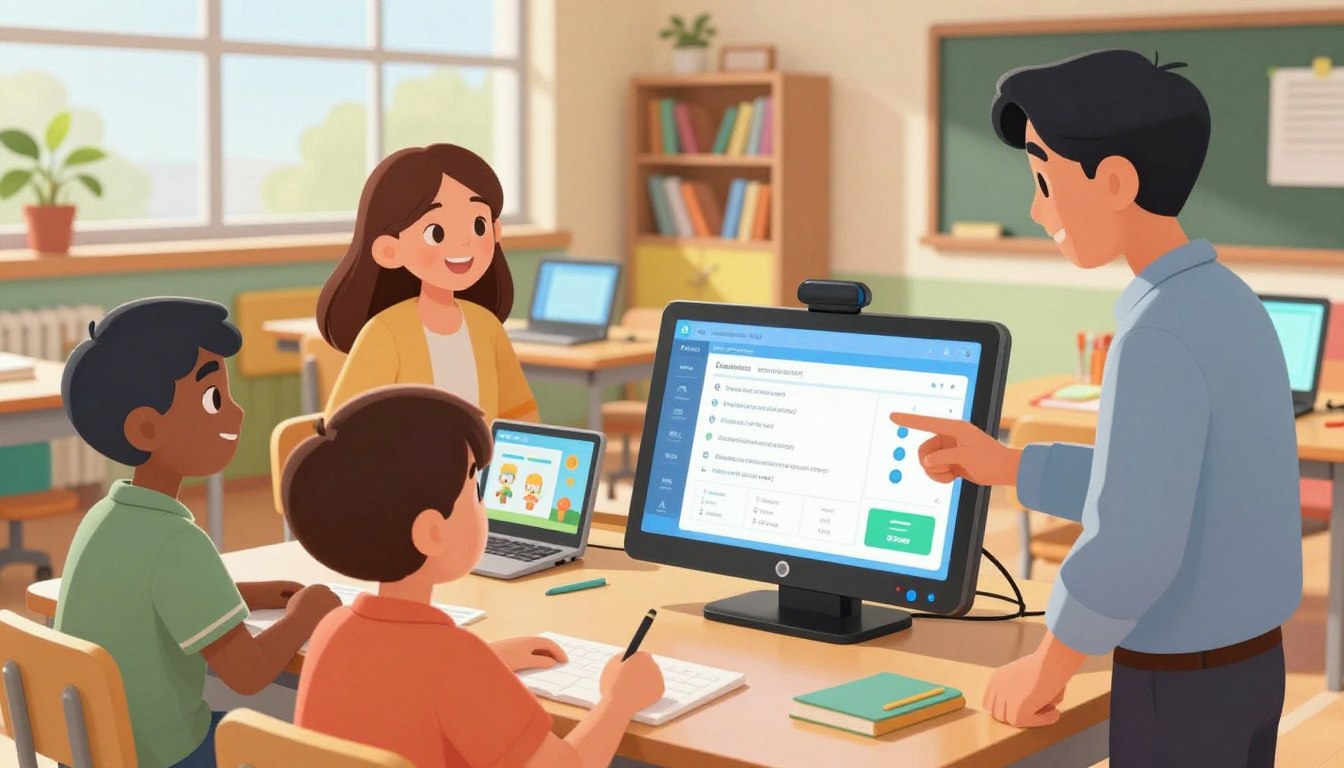
“Education is the most powerful weapon which you can use to change the world.” — Nelson Mandela. This idea frames FlowScholar.com’s mission: clear, practical support that saves time and elevates classroom work.
FlowScholar provides a suite of intelligent resources that streamline lesson planning, assessments, and content creation. It acts as a reliable assistant during the busy school day.
As a former teaching assistant, the author notes FlowScholar mirrors the hands-on support experts recommend. The free version lets educators explore ways to improve student writing and give immediate feedback.
In short: FlowScholar helps teachers use algorithms to align lesson plans with grade-level objectives, reduce routine work, and create engaging activities that match varied student needs.
Key Takeaways
- FlowScholar streamlines lesson planning and assessment creation to save time.
- The platform offers immediate feedback options to improve student writing.
- A free version enables teachers to test features before full use.
- It adapts to different teaching styles, tone, and grade levels.
- FlowScholar acts as a dependable assistant for daily classroom tasks.
The Evolution of AI in Modern Education
Recent advances let educators process mountains of information and turn it into clear, actionable plans. As Eric Curts has demonstrated in professional development sessions, dozens of emerging tools now guide choices about curriculum, assessment, and classroom workflow.
The shift in teaching methods is visible: teachers use platforms that automate routine work, suggest lesson plans, and generate slide-ready content. These systems act as an assistant during the school day, reducing time spent on admin tasks and giving more space to instruction.
Benefits of integration include faster creation of writing prompts, richer assessments, and data-driven learning objectives tailored to each student. A free version often lets educators test features before full adoption.
The evolution also changes style and development: schools adopt diverse approaches that mix human judgment with smart responses. As this technology matures, it will continue to offer practical ways to support classroom success.
- Faster lesson planning and content creation
- Improved assessments and rubrics
- Saved time and clearer development paths
Why Teachers Need AI-Powered Learning Tools for Teachers Students and Parents
Rising administrative demands have left many teachers searching for systems that actually reduce daily workload. These platforms help by automating repetitive planning and grading tasks that eat up the school day.
When teachers use reliable systems to generate lesson plans, they reclaim time for coaching, mentoring, and real classroom interaction. The result is better student support and less burnout.
The platform acts like a dedicated teaching assistant: it speeds content creation, suggests rubrics, and offers consistent feedback on student writing. A free version lets schools trial core features without budget risk.
- Automates routine tasks to save time.
- Delivers consistent feedback on writing and assessments.
- Supports differentiated activities across grade levels.
| Benefit | Impact | Ideal Use |
|---|---|---|
| Automated lesson plans | Reduces prep time by up to hours per week | Weekly unit planning |
| Feedback templates | More consistent student responses | Writing and rubric-based grading |
| Assessment suggestions | Faster formative checks | Daily exit tickets and slides |
For a balanced view on how this technology can add classroom value, see a thoughtful analysis at how AI can add, not just.
Streamlining Lesson Planning with Intelligent Automation
Intelligent automation reshapes daily prep, turning hours of paperwork into ready-to-use lessons. Educators can adjust materials to the proper grade level with a few clicks. This ensures content is developmentally appropriate for every classroom.
The platform’s advanced features include rapid plan generation and template libraries. These tools help create lesson plans, assessments, and activities in seconds. That reduces administrative work and saves significant time.
By automating routine tasks, a teacher can focus on personalized feedback and targeted support for each student. TeacherServer—run by the University of South Florida St. Petersburg—offers a robust free version that acts as a dependable assistant during planning.
- Adjusts text and pacing by grade level
- Generates lesson plans quickly with useful tools
- Creates aligned assessments and activities
| Function | Benefit | Ideal Use |
|---|---|---|
| Automated lesson plans | Less prep time; consistent quality | Daily and weekly planning |
| Assessment templates | Aligned to objectives; faster grading | Formative checks and rubrics |
| Content organization | Centralized information; ready next day | Unit storage and revision |
| Free version access | Low-risk trial of core features | Pilot in a single school or grade |
For a deeper look at how these systems change plan design, read how AI is revolutionizing lesson plan.
Enhancing Student Writing and Feedback Loops
Clear, timely feedback transforms weak drafts into confident voices in the classroom. Consistent responses help student writing improve across assignments. Brisk Teaching illustrates this by delivering targeted comments directly to a student’s text.
Real-time Writing Assistance
Live edits that guide revision
Brisk Teaching is a Google Chrome extension that gives real-time writing assistance using uploaded rubric criteria. Teachers can highlight strengths and next steps as students draft. That immediacy helps students act on feedback while ideas are fresh.
Rubric-Based Grading
Specific scoring to speed grading
The platform features a rubric-based grading system so teachers provide actionable feedback on every student writing assignment. The free version includes over 40 tools to streamline assessments and lesson planning.
- Consistent feedback: helps students revise with purpose.
- Organized workflows: reduce manual grading and save time.
- Scalable features: support varied classroom activities and assessments.
Visual and Design Tools for Engaging Classroom Content
Design-first platforms let teachers create striking lesson content without specialized skills. Adobe Express, with Firefly image and text effects, produces custom visuals that pull attention and clarify complex topics.
Prezi AI turns outlines and PDFs into cinematic presentations that read like stories rather than slides. That shift supports deeper focus and keeps students active during a lesson.
These platforms include ready-made templates and simple features that save time. Teachers can adapt templates to match objectives, embed clear visuals, and highlight key information quickly.
Practical benefits:
- Create polished visuals that support lesson plans and reinforce writing prompts.
- Use platform features to transform plain text into interactive scenes.
- Save prep time with templates, then customize ideas to fit classroom activities.
“Engaging content is vital for student success; these tools make that possible without a steep learning curve.”
Interactive Chatbots for Personalized Student Support
Interactive chatbots now act like on-demand tutors, answering questions and guiding inquiry in real time. They help break down complex information into short, clear steps that students can use immediately.
Conversational Learning Partners
Chat-based partners let a classroom become more responsive. These platforms provide tailored feedback and can point learners to relevant text or examples.
Microsoft Copilot, powered by advanced models, helps teachers generate ideas and summarize articles. NotebookLM lets an educator upload up to 50 sources so the chatbot references exact content when it answers.
- Chatbots serve as conversational partners that guide student inquiry and review writing.
- Built-in features allow quick summaries, targeted feedback, and lesson prompts.
- Teachers save time and free themselves to run richer activities while the chatbot handles routine questions.
In practice: select a platform that aligns with curricular goals and upload unit text. For step-by-step guidance on creating course content that pairs well with chat features, see create an online course.
Leveraging FlowScholar for Academic Success
FlowScholar integrates into existing school workflows so teachers spend less time on setup and more time on instruction. The platform connects grading, curriculum maps, and student progress in one place.
Educators gain a suite of resources that help monitor progress and deliver timely feedback on every assignment. That visibility makes it easier to spot gaps and target interventions.
These tools streamline lesson planning and ensure content aligns with current standards. As a result, teachers can build coherent units faster and keep lessons focused on measurable goals.
- Maximize success: give students the tools they need to excel across subjects.
- Track progress: use platform features to view growth and adjust instruction.
- Save time: centralize routines so teachers manage work more efficiently.
FlowScholar also supports organized classrooms where each student can track growth and access clear guidance. We believe every student deserves high-quality materials, and this platform is designed with ease of use in mind.
For a quick demo and practical tips, see this short overview on transforming classroom activity.
Assessing Student Mastery Through AI-Driven Insights
New assessment workflows let educators capture spoken responses and sketches, then turn them into instant insights. Snorkl evaluates oral answers and drawings on a digital whiteboard, returning clear feedback in under a minute.
Oral Assessment Tools
Oral Assessment Tools
Snorkl processes spoken words and the related text on-screen to score comprehension quickly. This feature lets a teacher hear mastery in real time and respond while the lesson is fresh.
Data-Driven Progress Tracking
Data-Driven Progress Tracking
The platform aggregates results so teachers can see growth patterns and gaps at a glance. Dashboards highlight which students need support or enrichment.
- Assess mastery with oral and handwritten responses in minutes.
- Use built-in features to automate grading and keep feedback consistent.
- Organize content and adjust lesson plans based on real-time data.
“Immediate insights turn brief checks into meaningful interventions.”
Managing Administrative Workloads with Smart Assistants
When routine administration is handled by a platform, educators gain runway to design richer lessons.
Smart assistants can automate tasks that normally take hours each week. They draft parent communications, organize class schedules, and prepare simple reports so a teacher spends less time on paperwork.
The result is clear: more time for student-centered instruction and timely feedback. Schools that adopt these features report smoother daily flow and fewer late nights.

Practical support matters. A reliable assistant reduces repetitive admin work and helps maintain a balanced workflow. That gives teachers energy to create engaging content and respond to individual student needs.
- Automates routine scheduling and messaging to save time.
- Drafts communications and organizes classroom logistics.
- Reduces paperwork so educators can focus on instruction.
“Every teacher deserves a dependable assistant that simplifies administration and preserves time for teaching.”
Supporting Diverse Learning Needs in the Classroom
Differentiation works best when educators can produce multiple versions of the same lesson in minutes. This capacity matters most in mixed-age or mixed-ability groups where readiness varies widely.
Scaffolding for Mixed-Ability Groups
Adaptive features let a platform generate tiered content aligned to a chosen grade level. Teachers can request simplified text, challenge prompts, or visual supports instantly.
These tools help ensure every student accesses materials that match their needs. Quick modifications preserve instructional momentum and free classroom time for direct support.
- Instantly adjust reading complexity and task demands.
- Create scaffolded prompts that guide revision and deepen thinking.
- Organize lesson versions so educators reuse content efficiently.
Personalized feedback becomes practical when systems produce multiple drafts of the same assignment. The result: targeted growth without added prep hours.
| Readiness Level | Example Modification | Estimated Time Saved |
|---|---|---|
| On-level | Standard prompt with formative checklist | 10–15 minutes per unit |
| Below-level | Shortened text with guided questions | 15–25 minutes per unit |
| Advanced | Extension tasks and research prompts | 10–20 minutes per unit |
| Multi-age group | Tiered tasks by complexity | 20–30 minutes per unit |
“Personalized materials make inclusive instruction scalable and sustainable.”
Ethical Considerations for AI Implementation
Ethical use of classroom platforms begins with deliberate decisions about student data and privacy. Schools must choose systems that comply with COPPA and GDPR. That protects families and preserves trust.
Privacy is not optional. Ethical implementation means reviewing how each platform stores text, collects feedback, and shares reports. Security features should be visible and documented.
- Prioritize vendors that show clear data-handling policies and local compliance.
- Use platform features that minimize stored personal data and support secure access.
- Train staff so teachers use tools responsibly and maintain student confidentiality.
Transparency builds trust: explain what data the platform collects and why. Share how content is used and how long records are kept. This openness helps families feel confident about technology in the classroom.
In practice: select vendors with built-in privacy controls, run short staff sessions on policy, and document consent. These steps let schools integrate helpful features while keeping student information safe.
“Ethical considerations are at the heart of modern teaching; protect data first, then innovate.”
Balancing Screen Time with Hands-On Learning
A balanced routine mixes focused screen time and real-world tasks to support deeper understanding. Short digital prompts can generate printables, discussion prompts, and clear rubrics while AI runs quietly behind the scenes.
The platform features accessible templates and simple tools that produce offline activities. Educators use those resources to design tactile labs, role plays, and paper-based projects that follow a brief online kickoff.
This approach keeps students active and reduces passive scrolling. It also gives teachers time back; lesson planning moves faster when the system prepares text, sheets, and quick feedback cues.
- Make screen moments short and purposeful.
- Use generated printables to extend learning off-screen.
- Organize content so transitions between digital and hands-on are smooth.
| Mode | Primary Benefit | Typical Time Saved |
|---|---|---|
| Short digital prompt | Clear launch and directions | 5–10 minutes per lesson |
| Off-screen activity | Active engagement and collaboration | 10–25 minutes per lesson |
| Combined workflow | Purposeful balance; better retention | 15–30 minutes per lesson |
Practical tip: schedule tech use around hands-on blocks and explore teaching AI skills workshops to train staff in these methods by visiting teaching AI skills workshops.
“Managing screen time is a critical part of modern teaching; use platforms that support hands-on, screen-free experiences.”
Customizing AI Outputs for Specific Grade Levels
Adjusting generated content by grade creates clearer, more usable lessons in minutes.
Why customization matters: teachers can set complexity and tone so material matches each grade level. This reduces off-target assignments and boosts engagement.
Practical features let educators change vocabulary, example types, and pacing. Those features produce text that meets curriculum needs while keeping tasks reachable for every student.
- Choose reading band and question depth quickly.
- Produce multiple versions to scaffold or extend.
- Save presets to reuse across units and lessons.
| Setting | Result | Best Use |
|---|---|---|
| Reading level | Shorter sentences; simpler vocabulary | Below-level groups |
| Tone & examples | Age-appropriate scenarios | Whole-class instruction |
| Challenge mode | Higher-order prompts and extension tasks | Advanced students |
“Personalization makes each lesson more effective—small adjustments yield big gains.”
Overall, these tools save time and deliver targeted feedback. We believe personalization is the key to stronger student outcomes.
Integrating AI into Existing School Workflows
A practical integration plan minimizes disruption while folding smart features into familiar workflows. Schools can connect new systems with Google Workspace apps—Docs, Slides, and Classroom—to keep routines intact.
Seamless access to content means teachers find materials in one place and share resources quickly. That reduces duplicate uploads and keeps class pages tidy.
These tools speed daily tasks, from generating quick text drafts to organizing rubrics. Staff save time and focus on classroom priorities.
When platforms link to calendars and drive folders, collaboration improves. Colleagues exchange lesson files, comment on drafts, and maintain consistent feedback cycles for students.
- Start with small pilots that sync to existing accounts.
- Train on specific features tied to daily routines.
- Measure time saved and adjust rollout accordingly.
| Integration Point | Benefit | Typical Impact |
|---|---|---|
| Docs & Slides | Single-source content updates | Less prep; faster sharing |
| Classroom | Auto-distribute assignments | Clearer submission flow |
| Calendar & Drive | Organized schedules and files | Reduced lost resources |
For practical steps to implement this approach, see how to integrate AI tools into a school’s tech.
Future Trends in Educational Technology
Personalized classroom experiences will become the norm as platforms interpret student signals and adjust text and tasks.

Looking ahead: future trends suggest more platforms that tailor content to each learner. These developments give teachers practical tools to design adaptive lessons and to deliver timely feedback.
- Platforms will personalize content pathways so every student receives the right challenge.
- Forward-thinking tools will help organize classroom resources and scale differentiated instruction.
- Real-time feedback and concise text prompts will speed revision cycles and boost engagement.
In short: adopting these tools helps educators stay ahead of change and build a dynamic environment where every student can reach their potential.
“The future of edtech is not about replacing expertise—it is about amplifying it.”
Conclusion
FlowScholar reduces prep and brings clearer content to the classroom. It helps educators create targeted materials that reach every student. Shorter prep means more time for coaching and meaningful interactions.
Practical platforms let a teacher give timely feedback, track progress, and adjust lessons quickly. These tools help cut admin load and let the classroom focus return to student growth.
Thoughtful adoption will shape the future of learning. We encourage readers to explore FlowScholar and see how smart workflows can transform practice. Visit https://www.flowscholar.com to start the journey toward more efficient, impactful instruction.
FAQ
How does FlowScholar support AI-powered learning for teachers, students, and parents?
FlowScholar offers an integrated platform that streamlines lesson planning, provides real-time student writing assistance, and enables parents to monitor progress. It combines rubric-based grading, conversational support bots, and automated administrative features to reduce workload and improve instructional focus.
What changes have educators seen with the evolution of AI in modern education?
Educators report a shift toward more personalized instruction, faster assessment cycles, and richer formative feedback. AI-driven workflows free teachers from repetitive tasks, allowing them to design deeper, project-based learning and coach students more effectively.
What are the primary benefits of integrating AI into classroom practice?
Key benefits include time savings through automation, consistent rubric application, on-demand writing guidance, and data-rich insights into mastery. These outcomes support differentiated instruction, higher student engagement, and measurable learning gains.
Why do teachers need AI-enhanced tools in schools today?
Modern classrooms demand scalability and precision. AI-enhanced tools help manage diverse learner needs, streamline assessment, and produce tailored materials—so teachers can focus on pedagogy, intervention, and professional growth.
How does FlowScholar streamline lesson planning with intelligent automation?
The platform auto-generates aligned lesson outlines, standards-mapped objectives, and adaptable activities. Teachers can customize suggested materials, export slide decks, and save reusable templates to accelerate planning cycles.
Which routine tasks can be automated to save teacher time?
FlowScholar automates grading for objective items, drafts formative comments, schedules parent updates, and compiles student progress reports—reducing hours spent on administrative work each week.
How does FlowScholar enhance student writing and feedback loops?
Students receive instant, scaffolded prompts, grammar and structure suggestions, and clarity edits. Teachers get aggregated feedback summaries and draft histories, making revisions transparent and instruction more targeted.
Can FlowScholar support rubric-based grading?
Yes. The system maps rubrics to assignments, provides consistent scoring suggestions, and offers evidence-linked justification for each criterion—helping ensure fair, standards-aligned assessment.
What visual and design tools are available for creating engaging content?
FlowScholar includes slide templates, media libraries, and layout assistants that help teachers craft visually compelling lessons. These tools prioritize accessibility and classroom-ready exports for quick use.
How do interactive chatbots function as personalized student supports?
Chatbots act as conversational partners that scaffold tasks, answer curriculum questions, and guide revision cycles. They adapt to student responses and escalate to teachers when human intervention is needed.
Are conversational learning partners effective for classroom use?
When paired with teacher oversight, they increase practice opportunities, boost student confidence, and free teachers to focus on higher-order instruction. They are most effective when integrated into structured lessons.
How can FlowScholar be leveraged for academic success?
By combining formative insights, targeted interventions, and personalized practice pathways, educators can close gaps faster and support mastery across grade levels. The platform surfaces action steps and progress summaries for stakeholders.
What tools support assessing student mastery through AI-driven insights?
FlowScholar provides item-level analytics, growth trend visualizations, and competency maps. These features help teachers identify misconceptions and tailor subsequent instruction.
Does FlowScholar include oral assessment tools?
Yes. The platform supports recorded responses, automated transcription, and rubric-linked scoring to evaluate speaking and language skills within classroom contexts.
How does data-driven progress tracking work?
The system aggregates assessment results, displays mastery trajectories, and flags students needing intervention. Dashboards let teachers filter by class, subgroup, or standard for targeted planning.
In what ways can smart assistants help manage administrative workloads?
Smart assistants draft communications, organize schedules, generate gradebook entries, and summarize student performance—reducing clerical burden and preserving teacher time for instruction.
How does FlowScholar support diverse learning needs in mixed-ability groups?
The platform offers scaffolded lesson versions, adjustable difficulty layers, and personalized practice paths. It helps teachers deliver tiered instruction while tracking individual growth.
What scaffolding features aid mixed-ability classrooms?
Features include chunked task breakdowns, sentence starters, model examples, and adaptive hints—designed to make content accessible while preserving challenge for advanced learners.
What ethical considerations accompany AI implementation in schools?
Key concerns include data privacy, bias mitigation, transparency of algorithms, and equitable access. FlowScholar emphasizes secure data practices, configurable settings, and teacher control over decisions.
How should schools balance screen time with hands-on learning?
Blend digital practice with offline projects: use short, focused online sessions for feedback and planning, and dedicate classroom time to collaboration, experiments, and tactile activities that reinforce concepts.
Can FlowScholar customize outputs for specific grade levels?
Yes. Content generation, feedback language, and complexity settings can be tuned to grade bands—ensuring age-appropriate prompts, rubrics, and materials.
How does FlowScholar integrate into existing school workflows?
The platform offers LMS integrations, SIS connectors, and import/export options for common file formats. It is designed to complement current routines rather than replace them.
What future trends in educational technology should educators prepare for?
Expect more adaptive mastery systems, natural language assessment, multimodal skill evaluation, and tighter interoperability across platforms. Preparing staff with focused professional development will ease transitions.