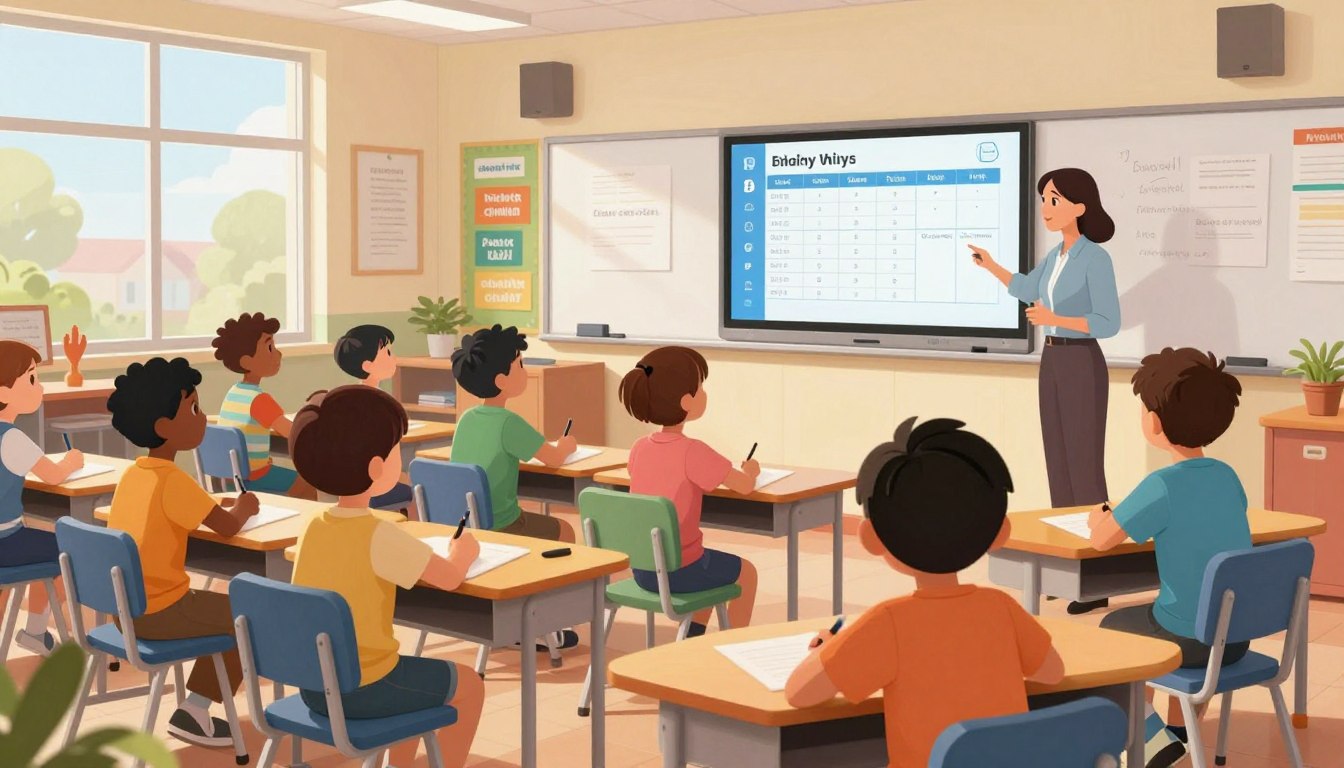
“The secret of getting ahead is getting started.” — Mark Twain. This sets a clear tone: small, steady moves matter most in the classroom.
The introduction frames a field-tested playbook for classroom management that values predictability and human judgment. It defines daily content consistency as a repeatable system that frees cognitive energy for learning rather than process guessing.
Practical routines cut stress, protect instructional time, and create a calmer learning environment. The guide previews three levers: predictable structure, engaging repetition, and lightweight feedback systems that yield fewer disruptions and higher task completion.
This is not about rigidity. Teachers keep professional judgment and offer student choice inside clear boundaries. Across complex classrooms, small steps compound into steady gains.
Next: the article will show classroom-tested routines and, later, introduce FlowScholar — an education AI tool that streamlines planning and progress monitoring without extra work. Visit https://www.flowscholar.com for a practical demo.
Key Takeaways
- Define a simple system so students know the day’s flow.
- Use routines and rituals to save time and reduce stress.
- Combine predictable structure, repetition, and feedback.
- Aim for stability that preserves teacher judgment.
- Small steps add up across the school year.
- FlowScholar can streamline planning and tracking.
Why consistency matters for daily learning in today’s classrooms
Predictable rhythms free attention for learning. When students know the flow of the day, they spend less energy scanning for surprises and more on meaningful tasks.
Predictability reduces stress and helps focus
Routine lowers anxiety: clear starts and signals mean fewer surprises. That lets students engage with material rather than worry about what comes next.
Consistency strengthens management and protects instructional time
Observable signals follow: faster settling at the bell, smoother transitions, fewer repeated directions, and independent starts that save minutes each class.
Stable routines build trust, positive behavior, and community
When teachers respond the same way, fairness rises and power struggles fall. A steady environment promotes stronger relationships and a shared sense of belonging.
“Clear routines are the framework where deep learning happens.”
- Fewer disruptions: more time for feedback and small-group work.
- Stronger culture: students participate confidently even when material is hard.
| Signal | What it shows | Impact on time | Classroom result |
|---|---|---|---|
| Quick bell settle | Expectation known | +3–5 minutes | More teaching minutes |
| Smooth transitions | Less redirection | +5–8 minutes | Fewer interruptions |
| Consistent responses | Perceived fairness | Reduced conflict | Better relationships |
How to Keep Students Consistent With Daily Content using clear routines and expectations
A simple daily plan and taught procedures reduce decision fatigue for both teacher and students. Start small: a visible schedule, three short rules, and a few practiced steps for common moments.

Set simple rules and clear expectations
Minimum viable rules are short, observable, and enforceable. Frame each rule with a brief example so students know what it looks like in class.
Create and post a daily schedule
Use the schedule as a self-management tool: post it, review it, and train students to check it before asking logistical questions. A posted plan reduces interruptions and keeps activities predictable.
Teach explicit procedures for common moments
Model entering class, starting work, and turning in tasks. Make procedures concrete: materials out, timer on, task begun, hand-in at a single spot. Practice these steps until they feel automatic.
Practice, reinforce, and give specific feedback
Rehearse routines after breaks and when patterns slip. Use targeted feedback: name the routine, describe the action, and note the impact on learning time. That links positive behavior with real outcomes.
For practical examples and research-based steps, see establish classroom routines.
Build a classroom plan you can follow through on all year
A sustainable classroom plan begins with clear patterns: spot recurring issues, pick proactive responses, and write them down. This creates a usable playbook teachers can lean on when days get hard.
Identify the most common issues
List the high-frequency problems that erode focus: missing work, tardiness, and disengagement. Name each issue and note the typical triggers so responses stay precise rather than impression-based.
Choose proactive responses instead of reactive fixes
Pre-plan interventions: bell work for late arrivals, structured make-up windows for missed work, and short check-ins for disengaged learners. These practices protect instructional time and reduce ad-hoc decision-making.
Stay flexible without changing the core routine
Hold start-of-class, transitions, and submission processes steady. Vary grouping, pacing, and materials while keeping core routines intact. That way the student brain learns what is non-negotiable and what can shift.
“Prevention beats reaction: a small, consistent framework saves time and builds trust.”
- Framework: identify patterns, choose responses, document expectations.
- Alignment: match school-wide management so students see one clear way across the school.
- Measure success: fewer repeated directions, higher completion rates, better participation.
For a practical example of a routine that teaches sustainable habits, see the binder routine.
Use engaging instructional routines that make daily content feel familiar
When routines form a dependable rhythm, learners invest energy in ideas rather than logistics. Regular activities give a familiar frame and leave room for fresh thinking each week.

Meme Monday
Meme Monday asks pairs to find a school-appropriate meme, analyze its message and audience, then revise wording after class feedback. This routine makes language and reasoning visible and serves as quick formative assessment.
Spiderweb discussions
Use the Alexis Wiggins spiderweb format: the teacher stays silent or records talk with a simple code. Saved webs help teachers track participation and reflect on discussion growth over time.
Sustained silent reading
Protect a weekly block for independent reading. Student choice within clear limits builds vocabulary and reading skills through repeated exposure.
Wonder wall article routine
Students post unit questions, locate articles, annotate, and answer metacognition prompts. This practice strengthens curiosity, annotation skills, and purposeful reflection.
Bottom line: recurring, well-shaped routines reduce transition time, increase ownership, and make classroom learning feel predictable yet lively.
Track consistency without adding more work for teachers
Simple, repeatable checks help teachers spot patterns without piling on paperwork. The goal is clear: light systems that save teaching time and sharpen classroom management.
Decide what to track
Lightweight tracking means minutes, not periods. Focus on four high-signal indicators: participation, completion, behavior, and growth.
Create quick feedback loops
Use same-day notes, brief conferences, or visible status markers students can read and act on. Fast feedback links behavior with next steps and keeps expectations clear.
Review patterns weekly
Look for breakdowns at predictable times—Mondays, transitions, end-of-unit deadlines—and revise procedures when data points cluster.
Use an Education AI Tool
FlowScholar streamlines planning, reinforces routines, and centralizes progress monitoring so teachers spend less time logging and more time teaching. Put expectations, deadlines, and next steps in one place for easy student reference.
“Clarity beats surveillance: students know where they stand, teachers know when to intervene.”
Try FlowScholar: explore how an Education AI Tool reduces friction and makes consistency manageable at scale — https://www.flowscholar.com
Keep a consistent tone while supporting individual students
Teachers who model calm and clear responses build a predictable emotional backdrop for learning.
Make tone a hidden routine. When adults respond the same way, students know the emotional climate and participation rises. This reduces escalation and protects instruction time.
Offer choice within defined boundaries
Give options that keep standards steady: topic choices with one rubric, product choices that meet the same expectations, or seating choices tied to behavior norms. Choice increases ownership but preserves structure.
Start fresh each day
Greet the room neutrally, reset expectations quickly, and avoid replaying past conflicts. A clean slate prevents resentment and keeps the class moving forward.
Address behavior without taking it personally
View negative behavior as a signal—stress, skill gaps, or unmet needs. Remain calm and clear; that protects relationships and models regulation.
- Practical language: “Name the action, state the expectation, and give the next step.”
- Script example: “Hands down. Start work now. I’ll check in after five minutes.”
- Community effect: Predictable corrections feel fair and strengthen a sense of community.
For guidance on sustaining follow-through as a daily habit, explore this short guide — follow-through and make it a daily.
Conclusion
Repeatable steps and simple checks make management sustainable across a busy school year.
This guide framed a clear logic: repeatable routines, a practical plan, engaging instructional rituals, and light tracking produce durable consistency. The classroom gains fewer transitions and more learning time; teachers gain clarity and room for targeted feedback.
Pick one routine to tighten this week—start-of-class, submission flow, or discussion protocol—and one metric to track for two weeks. Practice, revisit procedures, and adjust calmly; success comes from steady enforcement and small improvements.
For operational support that keeps expectations and deadlines in one place, explore FlowScholar — flowscholar.com. For research on retrieval practice and spacing, see the retrieval practice guide.
FAQ
Why does routine matter for learning and classroom management?
Predictable schedules reduce anxiety, sharpen attention, and protect instructional time. When students know what comes next, teachers spend less time redirecting behavior and more time on meaningful tasks that build skills and relationships.
What are simple rules teachers can enforce daily?
Use a short set of clear expectations—respect, readiness, and responsibility—that apply to all activities. Teach each rule with examples, model the behavior, and provide consistent, specific feedback so students internalize expectations.
How can a posted daily schedule improve independence?
A visible routine gives students a roadmap for each class period. Pair the schedule with time checks and transition signals so learners self-manage starts, work periods, and turn-ins without constant prompting from the teacher.
What is the best way to teach classroom procedures?
Demonstrate procedures, have students practice while you observe, then reinforce with targeted praise and corrective cues. Repeat the cycle until the actions become automatic, reducing friction and saving time.
How often should routines be practiced and reinforced?
Practice frequently at first—daily for several weeks—then shift to brief refreshers as habits form. Offer short, specific feedback each time students follow or miss a routine to accelerate learning and stability.
Which common issues should a year-long consistency plan address?
Prioritize missing assignments, lateness, and disengagement. Design proactive systems—like clear deadlines, small-choice tasks, and quick re-engagement strategies—that prevent problems rather than just reacting to them.
How can teachers stay flexible without undermining routines?
Keep core routines intact while allowing limited choices within them. For example, let students choose a writing prompt or seating partner but maintain the same start, work, and submission procedures so predictability remains.
What engaging routines help daily materials feel familiar?
Short, recurring activities—like Meme Monday prompts, Spiderweb discussions, sustained silent reading, or a Wonder Wall article routine—create ritual, build skills, and make formative assessment quick and meaningful.
How can tracking consistency avoid adding teacher workload?
Track a few high-impact indicators—participation, completion, behavior, and short-term growth—using simple checklists or a digital planner. Automate summaries where possible and schedule a weekly review to spot patterns without daily data overload.
What quick feedback loops help students improve?
Use color-coded signals, brief written comments, or a two-word oral cue that tells students what they did well and what to try next. Keep feedback immediate, specific, and actionable so learners can apply it during the same class.
Can Education AI tools support routines and monitoring?
Yes. Tools like FlowScholar streamline lesson planning, routine templates, and progress dashboards. They centralize expectations, deadlines, and next steps so both teachers and students access the same clear information.
How should teachers balance structure and individual support?
Offer choices within boundaries to boost ownership while maintaining core procedures. Start each day with a reset, respond calmly to setbacks, and keep communication focused on growth rather than blame.
What language and tone work best when enforcing expectations?
Use calm, confident, and specific language: state the expectation, note the behavior, and outline the next step. This approach preserves dignity, clarifies consequences, and models the professional communication students should adopt.
When data shows routine breakdowns, what is the practical next step?
Review the pattern with the class or small groups, reteach the exact procedure, and adjust supports—such as visual cues or shortened tasks—until consistency returns. Focus on small, measurable changes rather than wholesale shifts.
How can teachers keep consistency from feeling punitive?
Emphasize predictable routines as tools for learning and belonging. Recognize effort, celebrate small wins, and scaffold failures as learning opportunities so students associate consistency with growth and community.