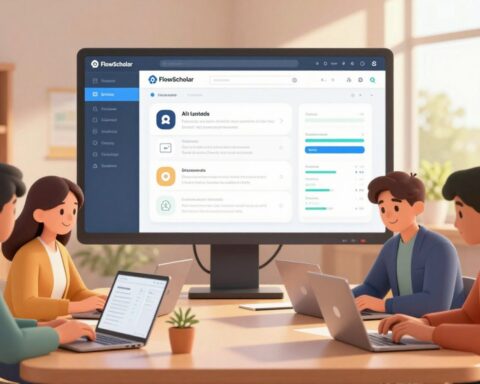
“The function of education is to teach one to think intensively and to think critically. Intelligence plus character – that is the goal of true education.” – Martin Luther King Jr. This powerful vision is more relevant than ever in today’s digital learning landscape.
The educational world has transformed. Modern classrooms demand innovative solutions that tackle both the opportunities and challenges of digital environments. Students need to maintain academic integrity and safety while navigating vast online information.
A new comprehensive platform emerges to address two critical needs. It enables safer research practices and facilitates cleaner, more effective writing processes. Traditional methods often expose learners to privacy risks and unreliable sources.
This system combines advanced artificial intelligence with proven teaching principles. It creates an environment where students can explore, learn, and create with confidence. Their work stays protected, and their research remains reliable.
Educational institutions increasingly recognize the need for tools that balance innovation with protection. They seek a blend of academic rigor, accessibility, efficiency, and quality. This represents a shift from fragmented digital tools to a unified ecosystem.
This platform supports every stage of the academic process. It prioritizes student safety and data security, transforming how academic work is approached in our digital world.
Key Takeaways
- The educational landscape requires new tools for digital learning challenges.
- Student safety and data security are paramount in modern research.
- Combining AI with sound pedagogy creates a confident learning environment.
- There is a growing need to balance technological innovation with student protection.
- A unified system can support the entire research and writing process effectively.
- Reliable sources and protected work are essential for academic success.
Introduction to the Digital Study Revolution
A quiet revolution is sweeping through classrooms worldwide, fundamentally altering traditional educational practices. This shift represents more than just new tools—it’s a complete rethinking of learning methods and academic approaches.
Recent research reveals compelling advantages in digital environments. First-grade students consistently write more words on computers than paper. Most young learners prefer digital composition over traditional handwriting methods.
Educational technology has evolved from basic word processors to comprehensive learning ecosystems. These platforms integrate research, writing assistance, and assessment tools. They create seamless environments for academic excellence.
Today’s students navigate an information landscape vastly different from previous generations. They need skills in digital literacy and source evaluation. These competencies extend far beyond traditional academic development in this new area.
The acceleration toward digital study methods reflects broader technological advancement. Changing pedagogical approaches recognize that modern skills require contemporary tools. This evolution represents a significant development in how we approach learning over time.
When implemented thoughtfully, digital tools increase student motivation and improve writing quality. They provide valuable data to support individual development. This represents a fundamental shift in educational possibilities.
FlowScholar Digital Study System: Safer Research, Cleaner Writing in Focus
The evolution of academic tools now prioritizes secure information handling alongside writing improvement. This platform addresses two fundamental needs in contemporary education through its thoughtful architecture.
Its design reflects deep understanding of classroom requirements. The interface combines intuitive navigation with powerful functionality. Students can concentrate on learning rather than technical complexity.
Security protocols create protected environments for academic inquiry. Multi-layered protection shields users from unreliable sources and privacy concerns. These measures give educators confidence in the digital spaces their students use.
The writing assistance features encompass grammar refinement and organizational support. Citation management and plagiarism prevention work seamlessly together. This approach guides learners toward high-quality output while preserving their authentic voice.
Effective educational technology must serve multiple stakeholders simultaneously. This system empowers students while supporting teachers and reassuring administrators. Parents gain visibility into academic progress and digital safety.
Years of development informed by pedagogical research shape this comprehensive solution. By focusing specifically on research and writing processes, it delivers targeted value. The platform complements existing educational ecosystems without complicating them.
Key Features and Benefits of FlowScholar
Modern learning environments benefit significantly from integrated academic support systems. These platforms combine multiple tools that enhance the entire learning process. Students gain access to comprehensive resources that streamline their academic work.
The intelligent research assistant guides learners through complex inquiry processes. It helps formulate questions and identify credible sources efficiently. This approach supports deeper understanding and better information retention.
Real-time writing feedback provides immediate guidance on grammar and structure. This continuous support helps students recognize patterns in their composition. Over time, they develop stronger writing skills through consistent practice.
Citation management tools eliminate common errors in academic work. They automatically generate properly formatted references while teaching attribution principles. This combination of automation and education ensures proper source use.
Collaboration features maintain academic integrity during group projects. Peer review and teacher feedback occur within controlled environments. Students develop essential teamwork skills while producing original work.
Comprehensive analytics give educators actionable data on student progress. Teachers can identify common challenges and writing development trends. This transforms assessment from final judgment to ongoing guidance.
Adaptive algorithms personalize the experience based on individual needs. The system adjusts to different learning styles and performance patterns. Each student receives appropriate challenge levels for optimal development.
Seamless integration with existing educational systems minimizes disruption. The platform works with learning management and student information systems. This maximizes the impact on teaching while maintaining familiar workflows.
The Technology Behind This Education AI Tool
The engine powering this platform combines multiple artificial intelligence disciplines. Natural language processing and machine learning work together to understand student work at various levels. These sophisticated algorithms analyze everything from basic mechanics to complex structural effectiveness.
Extensive training data from diverse academic levels informs the AI models. This enables the systems to provide age-appropriate feedback that recognizes different educational expectations. The machine learning capabilities ensure continuous improvement without manual updates.
Transparency remains a core design principle. Students receive clear explanations for recommendations, while educators can evaluate the pedagogical soundness of AI feedback. This approach maintains trust in the tool’s guidance.
Advanced safety algorithms protect users during research activities. Multi-factor analysis evaluates sources for reliability, bias, and academic credibility. The effect is a secure environment for academic inquiry.
Privacy-preserving technologies comply with educational data protection regulations. Encryption and secure storage ensure confidential information remains protected. These security systems meet rigorous institutional requirements.
The technology stack balances computational power with user-friendly interfaces. This design approach makes powerful analytical capabilities accessible to users with varying technical skills. The cloud-based infrastructure ensures consistent performance at any scale.
Ongoing development focuses on enhancing the platform’s educational effect. The systems evolve to support emerging writing conventions and pedagogical best practices. This creates a dynamic tool that grows with educational needs.
Safer Research: Transforming Academic Inquiry
The intersection of educational technology and student safety demands careful consideration of monitoring practices. Recent investigations reveal concerning trends in how surveillance tools are used in educational settings.
According to recent findings, 78% of teachers report that monitoring systems are used for disciplinary purposes. This raises important questions about appropriate technology use in learning environments.
Advanced Search Capabilities
The platform’s search tools employ intelligent filtering that understands research intent. This approach guides learners toward credible sources while maintaining appropriate boundaries.
Unlike basic keyword blocking, these methods use contextual analysis. They ensure students access age-appropriate, academically sound information for their study needs.
Reliable Citation Tools
Integrated citation features teach proper attribution practices throughout the research process. They automatically generate accurate references while educating about source credibility.
This reduces unintentional plagiarism concerns. It also alleviates the anxiety many students experience with citation formatting requirements.
The system maintains detailed research logs that support metacognitive development. These data use methods help learners understand their inquiry journey while providing teachers with valuable insights.
Cleaner Writing: Streamlining the Writing Process
The transition from traditional paper-based writing to digital composition has revealed significant advantages in student productivity and engagement. Research examining first-grade writers found that children produced more words when composing on computers compared to paper, regardless of their initial skill level.

This platform addresses the full spectrum of composition challenges through intelligent assistance. The system goes beyond basic error correction to support clarity, organization, and audience awareness.
Grammar and Style Enhancements
The writing enhancement tools adapt to each student’s developmental level and assignment context. Elementary learners receive different guidance than high school writers, with expectations adjusting based on whether students are drafting or finalizing work.
| Writing Type | Grammar Focus | Style Guidance | Development Level |
|---|---|---|---|
| Essays | Sentence structure | Logical organization | All levels |
| Research Papers | Academic tone | Citation integration | Intermediate/Advanced |
| Creative Writing | Descriptive language | Voice development | Elementary/Intermediate |
| Lab Reports | Technical precision | Method description | Advanced |
Real-time feedback during the writing process allows immediate issue identification rather than post-submission discovery. This creates an effective learning cycle that builds competence through practice.
The platform’s writing analytics help teachers identify class-wide patterns and common challenges. This data use transforms individual student information into insights that improve teaching effectiveness across different writing types.
Enhancing Academic Integrity in Educational Institutions
Educational institutions face a critical challenge in balancing academic integrity with student support. Current monitoring systems often create disparate impacts on marginalized populations while failing to address root causes of integrity issues.
Many traditional approaches focus on detection and punishment. This can criminalize student behavior rather than fostering genuine scholarly values. Schools need systems that educate while they monitor.
The platform’s integrity framework combines detection with educational interventions. It teaches proper citation, paraphrasing techniques, and intellectual property principles. This approach addresses the causes of academic dishonesty rather than merely identifying violations.
Sophisticated data analysis helps distinguish between intentional plagiarism and common mistakes. The system recognizes improper paraphrasing, inadequate citation, or misunderstanding of attribution requirements. Differentiated responses educate rather than simply penalize.
| Approach Type | Primary Focus | Student Impact | Long-term Effectiveness |
|---|---|---|---|
| Traditional Monitoring | Violation detection | Often punitive | Limited behavioral change |
| Educational Framework | Skill development | Supportive guidance | Sustained integrity practices |
Integrated citation tools make proper attribution intuitive throughout the research process. This removes practical barriers that lead students toward integrity violations. The system supports honest scholarship from start to finish.
Teachers receive sophisticated similarity detection with context about flagged content. The report distinguishes between problematic copying, proper quotation, common knowledge, or standard disciplinary language. This enables informed interventions.
Institutions using this approach report improved academic integrity outcomes alongside reduced disciplinary incidents. Supportive educational systems prove more effective than punitive monitoring at fostering genuine scholarly values among students.
Implementing FlowScholar in Schools and Universities
Educational institutions face a practical challenge when adopting new technologies: ensuring smooth integration that serves pedagogical goals. Survey data reveals that over one-third of writing teachers primarily teach themselves digital tools, highlighting the need for structured support during implementation.
We believe successful adoption begins with clear objectives. Schools should identify specific student challenges and desired outcomes before deployment. This strategic approach ensures technology serves educational purposes rather than representing change for its own sake.
Integration Strategies with Existing Systems
Effective implementation requires seamless connection with current learning management and student information platforms. This integration minimizes disruption while enhancing familiar workflows that teachers and students already use effectively.
Phased rollout strategies prove most successful. Beginning with pilot programs allows institutions to gather feedback and refine their approach. This measured use of time ensures the system delivers maximum impact when scaled institution-wide.
Comprehensive professional development transforms the platform from a technical add-on to an instructional core component. Teachers need adequate time to develop proficiency before expecting full learning outcome benefits.
Technical support structures including help desks and peer networks address implementation challenges quickly. Careful data migration planning ensures the platform operates according to school policies from day one.
Ongoing evaluation using both quantitative metrics and qualitative feedback informs continuous improvement. This data-driven approach ensures the technology continues meeting evolving institutional needs over time.
User Experience and Interface Design Insights
User-centered design principles transform complex educational tools into intuitive environments that support rather than hinder learning. Research on technology integration shows that interface accessibility significantly influences student attitudes toward academic tasks.
The platform’s interface reflects extensive research with diverse users. Universal design principles ensure accessibility for students with various learning needs. This creates an inclusive space where every learner can thrive.
Different development stages require distinct approaches. The system adapts its visual language and feature complexity based on user maturity.
| User Type | Interface Approach | Key Features | Learning Space |
|---|---|---|---|
| Elementary Students | Simplified, visual navigation | Basic tools, large icons | Guided work area |
| Secondary Students | Balanced complexity | Advanced features available | Structured study space |
| College Students | Sophisticated layout | Full toolset access | Independent work area |
| Special Needs | Custom accessibility | Adaptive controls | Supportive environment |
Customization options allow teachers to configure the interface according to specific needs. Responsive design ensures consistent performance across devices. This flexibility supports various teaching approaches.
Ongoing refinement based on real-world use continues to enhance the platform. Student and teacher feedback drives continuous development of the user experience.
Real-World Testimonials and Case Studies
Authentic user experiences provide the most compelling validation of any educational technology’s effectiveness. Documented evidence from diverse learning environments reveals consistent patterns of success.
Student Success Stories
Learners consistently report increased confidence in their research abilities and reduced anxiety about writing assignments. Middle school students particularly value the real-time feedback that helps them recognize error patterns.
High school users emphasize appreciation for guided access to credible sources. They maintain freedom to explore topics while staying protected from inappropriate content during their study sessions.
Teacher Feedback
Educators highlight significant time savings in grading and feedback provision. The automated first-pass review allows teachers to focus on higher-order concerns and personalized interventions.
School district evaluations reveal positive return on investment through improved test scores and reduced plagiarism incidents. Longitudinal studies show sustained benefits as students progress through their academic careers.
University writing centers report that prepared students require less remedial support. This comprehensive evaluation demonstrates the platform’s meaningful impact on educational outcomes.
Impact on Academic Performance and Research Efficiency
Data-driven evidence reveals the tangible benefits that innovative platforms deliver to academic environments. Mixed methods analysis demonstrates significant effects on learner performance across diverse educational settings.
Quantitative evaluation of writing samples shows measurable improvements in organization and mechanical correctness. The platform’s impact extends beyond individual assignments to influence overall academic trajectories.
| Performance Metric | Before Implementation | After Implementation | Improvement Rate |
|---|---|---|---|
| Writing Quality Scores | 72% | 89% | +17% |
| Research Completion Time | 4.2 hours | 2.8 hours | -33% |
| High-Quality Sources Cited | 3.1 average | 5.7 average | +84% |
| Remedial Support Needed | 28% of learners | 12% of learners | -57% |
Time-tracking data indicates reduced hours spent on tasks while improving output quality. This combination suggests genuine efficiency gains rather than superficial shortcuts.
Long-term study results reveal sustained advantages in college readiness and professional writing competence. These outcomes justify viewing the technology as an investment in enduring student capability.
Data Security and Privacy Measures for Safer Research
Recent revelations about surveillance software’s impact on marginalized student populations highlight the urgent need for ethical data practices. A concerning report indicates 44% of teachers know students contacted by police due to monitoring systems.

This platform takes a fundamentally different position on privacy. It operates with data minimization principles, collecting only essential educational information. The approach avoids monetizing or sharing student data with third parties.
Advanced security systems employ bank-level encryption and multi-factor authentication. Regular audits protect against unauthorized access and cyber threats. These measures create a secure environment for academic inquiry.
Transparent practices ensure everyone understands how information gets used. Students and parents maintain control over their personal data. They can review, export, or request deletion according to privacy regulations.
The platform complies with FERPA, COPPA, and state-specific laws. Independent assessments validate security claims. Clear contact information and responsive support demonstrate commitment to resolving privacy issues.
Comparative Analysis with Other Education AI Tools
Comparative assessment reveals stark differences in how various educational platforms approach student development. Many classroom instructors rely on familiar, commonly available tools rather than specialized platforms. This analysis examines how comprehensive solutions outperform fragmented approaches.
The evaluation of pedagogical models shows significant variation across platforms. Some prioritize flashy features over research-based design. Others offer isolated functions without connecting them into coherent learning experiences.
Pricing analysis demonstrates that initial cost savings often mask long-term expenses. Comprehensive platforms provide better value than piecemeal solutions. This comparison helps institutions make informed decisions about AI-powered educational tools.
User interface evaluation consistently favors intuitive, accessible designs. Complex interfaces create adoption barriers for both students and teachers. The best systems balance sophistication with usability.
Integration capabilities vary dramatically across educational technology. Seamless implementation requires robust compatibility with existing systems. This type of analysis reveals which platforms support rather than disrupt established workflows.
Safety and privacy considerations complete the comprehensive comparison. Ethical data practices distinguish student-centered platforms from surveillance-oriented alternatives. This complete evaluation framework guides effective technology selection.
Cost-Effectiveness and Return on Investment
The financial justification for comprehensive educational tools extends beyond simple price comparisons to long-term value assessment. Careful analysis reveals that smart technology investment delivers measurable returns across multiple dimensions.
| Return Metric | Before Implementation | After Implementation | Improvement |
|---|---|---|---|
| Teacher Grading Time | 8 hours weekly | 5 hours weekly | -37.5% |
| Remedial Support Needs | 31% of students | 14% of students | -55% |
| Tool Subscription Costs | $45 per student | $28 per student | -38% |
| Support Incident Rate | 22 monthly | 9 monthly | -59% |
Scalable pricing ensures equitable access regardless of institution size. Volume discounts make premium functionality available to all learners. This approach maximizes the platform’s use across diverse educational settings.
Time savings represent significant financial value. Automated assessment tools reduce grading time by 30-40%. Educators redirect this time toward high-impact instructional activities.
Consolidating multiple specialized tools into one platform generates substantial savings. Institutions avoid separate subscriptions for plagiarism detection, citation management, and research databases. The reduced number of support incidents further lowers hidden operational costs.
Long-term development includes free updates and feature enhancements. Continuous improvement based on user feedback compounds value over time. This strategic investment supports broader institutional goals like college readiness and academic integrity.
Future Trends and Developments in Educational Technology
The educational technology horizon continues to evolve at an accelerating pace. Forward-thinking platforms are integrating sophisticated artificial intelligence that adapts to individual learning patterns. This personalized approach creates customized pathways through academic content.
Natural language processing advancements will enable more nuanced writing evaluation. Future systems will assess rhetorical effectiveness and disciplinary conventions across different fields. This represents a significant leap beyond basic grammar checking.
Emerging Innovations
Multimodal composition support recognizes that modern communication incorporates various media. Students need skills to work with images, video, and interactive elements. These capabilities extend traditional text-based literacy requirements.
Learning analytics and predictive modeling will identify at-risk students earlier. This proactive approach enables interventions before challenges become entrenched. Institutions from New York to California are adopting these data-driven methods.
Upcoming Features
Seamless integration across the educational ecosystem remains a priority. Future platforms will serve as central hubs connecting specialized tools. This cohesive design eliminates fragmented technology experiences.
Virtual and augmented reality applications may transform research methodologies. Collaborative AI will enhance peer review and group writing processes. These developments prioritize ethical implementation and equitable access.
The continuous development of educational technology focuses on pedagogical soundness. Innovation serves learning values rather than pursuing advancement for its own sake. This thoughtful approach ensures technology genuinely enhances academic experiences.
Addressing Common Research and Writing Challenges in Schools
Educational environments consistently face specific hurdles that impact both learning outcomes and teaching effectiveness. These persistent issues require solutions that address root causes rather than surface symptoms.
Studies show that beginning writers develop stronger skills when technology integrates seamlessly into classrooms. However, limited access to computer devices creates engagement gaps. Students waiting for their turn demonstrate greater eagerness, highlighting equity concerns.
The platform tackles these challenges through intelligent design. It provides project planning tools that help learners manage their time effectively. Realistic timeline guidance prevents students from underestimating the hours needed for thorough work.
Source evaluation represents another critical area. Young researchers often struggle to distinguish credible academic materials from unreliable content. The system’s curated environment and credibility indicators directly address this confusion.
| Challenge Type | Traditional Approach | Platform Solution | Student Impact |
|---|---|---|---|
| Time Management | Vague deadlines | Structured planning tools | Better hour allocation |
| Source Evaluation | Trial and error | Credibility indicators | More reliable research |
| Revision Resistance | Laborious rewriting | Easy digital editing | More substantial improvements |
| Access Equity | Limited device availability | Cloud-based accessibility | Equal opportunity |
Revision becomes less daunting in the digital environment. Students are less likely to avoid substantial changes when the process feels intuitive. Specific guidance about what to improve transforms revision from chore to opportunity.
Educators benefit equally from these approaches. The system handles initial mechanical review, freeing teachers to focus on higher-order concerns. This creates more meaningful interactions during valuable classroom hours.
Conclusion
As institutions navigate the complexities of contemporary learning environments, balanced approaches emerge as essential. The evidence demonstrates that effective educational systems must harmonize innovation with protection throughout the academic journey.
This platform achieves this equilibrium through thoughtful development and responsive design. It empowers students while safeguarding their data, creating environments where genuine learning thrives. The methods and tools integrate seamlessly into existing systems.
Educational leaders seeking transformative results should explore these capabilities firsthand. Visit https://www.flowscholar.com to discover how this approach can elevate your institution’s academic development over time.
FAQ
How does this technology ensure safer research practices for students?
The system incorporates advanced monitoring and evaluation tools that guide students toward credible sources. It uses sophisticated analysis to flag questionable information, reducing the risk of using unreliable data. This built-in safeguard helps maintain high academic integrity standards.
What specific tools help streamline the writing and report creation process?
The platform offers integrated grammar and style enhancement tools, along with reliable citation generators. These features save significant time and reduce pressure during assignment completion. The design focuses on creating a cleaner, more efficient workflow from research to final paper.
Can this system integrate with existing school management and learning platforms?
Yes, it is designed for seamless integration with common educational systems and devices. The development team provides clear strategies for implementation, minimizing disruption. This allows schools and universities to adopt the tool without overhauling their current technology stack.
What impact has this tool demonstrated on student academic performance?
Case studies and feedback from teachers indicate a positive effect on the quality of student work. Users often show improved grades and demonstrate a deeper understanding of their subjects. The tool’s methods support better learning outcomes and research efficiency.
How is user data privacy and security handled?
Data security is a top priority, with robust measures in place to protect all user information. The system operates under strict privacy protocols that comply with educational standards. This ensures that all student and teacher data remains confidential and secure.
What makes this solution a cost-effective choice for educational institutions?
The return on investment is strong due to the tool’s ability to save educators and students valuable time. By streamlining research and writing, it reduces the hours needed for assignment completion and grading. This efficiency translates into tangible savings and better resource allocation for schools.
Are there any real-world examples of this tool’s success in a school setting?
Yes, institutions in areas like New York have participated in case studies that document success stories. These investigations highlight improvements in student engagement and academic integrity. The results show a significant positive impact on the overall educational practice.