There is a quiet thrill in turning a simple feeling into a usable product. Many developers remember the first night they sketched an idea on a napkin and felt both terrified and alive.
This piece frames how a maker translates that vibe into clear direction. It shows why building alone means wearing every hat—coding, marketing, and launching—and why prudent savings and scope protect a career.
We outline a practical path: start part-time, fund gear and learning with contract work, then use tight scoping to ship a 30-day MVP. One problem, one flow, one product—skip analytics and AI in v1. Use a boring, reliable stack: React, Tailwind, Supabase, Vercel, edge functions.
The goal is clear: convert vibe into market signals, answer the pivotal question about who benefits now, and pace work to avoid burnout. Community and disciplined habits compress timelines and make maintenance manageable for one person.
Key Takeaways
- Begin as a hobbyist while keeping a day job and building runway.
- Scope tightly: one user problem, one flow, one polished MVP.
- Choose a low-maintenance stack to reduce ops and long-term risk.
- Save and plan to avoid debt; use contract work as a bridge.
- Use community feedback to turn vibe into usable product direction.
- Pacing and disciplined habits protect the broader career arc.
From Idea Vibes to User Problems: Framing a How-To Path for a Solo Developer
Translate an initial spark into a measurable question that an MVP can answer in weeks.
A clear way to begin is to name the user, the context, and one measurable outcome. Frame the idea as a single problem: who, when, and what success looks like.
Inventory your skills and gaps up front. Decide what to learn via a short course and what to defer. This prevents wasted time and keeps momentum.
The first release is validation, not perfection. Skip analytics and AI in v1. Ship one core flow that proves value and collects real answers to your question.
“Small projects with defined problems teach faster and cost less than sprawling experiments.”
- Document assumptions and keep a question backlog that only user data can resolve.
- Prioritize by risk and years-to-payoff; choose projects that return learning quickly.
- Seek occasional feedback from other developers as a lightweight team substitute.
| Focus | Action | Outcome |
|---|---|---|
| Idea | Write one-sentence problem + user | Removes ambiguity |
| Skills | List gaps; take a short course | Faster execution |
| Scope | One flow, no analytics/AI | Validates direction quickly |
For an example of turning vibe into practical principles, see this concise guide on coding and design principles: vibe coding design principles.
Lock Scope Early: How to Validate “Vibe” and Define a Core MVP Flow
Locking scope early turns a hopeful idea into a testable plan that ships on time.
Start by naming one core problem, one user, and one measurable outcome. Then storyboard the fewest screens needed to prove value.
What to cut first: exclude AI add-ons, analytics dashboards, admin consoles, and complex role systems. Those features slow development and add risk without early payoff.
- Define the user journey in a single sentence; build only the screens that support it.
- Choose a stack that reduces DevOps: React + Tailwind, Supabase (Auth/DB/Storage), Vercel, Edge Functions.
- Map dependencies by risk: external APIs, auth, and payments go first with testable stubs.
- Time-box each part of the flow; if it overruns, simplify the feature instead of slipping time.
“If you don’t lock scope early, the MVP won’t ship.”
| Focus | Build in v1 | Skip in v1 |
|---|---|---|
| Core flow | One master post published via single dashboard | Multi-role publishing UI |
| Stack | React, Tailwind, Supabase, Vercel, Edge Functions | Custom infra or heavy orchestration |
| Risk | Auth and external API stubs | Full analytics and AI pipelines |
Time, Money, and Risk: Designing a Solo Dev Career that Doesn’t Burn You Out
Designing a sustainable path means balancing ambition with practical buffers for time and money.
Start as a hobbyist while keeping a full-time job to pay bills and protect mental health. Living below your means widens runway and reduces pressure to monetize early. Treat product work as structured hours, not life-consuming emergency work.
Start as a hobbyist, keep the day job, and build a rainy-day fund
Protect your time by carving fixed blocks for product work. This caps downside and builds steady momentum.
Budgeting the real costs: gear, subscriptions, incorporation, events
Expect real expenses: incorporation ≈ $500, a desktop PC $800–900, a laptop $1,000+, and event budgets that can reach $8,000. Add chair, peripherals, utilities, and rent.
- Save for the project horizon: if a project may take three years, save at least three years of living expenses.
- Use contract work as a flexible option to top up savings — a strategic lever, not a permanent detour.
- Agree a clear point to pause and reassess; return to full-time job if health or quality of life suffer.
“Longevity beats heroics in a small-team career.”
Build with Boring Tech: A Fast, Low-Maintenance Stack and Tools
Speed and predictability beat novelty when the goal is to ship and learn. A deliberate, well-known foundation reduces surprises and keeps the focus on product work.
Frontend, backend, storage, and auth
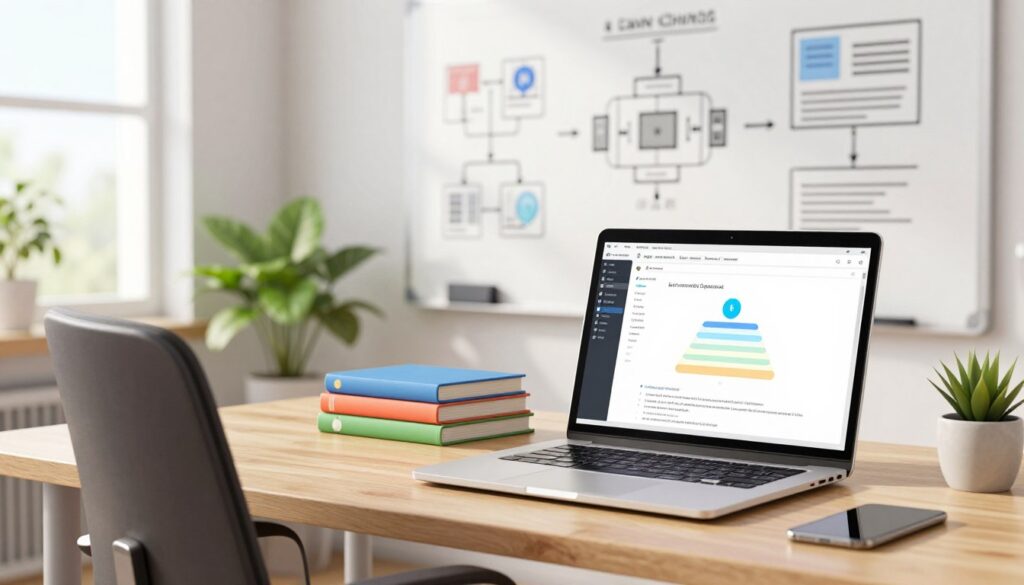
React plus Tailwind lets teams iterate UI quickly. Supabase provides Auth, DB, and storage in one place so a single developer skips wiring many services.
Edge functions, webhooks, and deployment
Deploy on Vercel and use Edge Functions to run payments and webhooks. This way server-side logic runs close to users with minimal DevOps.
Community and ecosystem support
Tap platforms like Solodev to learn patterns and speed problem solving. Other developers share templates and fixes that cut days off common tasks.
- Choose a stack that trims cognitive load: React + Tailwind, Supabase, Vercel.
- Use Edge Functions and webhooks to handle server events without owning servers.
- Keep data paths simple and intentional so debugging and recovery stay easy.
- Match tools to the skills you have; avoid complexity that becomes technical debt.
“Boring tech lowers risk, improves maintainability, and keeps projects shippable.”
Execution Blueprint: A Week-by-Week Solo Dev Development Timeline
A focused timeline turns a vague idea into repeatable days of progress.
Week one establishes the foundation: finalize scope, create the repo, enable continuous deployment, add email auth, and model the DB (users, posts, platforms).
Week one: repo, deployment, schema, and authentication
These tasks let a developer ship updates daily. Time-box each day and track open questions.
Week two: core posting flow, API limits, and basic error handling
Build the post creation UI, add platform placeholders, and implement a queue for posting. Test token refresh, rate limits, and expected API failures early.
Week three: payments, subscriptions, and access control
Integrate payments (for example, Razorpay), add pricing, process webhooks via edge functions, and create subscription tables. Add robust logging and handle failed payments in order.
Week four: polish critical flows—loading, errors, empty states
Focus on perceived quality: loading states, clear error messages, and empty screens. Users forgive missing features, not broken flows.
“End each week with a short review: what worked, what broke, and the one thing you’ll cut to keep momentum.”
| Week | Primary Goals | Risks to Test |
|---|---|---|
| 1 | Repo, deploy, auth, schema | Deployment friction |
| 2 | Core post UI, queue, API stubs | Rate limits, token expiry |
| 3 | Payments, webhooks, subscriptions | Failed payments, logging gaps |
| 4 | Polish flows, stability | Broken edge cases |
- Keep the stack consistent across environments to reduce surprises.
- Automate seeding and smoke tests so each day’s work proves out quickly.
- Document lessons—years of improvement start from these tight months.
Monetization Without Mayhem: Payments, Pricing, and Launch Readiness
Monetization should be built as a dependable system, not an afterthought stitched onto checkout code.
Payments require data and engineering: create orders with Razorpay, record them in subscription tables, and run secure webhooks via Edge Functions.
Logging and retries matter more than a pretty checkout. Missing webhook events or failed retries block access and cost trust.
Payments are a system: webhooks, failed payments, and logging
Implement order creation and an auditable log for each transaction. Webhooks must verify signatures, enqueue retries, and update subscription rows atomically.
A common early mistake is underestimating failed payments. Test charge failures, expired cards, and webhook duplication before launch.
Pricing and access: free vs. paid features that align with your product’s core
Align tiers to outcomes: free should prove value; paid should unlock throughput or convenience that changes the user’s result.
Ask one question before a paywall: does this feature change outcomes or only decorate the UI? If it doesn’t change outcomes, defer it.
Ship before perfect: avoid over-engineering and let users guide features
Launch with stability and clear access control. Defer complex analytics or AI until user behavior validates the model.
“Launch when stable, not perfect; let users’ behavior guide the way you expand the model.”
- Treat payments as data: orders, retries, secure webhooks, and auditable logs.
- Design subscription tables and access checks that fail safe—never block paid users by accident.
- Budget weeks and possibly years for compliance and provider changes.
| Area | Must-have | Why it matters |
|---|---|---|
| Order flow | Razorpay order creation, DB record | Source of truth for refunds and disputes |
| Webhooks | Edge Functions, signature verification, retries | Keeps access accurate and auditable |
| Subscriptions | Subscription table, status, next billing | Controls feature access reliably |
| Logging | Auditable logs, error alerts | Speeds debugging and maintains trust |
For practical platform guidance and integrations, consult a trusted payment platform guide as you design your flow.
Solo Dev Careers: Strategies, Skills, and Project Choices for the Long Game
A long-term plan treats product work like a ladder: each rung improves skills and widens options.
The practical path blends paid contract work, deliberate projects, and clear financial thresholds. Contract jobs supply income and portfolio pieces, but they are uneven; plan around that volatility.
Use contract work strategically: pick assignments that build relevant experience and cash flow while you validate product direction. Keep a clear stop point for billable work when signals show traction.
Contract work as a bridge: portfolio, cash flow, and experience
Contracts fund living costs and buy time. Some builders save multiple years of living expenses before scaling a product full-time.
Choose contracts that teach needed skills and produce visible case studies. That makes future projects quicker and reduces hiring risk if a small team forms.
Decision points: when to go full-time solo on your product
Define three clear signals: runway in months, steady user traction, and a plan for which paid work stops when product work starts.
- Calibrate time commitments so health and finances stay stable.
- Track product metrics and customer interviews—usage beats praise.
- Treat money as a constraint: spend on leverage, not vanity.
- Keep the team intentionally small until coordination overhead is justified.
- Reserve the option to re-enter full-time employment if signals turn negative.
| Decision Signal | Threshold | Why it matters |
|---|---|---|
| Savings runway | 6–24 months | Buffers development time and stress |
| Traction | Consistent user growth or revenue | Shows product-market fit |
| Skills built | Relevant portfolio pieces | Makes next projects faster |
“Durability beats heroics: a plan that preserves your job options and health is the most sustainable business move.”
For practical stories about shifting from paid work to product work, see this guide on making it work as a solo game.
Conclusion
A tight, repeatable rhythm—ship, reflect, and simplify—is the clearest way to turn an idea into a product.
One focused experiment—a 30-day MVP that answers a single question—proves far more than long plans. Use a lightweight stack (React, Tailwind, Supabase, Vercel, Edge Functions) and skip AI or heavy analytics until users demand them.
Keep money and time conservative: keep a day job while you build runway and budget real costs like incorporation and gear. Join supportive communities for feedback and shortcuts. For notes on learning to let go and practical project ideas see letting go of perfection and vibe coding project ideas.
Ship, learn, and repeat. Document decisions, ask one question before each addition—does this change the outcome?—and close the loop with a public post and stored lessons. Momentum is built, not granted.
FAQ
How can a solo developer validate a “vibe”-based SaaS idea quickly?
Start with a one-problem, one-user-flow approach: build a clickable prototype or a simple landing page, collect signups, and run short interviews. Use lightweight metrics—conversion rate from signup to active use—rather than full analytics. Validate willingness to pay with pre-orders or early-bird pricing before investing in heavy features.
What should be included in a minimal viable product (MVP) for a vibe-driven product?
Focus on the core user journey that delivers the vibe: one main feature, clear onboarding, and reliable auth. Skip AI, complex analytics, and multi-role permissions in v1. Prioritize speed and clarity: a working flow that solves a recognizable pain point beats many half-built extras.
How should a developer manage time, money, and burnout while building alone?
Treat the project like a sustainable side business: keep a day job if possible, set weekly time blocks, and build a rainy-day fund equal to several months of expenses. Budget for real costs—gear, subscriptions, and occasional legal or incorporation fees—and set hard limits on scope to avoid endless work cycles.
Which tech stack minimizes maintenance and maximizes speed?
Choose proven, low-opinion tools: React for frontend, Supabase for Auth/DB/Storage, Tailwind for UI, and Vercel for deployment and edge functions. This setup reduces DevOps overhead, shortens iteration loops, and relies on ecosystems with strong community support.
What does a practical four-week execution timeline look like?
Week one: set up repo, CI/deployment, DB schema, and authentication. Week two: build the core posting or interaction flow and add basic error handling. Week three: integrate payments, subscriptions, and access control. Week four: polish critical flows—loading states, errors, empty states—and prepare for launch testing.
How should payments and pricing be handled to avoid operational chaos?
Treat payments as a system: implement webhooks, robust error logging, and retry logic for failed charges. Design simple pricing tiers aligned with the product’s core value—offer a clear free tier and one or two paid plans. Ship with minimal billing complexity and iterate based on real customer behavior.
When is contract work useful for a solo product builder?
Use contracting as a bridge when you need cash flow, portfolio pieces, or experience in complementary domains. Short, targeted contracts can fund product development and sharpen skills without derailing focus—prefer work with clear scopes and deadlines.
How do you decide to go full-time on a product?
Look for consistent revenue signals: repeat customers, predictable monthly income that covers living costs, and a clear growth channel. Combine financial readiness with product traction and an achievable roadmap; avoid quitting solely on optimism.
What are the top things to cut from v1 to stay focused?
Drop advanced AI features, detailed analytics dashboards, complex role-based permissions, and nonessential integrations. Keep the product tight around the core flow that creates the intended vibe—these cuts speed development and reduce maintenance.
How can a solo builder leverage community and ecosystem support?
Tap into platforms like Supabase, Vercel, and relevant developer communities for templates, plugins, and troubleshooting. Share progress publicly—indie hacker forums, Twitter, and developer Discords—to gain feedback, collaborators, and early users.