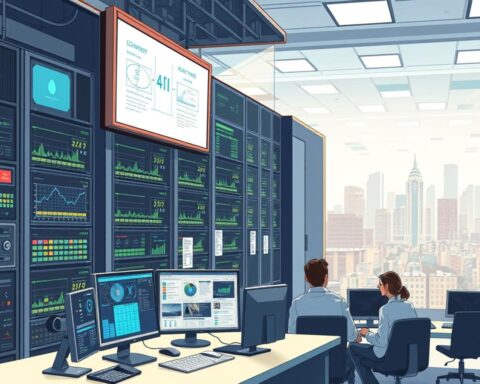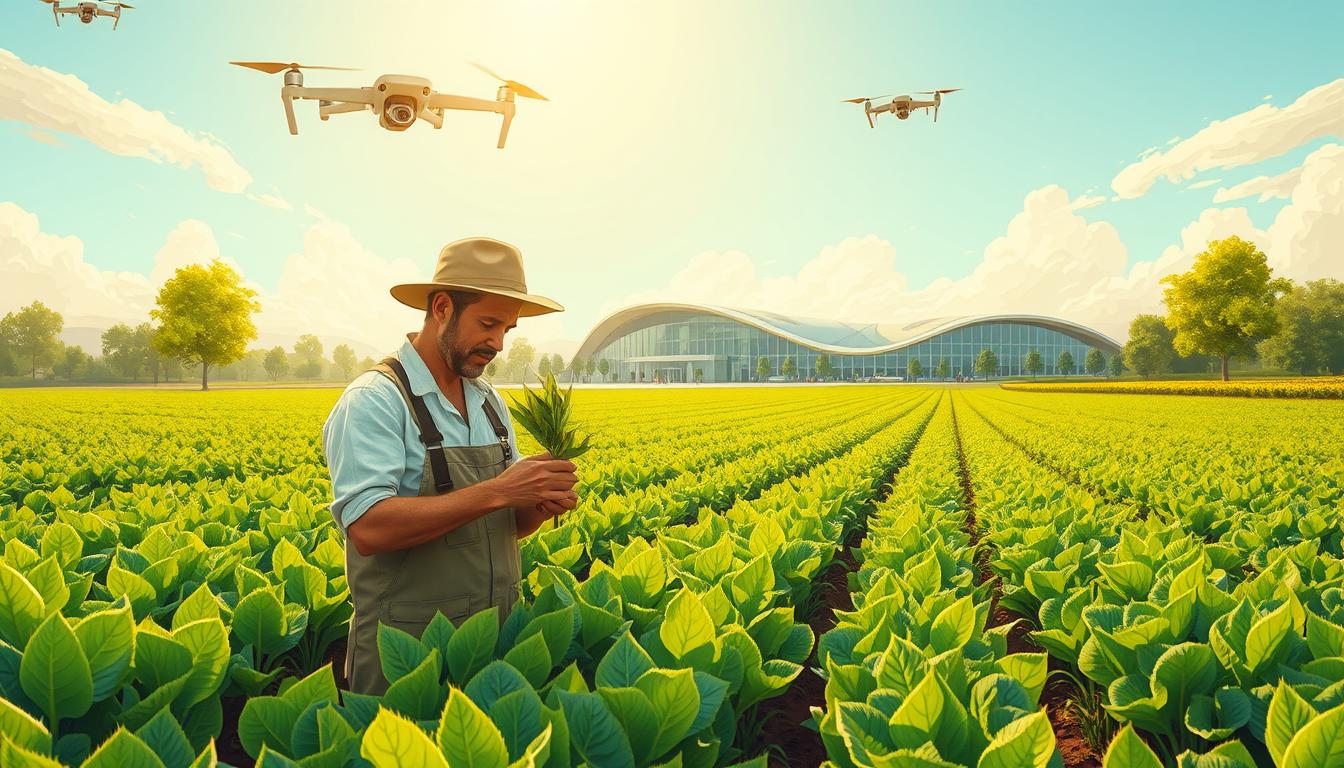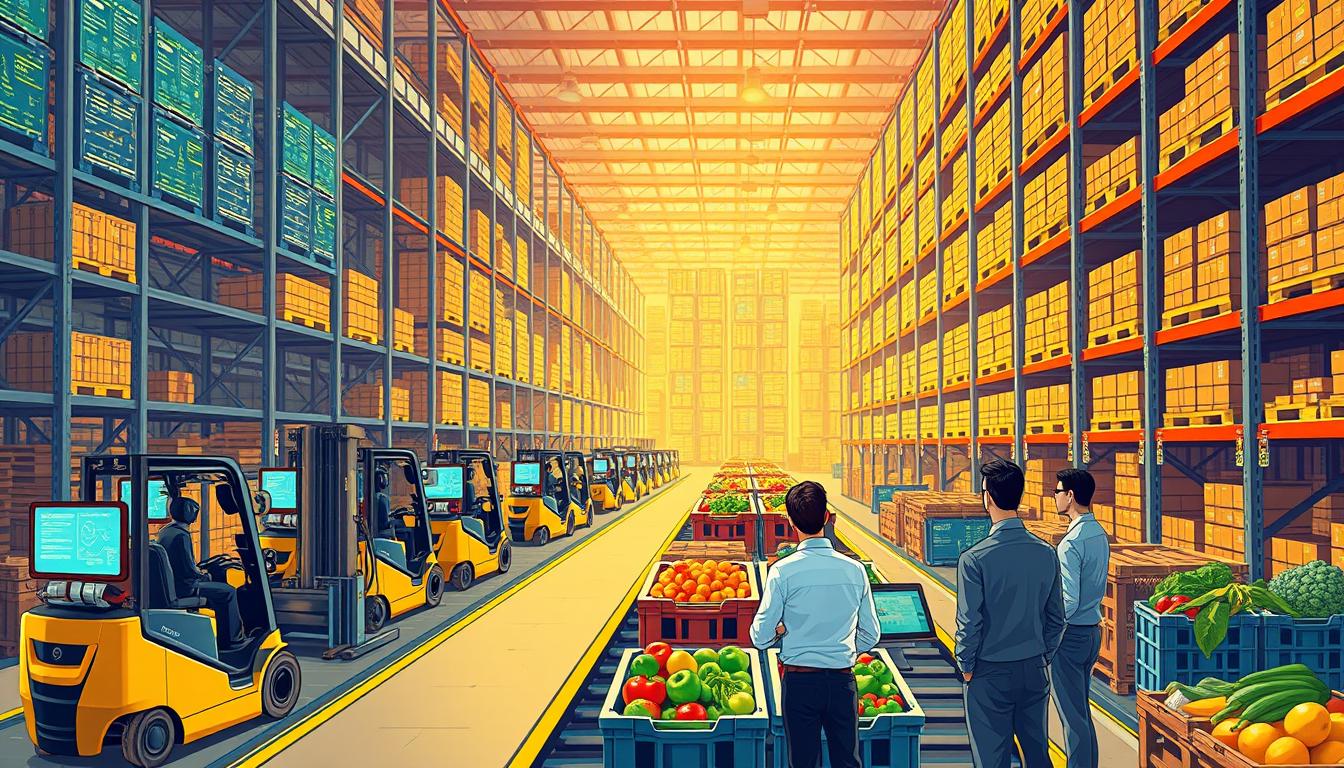
Many people know this feeling: a truck is late, food spoils on the way, and customers get upset. This makes operations managers, procurement leads, and founders very frustrated. They look for better tools and answers.
This section talks about using AI to improve the food supply chain. It shows how AI uses smart tools to reduce waste and make things more efficient. This helps food get from farms to tables better.
The article shows how to use AI in real life. It gives examples and steps for those who want to use AI in food operations. It talks about how companies like Mondelez use AI to make recipes better while keeping human taste.
The article says AI is a tool to help make better decisions. It talks about using AI in a smart way to get good results. It aims to help leaders understand and use AI wisely.
Key Takeaways
- AI Use Case – Food Supply-Chain Optimization with AI reduces waste and improves resilience across the value chain.
- Artificial intelligence in food supply chain applies predictive analytics, computer vision, and robotics for practical gains.
- AI applications in food industry already show results in recipe development, inventory control, and logistics optimization.
- Effective deployment requires governance, measured ROI, and alignment with operational processes.
- Readers will find both technical methods and strategic guidance to evaluate and adopt AI solutions.
Understanding Food Supply Chain Challenges
The modern food supply chain is under a lot of pressure. This comes from changing tastes, tighter budgets, and stricter safety rules. Leaders say the problem is the ups and downs in fresh food spending and the lack of digital tools.
Key Issues Facing the Food Supply Chain
Keeping perishable items fresh is a big challenge. It needs coordination from farms to retailers. The changing demand makes it hard for grocery stores and food makers to plan.
Supplier networks are not connected well. This makes it hard to see the whole supply chain. Teams often just react to problems instead of stopping them before they start.
Labor issues also make things harder. Many companies are just starting with AI. They are not yet using it on a big scale. This slows down solving big problems that need lots of computing power.
Impact of Inefficiencies on Businesses
Food logistics problems cost money. High spoilage and waste increase costs. Stockouts hurt sales and make customers lose trust.
Fast shipping to fix shortages also raises costs. Production planning issues lead to problems with recipes. For example, finding the right mix of ingredients is hard and needs lots of computing power.
Regulatory and Compliance Concerns
There are more rules to follow. These include keeping food cold, tracing items, and finding pathogens fast. Brands face big costs and damage to their reputation if they can’t track items well.
Using AI for faster pathogen detection and tracing items with blockchain can help. But, any AI tool must follow safety, privacy, and traceability rules to be trusted and useful.
The Role of AI in Supply Chain Management
The food supply chain is complex. It includes sourcing, production, storage, and delivery. New technologies are changing these steps. Artificial intelligence in food logistics helps make sense of messy data.
Overview of AI Technologies
Machine learning helps predict demand and find odd sales or temperature patterns. Optimization engines balance costs, shelf life, and transport needs.
Computer vision checks produce quality quickly. Robotics and self-driving vehicles make harvesting and delivery faster. Generative AI helps teams plan and summarize complex forecasts.
Big companies like Walmart and Amazon use AI to predict demand. They can see what items will sell well in different places and times. For more examples, check out real-world case studies.
How AI Transforms Traditional Approaches
AI helps move from reacting to planning ahead. Chatbots speed up finding suppliers. Predictive maintenance cuts down on equipment failures and spoilage.
Optimization models solve big problems with cloud computing. Companies like Mondelez and Kraft Heinz use them to save money and improve supply.
Algorithms make delivery routes better, saving miles and emissions. This lowers costs and speeds up delivery. AI also helps manage stock and reduce waste.
But, humans are needed to make sure AI is used right. They check quality, taste, and ethics. Responsible AI practices and rules help build trust as teams use AI in food supply chain management.
Predictive Analytics for Demand Forecasting
Predictive analytics makes sense of random data. It helps retailers and makers use machine learning. They look at sales history, promotions, and weather.
They also consider big trends and local events. This makes forecasts better for short and medium terms. It helps see what’s happening in stores and with products.
Getting good at predicting needs the right mix of models. Machine learning gives a range of possible outcomes. It’s like looking at different paths a future might take.
Companies like Ernst & Young test these predictions. They see how well they work before making them bigger. This helps decide what to stock and promote.
Starting small is key. Teams pick important items and stores to focus on. They check how accurate their forecasts are.
They work together to make things better fast. They use smart guesses for stock levels. This cuts down on waste and keeps shelves full.
Being better at forecasting helps in many ways. It means less waste and better shelves. It also makes production planning better.
This saves money and cuts down on waste. It makes customers happier and helps the business grow. This is because people want fresh and new things.
Using AI to improve the supply chain is a step-by-step process. Start with small tests, then grow and use the best ones. This makes the whole chain better at meeting real needs.
AI for forecasting is a big advantage when teams work well together. They keep improving by measuring and trying new things. This way, they stay ahead without messing up daily work.
AI-Driven Inventory Management Solutions
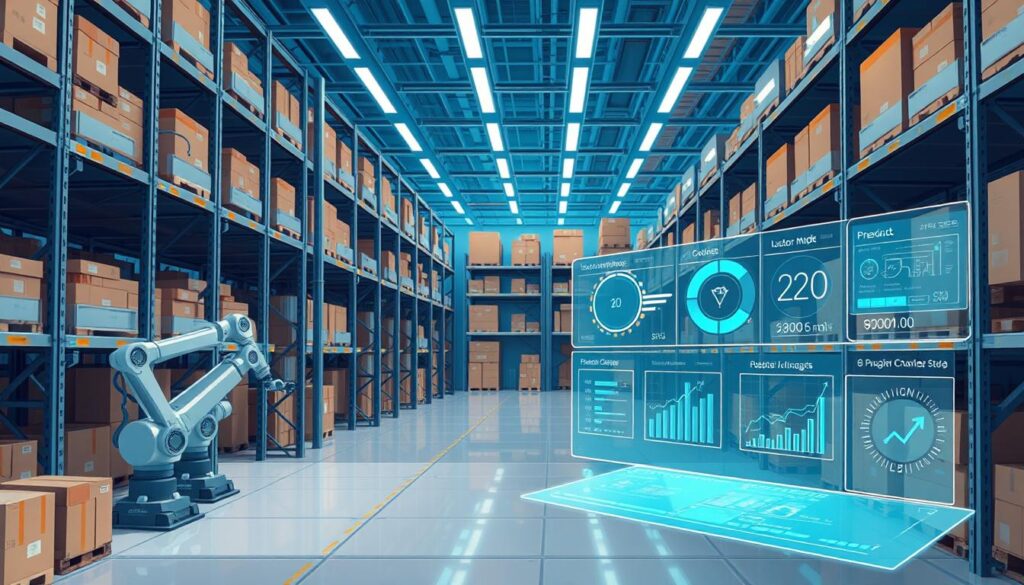
Inventory is key in food operations. Today’s systems use sensors, software, and analytics for quick, smart choices. AI helps by combining data from physical assets and business systems. This improves visibility and cuts down on errors.
Real-Time Inventory Tracking
Things like sensors and RFID tags send data to AI platforms. This data helps track inventory in real-time. It shows where things are, their temperature, and humidity.
This info helps avoid stockouts and spoilage. It also helps with smart restocking and allocation.
AI works with ERP and transport systems too. It sends alerts for cold-chain issues and exceptions. This way, teams can act fast to keep quality high.
Reducing Waste with AI
AI sorts inventory by shelf-life and demand. It suggests markdowns, transfers, or donations. This helps lower waste and keep profits up.
AI also predicts shelf-life based on sensor data. This is better than just using best-by dates. It learns from feedback to get better over time.
Start with small tests, like with fresh produce or dairy. Then, expand what works. Use tools for frontline workers to speed up adoption. This leads to less waste and more on-shelf items.
| Capability | What it Does | Value to Operations |
|---|---|---|
| IoT & RFID | Continuously monitors stock count, location, temperature | Enables accurate, real-time inventory tracking and cold-chain alerts |
| Prescriptive Analytics | Recommends markdowns, transfers, or donations based on shelf-life | Supports reducing food waste with AI and improves margins |
| ERP Integration | Syncs financials, procurement, and inventory movements | Creates single source of truth for decision-making |
| Predictive Shelf-Life | Estimates usable life from sensor and handling data | Replaces static dates with dynamic, actionable insights |
| Connected-Worker Tools | Guides frontline staff with tasks and alerts | Accelerates adoption and improves on-shelf availability |
Optimizing Transportation and Logistics with AI
Logistics teams deal with many challenges. These include perishable items, limited vehicle space, changing traffic, and weather. AI helps turn these issues into solutions. It aims to reduce waste, keep food quality high, and make deliveries on time.
AI uses data like traffic and delivery times to plan the best routes. For regular schedules, old methods work well. But for sudden changes, AI’s learning abilities shine.
Begin with small tests on busy routes. Check costs and how often deliveries are on time. Use data from Verizon Connect or Samsara to improve. Make sure to protect customer and route data.
Improving delivery efficiency brings big wins. It means less driving, less fuel use, and more on-time deliveries. AI and location tech from HERE Technologies help make deliveries tighter.
New ideas for the last mile include smart order planning and small hubs. Generative AI helps manage demand and capacity. These tools cut down on extra shipping costs and make customers happier during busy times.
Here’s how to get started:
- Find busy routes and set up a baseline.
- Add real-time data like weather to the mix.
- Use AI to plan routes and watch your numbers.
- Keep improving with AI and make sure data is safe.
Using AI in food logistics gives companies an edge. They can work more efficiently, make more money, and keep food quality high throughout the supply chain.
Enhancing Supplier Relationships through AI
AI changes how teams find risks, speed up buying, and make strong partnerships. Companies using AI can move from just managing suppliers to working together better. This helps with planning, clear goals, and working together on sustainability.
AI in Supplier Risk Assessment
Models look at big economic trends, supplier money, world news, and delivery times. They rank how stable suppliers are. Many companies use AI to find early signs of trouble and plan ahead.
Experts like EY say to add rules to make sure scores are fair and clear. This way, teams can explain scores to suppliers and officials, building trust and following rules.
Streamlining Procurement Processes
Cognitive tools make buying and finding suppliers faster. AI helps by summarizing bids, finding important contract parts, and showing price trends. This saves time and helps make better choices based on past data and market signs.
Changing involves teams working together, including supply chain, finance, and sustainability experts. Testing in key areas gives quick feedback. Important metrics include meeting deadlines, filling orders, and how fast things are bought.
Results include shorter lead times, better planning, stronger supplier work, and lower costs. Leaders in retail and food say AI helps make early buying decisions. It shows prices and what’s available.
AI-Powered Quality Control Mechanisms
The food industry is using new tech to keep food safe and the same. Smart systems use cameras, sensors, and analytics to find problems fast. This helps follow rules, respond quickly, and works well with lots of products.
Monitoring Product Quality in Real Time
High-speed cameras and computer vision check shape, color, and packaging fast. Sensors watch temperature, humidity, and gas levels in places where food is stored and made. AI helps by ignoring false signals and focusing on real ones.
Predictive models spot problems before products leave the factory. Working with manufacturing systems, teams can stop or change production quickly. This leads to fewer recalls and more products made, with humans checking tricky cases.
Impact on Consumer Safety
AI for food safety finds contamination and pathogens sooner. It looks at signals that lab tests often miss. This means less time for people to be exposed and quicker recalls if needed.
Knowing where food comes from makes finding problems faster. When AI systems work with blockchain or traceability, teams can find and fix issues quickly. It’s important to check AI models against lab results and watch for bias to keep them reliable.
| Capability | What It Monitors | Primary Benefit |
|---|---|---|
| Computer Vision | Product defects, foreign objects, packaging integrity | Rapid, consistent inspection at conveyor speeds |
| Environmental Sensors | Temperature, humidity, gas levels, light exposure | Ongoing control of growth conditions and spoilage risk |
| Predictive Models | Equipment behavior, contamination indicators, trend shifts | Early warning to prevent faults and contamination |
| Traceability Integration | Batch tracking, supplier data, shipment history | Faster recall execution and clearer root-cause analysis |
| Governance & Validation | Model accuracy, bias audits, calibration logs | Regulatory confidence and sustained model reliability |
Sustainability in the Food Supply Chain
AI helps make choices that are better for the planet. It guides companies to plan routes and loads better. This cuts down on fuel use and makes food fresher.
Reducing Carbon Footprint with AI
AI makes routes and loads better to cut carbon emissions. It keeps trucks running well and reduces waste. Tests show less waste and faster orders, which lowers emissions.
AI lets leaders see how choices affect the planet. They can pick actions that make a big difference. This helps reach climate goals faster.
AI’s Role in Sustainable Sourcing
AI finds suppliers with smaller footprints by looking at their data. Companies like Mondelez choose ingredients that are better for the planet. Tools help teams make choices that are good for everyone.
Guidelines say to measure and share results. This makes it clear how AI helps. It also makes farms more efficient by using new tools.
For more on how AI helps, check out Toolsgroup’s blog.
Case Studies: Successful AI Implementations
This section shows how AI changed the game for companies. We’ll look at how big names made strategy work and what they did to get the best results.
Major Brands Utilising AI for Optimization
Mondelez used AI to make recipes better and cheaper. They kept the taste and good for the planet. Big stores and food companies tested AI for keeping things running smoothly.
Kroger and Walmart used AI to guess what people want on their shelves. Conagra and Nestlé used AI to come up with new ideas and predict how much to make. These moves helped them work faster and guess sales better.
Lessons Learned from Successful Deployments
Start with big wins like guessing sales and keeping stock right. Teams that work together and plan well grow faster. They avoid wasting money on too many projects.
Watch the right numbers to see if AI is working. EY showed how fast AI can pay off by saving money and time. This helps businesses grow.
But, there are traps. Not seeing the whole picture, not understanding AI, and not planning to grow can slow you down. Canadian grocery stores say it’s time to make AI work better for people, not just for tech.
- Prioritize use cases with clear ROI and operational data.
- Govern models for accuracy and explainability from day one.
- Align cross-functional teams to accelerate adoption and scale.
| Use Case | Example Brand | Key Metric Improved |
|---|---|---|
| Recipe development acceleration | Mondelez | Shorter product development cycle |
| Demand forecasting | Walmart, Kroger | Forecast accuracy and reduced stockouts |
| Vision-based quality control | Nestlé | Lower spoilage and faster QC throughput |
| Predictive maintenance | Conagra | Reduced downtime and logistics cost |
These stories show how AI is changing the food industry. Companies that use AI wisely will lead the way. They’ll make their food supply chains better, faster, and stronger.
Future Trends in AI Supply Chain Innovations
The future will change how food gets from farms to our plates. Companies like Nestlé, Tyson Foods, and Walmart are testing new systems. These systems use data to make quick, smart choices. This section talks about the main trends and what we expect for AI in food supply chains.
More companies will start using AI in real operations. Those that focus on clear goals will grow faster. The ones that invest in data and people will lead the way.
Cloud computing and edge devices will give us real-time insights. This helps in many areas like buying, making, moving, and selling food. It makes things faster and cheaper.
Emerging Technologies Transforming the Industry
Generative AI will help plan and quickly summarize big data. Teams will use Google Cloud and Microsoft Azure models. They will test supply chain issues and find solutions fast.
Reinforcement learning will make routes better for trucks. Algorithms will learn from traffic and weather. This will make deliveries faster and use less fuel.
Edge AI will check food quality at packing lines and stores. Cameras and local models will spot bad food or packaging problems early.
Robots and drones will help more than just in warehouses. Harvesting robots and drones will make delivering food easier in both cities and countryside.
Predictions for the Next Decade
AI will help make decisions in real-time across different areas. Buying teams will get warnings; plant managers will get flexible plans; and logistics will change routes quickly.
Being able to explain AI and having rules will become key. Companies will use EY and Deloitte’s guidelines. This ensures AI is fair and meets environmental goals.
More companies will use AI in their main work. This will create a need for new roles in data and AI management.
| Trend | Short-term Impact (1–3 years) | Long-term Outcome (5–10 years) |
|---|---|---|
| Generative AI for planning | Faster scenario runs; improved planning clarity | Routine simulation-driven decisions; fewer manual trade-offs |
| Reinforcement learning routing | Reduced fuel and time in pilot fleets | Autonomous adaptive logistics at scale |
| Edge AI quality inspection | Lower defect rates on lines and shelves | Near-zero escape of substandard product to market |
| Robotics & autonomous delivery | Higher throughput in controlled sites | Widespread automation across harvesting and last mile |
| Governance & explainability | Standardized audit practices | Trusted, regulated AI that supports ESG reporting |
Executives who start now will gain a lot. They need to set clear goals and build strong data systems. These steps will shape the future of AI in food supply chains.
Conclusion: The Future of AI in the Food Supply Chain
AI is changing the food supply chain. It moves from just reacting to predicting. Companies like Mondelez and big grocery stores show how AI helps.
AI makes forecasting better, cuts down waste, and improves quality. These changes bring real benefits. They show how AI can help when used on a big scale.
AI also helps in logistics and finding suppliers. It makes routes better, lowers emissions, and shows who is reliable. EY’s work shows how important it is to work together and explain AI’s role.
This teamwork makes things more efficient and helps the planet. It’s a win-win for everyone involved.
Leaders in the supply chain should focus on big projects. These projects should help make more money or reduce waste. It’s important to have clear goals and to work together.
Start with small tests and then grow AI use in your company. This way, AI becomes a big advantage. It makes things better and more sustainable.
AI can make a big difference when used right. It’s all about working together and setting clear goals. Let’s make the food supply chain better with AI.
FAQ
What is the scope of “AI Use Case – Food Supply-Chain Optimization with AI”?
This study looks at how AI makes the food supply chain better. It uses tools like predictive analytics and computer vision. It aims to reduce waste and make things more efficient.
What key challenges in the food supply chain does AI address?
AI tackles big problems like managing perishable items and dealing with demand changes. It also helps with supplier networks and labor issues. This leads to less waste and better planning.
Which AI technologies are most relevant to food supply-chain optimization?
Important AI tools include machine learning and prescriptive analytics. Computer vision and robotics are also key. Generative AI helps with planning and decision-making.
How does predictive analytics improve demand forecasting for perishable goods?
Predictive analytics use data to forecast demand better. It looks at sales history and trends. This helps avoid overstocking and understocking.
Can AI reduce food waste, and how?
Yes, AI can help reduce waste. It sorts inventory based on shelf life and demand. This way, less food goes to waste.
What role do real-time tracking technologies play in AI-driven inventory management?
Real-time tracking gives AI a clear view of inventory. This helps with better planning and less waste. It also keeps track of stock levels and conditions.
How do optimization algorithms improve transportation and logistics?
Optimization algorithms find the best routes for delivery. They consider traffic and weather. This makes delivery faster and cheaper.
What practical steps should companies take when piloting AI in logistics?
Start with small projects and measure their success. Use data to improve routes and delivery times. Make sure everyone is on board with the plan.
How does AI support supplier risk assessment and procurement?
AI looks at supplier data to assess risk. It helps find reliable suppliers quickly. This makes the supply chain more stable.
What benefits does computer vision bring to quality control?
Computer vision checks products fast for defects. It works with sensors to improve quality checks. This leads to fewer mistakes and better products.
Can AI shorten pathogen detection and improve recall response?
Yes, AI can speed up finding pathogens. It works with blockchain to track products. This makes recalls faster and safer.
What governance and validation practices are required for AI in food supply chains?
AI models need regular checks and updates. They should be fair and explainable. A team should oversee AI to ensure it’s working right.
How does AI contribute to sustainability and emissions reduction?
AI helps reduce waste and emissions. It optimizes routes and uses data to find better suppliers. This makes farming more efficient and green.
Are there quantified business benefits from AI adoption in the food supply chain?
Yes, AI can save money and improve efficiency. It makes forecasts more accurate and reduces waste. Companies have seen big improvements.
What are common pitfalls when implementing AI in food supply chains?
Avoid starting too many small projects without a plan. Make sure you have the right data and team. Focus on clear goals and success measures.
How should companies prioritize AI use-cases for maximum impact?
Start with big wins like forecasting and quality checks. Run small tests to see what works. Work together as a team to make it better.
What role does generative AI play in supply-chain planning?
Generative AI speeds up planning and decision-making. It helps model different scenarios. This makes it easier to plan for the future.
Which major brands are already using AI for supply-chain optimization?
Big companies are using AI for better planning and quality. Mondelez is one example. They use AI to make recipes and find ingredients.
How can companies ensure human oversight in AI-driven decisions?
Use AI as a tool, not the only decision-maker. Keep humans in the loop for taste and safety checks. Make sure the AI is explainable and fair.
What infrastructure is needed to scale AI-driven optimization models?
You need cloud computing and data systems for AI to grow. Make sure you have the right tools and data to support it.
What metrics should organizations track to measure AI impact?
Look at how accurate forecasts are and how much waste is reduced. Check delivery times and costs. This shows if AI is working well.
What are the next-step recommendations for leaders considering AI adoption?
Start with small, focused projects. Invest in the right data and team. Make sure AI is fair and explainable. Aim for big wins that help the business and the planet.