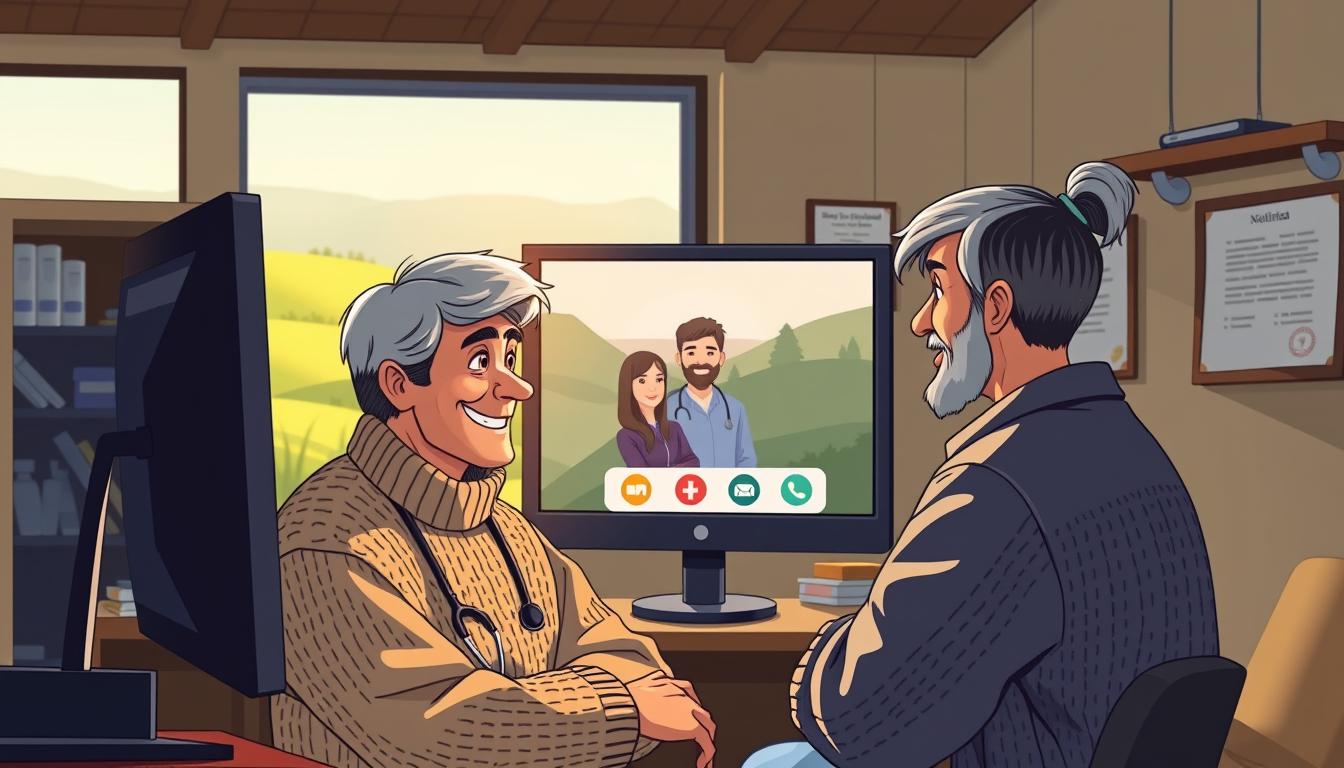
I once sat in a small community center in Iowa. A farmer told me about driving two hours for a mental health visit. This image of long roads and quiet anxiety stayed with me.
It shows why telemedicine is a lifeline for rural folks. They often live far from clinics and specialists.
This guide sees telehealth as a key to fixing care gaps in rural areas. It talks about how tech like electronic health records and patient portals help. They make care better, faster, and more accessible in rural U.S. communities.
The COVID-19 crisis made telemedicine more common. Some changes stuck, while others didn’t. Knowing which changes help is key for lasting support in rural areas.
This guide uses federal resources and studies to help. It offers steps for making digital mental health support work in rural areas.
Key Takeaways
- Telemedicine for rural mental health support uses telecom and HIT to reach underserved populations.
- Telehealth for mental health in rural regions improved rapidly during COVID-19, changing practice patterns.
- Successful programs combine video, phone, and secure electronic records to maintain quality and continuity.
- Broadband, workforce training, and clear reimbursement rules are critical for long-term viability.
- Evidence and practical guidance—such as findings summarized in this review—inform implementation and policy choices.
Understanding Telemedicine in Mental Health
Telemedicine brings care to people in remote areas. It uses video calls, messages, and talks with doctors to help those far away. This part explains what it is, why it’s important, and how it compares to face-to-face therapy.
Definition and Overview of Telemedicine
Telemedicine uses the internet for health care from a distance. It includes video chats, messages, and talks between doctors. It’s different from telehealth, which is more about education and management.
Importance of Mental Health Support
Rural areas often lack mental health professionals. Telemedicine helps by providing counseling and medication advice. It makes getting help faster and easier.
Telemedicine vs. Traditional Therapy
Telemedicine offers video chats and messages for quick help. It’s more private and can reach more people. But, it needs the right technology and follows rules about privacy and licenses.
Studies show many people use telehealth for mental health. It’s popular with Medicare and rural folks. Programs that train well and keep things private work best.
Benefits of Telemedicine for Rural Communities
Telemedicine changes how people in rural areas get mental health care. It brings experts to local clinics and homes. This means people get help fast without waiting a long time.
Health systems reach more people with programs like Project ECHO and e-consults. These help local doctors learn more and get better care for their patients.
Increased Accessibility to Care
Virtual visits bring more services to small towns. This includes telepsychiatry, substance use disorder programs, and therapy. Doctors can also talk to specialists online, making care better.
This makes online therapy a good choice for those with few options before.
Reduction in Travel Burdens
Teletherapy means less need to travel far for care. It saves time and money for patients. It also helps family caregivers and people with disabilities by reducing travel hassle.
Local clinics can keep care close to home. This is good for everyone. Rural health centers that use telemedicine see more visits and better care.
Cost-Effectiveness
Telehealth can save money for patients and doctors. It cuts down on costs by avoiding expensive transfers and allowing online consultations. It also makes care more efficient and supports new payment models.
| Benefit | How It Helps Rural Communities | Real-World Evidence |
|---|---|---|
| Access to Specialists | Telepsychiatry and e-consults bring expert input to local clinics | Project ECHO networks expand specialist reach and provider skills |
| Lower Travel Burden | Virtual visits reduce patient travel time and transportation costs | Rural patients report fewer missed appointments and better adherence |
| Operational Savings | Facilities offer specialty care without full-time onsite staff | Rural FQHCs show substantial telehealth visit volumes and cost avoidance |
| Improved Care Coordination | HIT tools streamline referrals, records, and follow-up | Integrated EHRs support value-based care and better outcomes |
| Patient Affordability | Lower travel and time costs make therapy more attainable | Medicare data indicates rising telemedicine adoption among rural beneficiaries |
Using teletherapy more in rural areas helps local health systems. It makes care more consistent and effective. Telehealth is a big step towards better care and smarter use of resources in rural areas.
Overcoming Barriers to Accessing Telemedicine
Rural areas really want telemedicine, but there are big hurdles. We need to find ways to make telehealth better for mental health in rural places. This includes better digital support and more telemedicine for mental health.
Internet connectivity challenges
Having good internet is key for video calls and checking in on patients. But, many homes and tribal areas don’t have reliable internet. This makes it hard to get the care they need.
We can fix this by working with libraries and schools. They can offer private rooms and internet. Clinics can also set up times for telehealth visits, using their own internet.
Getting more internet is important. We should use money from the government and states to help. Even if video calls don’t work, we can use phone calls to keep care going.
Technology literacy
Just because someone has a smartphone doesn’t mean they know how to use it for health apps. Some people and staff don’t feel confident using these apps.
We can help by teaching people in a simple way. There are programs that teach digital skills. Libraries and health systems can offer workshops to help.
Health systems can also help by making guides and videos. This makes it easier for people to use digital health tools. It helps more people get the mental health support they need.
Addressing privacy concerns
People might not feel comfortable talking openly at home. Not everyone has a quiet place for therapy.
Doctors need to use safe apps and make sure their internet is secure. Training staff helps avoid mistakes that could hurt privacy.
If someone can’t have a private call at home, clinics can help. They can offer private rooms or work with community centers. Patients can also learn how to make their calls private, like using headphones.
Working together on internet, learning, and privacy can make a big difference. Health systems, libraries, schools, and funders need to work together. This will make telemedicine better and more fair for rural areas.
Types of Telemedicine Services Available
Rural clinics and community health programs have many options to offer mental health care online. These choices help match the care needed with what patients can access. They use technology and staff in creative ways to support patients.
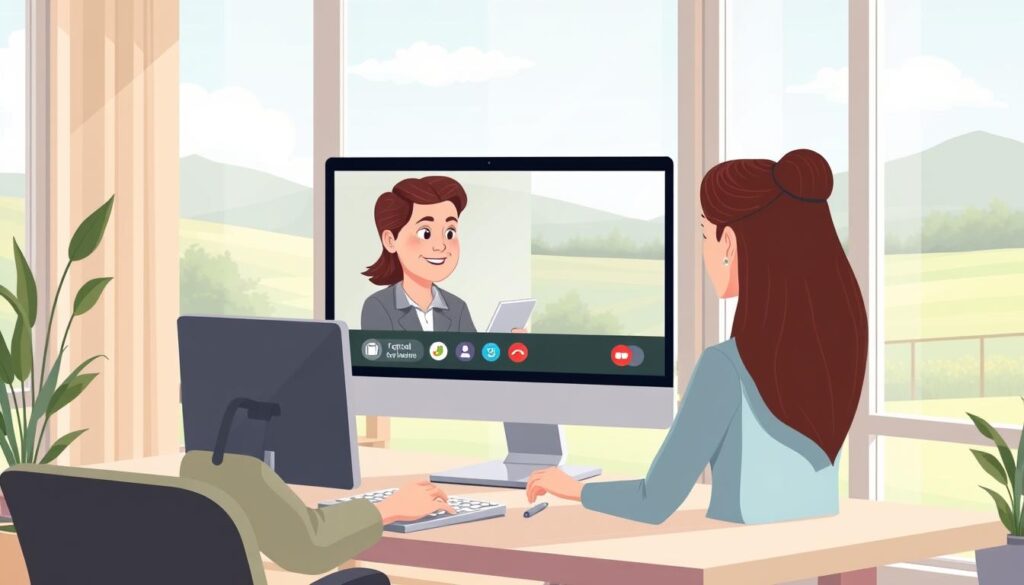
Video Conferencing Therapy
Video therapy lets people get real-time help for their mental health. It’s done through safe online platforms. Clinicians at places like Mayo Clinic use it to help patients in many ways.
Online visits can be part of or all of a patient’s care. Even without video, audio-only calls work when internet is slow. This way, patients get help no matter where they are.
Mobile Health Applications
Mobile apps help people track their mood and do therapy exercises. They also remind patients to take their medicine. These apps can connect to health records and portals.
Before using apps, it’s important to check if people have the right devices. Apps that work well even with slow internet help reach more people. They keep patient data safe and let doctors watch over care.
Text-Based Support
Secure messaging and SMS help patients talk to counselors anytime. It’s good for those who are busy or prefer quick chats. These services also let doctors talk to each other for better care.
Telepharmacy and interpreter services are available on demand. They help make sure medicine is safe and care is understood by everyone.
For more information on telehealth, visit ruralhealthinfo.org. They have a lot of info on different telehealth services.
| Service Type | Primary Uses | Advantages for Rural Areas |
|---|---|---|
| Video Conferencing Therapy | Psychotherapy, psychiatric evaluations, med management | Real-time interaction; supports complex care and integrated behavioral health |
| Mobile Health Applications | Mood tracking, CBT modules, reminders, asynchronous messaging | Scalable self-management; enhances continuity with EHR integration |
| Text-Based Support | Secure messaging, SMS check-ins, e-visits, e-consults | Low-bandwidth option; convenient for appointment coordination and brief interventions |
Integrating Telemedicine into Existing Mental Health Frameworks
Adding telemedicine to mental health systems needs clear roles and training. It aims to help local clinics and hospitals. It also makes teletherapy and telepsychiatry more available.
Collaboration with local providers
Programs should work with what’s already there. Hub-and-spoke models help by linking specialists with community doctors. This makes telepsychiatry a regular part of care.
Training for healthcare professionals
Doctors need to feel comfortable with new tools and rules. They should get training and certification. This helps them use remote services well.
Developing a referral system
Make clear when to use online or in-person visits. Use electronic health records for tracking. Make sure it fits with state rules and Medicaid.
| Integration Element | Key Actions | Expected Benefit |
|---|---|---|
| Local Collaboration | Adopt hub-and-spoke learning; schedule joint case reviews | Improved primary care capacity; fewer specialty backlogs |
| Clinical Training | Provide telehealth CME, platform drills, telementoring | Higher clinician confidence; consistent quality of care |
| Referral Workflow | Standardize e-consult paths; embed referrals in EHR | Smoother transitions; better continuity and billing compliance |
| Compliance & Reimbursement | Map state licensure; align with Medicaid and payer policies | Reduced administrative risk; predictable revenue |
| Technology & IT Support | Ensure secure platforms; offer on-call IT assistance | Fewer technical disruptions; higher patient engagement |
Case Studies: Successful Telemedicine Implementations
Real-world programs show how telemedicine can change care in rural areas. This section reviews notable implementations, patient experiences, and measurable outcomes. It shows the impact of these efforts. Examples highlight partnerships, training models, and scalable approaches that reduced barriers to mental health care.
Organizations Leading the Way
Harvard Medical School Center for Primary Care developed a hub-and-spoke model. It links specialists to spoke sites in Arkansas, West Virginia, and the Chickasaw Nation. The program uses telemedicine and telementoring funded by HRSA to strengthen primary care teams.
Project ECHO expands specialist knowledge through virtual case-based learning. This improves local treatment capacity.
Regional Telehealth Resource Centers provide technical support and planning. They help clinics and Federally Qualified Health Centers scale telehealth for mental health in rural regions. These centers advise on workflow, broadband needs, and provider training.
Community clinics that partner with academic centers report faster referral times. They also have stronger continuity of care.
Patient Testimonials
Patients report reduced stigma when they access care at home. One community clinic noted higher engagement among patients. This was due to travel or privacy concerns.
Telepsychiatry for underserved communities made timely therapy possible. This was after hours and on weekends.
Feedback from behavioral health programs shows improved satisfaction. Patients cite shorter wait times and clearer communication with providers. Increased use of telehealth for mental health in rural regions led to more consistent follow-up and higher adherence to treatment plans.
Measurable Outcomes
Telehealth uptake rose sharply during COVID-19. Outpatient telehealth visits reached about 13% of total visits in 2020. Rural Medicare data before the pandemic already showed a high share of mental health visits delivered via telehealth.
In 2021, rural FQHCs logged millions of telehealth visits. Many focused on behavioral health. Systematic reviews find positive medical outcomes in over 80% of studies on health information technology interventions.
Case studies show reduced hospital bypass, improved chronic disease control, and gains in provider retention. These metrics support broader adoption of telemedicine for rural mental health support.
| Program | Region | Primary Approach | Key Outcome |
|---|---|---|---|
| Harvard Med School Hub-and-Spoke | Arkansas, West Virginia, Chickasaw Nation | Telemedicine + Telementoring | Stronger primary care capacity; faster referrals |
| Project ECHO | Nationwide networks | Virtual case-based specialist education | Improved local provider skills; scalable care |
| Telehealth Resource Centers | Regional (multiple states) | Technical assistance and planning | Faster implementation; better workflow |
| Rural FQHC Behavioral Health Programs | Rural U.S. counties | Clinic-based telehealth visits | Millions of visits in 2021; higher patient engagement |
| Medicare Telehealth for Mental Health | Rural beneficiaries | Remote psychiatric consultations | High pre-pandemic utilization; sustained access |
Regulatory and Legal Considerations
Rules and laws guide telemedicine to rural patients. They help providers offer mental health care safely and protect data. Here are tips for clinicians, admins, and policymakers on licensure, privacy, and payment.
State licensure requirements
Licensure is a big hurdle for cross-state care. Each state has its own rules for telemedicine. COVID waivers helped, but some have ended. Check state policies and Telehealth Resource Centers for updates.
HIPAA compliance
Choosing a HIPAA-compliant platform is key for mental health services. Systems must keep health info safe. Rural places should focus on cybersecurity and protect electronic health records.
Reimbursement policies
Payment for telemedicine varies by payer and state. Medicaid rules change by state. Medicare has rules for telehealth, but some services are limited. CMS made changes during the pandemic. Providers should keep up with these changes.
Grants from HRSA and state programs can help start telehealth programs. Keeping up with policy changes helps plan for the future and find funding.
| Issue | Current Landscape | Action Steps |
|---|---|---|
| State Licensure | State-by-state rules; some COVID waivers; Interstate Medical Licensure Compact eases multistate licensing for participating physicians | Verify licensing requirements for each state; use Telehealth Resource Centers; consider IMLC where applicable |
| Privacy & Security | HIPAA applies; rural systems face heightened cybersecurity risks | Select HIPAA-compliant vendors; enforce encryption and access controls; train staff on security protocols |
| Medicaid & Medicare | Varies by state; Medicare covers synchronous telehealth with geographic and location limits | Map state Medicaid policies; monitor CMS rule changes; document services and billing codes carefully |
| Private Payers | Many states have parity laws; coverage levels differ | Confirm private payer policies locally; negotiate contracts that include behavioral health telemedicine |
| Funding & Grants | Federal and state grants available to support telehealth implementation | Apply for HRSA and state programs; build budget plans that include maintenance and training |
For more on state policies, licensure, and payment, see the Telehealth Resource Centers’ summary. Also, check out the telehealth policy review. Keeping up helps expand telemedicine in rural areas.
Good policy planning helps care reach more people. When laws and goals match, telehealth can help a lot in rural areas.
Strategies to Encourage Adoption of Telemedicine
Telehealth grows in rural areas when it meets daily needs. Clear messages show how it saves travel, offers flexible times, and keeps things private. Public demos and easy tech help people try it.
Community Awareness Campaigns
Use local places like libraries, schools, and health centers for ads. Short workshops show how telehealth works and keeps things private.
Work with local radio, churches, and schools to reach more people. Let them try it out. Share results to show its benefits.
Engaging Local Leaders and Influencers
Get leaders like tribal, faith, school, and doctor leaders to support telehealth. Their support makes it seem normal and reduces fear.
Use systems like Harvard Medical School’s to show how it works. A local doctor who uses it makes it seem real and easy.
Building Trust in Digital Health Solutions
Be open about privacy and data use. Offer help and training so people feel safe and know how to use it. Make options for those with little privacy at home.
Do short tests to see if it works. Show how it saves money and improves care. A study summary can prove its worth: relevant evidence review.
| Strategy | Action Steps | Expected Benefit |
|---|---|---|
| Community Workshops | Hands-on demos at libraries and schools; printed guides | Increased comfort with digital mental health support; lower stigma |
| Local Champions | Train faith leaders, clinicians, and school nurses to refer | Higher uptake of teletherapy for rural populations; sustained referrals |
| Digital Navigators | One-on-one tech help and privacy briefings | Improved appointment completion and user confidence |
| Pilot Programs | Short trials measuring adherence, cost, and satisfaction | Data to justify expansion and funding applications |
| Low-Bandwidth Options | Audio-only visits; clinic-based telehealth booths | Access for those with limited connectivity; equitable reach |
Future Trends in Telemedicine for Mental Health
Looking ahead, we need to watch technology, policy, and research. These areas will shape how we offer virtual mental health care in rural areas.
New tools will help monitor patients from afar. They will also link health records to telehealth platforms easily. Expect better mobile apps and AI to help get care faster.
Policy changes will affect what care looks like after waivers end. Broadband investment, licensure compacts, and clear Medicaid rules will help. Providers should keep up with CMS and Medicaid updates.
Studies will find the best ways to help rural people. They will look at different care models and how to make care fair. This will help make telemedicine better for rural areas.
The table below shows what we can expect in technology, policy, and research. It helps leaders know what to focus on to make a big difference.
| Trend Area | Short-Term Changes (1–2 years) | Mid-Term Impact (3–5 years) |
|---|---|---|
| Technology | Integrated EHR–telehealth workflows; improved mobile apps; pilot AI triage tools | Wider remote monitoring, tele-ICU links, secure data sharing across vendors |
| Policy | State-level licensure experiments; targeted reimbursement updates; broadband grants | National licensure compacts; stable reimbursement models that support virtual mental health care |
| Research | Outcome studies focused on access and satisfaction; program evaluations in select states | Large meta-analyses that guide evidence-based protocols for telehealth for mental health in rural regions |
| Workforce & Training | Short courses on telepractice and digital tools for clinicians | Widespread certification programs; interdisciplinary teams skilled in remote care delivery |
| Community Engagement | Local awareness campaigns and trusted provider partnerships | Sustained uptake driven by community-tailored virtual services and shared outcome tracking |
Leaders who invest wisely will improve access and quality. Using new tools, watching policy, and studying results will help. This will make telemedicine a lasting solution for rural areas.
Resources for Rural Mental Health Support via Telemedicine
Rural providers and groups have many resources to help with telemedicine for mental health. Federal and regional groups offer help, training, and grant advice. They help clinics grow telepsychiatry for those who need it most.
National and Local Support Organizations
Important agencies include the Health Resources and Services Administration (HRSA) and the Office for the Advancement of Telehealth. Also, the Telehealth Resource Centers, the Centers for Disease Control and Prevention, and the National Rural Health Resource Center are key. They offer grants, support, and toolkits to help with online therapy in rural areas.
Online Platforms and Tools
Clinics need to use HIPAA-compliant telehealth platforms and patient portals. They should also use tested mobile mental health apps. Tools like Project ECHO and e-consult systems help with learning and working together. Digital toolkits make starting up and getting patients easier.
Funding Opportunities for Telehealth Initiatives
There are many funding sources like HRSA grants and state telehealth programs. Federal broadband initiatives and private foundation grants are also available. Rural hospitals and health centers use this money to build, train, and hire.
FAQ
What is telemedicine and how does it differ from telehealth in the context of rural mental health?
Telemedicine is about remote clinical services like video visits and audio calls. Telehealth is broader, including non-clinical services like education and public health. Both use technology to help people in rural areas get mental health care.
Why is telemedicine a strategic solution for rural mental health gaps?
Telemedicine helps because there are not enough doctors in rural areas. It also makes it easier to get care without having to travel far. This way, people can get the help they need faster and more easily.
What types of telemedicine services are commonly used for rural mental health care?
Services include video therapy, audio calls, and messaging. There are also apps for tracking mood and medication reminders. These options help people get mental health care from home.
How did the COVID‑19 public health emergency affect telehealth adoption for rural behavioral health?
The COVID-19 crisis made telehealth more popular by relaxing rules and paying for it. Many providers started using it more. But, we need to keep an eye on changes in rules to keep it going.
What are the main benefits of telemedicine for rural communities?
Telemedicine brings specialty care to rural areas. It saves time and money. It also helps local clinics offer more services without needing specialists.
What broadband and connectivity challenges affect telemedicine in rural regions?
Rural areas often lack good internet. This makes video visits hard. Solutions include using libraries and schools for internet access and finding ways to do audio visits.
How can rural providers address varying levels of technology literacy among patients?
Providers can offer training and simple guides. They can also use libraries and community centers for hands-on help. This way, everyone can use telemedicine, even if they’re not tech-savvy.
What privacy and cybersecurity issues should organizations consider for telemental health?
Providers need to use secure platforms and train staff on safety. They should also make sure patients have private spaces for calls. Small hospitals need to plan for keeping patient data safe.
Are video visits always required for effective remote mental health care?
Video is best for therapy and assessments. But, audio calls and messaging are okay when internet is bad. It’s up to the doctor and patient to decide what works best.
How do mHealth apps and text‑based supports fit into rural mental health care?
Apps help with mood tracking and reminders. Messaging lets patients and doctors communicate. But, providers need to check if these tools are safe and work well.
How should telemedicine complement local primary care instead of replacing it?
Telemedicine should help local care by connecting with specialists. It should not replace face-to-face care. This way, doctors in rural areas can get help and patients get the care they need.
What workforce and training strategies improve telebehavioral health delivery?
Training is key for telemedicine success. It includes learning about technology and how to use it. This helps doctors and staff provide better care.
How can rural organizations develop effective telemedicine referral systems?
Create clear plans for referrals and follow-ups. Make sure EHRs work with telemedicine. This helps doctors and patients get the care they need.
Which organizations and programs lead effective rural telemedicine models?
HRSA and other groups help with funding and training. They support programs that make telemedicine work well in rural areas.
What measurable outcomes support telemedicine for rural mental health?
Studies show telemedicine works well for mental health. It helps people get care faster and more easily. This improves health outcomes.
How do state licensure and reimbursement policies affect telemedicine delivery?
Rules on who can practice vary by state. Payment for telemedicine also differs. Providers need to know these rules to keep telemedicine going.
What funding sources can support telehealth infrastructure and sustainability?
There are grants and programs to help with telemedicine. Organizations like HRSA and the National Rural Health Resource Center offer help. This makes it easier for rural areas to get the technology they need.
How can communities increase patient uptake and trust in telemedicine?
Use local leaders and events to promote telemedicine. Make sure people know how it works and how it helps. This builds trust and makes telemedicine more popular.
What role do local leaders and influencers play in telehealth adoption?
Local leaders can help by supporting telemedicine. They can make it more accepted in their communities. This is important for making telemedicine a success in rural areas.
What future trends will shape telemedicine for rural mental health?
We can expect more use of remote monitoring and better technology. There will also be more help for mental health through apps and AI. These changes will help telemedicine reach more people.
Where can providers find technical assistance and resources to build or expand rural telemedicine?
There are many resources available. HRSA, the Office for the Advancement of Telehealth, and the National Rural Health Resource Center offer help. They provide tools and funding for telemedicine in rural areas.