Ever had a moment when one suggestion changed your mind? Maybe you saw dozens of items but clicked on something special. That’s what turns visitors into loyal customers.
For those who want to grow, personalized engines are key. This guide shows how to use them to boost sales. It offers practical steps to get started and improve.
Studies show the power of these engines. McKinsey says 35% of Amazon’s sales come from them. Netflix credits them for a lot of viewer interest. The market is expected to grow a lot by the 2030s.
This article helps you take action. It covers the basics, how they work, and how to use them. It also talks about common issues and future trends.
Using recommendation engines is more than tech. It’s about making smart business choices. The aim is to use data to increase sales with better recommendations.
Key Takeaways
- Personalized recommendation engines convert browsing into purchases by delivering relevant suggestions.
- Proven impact: major platforms such as Amazon and Netflix show high revenue and engagement gains from recommendations.
- Effective adoption requires alignment of data, algorithms, and business metrics.
- Personalized product recommendations depend on strong data pipelines and iterative testing.
- Privacy, bias, and relevance are solvable but demand deliberate design and monitoring.
Understanding Personalized Recommendation Engines
Personalized recommendation engines turn user data into helpful suggestions. They use data and models to offer products or services that fit what you like. Companies like Shopify and Gymshark show how these suggestions can boost sales and engagement.
What Are Recommendation Engines?
Recommendation engines use AI to guess what you might like next. They look at what you’ve liked and done before. This helps in making your shopping or streaming experience better.
For example, Gymshark suggests activewear that’s similar to what you’ve bought. Shopify offers personalized suggestions when you’re checking out or in emails. These systems use machine learning to make recommendations for millions of users.
How Do They Work?
They work in four steps: collecting data, storing it, analyzing it, and then showing you what you might like. They collect data like what you’ve liked and where you are.
They store this data in big databases. Then, they use machine learning to understand your preferences. This helps them show you the best suggestions.
These suggestions are shown to you through websites, apps, or emails. They can change in real-time or in batches, like newsletters. This way, they keep getting better as your tastes change.
Key Algorithms Behind Recommendations
There are different types of algorithms used. Some look at what you’ve liked before to suggest similar things. Others compare what you like with what others like.
Some algorithms mix both to make better suggestions. Others use rules based on where you are or what time it is. This is useful when your preferences change based on the situation.
More advanced algorithms use deep learning to understand what you like better. For example, some systems suggest items that are often bought together. Others use special models to make search and recommendations better.
| Stage | Core Components | Typical Technologies |
|---|---|---|
| Data Collection | Explicit signals (ratings), implicit signals (clicks), product metadata, context | Event tracking, server logs, APIs |
| Data Storage | Aggregated user and item stores, session logs | Data lakes, warehouses, lakehouses |
| Analysis & Training | Feature engineering, model training, validation | Batch jobs, streaming ML, TensorFlow, PyTorch |
| Filtering & Delivery | Ranking logic, business rules, A/B testing | Real-time APIs, caching layers, personalization CDN |
| Algorithm Types | Content-based, collaborative, hybrid, knowledge-aware, deep models | Nearest neighbors, matrix factorization, transformers |
| Customization | Weighting signals, business constraints, custom recommendation algorithms | Rule engines, feature stores, custom model pipelines |
Benefits of Personalized Recommendations
Personalized recommendations change how we find products and content. They make searching faster and more relevant. They make our experiences feel made just for us.
Increased Customer Engagement
When we get choices that match what we like, we stay longer. Spotify and Disney+ show this by giving us what we want next. This keeps us interested and stops us from leaving.
Higher Conversion Rates
When we get the right offers at the right time, we buy more. Amazon’s “Customers also bought” feature is a big reason for its sales. Shopify and others see more money spent when they suggest more items at checkout.
Improved Customer Retention
When we get things that match our interests, we come back. Many shoppers do this after a good shopping experience. Emails and special pages keep us coming back for more.
These systems get better with time. They learn from us and get better at showing us what we like. This helps keep us engaged and coming back.
| Benefit | How It Works | Representative Metric |
|---|---|---|
| Engagement | Dynamic feeds and suggestions based on recent activity | Session length; pages per visit |
| Conversion | Checkout prompts and complementary product suggestions | Average order value; conversion rate |
| Retention | Personalized outreach and evolving recommendations | Repeat purchase rate; customer lifetime value |
| Operational Impact | Recommendation engine optimization reduces irrelevant inventory exposure | Return rate; inventory turnover |
Types of Recommendation Engines
There are many kinds of recommendation engines. Each one is good for different things. They help find what you might like to buy.
Content-Based
This type finds items like what you liked before. It looks at product details to suggest similar things.
It’s great for small stores with detailed product info. Good tags and descriptions help a lot.
Collaborative
This method finds patterns in what lots of people like. It can find users with similar tastes or items that go together.
Big sites like Amazon use it for recommendations. It works well with lots of users.
Hybrid Approaches
Hybrid systems mix content-based and collaborative filtering. They offer both new finds and items you might like.
Netflix uses hybrids to give good suggestions. Retailers use them to boost sales by combining different methods.
| Approach | Strengths | Best Use Case | Requirements |
|---|---|---|---|
| Content-Based Filtering | Good for cold-start; precise by attribute | Specialty retail, niche catalogs | Rich product metadata; feature extraction |
| Collaborative Filtering | Discovers patterns across users; scalable | Large marketplaces, social platforms | Extensive interaction data; similarity metrics |
| Hybrid Recommendation Systems | Balances relevance and discovery; mitigates sparsity | Streaming services, e-commerce with diverse catalogs | Combined data pipelines; model orchestration |
Want to know more about how predictive analytics helps? Check out this guide on predictive analytics in marketing. It talks about how it boosts sales and personalization.
Data Sources for Personalization
Good personalization needs clean, varied data. Companies use many sources to make profiles for personalized engines. The type of data used affects how fast, relevant, and trustworthy the recommendations are.
User Behavior Data
Things like page views and clicks show what users want. Collecting data in real-time helps make suggestions that fit the moment.
Watching how users browse helps show them things that match their visit. This data helps models in software get better at personalizing.
Demographic Data
Things like age and interests help sort users into groups. This lets platforms send messages that really speak to them.
Keeping demographic data up to date helps platforms tailor content. For example, Disney+ and Amazon use this to show content that fits families or certain regions.
Transaction History
Buying history and ratings help predict what users might like next. This data also helps decide what to suggest and how much to charge.
Keeping this data safe and following rules like GDPR is key. Clean data makes recommendations more reliable and accurate.
Combining these data types in a controlled way makes profiles better. Teams should focus on data quality, privacy, and keeping it current for the best results.
Implementing Personalized Recommendation Engines
Starting a recommendation system means focusing on speed, scale, and where it will be used. Teams should compare ready-made options with custom ones. This helps avoid wasting time and keeps efforts on track.
Choosing the Right Technology
Look at both ready-made and custom recommendation software. Ready-made options are quick to use, but custom ones give more control. This is important for things like how fast it works and how it handles data.
Think about the types of models you need. You might want ones that work together, or ones that focus on content or user actions. Use tools like Python libraries for basic models, and TensorFlow for more complex ones. If you need to grow fast, look at services made for big companies.
Integration with Existing Systems
Design your system to work well with other apps and services. This makes it easy to share recommendations across different platforms. Use strong systems to move data around and keep your engine up to date.
Build a system that uses different tools for different tasks. For example, use ElasticSearch for quick searches and a database for user info. This way, you can make sure everyone gets the same experience and that user data is safe.
Testing and Optimization
Use both numbers and real tests to see how well your system works. Watch how it affects things like what people see first and what they buy. Use special tools to test different versions and find the best one.
Keep improving your system by listening to feedback and watching how it does. Check if it’s working well and make changes as needed. Keep track of how well it’s doing to see if it’s helping your business.
Measuring Success of Recommendations
Measuring the impact of personalized recommendation engines is key. Teams need clear goals and tight metrics. They should watch business outcomes like conversion lift and average order value.
They also need to check if recommendations match user intent. This shows if the recommendations are good.
Key Performance Indicators (KPIs)
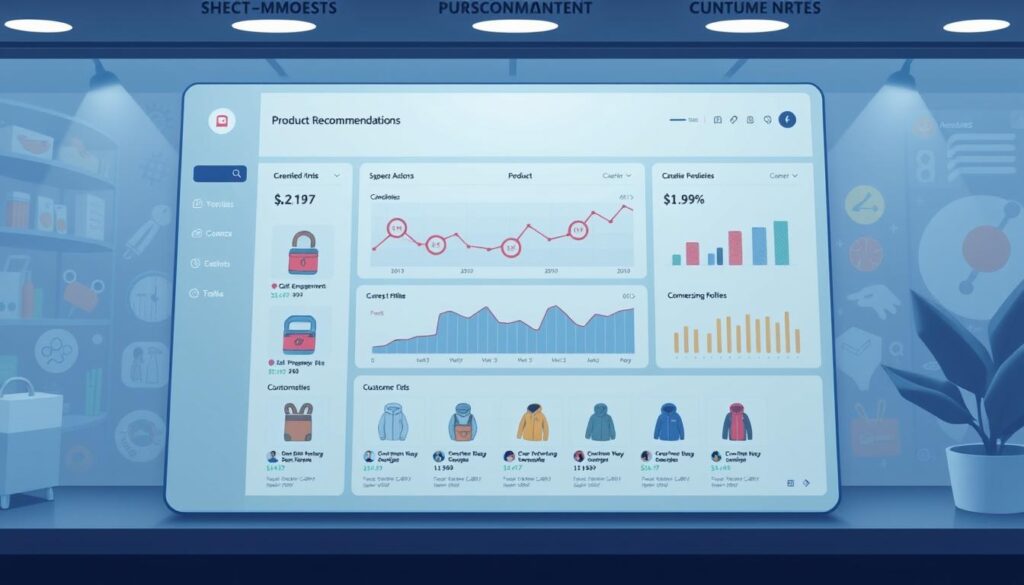
KPIs show how experiments help the business. Look at conversion rate lift and sales from recommendations. Also, check click-through rates and revenue from recommendations.
Watch average order value, how often customers come back, and how long they stay. Also, see how fast inventory sells out.
Use metrics like Precision at K and Recall at K to check if recommendations are good. Hit rate and a clear K parameter help set standards. Keep a clear idea of what’s good and what’s not for fair comparisons.
A/B Testing for Recommendations
Do controlled tests to see how different things work. Compare algorithms, where to place them, and how they look. Test different ways to personalize and how many recommendations to show.
Use holdout groups to see how much of an impact recommendations have. Check if the results are really significant.
Look at results for new versus returning customers. Keep testing to make recommendations better. For ranking, see ranking metrics for recommender systems for tips.
Analyzing User Feedback
Get feedback like ratings and thumbs up/down. Also, look at skips and quick bounces. Get notes from support logs and surveys to find problems not seen in numbers.
Use feedback to make recommendations better. This includes fixing false positives and helping new users. Keep improving recommendations based on what users say and what numbers show.
Case Studies of Successful Implementation
Real-world examples show how personalized recommendation engines work. They increase engagement, keep people longer, and build loyalty. They also show how AI fits into product plans and operations.
Amazon’s Approach to Personalization
Amazon uses item-to-item filtering and lots of data to suggest products. Features like “Customers who bought this” help. This boosts sales by about 35%.
Netflix’s Recommendation Strategy
Netflix mixes data to suggest titles. They test and personalize to improve discovery. This makes recommendations key to keeping viewers.
Spotify’s Music Suggestions
Spotify blends music analysis with user data for playlists. They consider time and device to suggest music. This keeps listeners coming back.
Each example shows how to choose algorithms and signals. For more details, check out this industry roundup.
Challenges in Personalization
Personalization aims to engage users more. But, it comes with big costs and legal hurdles. Teams must find a balance between spending and keeping users’ trust.
Data Privacy Concerns
Getting lots of user data is tricky. Companies must follow strict privacy laws. They also need to protect data well.
Using privacy-friendly methods is key. This includes keeping data safe and giving users choices. Platforms that focus on privacy help users feel more secure.
Overcoming Algorithm Bias
Training data can have hidden biases. These biases can affect how recommendations are made. Regular checks help find and fix these issues.
There are ways to make recommendations fairer. This includes using diverse data and having humans review them. This is important in sensitive areas.
Keeping Recommendations Relevant
Recommendations can quickly go out of date. Keeping them fresh is a big challenge. Regular updates and learning from user behavior help.
Using real-time data and human input keeps things current. Watching how users react helps spot when recommendations are off.
For more on the challenges, check out this summary: critical challenges of recommendation engines. When choosing tools, look at how easy they are to use, their cost, and support.
Future Trends in Recommendation Engines
The next big thing in personalized recommendation engines is exciting. They will use deeper learning models and give users more control. Companies will aim for smarter, context-aware suggestions that respect privacy and explain why they show certain products or content.
AI and Machine Learning Advancements
Transformer-based models will make personalization even better. They will link text, images, and video to create detailed profiles. This will make suggestions more relevant. Reinforcement learning will help keep users engaged over time. Generative AI will create custom descriptions and creative assets on the spot.
The Role of Predictive Analytics
Predictive analytics will guess when a customer is ready to buy. It will also figure out which offers will work best. Teams will use signals to pick the best recommendations and match prices with what they have in stock. This will cut down on waste and make more sales.
Trends in User Experience Design
Design will focus on being clear and easy to use. Users will get clear reasons for suggestions, easy privacy controls, and a consistent experience everywhere. Visual search, voice-activated suggestions, and emotion-aware interactions will make finding things easier and more fun.
Brands like Amazon, Netflix, and Spotify will be leaders in this area. Companies that use strong AI, good UX, and smart predictive analytics will lead the way in keeping users engaged.
- Use multimodal learning to capture richer intent.
- Apply predictive analytics to optimize timing and margins.
- Design explainable controls so users trust personalized recommendation engines.
Conclusion: The Impact of Personalization on Sales
Personalized product recommendations make shopping feel right and timely. Brands like Amazon, Netflix, and Spotify see big benefits. They get more sales, more repeat customers, and more loyal customers over time.
This loyalty helps their sales grow steadily, not just in big jumps. To keep this up, businesses need to keep improving. They should always be collecting data, testing, and listening to what users say.
They should also focus on keeping data safe and using smart algorithms. This way, they can keep making good recommendations that help their business grow.
Looking to the future, new tech like generative AI will change how we shop online. Companies that use this tech wisely and care about privacy will do well. Start small, test, and then grow your efforts to keep sales up.
FAQ
What are personalized recommendation engines and how do they increase e-commerce sales?
Personalized recommendation engines use AI to suggest products. They look at what you like and what others like. This makes shopping easier and more fun.
They help find what you want faster. This leads to more sales and happier customers. Amazon shows how well they work, with about 35% of sales coming from them.
How do recommendation engines work end to end?
They start by collecting data on what you do and what products are like. Then, they store this data in big databases.
Next, they use special algorithms to make suggestions. These suggestions are then shown to you. They keep getting better over time.
What are the main algorithms used in recommendation systems?
There are a few main types. Some look at what you like and suggest more of that. Others look at what others like and suggest that.
Some even use deep learning to understand what you mean. Mixing these methods can make the best suggestions.
Which data sources most improve personalization quality?
The best data comes from what you do online and what you buy. Also, knowing who you are and where you are helps a lot.
Using all this data makes suggestions more accurate. But, it’s important to keep this data safe and follow rules about privacy.
How do content-based and collaborative filtering differ, and when should each be used?
Content-based filtering looks at what you like and suggests more of that. It’s good for finding new things in a small catalog.
Collaborative filtering looks at what others like and suggests that. It’s better when you have a lot of data. Many use a mix of both.
What technology stack options exist for building recommendation engines?
You can use ready-made software or build your own. There are many tools and frameworks to help. Think about how fast and big your system needs to be.
Also, consider if you need to show pictures or videos. You can choose to host it yourself or use a cloud service.
How should recommendation engines be integrated with existing e-commerce systems?
Use APIs to connect them to your website and other places. Make sure your data is ready and can be updated quickly.
Keep everything working together smoothly. This means your website, customer data, and inventory all need to talk to each other.
Which KPIs should businesses track to measure recommendation impact?
Look at how many people buy things because of the suggestions. Also, see if they spend more and come back more often.
Check how well the suggestions match what you want. And make sure they’re fast and don’t get old.
How can A/B testing validate recommendation strategies?
Try different ways of suggesting things and see what works best. Use special groups to see if it really makes a difference.
Look at how many people buy things and how much they spend. This helps pick the best suggestions for your business.
What are practical examples of successful recommendation engines?
Amazon uses special algorithms to suggest things. This helps them sell about 35% of their stuff through suggestions.
Netflix uses a mix of what you like and what others like. This keeps viewers happy and coming back. Spotify creates playlists that people love, making them listen longer.
What privacy concerns arise with personalization and how can they be addressed?
Collecting lots of data can raise privacy concerns. Make sure to follow rules like GDPR and CCPA.
Be open about what data you collect and let people choose not to share it. Use special methods to protect data without losing personal touch.
How can teams mitigate algorithmic bias in recommendations?
Check your algorithms regularly to make sure they’re fair. Use special techniques to avoid bias.
Make sure to explain why you suggest certain things. Let people review suggestions to catch any unfairness.
Why do recommendations become stale and how can relevance be maintained?
Suggestions can get old because the world changes. Keep your algorithms up to date and use new data.
Use what’s happening now to make suggestions better. Watch how people react to see if you need to change things.
What future trends will shape recommendation engines?
Expect more use of AI that understands pictures and videos. Generative AI will make personalized descriptions.
Analytics will predict what you might buy next. Expect more personal experiences, like voice and emotion-based suggestions.
How should businesses start implementing personalized recommendations to boost sales?
Start small with a focused test. Choose something simple like the homepage. Pick a tool or build your own.
Make sure your data is ready and test different approaches. Keep improving and scaling what works. Focus on quality data and following privacy rules.