“Education is the most powerful weapon which you can use to change the world.” — Nelson Mandela.
FlowScholar.com offers a strategic roadmap that balances innovation with core values. The platform equips teachers and leaders with a clear guide for safe use of artificial intelligence.
Our guide highlights ways to protect student data and privacy while streamlining tasks. Educators gain tools that save time, boost feedback loops, and improve learning outcomes.
FlowScholar supports staff and community collaboration, provides practical guidelines, and helps leaders make informed decisions about implementation. The result: better transparency, stronger security, and meaningful classroom experiences.
Key Takeaways
- Follow a clear roadmap to balance innovation and student safety.
- FlowScholar provides tools and a concise guide for teachers and leaders.
- Protecting data and privacy is central to any implementation plan.
- Reducing routine work gives educators more time for teaching and feedback.
- Visit https://www.flowscholar.com to explore practical guides and resources.
Understanding the Role of AI in Modern Classrooms
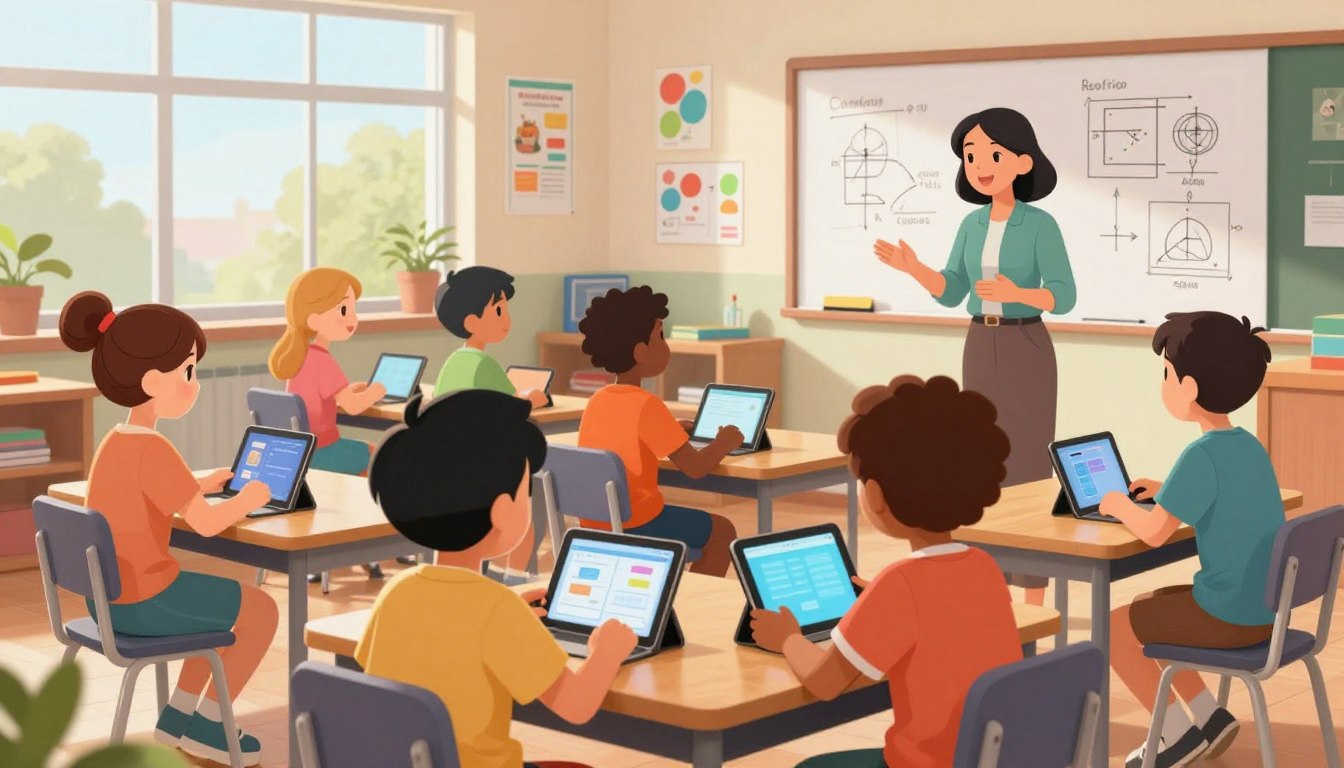
Today’s classrooms rely on data-driven tools to support learning goals. Personalized learning now helps students build skills for the future by tailoring tasks and feedback to each student’s pace.
These systems analyze patterns in seconds and give leaders clear insights that save time. That lets teachers focus on teaching and strong human connection—an element technology should augment, not replace.
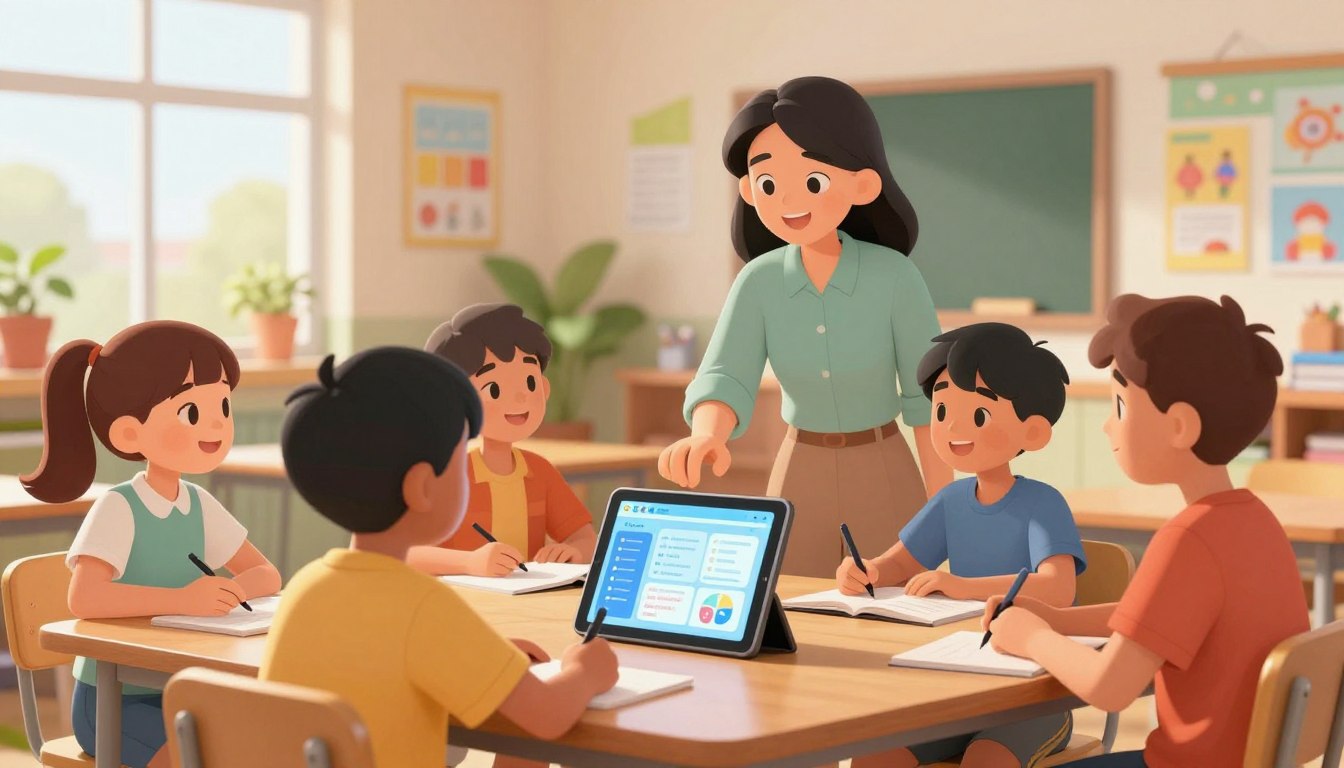
Teachers and educators who study how the tools function help students complete complex tasks with greater accuracy. This practical literacy prepares young people to use technology wisely and boosts classroom engagement.
- Faster insights: tools reduce routine work so teachers spend more time with students.
- Better decisions: systems surface trends that inform curriculum and support.
- Balanced adoption: move beyond knee-jerk reactions and evaluate potential benefits.
For a grounded look at the broader pros and cons, consult research on the pros and cons of classroom use.
Foundational Principles for Responsible AI in Schools
A clear ethical foundation helps districts shape effective classroom practice while protecting student rights. This section outlines practical principles that put students first and keep human judgment central to teaching choices.
Core Ethical Frameworks
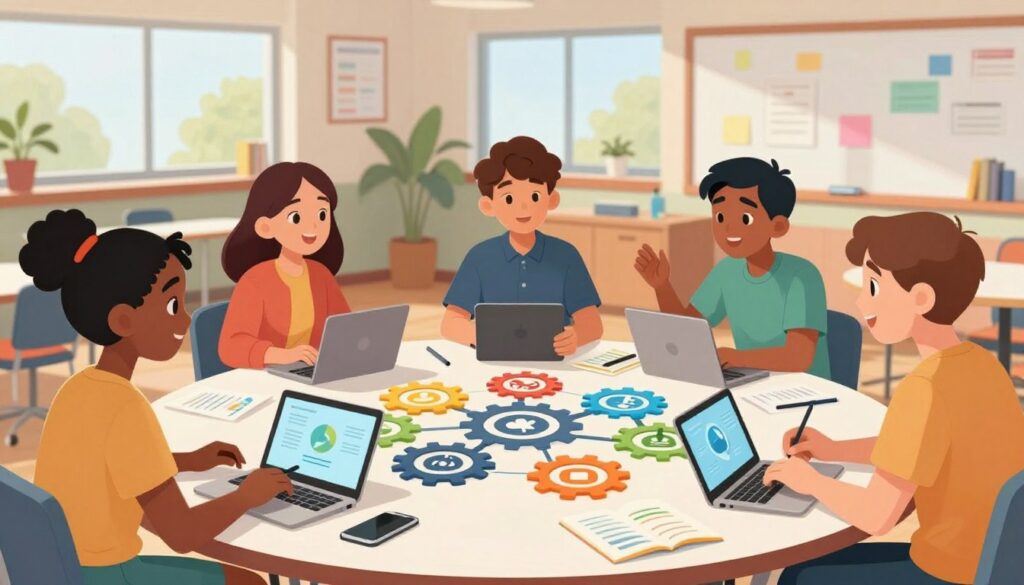
Adopt a compact framework that prioritizes privacy and secure handling of student data. UNESCO guidelines provide a tested starting point: let systems handle routine tasks while educators focus on learning.
Leaders should document policies, log decisions, and ensure transparency across staff and the wider community. This creates trust and aligns implementation with the school’s values.
Balancing Innovation with Integrity
Balance means using technology to reduce repetitive work without surrendering professional judgment. Teachers keep oversight of assessment and feedback; systems support, not replace, teaching.
- Align implementation with clear guidelines and leader-approved processes.
- Train staff and educators on data handling and system limits.
- Prioritize student safety, transparency, and informed decisions.
Designing Equitable and Accessible AI Learning Experiences
Equitable learning begins with datasets that reflect every student’s background and experience. Schools must audit sources and fill gaps so data mirrors race, language, ability, and culture.
Strategies for Inclusive Data Sets
Create representative datasets: gather varied samples so models do not favor one group. This reduces bias and supports fair outcomes for students.
Support multilingual needs and Universal Design for Learning. Choose tools that work across devices so all learners can access lessons and tasks without barriers.
Personalized learning feedback helps teachers give timely, meaningful guidance. When educators pair tool suggestions with professional judgment, students gain skills and confidence.
- Document how data is collected and used to boost transparency.
- Run regular bias audits to prevent disparities and protect learning time.
- Prioritize accessibility on common devices to reach every student.
Safeguarding Student Privacy and Data Security
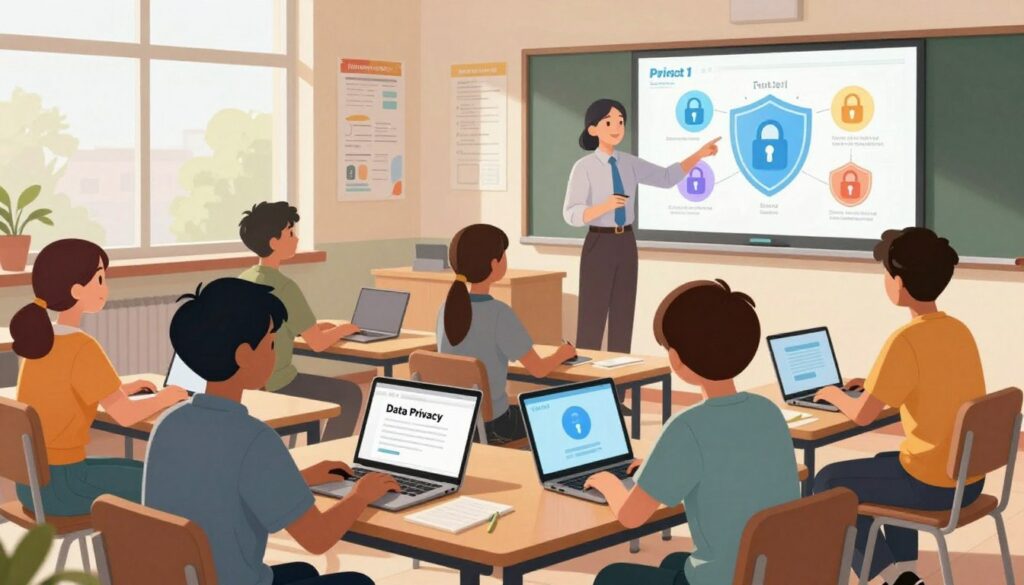
Protecting student information demands clear policies and practical security measures at every step. Good privacy and security practices keep sensitive information safe and preserve trust across the school community.
Leaders should run Privacy Impact Assessments before any tool is adopted. These reviews show how systems handle data and highlight gaps that affect students, staff, and outcomes.
Training helps staff spot common security issues and follow retention rules. Simple rules for how long data is kept reduce risk and free time for teaching and feedback.
- Assess tools: evaluate each tool for data protection across devices.
- Document policies: set clear retention and access guidelines.
- Educate staff: make roles and incident steps explicit.
| Focus | Action | Result |
|---|---|---|
| Privacy Impact | Conduct assessments before implementation | Reduced legal and security issues |
| Data Retention | Set clear retention schedules | Less stored sensitive data; better outcomes |
| Staff Training | Regular workshops and drills | Faster response to issues; safer systems |
For deeper guidance, review the student and educator data privacy guide to align practice with national standards.
Empowering Educators Through Human Oversight
Educators must keep final authority over classroom choices when technology offers suggestions. This ensures that every decision serves students and aligns with teaching goals.
Maintaining Professional Judgment
Teachers use their expertise to accept, modify, or reject system suggestions. When a tool flags a student for extra support, staff verify context before changing instruction.
Professional development programs train educators to interpret data and preserve pedagogical values. Ongoing workshops build skills and shorten the time needed to trust system insights.
Documenting AI-Assisted Decisions
Documenting decisions creates a record that benefits the whole community. Logs of how a tool influenced teaching help staff refine personalized learning plans and share effective strategies.
- Record which suggestions were used and why.
- Share patterns with colleagues to improve learning experiences.
- Use documentation to inform professional development and school policy.
For practical governance and ethics guidance, consult the NEA resource on technology use and a detailed guide to governance and privacy practices at NEA guidance and Miloriano.
Fostering Community Collaboration and Transparency
Building trust with families and staff starts when leaders invite clear, two-way conversations about new classroom tools. Open forums and short surveys let students and parents share concerns and ideas. That input helps shape policy and practice.
Districts that use platforms like ThoughtExchange gather broad, actionable feedback fast. DeKalb County used that method to inform strategic planning; Burlington Public Schools shared climate survey results with the community in a fraction of the usual time. These examples show how timely insights improve student outcomes and speed implementation.
Clear guidelines about use, data handling, and privacy reassure families and staff. Publish simple rules, describe security steps, and explain who reviews information. Transparency reduces confusion and builds confidence.
An inclusive approach values diverse voices: students, staff, and parents all matter. Share results publicly and explain next steps so the community sees benefits and the school’s commitment to the future of education.
- Engage stakeholders early with surveys and town-hall conversations.
- Use platforms that scale feedback and produce clear data for leaders.
- Publish guidelines on privacy, security, and expected benefits.
For districts exploring tool development and classroom applications, consider learning how to build GPT-powered educational tools for teachers as part of a transparent implementation plan.
Conclusion: Advancing Your Responsible AI Journey with FlowScholar
Enduring change begins when leaders pair clear policy with day-to-day practice that centers students. This approach turns strategy into better learning and stronger outcomes for every classroom.
FlowScholar.com supplies the guide, professional development, and tools that help educators and teachers manage data and make smarter decisions. Staff gain practical methods that free up work time and reveal each student’s potential.
Join a community focused on the future of education: visit https://www.flowscholar.com to access resources, training, and frameworks that keep the human role central to teaching.
FAQ
How does FlowScholar.com help schools bring AI into everyday teaching responsibly?
FlowScholar.com offers a step-by-step approach that helps districts evaluate tools, set ethical guidelines, and train staff. The platform combines policy templates, classroom-ready lesson plans, and professional development modules so teachers can safely use adaptive tools while preserving instructional judgment and student privacy.
What is the role of artificial intelligence in modern classrooms?
AI-powered tools can personalize learning paths, provide rapid feedback, and automate routine tasks like grading or content curation. When implemented with clear goals and oversight, these technologies free teachers to focus on higher-value instruction and relationship building.
What core ethical frameworks should guide school use of AI?
Schools should adopt frameworks that emphasize fairness, transparency, accountability, and student welfare. This means auditing algorithms for bias, documenting decision processes, and ensuring equitable access so all learners benefit from innovation.
How can schools balance innovation with integrity when adopting new tools?
Balance comes from piloting tools in controlled settings, measuring learning outcomes, involving teachers in evaluation, and creating stop-gap policies if a tool harms access or accuracy. Continuous review and stakeholder input keep innovation aligned with school values.
What strategies ensure AI learning experiences are equitable and accessible?
Use diverse, representative datasets; design multimodal content for varied needs; provide offline and low-bandwidth options; and consult with special education and English-learners staff. These steps reduce gaps and make personalized learning meaningful for every student.
How should schools safeguard student privacy and data security?
Adopt clear data-governance policies, limit data collection to instructional needs, encrypt sensitive records, and vet vendors for compliance with laws like FERPA. Regular audits and parental communication strengthen trust and reduce risk.
How can educators retain professional judgment when using AI-assisted tools?
Teachers should treat tools as assistants, not replacements: verify recommendations, adapt AI outputs to context, and use professional knowledge to interpret results. Ongoing training helps staff integrate tools without ceding instructional control.
What documentation is recommended for AI-assisted decisions?
Keep logs of tool outputs, teacher adjustments, assessment results, and consent records. Clear documentation supports transparency, enables audits, and helps leaders measure impact on learning outcomes and equity.
How can schools involve families and communities in AI initiatives?
Communicate goals, share examples of classroom use, host workshops, and solicit feedback. Transparent dialogue builds buy-in and surfaces local concerns so projects reflect community priorities.
What steps should leaders take to advance a responsible AI journey?
Start with a needs assessment, create governance structures, pilot with measurable success metrics, invest in staff development, and scale only after evidence shows improved outcomes. Iterative planning keeps growth sustainable and ethical.