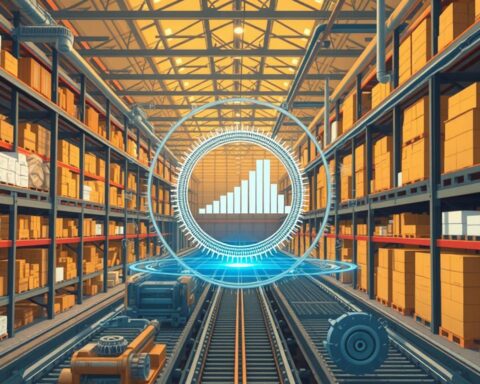
Every $1 lost to supply chain disruptions costs businesses an additional $1.50 in operational recovery—a staggering multiplier effect revealed during recent global crises. With the management market projected to hit $31 billion by 2026, organizations face mounting pressure to rethink outdated strategies. Traditional approaches struggle to navigate today’s interconnected challenges, from sudden demand spikes to geopolitical instability.
Advanced predictive systems now analyze millions of data points—historical patterns, supplier reliability metrics, even weather trends—to map potential bottlenecks before they escalate. These tools don’t just react to problems; they simulate dozens of scenarios to recommend optimal responses. Early adopters report 40% fewer stockouts and 22% lower warehousing costs within 18 months of implementation.
What separates modern solutions from legacy methods? The ability to process real-time information across entire networks. Instead of relying on static forecasts updated quarterly, dynamic models adjust daily based on shifting consumer behavior and supplier capacity. This shift transforms how companies allocate resources, negotiate contracts, and mitigate risks.
Key Takeaways
- Global supply chain disruptions create 2.5x financial impact beyond direct losses
- Predictive systems reduce inventory errors by 30-50% compared to manual methods
- Real-time data integration enables daily adjustments to procurement strategies
- Organizations using advanced analytics report 18% faster crisis recovery times
- Dynamic forecasting cuts excess inventory costs by over 20% annually
Understanding the Impact of AI in Material Supply Chains
Global trade networks now resemble intricate ecosystems—delicate balances easily disrupted by shifting consumer demands or logistical hiccups. Traditional planning methods crumble under this complexity, creating ripple effects that drain resources and delay deliveries.
Navigating Modern Network Complexities
Today’s supply chains stretch across continents, connecting thousands of partners. Single supplier failures can halt entire production lines. Geopolitical shifts or port closures amplify risks exponentially.
Recent crises exposed critical weaknesses in lean inventory models. Companies relying on manual tracking systems often discover shortages too late. Reactive strategies prove costly when lead times stretch beyond expectations.
Building Resilience Through Technology
Advanced systems now map entire networks in real time. They identify potential breakdowns weeks before traditional alerts trigger. Automated workflows reroute shipments instantly when weather patterns shift.
| Challenge | Traditional Approach | Modern Solution | Result |
|---|---|---|---|
| Demand Forecasting | Monthly Excel Updates | Live Market Sensors | 38% Error Reduction |
| Risk Management | Quarterly Audits | Continuous Monitoring | 67% Faster Response |
| Inventory Control | Manual Stock Checks | Smart Replenishment | 24% Cost Savings |
These innovations transform how teams allocate resources. Instead of guessing future needs, decision-makers access predictive insights. Operational continuity becomes achievable despite unexpected events.
How AI is Revolutionizing Inventory and Demand Forecasting
Businesses once relied on spreadsheets and intuition to predict material needs. Now, advanced analytics decode hidden patterns in sales data, social trends, and weather reports. This shift turns guesswork into precise planning.

Enhancing Forecast Accuracy and Reducing Costs
Nestlé’s overhaul of its replenishment strategy illustrates this evolution. By replacing error-prone manual calculations with dynamic models, the company reduced stockouts by 37% within a year. Machine learning now factors in advertising campaigns and regional pricing shifts when predicting needs.
Traditional methods often miss subtle connections. A beverage manufacturer discovered social media chatter about heatwaves correlated with 19% higher drink sales—insights their old system ignored. Modern tools detect these links automatically.
Cost savings emerge from smarter balance. One retailer cut excess stock by 28% while maintaining 99% product availability. “Real-time adjustments let us pivot faster than competitors during supply shocks,” notes their logistics director.
These systems don’t just react—they simulate. Teams test how tariffs or transport delays might affect lead times, then adjust orders preemptively. The result? Fewer emergencies and more strategic resource allocation.
AI Use Case – Material Supply-Chain Forecasting
Regional market dynamics now dictate success in logistics operations. Advanced tools decode location-specific variables—from cultural buying habits to port congestion patterns—enabling tailored strategies for each market segment.
Key Features and Applications
Modern systems ingest data from production schedules, weather APIs, and supplier performance dashboards. Real-time alerts flag potential shortages 14 days earlier than manual methods. One automotive manufacturer reduced buffer stock by 33% using these predictive signals.
Amazon’s Cyber Monday preparation showcases practical applications. Their algorithms processed 400 million daily item predictions, positioning inventory within 12 hours of regional demand shifts. This approach slashed delivery times by 75% during peak sales periods.
Beyond basic predictions, advanced tools optimize routes using traffic pattern analysis and fuel cost trends. Supplier reliability scores now incorporate geopolitical stability metrics—a game-changer for global procurement teams. “Dynamic safety stock adjustments prevent both overstocking and stockouts,” explains a retail logistics executive.
These applications transform planning from reactive firefighting to strategic foresight. Companies achieve 19% faster order fulfillment while cutting warehousing expenses. The result? Resilient networks that adapt faster than competitors during disruptions.
Leveraging Generative AI for Resilient Supply Chains
Next-generation technologies are redefining how companies manage logistical uncertainties. Unlike conventional tools, generative systems analyze global data streams—from shipping delays to labor strikes—to craft adaptive strategies. These solutions empower teams to transform reactive protocols into proactive safeguards.
Optimizing Logistics and Mitigating Disruptions
Generative tools simulate hundreds of scenarios in minutes. They evaluate fuel costs, port congestion, and weather disruptions to recommend optimal shipping routes. One logistics provider reduced delivery delays by 41% using these dynamic models.
Key capabilities include:
- Automated rerouting during geopolitical conflicts
- Real-time cargo capacity adjustments
- Predictive maintenance schedules for transport fleets
Advancements in Risk Management and Decision-Making
Modern systems now track supplier financial health and regional stability scores. When a critical vendor’s credit rating drops, algorithms instantly identify backup options. This proactive approach slashes response times by 68% compared to manual audits.
The generative AI market in logistics is projected to grow at 45.62% annually, reaching $12.9 billion by 2032. This growth reflects widespread adoption of tools that:
- Generate contract terms based on market fluctuations
- Predict raw material shortages 90 days in advance
- Automate crisis communication with stakeholders
“We’ve shifted from firefighting to strategic foresight,” shares a Fortune 500 procurement director. Teams now receive prioritized risk summaries—not raw data—enabling faster, more confident decisions.
Real-World Success Stories in AI-Driven Supply Chain Optimization
Industry leaders are rewriting the rules of logistics through intelligent technology implementations. Their achievements demonstrate how strategic innovation creates tangible value across cost, speed, and sustainability metrics.
Pioneering Approaches from Market Leaders
Amazon’s operational overhaul stands as a landmark achievement. Their systems boosted fulfillment velocity by 75% while delivering $1 billion in savings and 1 million tons of CO₂ reduction. The Packaging Decision Engine exemplifies this progress—analyzing product dimensions and customer feedback to eliminate 2 million tons of packaging waste since 2015.
Nestlé’s transition from spreadsheet-dependent processes yielded striking results. Implementing advanced analytics platforms generated 90% ROI in three years. Predictive maintenance systems reduced unplanned equipment downtime, unlocking $1.5 million in efficiency gains annually.
Microsoft’s Dynamics 365 Copilot empowers teams with proactive risk assessment. The tool evaluates supplier stability, weather patterns, and geopolitical factors to forecast disruptions. “We transitioned from scrambling during crises to preventing them,” shares a logistics director at a Fortune 500 firm.
These breakthroughs share common threads:
- Data integration across procurement, production, and distribution networks
- Dynamic adjustment capabilities for inventory levels and shipping routes
- Sustainability metrics embedded in decision-making algorithms
Organizations adopting similar intelligent management systems report 19% faster order fulfillment and 24% lower warehousing costs. The results validate technology’s role in building resilient, customer-centric operations.
Emerging Technologies and Future Trends in AI-Enhanced Supply Chains
Tomorrow’s logistics networks will operate as living systems—constantly adapting through intelligent technologies. Innovations like digital twins and self-optimizing algorithms are reshaping how companies navigate complex operations. These tools don’t just predict outcomes; they create dynamic ecosystems where every component communicates and adjusts in real time.
Digital Twins and IoT: The Nervous System of Modern Logistics
Digital twin platforms now mirror entire supply networks, from factory floors to delivery routes. By feeding IoT sensor data into virtual replicas, teams simulate disruptions like port closures or demand surges safely. A major retailer recently used this approach to reroute shipments during a hurricane—avoiding $18 million in potential losses.
Machine Learning’s Leap From Prediction to Action
Advanced algorithms now make autonomous decisions previously requiring human oversight. One automotive supplier’s system adjusts production schedules hourly based on parts availability and shipping delays. These models analyze supplier reliability scores, weather patterns, and consumer trends simultaneously—balancing efficiency with resilience.
Warehouse robotics demonstrate technology’s growing role in operational agility. Systems using 3D spatial mapping boost picking speeds by 40% while reducing errors. As these tools evolve, they’ll transform not just processes but entire business models—proving that adaptability is the ultimate competitive edge.
FAQ
How does generative AI improve demand forecasting accuracy?
Generative models analyze historical data, market trends, and external factors like geopolitical shifts to predict demand with higher precision. Companies like Walmart and Amazon use these tools to reduce excess inventory costs by 15–30% while maintaining stock availability.
What role do digital twins play in supply chain optimization?
Digital twins create virtual replicas of physical supply networks, allowing managers to simulate disruptions and test mitigation strategies. Siemens and GE Digital employ this technology to model scenarios like port delays or supplier failures, enabling proactive adjustments.
Can machine learning reduce risks in global logistics?
Yes. Machine learning algorithms assess supplier reliability, weather patterns, and transportation bottlenecks in real time. Maersk’s AI-driven platform cuts route optimization errors by 40%, minimizing delays and cargo losses across international shipping lanes.
How do generative supply chain tools handle sudden demand spikes?
These systems dynamically reroute materials and activate backup suppliers using predictive analytics. During the 2021 semiconductor shortage, companies like Tesla reconfigured procurement strategies within hours—a task previously requiring weeks of manual analysis.
What measurable benefits do AI solutions offer for inventory management?
Early adopters report 20–50% reductions in carrying costs and stockouts. Tools like IBM’s Watson Supply Chain provide granular visibility into warehouse operations, automating reorder points based on predicted lead times and customer buying behaviors.
How are IoT devices enhancing real-time supply chain visibility?
Sensors track location, temperature, and handling conditions of goods in transit. DHL’s Smart Warehouse initiative uses IoT data to optimize storage layouts and prevent M annually in perishable goods spoilage through predictive quality alerts.
What advancements in risk management do AI models enable?
Neural networks process ESG metrics, supplier financial health, and regulatory changes to score risks. Unilever’s Responsible Sourcing Platform flags ethical violations 60% faster than traditional audits, safeguarding brand reputation across 12,000+ suppliers.