Imagine reducing online clothing returns by 40% – not through stricter policies, but through smarter technology. The global market for digital try-on tools is projected to explode from $6.86 billion to $24.30 billion by 2032. This surge reflects a fundamental shift: retailers now recognize that bridging the gap between physical and digital shopping experiences isn’t optional – it’s existential.
These solutions overlay garments onto real-time images of customers, combining spatial mapping with precise measurement algorithms. The result? Shoppers gain confidence to click “buy,” while businesses slash return rates that traditionally reached 35% for online apparel purchases. Early adopters report 23% higher conversion rates compared to standard product pages.
What makes this innovation transformative isn’t just its technical prowess. It addresses the core frustration of e-commerce: the disconnect between screen and reality. For retailers, it transforms costly return cycles into opportunities for deeper customer engagement. For shoppers, it brings the dressing room experience into living rooms – no queue required.
Key Takeaways
- The digital try-on market grows nearly 20% annually through 2032
- Reduces apparel return rates by up to 40% through accurate visualization
- Boosts conversion rates by 23% compared to static product images
- Combines real-time body mapping with fabric simulation technology
- Creates competitive advantage for early-adopting retailers
Understanding Virtual Fitting Rooms in the Digital Age
Retailers are bridging the gap between physical stores and digital platforms through interactive tools that transform how customers engage with products. These systems overlay apparel onto real-time body scans – either through smartphone cameras or smart mirrors – creating lifelike previews of garments. This eliminates the guesswork that plagues traditional online shopping, where 56% of returns stem from sizing mismatches.
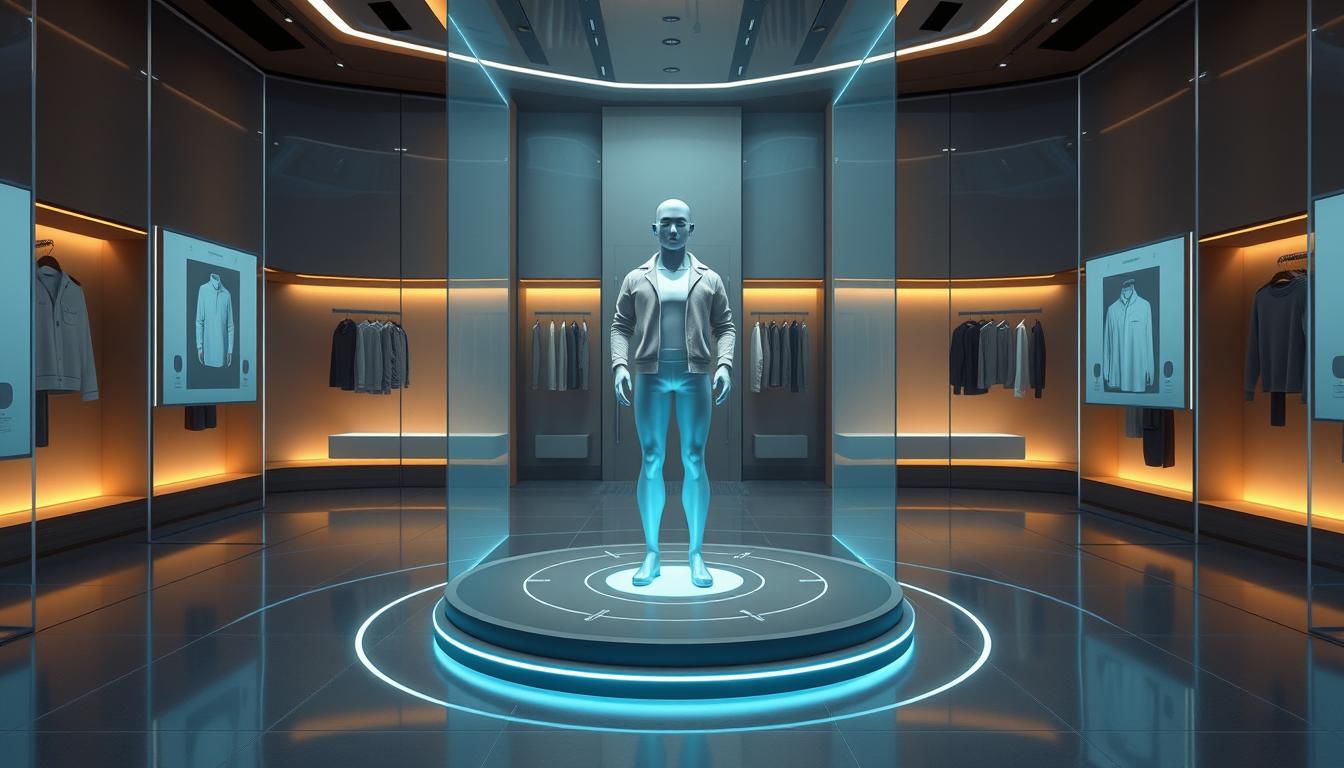
Advanced versions map over 200 body points to generate precise 3D avatars. Shoppers rotate these digital twins to examine drape and fit from multiple angles, mimicking in-store experiences. For retailers, this tech integrates directly into existing e-commerce platforms through APIs, requiring minimal infrastructure upgrades.
The evolution from static product pages to dynamic visualization tools reflects changing consumer demands. Where physical fitting rooms limited options to available stock, digital alternatives let customers test endless combinations instantly. Beauty brands now apply similar principles, enabling virtual makeup trials through facial recognition algorithms.
Three core advantages drive adoption:
- Real-time garment rendering adjusts for lighting and movement
- Size recommendation engines reduce cart abandonment
- Social sharing features amplify brand reach
As shopping behaviors shift, these tools redefine expectations – transforming browsers into confident buyers through experiential engagement.
The Technology Behind Virtual Fitting Rooms: AR and AI
By 2025, 70% of retailers plan to adopt immersive tech solutions to combat sizing uncertainties. These systems merge spatial awareness with predictive analytics, creating digital mirrors that adapt to individual body types. At their core, they rely on two pillars: augmented reality for visual simulation and artificial intelligence for precision modeling.
Visual Foundations Through AR
Augmented reality acts as the eyes of the operation. Smartphone cameras or smart mirrors capture 200+ body points, constructing dynamic 3D avatars. Apple’s ARKit demonstrates this capability – its TrueDepth sensors map facial contours for glasses try-ons within 0.2mm accuracy. Retail solutions extend this principle to full-body mapping through:
- Real-time fabric drape simulation
- Light-adjusted color matching
- Multi-angle rotation controls
Intelligent Precision via AI
While AR handles visualization, artificial intelligence ensures fit accuracy. Machine learning algorithms analyze historical purchase data and body scans to predict size preferences. One platform reduced sizing errors by 38% using neural networks trained on 500,000 fit profiles. RFID tags sync product data with these models, enabling instant garment overlays.
| Technology | Function | Impact |
|---|---|---|
| AR Core | Real-time rendering | 92% visualization accuracy |
| AI Measurement | Body mapping | 40% fewer returns |
| RFID Sync | Product-data linking | 2.5x faster load times |
Pricing models reflect capability tiers – basic webcam solutions start at $129/month, while enterprise systems with AI-driven analytics reach $549. As these tools evolve, they’re setting new standards for what digital shopping can achieve.
Benefits of Virtual Fitting Rooms for Enhanced Online Shopping
Shoppers who visualize products accurately are 65% more likely to purchase – a statistic Rebecca Minkoff leveraged to boost conversions through immersive tech. This shift addresses a core challenge: bridging the gap between digital browsing and real-world fit expectations.
Improved Sizing Accuracy and Product Visualization
Advanced measurement algorithms analyze over 200 body points, creating personalized fit profiles that reduce sizing errors by 38%. Fytted’s platform demonstrates this impact – users experienced 40% fewer returns after adopting their solution. Precision matters: even minor miscalculations in shoulder width or inseam length lead to costly exchanges.
Real-time fabric simulation adds another layer of confidence. Shoppers see how materials drape over their unique shape – whether testing a silk blouse’s flow or jeans’ stretch capacity. This eliminates the “fabric roulette” that plagues traditional online shopping experiences.
Convenience accelerates decision-making. Customers cycle through 12 outfits in minutes – faster than emptying a physical changing room. One retailer noted a 27% increase in basket size when users combined multiple garments during virtual trials.
These innovations translate to measurable gains. Brands report 19% higher customer satisfaction scores and 33% more repeat purchases. When shoppers trust what they see, they buy – and keep coming back.
Best Practices for AI Use Case – Virtual Fitting Rooms with AR and AI
Platforms like Shopify simplify entry into augmented reality retail through plug-and-play applications. Businesses can launch basic virtual fitting capabilities within days using pre-built solutions from app marketplaces. For complex needs, custom systems offer deeper integration with existing technology stacks.
Step-by-Step Implementation Guidelines
Follow this framework for seamless deployment:
| Stage | Action | Timeline |
|---|---|---|
| Assessment | Audit existing tech infrastructure | 2-4 weeks |
| Solution Selection | Compare third-party vs custom builds | 1-3 weeks |
| Integration | Connect to CRM & inventory systems | 3-6 weeks |
Entry-level plans ($129/month) suit small businesses, while enterprise packages ($549/month) include advanced analytics. Fitnonce’s approach demonstrates effectiveness – their 20-measurement system reduced sizing errors by 29% in pilot programs.
Integrating Data and Customer Feedback
Continuous improvement drives success. Capture these data points:
- Garment interaction heatmaps
- Average trial duration per session
- Post-purchase fit satisfaction scores
One retailer boosted repeat purchases by 18% after refining size algorithms using customer feedback. “The magic happens when technical capabilities meet shopper insights,” notes a leading e-commerce strategist. Regular updates ensure tools evolve with changing preferences and body measurement trends.
Enhancing Customer Experience Through Virtual Try-Ons
Personalization isn’t a perk—it’s expected by 81% of younger shoppers seeking authentic digital interactions. These tools transform browsing into dynamic dialogues, where every click reveals tailored options that resonate with individual tastes. By merging biometric data with style preferences, they create shopping experiences that feel less like transactions and more like personal consultations.
Personalization and User Engagement
Advanced algorithms analyze past purchases, body measurements, and even color preferences to curate suggestions. A denim brand saw 34% higher engagement after introducing real-time fit adjustments based on hip-to-waist ratios. Features like these turn routine shopping into interactive journeys:
| Feature | Engagement Boost | Conversion Lift |
|---|---|---|
| Customized Outfit Pairing | 41% | 19% |
| Real-Time Size Adjustments | 28% | 15% |
| Style Quiz Integration | 53% | 22% |
Gamification elements keep users exploring. Reward systems for sharing looks or completing virtual wardrobe challenges increase session durations by 2.3x. “It’s not about selling faster—it’s about creating moments worth remembering,” notes a retail tech strategist.
Impact of Social Sharing on Brand Visibility
When customers post try-on videos, they become micro-influencers. One athleisure brand gained 12,000 organic impressions per month through user-generated content. These shares act as peer endorsements—63% of shoppers trust them more than branded ads.
Platforms capitalize on this by embedding one-click sharing buttons. Users who post their virtual try-ons spend 18% more than silent browsers. For brands, this creates a ripple effect: authentic content reaches networks friends might never see through traditional marketing.
Reducing Return Rates and Boosting Sales with Virtual Fitting Rooms
Fashion retailers lose $7 billion annually to size-related returns – a problem now being solved through interactive visualization tools. By letting shoppers “try before they buy” digitally, businesses transform costly exchanges into confident purchases.

Reduction in Fit-Related Returns
Fytted’s data reveals a 40% drop in returns after implementing body-mapping tech. Traditional sizing charts fail 38% of shoppers – virtual tools eliminate this gap through millimeter-accurate measurements. This precision matters: a 2cm error in waist sizing can trigger a $30 reverse logistics cost per item.
Free return policies backfire when overused. Smart retail solutions like those detailed in recent research reduce “wardrobe regret” by showing how fabrics stretch and drape on individual body types. Customers make informed choices – no more guessing games with size charts.
Sales, Revenue, and Conversion Rate Improvements
Rebecca Minkoff’s 65% conversion lift proves visualization drives action. Shoppers who engage with try-on tools spend 19% more per order. Why? Confidence breeds exploration – users mix-and-match 7x more items than static browsers.
| Metric | Improvement | Impact Period |
|---|---|---|
| Conversion Rates | +23% | 3 months |
| Average Order Value | +$18 | 6 months |
| Repeat Purchases | +33% | 12 months |
These gains compound. Lower return rates mean faster inventory turnover – goods spend 22% less time in warehouses. For mid-sized brands, this could free $150,000+ annually in working capital. When customers trust what they see, everyone wins.
Case Studies: Success Stories in Virtual Fitting Room Implementation
Leading retailers prove interactive try-ons deliver measurable results. From eyewear to luxury fashion, these tools reshape how customers connect with products – and how brands boost profitability.
Retailer Examples and Real-World Outcomes
Warby Parker’s AR glasses try-on cut returns by 25% within six months. Using Apple’s TrueDepth sensors, their iOS app maps facial contours with 0.2mm precision – crucial for accurate frame visualization.
Knix’s virtual fittings now handle 83% of their online traffic. The intimates brand credits this tool with maintaining 94% customer satisfaction during pandemic lockdowns. “It’s like having a stylist in your pocket,” notes their Chief Digital Officer.
Charlotte Tilbury’s London store saw 31% higher cosmetics sales after installing smart mirrors. Shoppers testing lipstick shades virtually bought 2.7 items on average – 40% more than non-users.
Metrics and Key Performance Indicators
| Brand | Metric | Improvement |
|---|---|---|
| Walmart | Post-Zeekit acquisition conversions | +18% |
| Balmain | 3D avatar adoption rate | 67% |
| Knix | Monthly virtual fittings | 14,000+ |
These results align with broader trends how leading brands reduce returns through tech innovation. Balmain’s partnership with Bods demonstrates luxury’s shift – 72% of users customized 3D avatars before purchasing $1,200+ jackets.
As physical and digital retail merge, early adopters gain clear advantages. The data speaks: interactive visualization isn’t speculative – it’s profit-driving reality.
Key Considerations for Implementing Virtual Fitting Rooms
Strategic adoption requires balancing technical capabilities with human-centered design. While technology powers these tools, success hinges on aligning them with real-world shopping behaviors and operational realities.
Budgeting and Technology Infrastructure
Monthly costs start at $129 for basic webcam solutions, scaling to $549 for enterprise-grade systems. Hidden expenses like API integration (3-6 weeks) and staff training add 15-25% to initial budgets. Shopify’s retail solutions demonstrate accessible entry points – their plug-and-play tools require minimal coding knowledge.
Infrastructure demands vary. Smartphone-based platforms need 5Mbps bandwidth per user, while smart mirror systems require dedicated IoT networks. Compatibility checks prevent 43% of integration delays – test device support for:
- Mobile browsers (iOS/Android)
- Augmented reality frameworks
- Payment gateways
User Experience and Interface Design
First-time users abandon complex interfaces within 19 seconds. Successful designs mimic natural behaviors – swipe to change outfits, pinch to zoom on seams. One brand reduced tutorial screens by 80% using “discoverable” gesture controls.
Heatmap analysis reveals key priorities: 72% of customers want instant size comparisons. Tools letting shoppers overlay multiple sizes simultaneously see 31% longer sessions. As leading brands prove, simplicity drives adoption – three-click workflows outperform feature-heavy alternatives.
Privacy remains non-negotiable. Clear data usage policies increase opt-in rates by 38%. When retailers explain how body scans get deleted post-session, trust metrics improve by 27%.
Emerging Trends and Future Outlook in AR Retail Technology
The next evolution of digital retail moves beyond basic visualization. Advanced AR tools now integrate real-time 3D rendering with environmental awareness – adjusting garment appearances based on surrounding lighting and spatial context. This leap transforms mobile screens into dynamic fitting studios.
Innovations Reshaping Interactive Commerce
New platforms combine physics-based fabric simulation with social commerce features. ASOS experiments with shared virtual dressing rooms where friends style avatars simultaneously. Gucci’s recent collab with Snapchat lets users project life-sized 3D outfits into physical spaces through AR mirrors.
Three developments signal transformative potential:
- AI-powered texture mapping that replicates lace details at 0.1mm resolution
- Blockchain integration for digital wardrobe ownership tracking
- Haptic feedback gloves simulating fabric textures during virtual try-ons
These advancements address lingering consumer skepticism. When immersive experiences match tactile reality, adoption accelerates. Early tests show 54% higher engagement in sessions combining 3D innovations with instant checkout options.
As digital and physical retail converge, brands mastering these tools will dominate. The future belongs to those transforming screens into portals – where every interaction builds confidence, community, and lasting loyalty.
FAQ
How do virtual fitting rooms improve online shopping experiences?
By combining augmented reality and artificial intelligence, these tools let shoppers visualize clothing on their body type in real time. Retailers like ASOS and Zara use this to reduce uncertainty, boosting confidence in purchases and lowering return rates.
What role does AI play in virtual try-on technology?
Artificial intelligence analyzes body measurements, fabric behavior, and fit preferences to generate accurate simulations. Brands like Tommy Hilfiger leverage AI-driven avatars to personalize recommendations, enhancing sizing accuracy and customer satisfaction.
Can virtual fitting rooms increase sales for retailers?
Yes. Companies like Warby Parker and Nike report higher conversion rates when shoppers use virtual try-ons. By minimizing fit-related returns and enabling social sharing, these tools directly impact revenue growth and brand visibility.
What challenges do brands face when implementing this technology?
High-quality 3D modeling and real-time rendering require robust infrastructure. Retailers like Gucci prioritize user-friendly interfaces and mobile optimization to ensure seamless experiences, balancing innovation with practical design.
How do virtual fitting rooms reduce environmental impact?
By cutting down on return shipping and excess inventory, brands like H&M and Levi’s minimize waste. Accurate virtual try-ons align with sustainable fashion goals, appealing to eco-conscious shoppers.
Are there privacy concerns with body-scanning technology?
Reputable brands anonymize data and comply with regulations like GDPR. For example, Adidas allows users to delete scan data immediately, building trust through transparency about how biometric information is stored.
Which industries benefit most from virtual fitting rooms?
Beyond apparel, eyewear brands (Ray-Ban) and cosmetics companies (Sephora) use AR try-ons. Luxury retailers like Dior also adopt this for high-ticket items, proving its versatility across product categories.
What future trends will shape AR retail experiences?
Advances in AI avatars, real-time fabric simulation, and social commerce integrations are emerging. Walmart’s AI-powered “Be Your Own Model” feature hints at hyper-personalized shopping journeys, blending convenience with immersive engagement.