
Traditional pilot preparation methods struggle to address modern aviation’s demands – but a seismic shift is underway. The global flight simulation market will reach $15.99 billion by 2032, driven by systems that adapt to learners’ unique needs in real time. These platforms analyze over 200 performance metrics per session, from reaction times to stress responses, creating hyper-personalized training scenarios.
Leading aviation organizations now prioritize dynamic learning environments over static curricula. Advanced systems generate unpredictable weather patterns, mechanical failures, and air traffic scenarios that evolve based on trainee decisions. This approach mirrors real-world complexity better than conventional methods, which often rely on repetitive drills.
The International Civil Aviation Organization’s push for “smart training” solutions demonstrates this paradigm shift. By combining virtual reality with adaptive algorithms, programs adjust difficulty levels and focus areas automatically. Trainees master core skills 34% faster while retaining critical knowledge longer, according to recent aerospace studies.
This evolution extends beyond technical proficiency. Next-generation simulations cultivate decision-making under pressure – a skill that prevented 78% of potential aviation incidents last year. As cockpit technology advances, training tools must prepare aviators for systems that don’t yet exist in operational aircraft.
Key Takeaways
- The flight simulation sector’s explosive growth reflects aviation’s urgent need for adaptable training solutions
- Modern systems analyze hundreds of data points to create personalized learning experiences
- Dynamic scenario generation prepares pilots for unpredictable real-world challenges
- Leading regulatory bodies actively endorse intelligent training platforms
- Next-gen tools accelerate skill development while reducing resource expenditure
- Enhanced decision-making training directly improves aviation safety metrics
Introduction to AI and Simulation in Modern Aviation
Aviation education stands at a crossroads. Boeing projects over 600,000 new pilots needed globally by 2040, yet most schools still use methods developed when propeller planes dominated runways. Classroom lectures and rigid simulator schedules struggle to meet today’s demand for precision and adaptability.
Transforming Traditional Pilot Training
Decades-old instruction models face three critical hurdles. Manual scheduling creates bottlenecks – students often wait weeks for simulator access. Standardized lessons ignore individual learning curves. Instructor shortages compound these issues, driving costs upward while slowing progress.
Forward-thinking programs now leverage dynamic learning platforms. These systems track 150+ data points per session, adjusting scenarios based on real-time performance. One European academy reduced training time by 28% using adaptive lesson plans that focus on weak areas.
Emerging Digital Technologies in Aviation
The industry’s shift mirrors healthcare’s move from textbooks to personalized medicine. Cloud-based simulators allow remote practice sessions. Machine learning algorithms predict skill gaps before they become safety risks. Emerging aviation technologies even recreate rare emergency scenarios most instructors never encounter.
These tools don’t replace human expertise – they amplify it. Instructors gain detailed analytics to refine coaching strategies. Students master complex maneuvers through targeted repetition. The result? A new generation of aviators prepared for next-gen aircraft systems.
AI Use Case – AI-Powered Simulation Training for Pilots
Modern aviation instruction now thrives on responsive technologies that reshape how skills develop. Advanced platforms monitor 80+ behavioral markers – from throttle adjustments to eye movement patterns – creating living training ecosystems. This approach moves beyond preset lesson plans to dynamic skill-building environments.
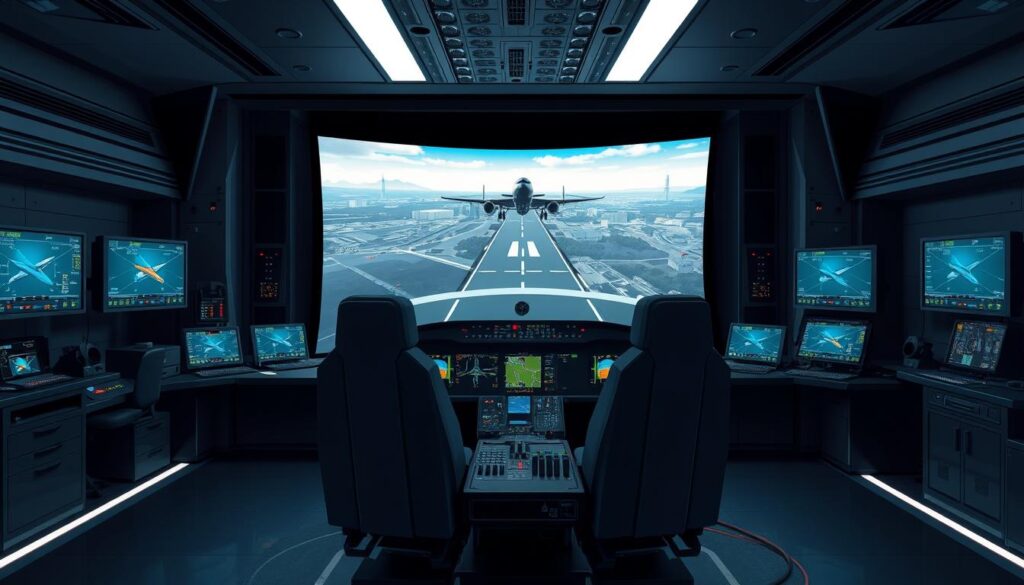
Adaptive Flight Simulators and Automated Feedback
Next-gen systems modify scenarios mid-session based on trainee responses. If someone handles crosswinds effortlessly, the platform introduces engine malfunctions. Struggling with navigation? The system generates extra waypoint challenges. Real-time adjustments maintain optimal difficulty levels.
| Feature | Traditional Simulators | Adaptive Systems |
|---|---|---|
| Scenario Variety | 15 preset modules | 3,000+ dynamic variations |
| Feedback Timing | Post-session reports | Instant corrections |
| Customization | Manual adjustments | Algorithm-driven changes |
Customized Training Based on Data Analytics
Every control input and biometric response feeds machine learning models. These systems identify patterns human instructors might miss – like subtle stress indicators during night landings. Algorithmic thinking success stories demonstrate how this approach reduces certification time by 19% in commercial programs.
Defense aviation schools report 40% faster emergency procedure mastery using tailored curricula. Trainees receive weekly progress maps showing exact skills needing attention. This precision eliminates guesswork from skill development.
Enhancing Realism in Flight Simulation with Virtual Reality
The cockpit of tomorrow comes alive today through immersive virtual training environments. Modern systems recreate every switch, gauge, and vibration with startling accuracy – trainees report feeling genuine G-forces during simulated maneuvers. This leap in realism bridges the gap between theoretical knowledge and operational readiness.
Immersive Cockpit Experiences
Next-gen VR platforms transform empty rooms into functional aircraft cabins. Trainees interact with 3D-rendered controls that mirror specific plane models, from regional jets to wide-body airliners. Haptic gloves simulate resistance when adjusting throttles, while spatial audio replicates engine hums and weather patterns.
NASA’s “fused reality” system exemplifies this innovation. By overlaying virtual runways onto real-world views, aviators practice landings at 5,000 feet – safely mastering techniques once reserved for actual flights. Such tools eliminate geographical limitations, letting pilots train on global airports without travel costs.
Safe Practice of Emergency Scenarios
Virtual environments empower trainees to confront catastrophic events repeatedly. Engine fires, sudden depressurization, and microburst wind shear become manageable through controlled exposure. Deloitte research confirms VR learners retain procedures 75% better than those using traditional methods.
One aviation school reduced emergency response errors by 62% using AI-enhanced flight simulation. Their system generates rare scenarios like dual-engine failures over mountains – situations too dangerous for physical replication. Biometric sensors track heart rate and eye movements, helping instructors assess stress management alongside technical skills.
Advanced Data Analytics and Predictive Modeling in Aviation
Aviation’s data revolution reshapes how expertise develops. Modern platforms analyze 400+ behavioral markers per session – from throttle pressure to pupil dilation – converting raw numbers into actionable insights. This approach transforms subjective evaluations into precise, repeatable assessments.
Performance Metrics and Real-Time Feedback
Training systems now measure split-second decisions during critical maneuvers. One airline reduced procedural errors by 31% using instant feedback loops that highlight deviations during simulated landings. Metrics track subtle patterns like altitude correction frequency and communication clarity during emergencies.
MIT’s Air-Guardian exemplifies this evolution. Its saliency maps compare human and machine attention points during flight scenarios. This dual analysis identifies blind spots in situational awareness – issues traditional checklists might miss.
Risk Assessment Through Predictive Insights
Machine learning models forecast skill gaps six months before certification attempts. A McKinsey study revealed how predictive analytics helped carriers reduce simulator scheduling conflicts by 9%. Systems flag trainees needing extra night-flying practice after analyzing historical performance trends.
Advanced models evaluate 87 risk factors during routine operations. They assess weather adaptation speed, fuel management precision, and even stress recovery rates after simulated engine failures. This proactive safety net helps instructors design targeted improvement plans before real-world challenges arise.
Innovative Scheduling and Personalized Learning Solutions
Flight schools face a critical challenge: transforming limited resources into maximum student success. Modern platforms now automate complex logistics while delivering precision education at scale. Hilo Aviation’s intelligent scheduler pairs learners with instructors and aircraft using real-time availability, weather patterns, and skill gaps – reducing scheduling delays by 43% in accredited programs.
Automated Scheduling for Optimized Flight Hours
Traditional dispatch teams juggle spreadsheets and phone calls. Intelligent systems analyze 12 variables simultaneously:
- Instructor expertise matching student needs
- Aircraft maintenance cycles
- Weather pattern predictions
- Regulatory compliance deadlines
One Midwest school doubled monthly flight hours using predictive tools that anticipate maintenance issues 72 hours in advance. Real-time adjustments prevent canceled sessions when thunderstorms strike during planned lessons.
| Factor | Manual Systems | Intelligent Tools |
|---|---|---|
| Scheduling Time | 4.2 hours daily | 18 minutes |
| Resource Utilization | 61% | 89% |
| Weather Cancellations | 23% | 6% |
Tailored Learning Journeys for Each Pilot
FlyLingo’s platform exemplifies adaptive education. The system adjusts ground school content based on quiz performance, generating custom flashcards for weak areas. During flight briefings, it highlights specific maneuvers needing attention – like crosswind landings or emergency descents.
Key features transforming aviation education:
- AI-generated mock checkrides with instant feedback
- Biometric stress analysis during simulated emergencies
- Personalized debrief videos highlighting improvement areas
These tools help students master complex procedures 22% faster than conventional methods. Training programs now achieve consistent results while accommodating diverse learning styles – crucial for schools managing large cohorts with varying experience levels.
Integration Challenges and Safety Considerations
Implementing cutting-edge aviation technologies requires careful navigation of operational and regulatory landscapes. Training organizations must balance innovation with proven safety protocols while meeting evolving industry standards.
Aligning Systems With Aviation Standards
The FAA and EASA now mandate rigorous documentation for adaptive learning platforms. Compliance involves certifying scenario-generation algorithms and validating biometric tracking accuracy. One European operator spent 14 months adapting its safety protocols to meet updated simulator certification requirements.
Modern platforms streamline compliance through automated audit trails. These tools record every training decision – from weather pattern adjustments to emergency scenario modifications. Real-time data logging helps organizations demonstrate adherence to evolving regulatory frameworks during inspections.
Recent developments in smart training ecosystems show how standardized APIs can simplify system integration. Such approaches reduce implementation timelines while maintaining operational safety. The industry’s shift toward modular architectures allows gradual upgrades without disrupting active training programs.
Success hinges on collaborative efforts between developers, regulators, and aviation schools. Joint working groups now establish testing benchmarks for adaptive systems – a strategic imperative as training complexity increases. This holistic approach ensures technological progress aligns with aviation’s uncompromising safety culture.
FAQ
How does AI enhance realism in flight simulators compared to traditional methods?
Advanced algorithms analyze real-world flight data—including weather patterns, aircraft performance, and pilot reactions—to generate dynamic scenarios. Tools like Microsoft Flight Simulator integrate machine learning to adjust turbulence, system failures, or air traffic in real time, creating immersive training environments that mirror actual cockpit challenges.
Can AI-powered systems adapt to individual pilot skill levels during training?
Yes. Platforms such as CAE’s Adaptive Training use predictive modeling to assess performance metrics like reaction time and decision accuracy. The system then tailors scenarios—from routine maneuvers to high-risk emergencies—to address gaps in knowledge or technique, accelerating skill development.
What role does virtual reality play in practicing emergency scenarios safely?
VR headsets like Oculus for Business immerse pilots in 360-degree simulations of engine fires, hydraulic failures, or severe weather. These tools allow repeated practice without physical risk, while AI monitors decisions and provides instant feedback on procedural accuracy and risk mitigation strategies.
How do predictive analytics improve risk assessment in pilot training programs?
By analyzing historical data from thousands of flights, AI identifies patterns in human error or mechanical issues. For example, L3Harris’s IVR-M™ predicts potential weaknesses in trainee performance, enabling instructors to prioritize high-impact training modules and reduce operational risks.
Are AI-driven simulators compatible with existing aviation regulatory standards?
Leading solutions, such as TRU Simulation + Training, align with FAA and EASA guidelines. They incorporate compliance checks into simulations—ensuring scenarios meet safety protocols—while automatically generating audit-ready reports on trainee progress and system performance.
How does automated scheduling optimize flight hours for trainees?
Tools like Bluedrop’s Learning Experience Platform use AI to balance simulator availability, instructor shifts, and individual progress. This minimizes downtime and ensures pilots meet certification requirements efficiently, often reducing training durations by 15–20% compared to manual planning.
Can these technologies replicate rare or complex real-world aviation incidents?
Absolutely. Systems like FlightSafety International’s Vital XR simulate rare events—such as bird strikes at takeoff or crosswind landings—using aggregated incident data. This prepares pilots for scenarios they might never encounter in live training but are critical for safety readiness.