Imagine a workforce where 75% of routine employee questions are resolved instantly—without human intervention. This isn’t a distant vision but today’s reality for organizations leveraging intelligent solutions in human resources. As the global market for automated workforce support tools surges toward $27 billion by 2030, businesses are redefining how teams access critical information.
Forward-thinking companies now deploy always-available virtual assistants to handle administrative tasks ranging from policy clarification to onboarding guidance. These systems don’t just answer questions—they learn from interactions, improving response accuracy over time. Take Hitachi’s recent transformation: their implementation slashed onboarding timelines by four days while reducing HR workload by 66% per new hire.
This shift addresses a critical pain point. Traditional support models often create bottlenecks, leaving employees waiting for answers. Modern alternatives empower staff through immediate, accurate responses while freeing human resources teams for strategic initiatives like talent development. A recent analysis highlights how enterprises achieve measurable improvements in operational efficiency and employee satisfaction through this approach.
Key Takeaways
- Automated systems resolve 75% of common workforce inquiries without human input
- The virtual assistant market is projected to grow 23% annually through 2030
- Early adopters report 50% faster hiring cycles and improved candidate experiences
- Onboarding processes can be accelerated by multiple days through intelligent automation
- Human resources teams regain 12+ hours weekly by redirecting repetitive tasks
The Rise of HR Self-Service and Automation in Modern Organizations
Modern workplaces now operate at digital speed, demanding instant access to critical resources. Traditional support models struggle to keep pace, creating friction between staff needs and operational capabilities. This gap fuels the adoption of advanced solutions that redefine how teams interact with organizational systems.
From Manual Processes to Intelligent Platforms
Early workforce support relied on paper forms and phone calls. Basic digital portals emerged in the 2000s, offering limited FAQ databases. Today’s solutions integrate with payroll software, learning management systems, and performance trackers—creating unified ecosystems.
| Aspect | Traditional Approach | Modern Solution |
|---|---|---|
| Access Speed | 24-48 hour response | Instant resolution |
| Functionality | Static information | Dynamic interaction |
| Integration | Isolated systems | Cross-platform sync |
Operational Transformation Across Industries
Companies adopting these technologies report measurable gains. A manufacturing firm reduced payroll inquiry resolution from 3 days to 12 minutes. Financial institutions cut benefits enrollment errors by 43% through guided digital workflows.
Three key improvements emerge:
- 63% reduction in routine task completion time
- 89% employee satisfaction with instant resource access
- 41% decrease in administrative costs over two years
These changes enable human capital teams to focus on culture-building initiatives rather than paperwork. Leaders report better workforce retention and faster decision-making cycles as collateral benefits.
AI Use Case – HR Self-Service Chatbots
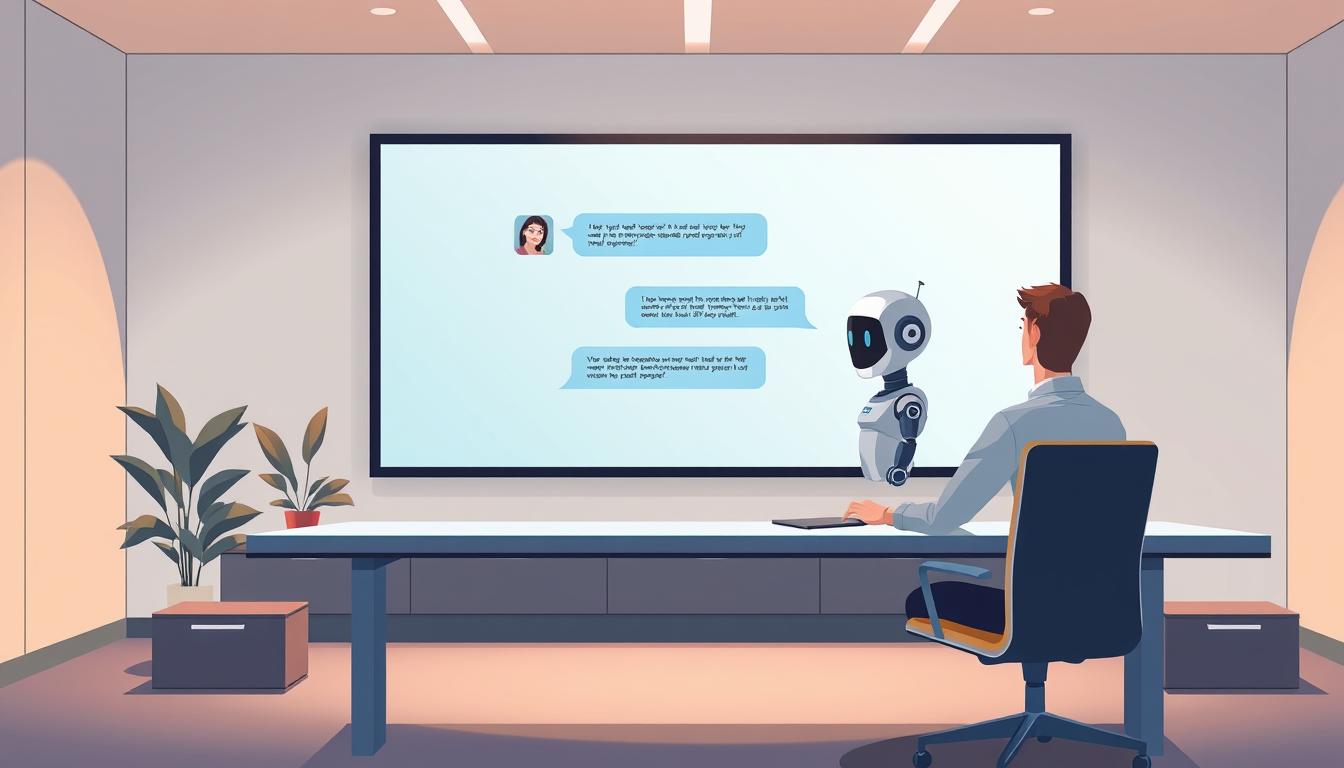
Organizations are redefining workforce support through intelligent virtual assistants that handle critical operational needs. These tools address three core areas where teams demand immediate, accurate responses: orientation processes, policy navigation, and skill development.
New team members benefit from guided onboarding workflows. Virtual assistants provide instant access to handbooks, document templates, and role-specific checklists—reducing orientation delays by 58% in documented cases. One logistics company reported completing new hire setups in 72 hours instead of seven days through automated guidance.
Policy interpretation challenges dissolve with dynamic support systems. Staff receive real-time explanations of benefits structures, time-off protocols, and compliance requirements. A healthcare provider eliminated 83% of benefits-related emails through conversational interfaces that clarify coverage details.
Skill-building initiatives gain momentum with personalized learning paths. Systems analyze role requirements and performance data to suggest relevant courses, certifications, and mentorship opportunities. “Our teams complete upskilling programs 40% faster with tailored recommendations,” notes a tech firm’s learning director.
The shift toward automated support creates cascading benefits. Human capital teams reclaim 15-20 weekly hours previously spent on routine inquiries. This enables strategic focus on culture-building initiatives and leadership development programs that drive retention.
Modern solutions integrate with existing platforms through secure APIs, maintaining data consistency across payroll systems and performance trackers. This connectivity ensures employees access current information whether reviewing PTO balances or updating professional credentials.
Key Benefits for Empowering Employees with AI-Powered Self-Service
Workplace efficiency reaches new heights when teams control their own solutions. Intelligent systems now deliver immediate answers to common questions, transforming how organizations support their workforce. This shift creates ripple effects across productivity and engagement metrics.
Reducing Repetitive Tasks and Enhancing Response Times
Manual processes drain productivity. Automated solutions resolve 60% of routine inquiries without human intervention—from payroll updates to policy clarifications. One retail chain reduced benefits-related emails by 72% within three months of implementation.
Response speed becomes a competitive advantage. Employees no longer wait days for answers—critical information flows instantly. A financial services firm cut average resolution times from 26 hours to 8 minutes through guided workflows.
Improving Employee Experience and Access to Information
Consistent information access builds trust. Workers independently retrieve handbooks, training materials, and compliance guidelines through intuitive interfaces. “Our teams feel more capable when answers are at their fingertips,” observes a manufacturing company’s operations director.
Round-the-clock availability proves vital for global teams. Distributed staff access resources during non-traditional hours without delays. This autonomy correlates with 34% higher satisfaction scores in recent surveys.
Data-driven improvements emerge naturally. Systems track frequently asked questions, enabling organizations to refine policies and training programs. These insights help leadership address knowledge gaps before they escalate into larger issues.
Step-by-Step Guide to Implementing Chatbots in Human Resources
Deploying effective workforce support requires meticulous preparation. Leaders must align technical capabilities with employee needs while maintaining operational continuity. This approach ensures smooth transitions from legacy methods to modern digital interfaces.
Laying the Strategic Foundation
Successful adoption begins with process mapping. Teams should audit existing workflows to pinpoint repetitive tasks consuming 40%+ of support staff time. A healthcare network discovered 58% of their service requests involved resetting passwords—an ideal automation candidate.
| Consideration | Traditional Setup | Optimized Approach |
|---|---|---|
| Response Accuracy | Manual updates | Real-time sync |
| User Adoption | Static tutorials | Interactive guides |
| Scalability | Fixed capacity | Cloud-based growth |
Technical Harmonization
Integration depth determines system effectiveness. Platforms must connect with payroll databases, benefits portals, and training repositories through secure APIs. A manufacturing company achieved 94% data accuracy by syncing their solution with legacy HRIS platforms.
Three critical integration points:
- Single sign-on compatibility
- Bi-directional data flows
- Automated compliance checks
For comprehensive guidance, explore our detailed resource on aligning conversational tools with enterprise architectures. Proper implementation creates frictionless experiences where employees access policy documents or submit time-off requests through natural dialogue.
Best Practices for Integrating AI Chatbots into HR Systems
Effective implementation of digital workforce tools requires strategic alignment between technology capabilities and human needs. Organizations must balance automation efficiency with ethical considerations to maintain trust while delivering rapid solutions.
Ensuring Accurate and Up-to-Date Knowledge Bases
Reliable information forms the foundation of successful automation. Leading companies implement three-step validation processes: weekly policy reviews, automated document version checks, and cross-departmental accuracy audits. A financial services firm reduced compliance errors by 78% after introducing real-time policy synchronization across their platforms.
| Element | Traditional Approach | Optimized Practice |
|---|---|---|
| Policy Updates | Quarterly manual reviews | Real-time CMS integration |
| Source Citations | General references | Hyperlinked policy sections |
| Accuracy Checks | Annual audits | AI-driven inconsistency alerts |
Setting Clear Boundaries for Complex Inquiries
While digital tools excel at routine tasks, 29% of workforce questions require human judgment. Clear escalation protocols protect organizations from liability while ensuring staff receive appropriate support. “Our system automatically routes harassment reports to trained specialists within 15 seconds,” shares a healthcare administrator.
Critical guardrails include:
- Immediate human handoff for mental health discussions
- Visual disclaimers during benefits calculations
- Mandatory manager notifications for conflict resolution requests
For detailed implementation strategies, explore our guide to workforce support best practices. Regular system evaluations ensure tools evolve alongside organizational needs while maintaining employee confidence in automated solutions.
Real-World Use Cases and Success Stories in HR
Forward-thinking enterprises are witnessing measurable results through practical applications of digital workforce tools. These implementations demonstrate how intelligent systems reshape orientation processes and skill development at scale.
Case Study: Streamlining Onboarding and Training
A global logistics provider transformed their orientation process using automated guidance. New team members now complete setup in 72 hours instead of seven days—accessing checklists, policy documents, and role-specific resources through conversational interfaces. Satisfaction scores rose 31% as recruits gained instant answers to 82% of common questions.
Learning initiatives show similar success. One manufacturing firm reduced time-to-competency by 19 days using personalized training paths. Systems analyze individual performance gaps and recommend microlearning modules, with completion rates jumping 67% compared to traditional programs. “Our mentors now focus on coaching rather than administrative follow-ups,” reports their talent development lead.
Three measurable outcomes emerge from these examples:
- 54% faster resolution of orientation queries
- 42% increase in voluntary upskilling participation
- 28% reduction in training-related costs
Resource accessibility proves critical. Employees locate compliance guidelines or benefits forms 89% faster through natural language searches, according to recent research. This efficiency allows human capital teams to allocate 22% more time to strategic initiatives like leadership pipelines.
These success stories highlight scalable solutions for growing organizations. Companies handling seasonal hiring spikes maintain consistent support quality without expanding administrative teams—a key advantage in competitive talent markets.
Overcoming Challenges and Managing Expectations
Balancing technological potential with human insight remains critical in workforce support strategies. While automation streamlines repetitive tasks, its limitations require thoughtful navigation to maintain trust and operational effectiveness.
Understanding Tool Boundaries
Mathematical precision poses challenges for automated systems. Benefits calculations and compensation queries often demand contextual awareness beyond programmed logic—a healthcare network discovered 22% of financial questions needed human review for accuracy.
Sensitive workplace discussions require personal interaction. Conflict resolution scenarios and mental health support demand empathy that algorithms can’t replicate. One tech firm implemented instant specialist handoffs for harassment reports, preserving confidentiality while meeting legal obligations.
Managing expectations starts with transparency. Organizations achieve better adoption by clearly defining which tasks suit automation versus those needing human judgment. A retail chain’s training program reduced misdirected inquiries by 41% through visual guides explaining system capabilities.
Successful implementations complement human roles rather than replace them. Teams report higher satisfaction when tools handle routine questions while specialists focus on complex needs. This balance helps build sustainable workflows where technology and expertise coexist purposefully.
FAQ
How do automation tools reduce repetitive tasks for human resources teams?
By handling routine inquiries—like benefits enrollment or policy questions—these tools free HR professionals to focus on strategic initiatives. For example, chatbots can instantly address 70% of common employee requests, minimizing manual follow-ups.
What steps ensure accuracy in chatbot responses for employee self-service?
Regularly updating the knowledge base with current policies, benefits details, and organizational changes is critical. Integrating with trusted platforms like Workday or BambooHR ensures real-time data alignment, while audits refine response quality over time.
Can these tools improve onboarding and training processes?
Yes. Companies like IBM use chatbots to guide new hires through paperwork, schedule training sessions, and provide instant answers to role-specific questions. This reduces administrative bottlenecks and accelerates time-to-productivity by up to 40%.
How do organizations balance automation with complex employee needs?
Clear boundaries are set during implementation. Chatbots handle tier-1 queries (e.g., PTO balances), while escalating nuanced issues—like conflict resolution—to HR specialists. This hybrid model maintains efficiency without compromising personalized support.
What metrics measure the success of AI-powered self-service tools?
Key indicators include reduced resolution time, employee satisfaction scores, and deflection rates (queries resolved without human intervention). For instance, Unilever reported a 35% drop in HR ticket volume after deploying its virtual assistant.
How can businesses build trust in chatbot interactions?
Transparency about data usage, consistent accuracy checks, and enabling seamless transitions to live agents when needed help build confidence. Training employees to view chatbots as extensions of HR—not replacements—also fosters adoption.