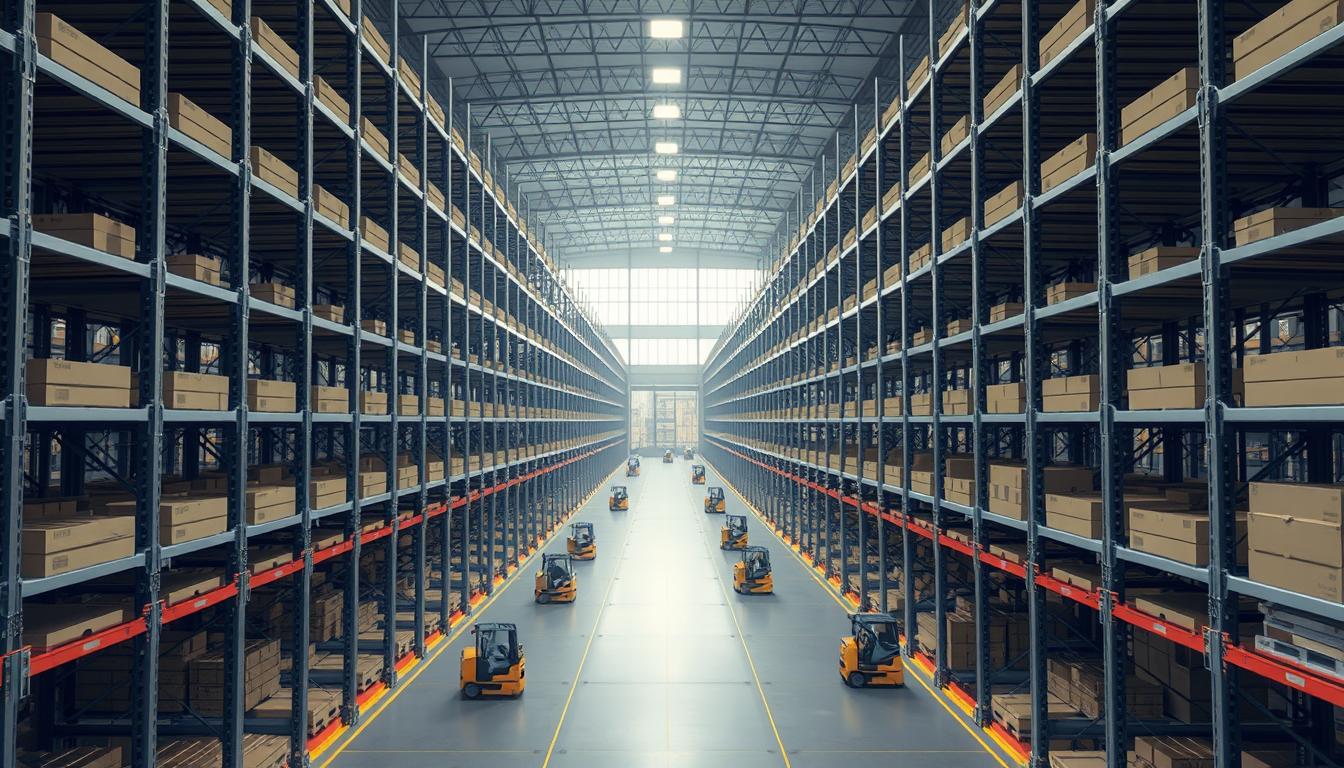
Imagine cutting the distance your warehouse pickers walk by 4.5 miles per shift – equivalent to hiking a Colorado mountain trail daily. This isn’t theoretical: businesses leveraging intelligent storage systems achieve exactly that through real-time product placement decisions.
Traditional storage methods often resemble a game of Tetris played blindfolded. Workers rely on gut feelings to place items, creating inefficiencies that compound daily. Modern solutions analyze 17 distinct variables – from seasonal demand spikes to packaging dimensions – creating dynamic placement blueprints that adapt faster than market trends.
The results speak volumes. Early adopters report 28% shorter training cycles for new staff, as intuitive layouts replace complex memorization. Order fulfillment speeds increase by 19% on average, directly boosting customer satisfaction scores. These improvements don’t require massive infrastructure changes – just smarter use of existing space.
Key Takeaways
- Intelligent storage systems reduce worker travel distance by 15-30%
- Dynamic placement strategies adapt to real-time order patterns
- New employee training time drops by nearly one-fifth
- Throughput improvements directly enhance customer experiences
- Existing facilities achieve gains without structural modifications
This approach transforms storage management from reactive chore to strategic asset. Companies using these methods consistently outperform competitors in same-day fulfillment metrics while maintaining 12% lower operational costs. The secret lies not in working harder, but in placing smarter.
Understanding Current Warehouse Slotting Challenges
Storage facilities face a hidden productivity drain: workers often spend 60% of their shift navigating aisles rather than moving goods. This stems from decades-old placement strategies that prioritize convenience over data-driven logic.
Operational Friction Points
Seasonal shifts expose critical weaknesses in manual placement systems. Teams scramble to reorganize holiday merchandise while daily orders pile up – a recipe for missed deadlines and frustrated customers. Even routine tasks become problematic when identical products scatter across multiple zones, confusing staff and delaying shipments.
The Price of Outdated Methods
Legacy systems force managers into spreadsheet marathons – one retailer spent $50,000 annually on manual analysis that still left 12% of storage space underutilized. Facilities with 30,000+ SKUs face compounded issues:
- 48% longer training periods for new hires
- 22% increase in mis-picks during peak seasons
- 17% slower restocking cycles
These inefficiencies create ripple effects. A Midwest distributor reported 28% higher overtime costs during inventory transitions – funds that could have upgraded equipment instead of patching workflow gaps.
AI Use Case – Warehouse Slotting Optimization in Action
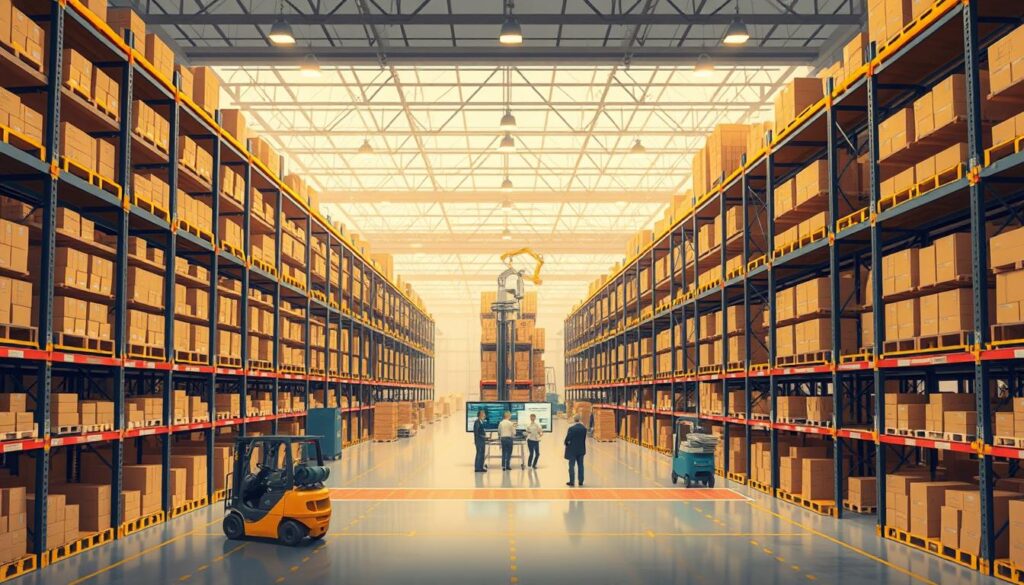
Traditional storage layouts become obsolete within weeks as consumer demands shift – a problem solved by modern decision engines. These tools process millions of data points daily, from pallet dimensions to regional sales spikes, creating placement blueprints that evolve with market rhythms.
How Advanced Algorithms Transform Slotting Decisions
Sophisticated systems start by mapping historical patterns – which items ship together, peak season traffic flows, and equipment limitations. This analysis reveals hidden connections:
- Products bought simultaneously get neighboring slots
- High-velocity items move closer to packing stations
- Oversized goods reposition based on forklift routes
One automotive parts distributor reduced cross-aisle trips by 34% using these insights. Their algorithms now adjust layouts weekly instead of quarterly.
Real-Time Adjustments vs. Fixed Plans
Static blueprints crumble when holiday rushes hit or new products launch. Dynamic systems monitor live order streams and equipment availability. During a recent Black Friday surge, a Midwest retailer’s platform rerouted 12% of inventory overnight – preventing $78,000 in potential delays.
This approach contrasts with manual methods that often react to yesterday’s problems. Continuous learning allows systems to predict staffing needs and storage constraints three weeks out with 89% accuracy.
Data Collection and Pattern Recognition for Optimal Slotting
Every storage decision begins with precise information – 82% of facilities using advanced pattern recognition report measurable efficiency gains within three months. Modern tools transform raw numbers into actionable insights, revealing hidden connections between inventory behavior and customer needs.
Harnessing Operational Intelligence
Sophisticated platforms track over 40 metrics simultaneously, from item rotation rates to shipping lane preferences. One retailer discovered that 23% of their fastest-moving products were stored in low-traffic zones – a simple repositioning boosted daily picks by 17%.
Anticipating Market Rhythms
Seasonal shifts no longer catch teams off-guard. Algorithms cross-reference historical sales with weather forecasts and promotional calendars. When a Midwest distributor implemented this approach, they reduced holiday season restocking delays by 41%.
| Factor | Traditional Approach | Data-Driven Method |
|---|---|---|
| Data Sources | Manual logs (3-5 inputs) | IoT sensors + ERP (15+ streams) |
| Adjustment Frequency | Quarterly reviews | Real-time updates |
| Key Metrics | Storage capacity | Pick efficiency + demand correlation |
| ROI Focus | Cost reduction | Revenue optimization |
Implementation success starts with high-impact items. Focusing on the top 20% of SKUs – responsible for 80% of activity – delivers rapid results. ERP system connectivity bridges information gaps, allowing real-time adjustments during peak demand periods.
Multi-Variable Optimization and Continuous Improvement
Like a skilled conductor harmonizing an orchestra, modern systems juggle competing priorities to create operational symphonies. They evaluate travel time reduction, spatial efficiency, and product characteristics simultaneously – transforming storage areas into precision-tuned environments.
The Balancing Act of Modern Logistics
Sophisticated algorithms weigh over 12 factors at once. Fast-moving items gain priority placement while maintaining logical groupings. Dimensional analysis ensures bulky products don’t monopolize prime real estate. One retailer achieved 31% faster restocking by aligning item sizes with shelf capacities.
Evolution Through Experience
These systems grow smarter daily. Machine learning spots patterns human planners miss – like how weather changes affect regional product demand. A Midwest distributor reduced holiday season errors by 44% as their platform adapted to shifting sales trends.
| Factor | Static Systems | Dynamic Solutions |
|---|---|---|
| Adjustment Frequency | Quarterly | Real-Time |
| Space Utilization | 82% Average | 93% Peak |
| Training Impact | 48 Hours | 24 Hours |
| Error Rate | 5.2% | 1.8% |
Continuous refinement delivers compounding benefits. Facilities using strategic inventory placement report 19% higher throughput within six months. The secret lies in treating every shipment as a learning opportunity – each pallet movement fine-tunes future decisions.
Space reclamation becomes effortless. One electronics supplier recovered 14% capacity simply by optimizing vertical storage – equivalent to adding 3,500 square feet without construction costs. These improvements accelerate over time as algorithms master facility-specific rhythms.
Implementing AI Slotting: Strategies and Modern Technologies
Transitioning to advanced storage strategies requires meticulous planning. Organizations achieve best results by combining thorough data preparation with modular technology adoption. Start by mapping current workflows – 73% of failed implementations overlook critical layout constraints or seasonal demand variations.
Building Foundations Through Data Integrity
Successful deployments begin with cleansing operational records. Focus on three core areas:
- Standardizing SKU dimensions across all platforms
- Aligning historical order patterns with inventory movements
- Validating warehouse zone capacity measurements
A Midwest retailer improved algorithm accuracy by 39% after reconciling conflicting product measurements from six different databases.
Architecting Future-Ready Systems
Modern platforms thrive on flexible infrastructures. The MACH framework enables seamless evolution through:
| Component | Traditional Systems | Modern Solutions |
|---|---|---|
| Integration | Custom coding | Prebuilt API connections |
| Scalability | Hardware-dependent | Cloud-native elasticity |
| Updates | Quarterly patches | Continuous deployment |
| User Interface | Fixed workflows | Headless customization |
Pilot programs prove particularly effective when testing new approaches. One distributor achieved 22% faster order processing by implementing zone-specific optimizations before expanding company-wide. This phased approach builds stakeholder confidence while ironing out process wrinkles.
Change management remains critical – involve floor teams in design sessions and celebrate quick wins. When staff see tangible reductions in walk time or error rates during trials, adoption rates typically double. The journey transforms storage areas into intelligent ecosystems that learn and adapt.
Next-Generation Trends in Warehouse Automation
The future of logistics is being rewritten through interconnected technologies that learn as they operate. Facilities now prioritize systems where real-time data streams merge with physical workflows – a shift accelerating efficiency beyond traditional metrics.
Integration with Robotics, IoT, and Real-Time Systems
Autonomous mobile robots now receive live inventory positioning updates, slashing search times by 27% in pilot programs. IoT sensors track equipment movements and storage conditions, feeding algorithms that adjust layouts hourly. One electronics manufacturer reduced energy costs by 19% after linking climate controls to dynamic storage patterns.
Future Frontiers: Augmented Reality and Cross-Warehouse Intelligence
Augmented reality headsets project optimal pick paths onto workers’ visual fields – early adopters report 31% fewer errors. Multi-site operators benchmark performance across locations using centralized intelligent inventory systems, identifying best practices that boost throughput chain-wide.
Emerging sustainability strategies now influence placement logic. Algorithms prioritize fuel-efficient routes and low-emission zones without compromising speed. These innovations signal a broader transformation – storage areas evolving from static containers into responsive, self-optimizing networks.
FAQ
What makes traditional inventory placement strategies inefficient?
Manual approaches often rely on outdated patterns or guesswork, leading to wasted space, longer travel times for pickers, and missed opportunities to group complementary items. Static plans struggle to adapt to shifting demand or seasonal spikes.
How do algorithms improve storage location decisions?
Advanced systems analyze order history, product dimensions, and velocity to calculate optimal placements. For example, Walmart uses machine learning to prioritize high-turnover goods in easily accessible zones, reducing labor costs by 15% in pilot projects.
Can these solutions handle real-time supply chain disruptions?
Yes. Modern platforms like Blue Yonder integrate live sales data, IoT sensors, and delivery timelines to dynamically adjust slotting. This agility helps companies like DHL avoid bottlenecks during peak periods or supplier delays.
What role does trend analysis play in maximizing space utilization?
Systems forecast demand surges using historical patterns and market signals. Amazon’s warehouses pre-position trending items near packing stations before Prime Day, slashing processing times by 22% despite 40% higher order volumes.
Why are MACH principles critical for scalable implementations?
Microservices and API-first architectures let businesses plug slotting tools into existing WMS or ERP systems without costly overhauls. Companies like Manhattan Associates design modular solutions that evolve with automation trends like autonomous mobile robots.
How does augmented reality enhance picking efficiency?
AR headsets guide workers via optimized routes calculated by AI. Zebra Technologies’ SmartSight tool overlays item locations and order priorities, cutting training time by 30% and reducing mispicks by 25% in trials with Home Depot.
What metrics prove the ROI of intelligent slotting systems?
Leaders track reduced travel distance (often 20-35%), increased picks per hour, and lower carrying costs. Coca-Cola European Partners reported a 28% drop in operational expenses after adopting ToolsGroup’s dynamic slotting platform.