“Education is the kindling of a flame, not the filling of a vessel.” —Socrates. That spark guides modern classrooms where efficiency matters as much as insight.
FlowScholar.com and its Brisk Teaching suite reclaim the school day by cutting admin overhead. In districts across the United States—over 20,000 of them—educators report faster grading and clearer routines.
Emily Boyas, a Reading Specialist in Lake Zurich, Illinois, says AI-driven systems let her grade more quickly and focus on meaningful feedback. That shift frees time for direct instruction and richer interactions with each student.
The platform blends personalized feedback with quick assignment generation so teachers can prepare a new activity in minutes. The result: brisk teaching that adapts to diverse classes while keeping standards high.
Key Takeaways
- FlowScholar.com reduces prep time so teachers can focus on instruction.
- Brisk Teaching is used in 20,000+ U.S. districts for reliable efficiency.
- Personalized feedback helps each student get targeted support.
- Educators can build an assignment in minutes, saving valuable time.
- The platform supports high academic standards across diverse classes.
The Evolution of Teacher Content Creation Tools
Classroom resources have moved from fixed textbooks to adaptive, AI-driven materials that respond to learners’ needs.
Design now follows practice: platforms are built to fit real schedules, pacing, and diverse learning paths. Chrissy M., a Middle School English teacher in Akron, Ohio, notes that the best systems feel like they were made by teachers for teachers.
“The right platform understands daily routines and the specific demands of a topic,” said Chrissy M.
Modern education favors ecosystems where each piece of content aims to spark critical thinking and deeper engagement. Schools now rely on a mix of personalized materials, analytics, and quick planning aids.
| Era | Typical Resources | Primary Benefit |
|---|---|---|
| Traditional | Printed textbooks, static worksheets | Consistency across classes |
| Digital | Online modules, multimedia | Access and variety |
| AI-driven | Adaptive lessons, real-time feedback | Personalized learning paths |
For educators exploring how to bring AI into planning, see our AI-powered course guide for practical steps and examples.
Why Educators Need a Dedicated Teacher Content Creation Tool
Many educators find that routine admin work steals time from meaningful student interactions. Administrative duties and grading pile up quickly. That erosion reduces focused learning and limits class moments that matter.
The Burden of Administrative Tasks
Anne Stanislawski and Curt Mould from Sun Prairie praise digital systems for simplifying workflows and giving real-time support. Nicole L. in Derry highlights that intuitive platforms should not demand long training.
When paperwork is minimized, teachers spend more time on instruction and one-on-one feedback. Automating routine questions and grading frees time for richer student work and deeper reading activities.
Bridging the Gap in Classroom Support
A robust platform acts like a virtual teaching assistant: it helps generate lesson plans, reading materials, and activities fast. Schools that invest in the right solution report fewer interruptions and stronger classroom routines.
- Reduce admin work so teachers can focus on student learning.
- Provide on-demand support for varied student needs.
- Automate routine feedback to improve lesson pacing.
| Challenge | What Educators Need | Impact |
|---|---|---|
| Heavy paperwork | Automated grading and plans | More time for instruction |
| Urgent student questions | Real-time classroom support | Faster response, better engagement |
| Limited prep time | Rapid generation of materials | Consistent, high-quality lessons |
Streamlining Lesson Planning with FlowScholar
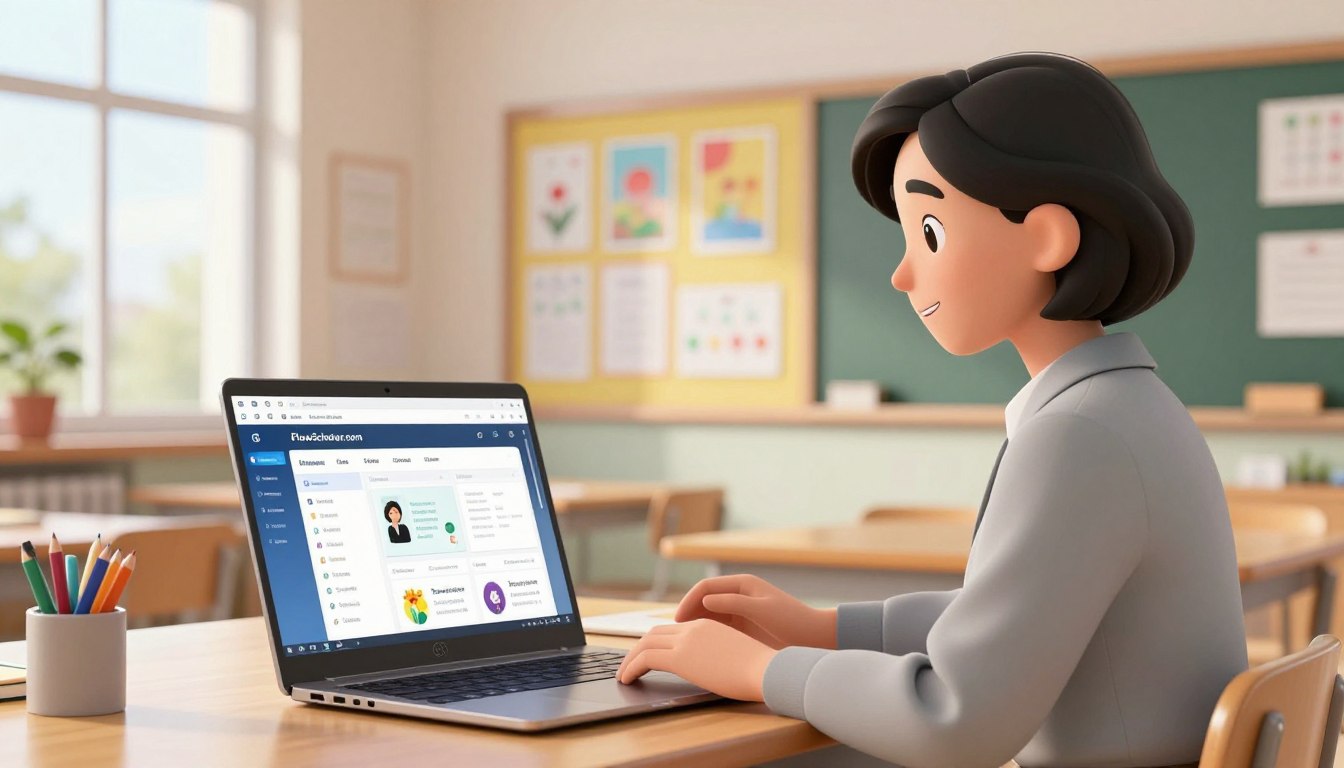
FlowScholar speeds routine planning by converting a prompt into a full lesson plan inside Google Docs. Educators report building a lesson, quiz, and presentation slides in a fraction of the usual time.
Emily Kirby, a High School teacher in Boca Raton, says she would be lost without AI solutions designed with teachers in mind. The platform acts like a versatile assistant: it drafts assignments, suggests activities, and frames questions that match any topic.
Teachers can drop a short text or video into the generator and get a polished classroom sequence. That sequence includes formative quizzes and immediate feedback routines that help students stay focused during the day.
- Quick plans: lesson plans and slides created inside Google Docs.
- Engaging activities: quizzes and assignments aligned to standards.
- Immediate feedback: routines that support every student in class.
| Feature | What it Produces | Typical Time Saved |
|---|---|---|
| Google Docs integration | Lesson plan + slides | 40–70 minutes |
| Quiz generator | Formative checks with answers | 20–30 minutes |
| Activity assistant | Hands-on tasks and assignments | 30–50 minutes |

Enhancing Student Engagement Through Personalized Feedback
When feedback pinpoints a next step, students gain confidence and accelerate their learning.
Differentiating Learning for Every Student
Personalized feedback helps each student move from error to understanding. It guides the next attempt and clarifies what success looks like at any grade level.
FlowScholar lets instructors generate targeted assignments and activities that match a learner’s level. Short scaffolds in text and model answers turn dense topics into clear tasks.
Timely responses matter: when students get fast, specific notes on their student work, they revise more effectively and retain core ideas.
- Targeted support: differentiated materials meet varied needs without extra prep.
- Actionable questions: scaffolded prompts help students practice key skills.
- Better outcomes: focused feedback raises engagement and mastery across the class.
For schools exploring scalable methods to boost pupil interaction, see research on enhancing student engagement and practical implementation strategies.
Integrating AI into Your Existing Classroom Workflow
When AI sits inside familiar apps, educators gain time to refine instruction instead of wrestling with new systems.
Brisk Teaching earned a 93% Common Sense Privacy Rating — the highest among current AI options for schools. That level of privacy makes it easier for schools to adopt assistants while protecting students and materials.
Integration works best when the feature set lives where staff already work. Embedding functionality in Google Docs means lessons, quizzes, and text edits appear in the same place as everyday planning.
Use AI to adapt any lesson or topic so it matches a class’s needs. Educators can generate tailored text and examples that make a subject more relevant to students without extra prep time.
- Seamless workflow: tools inside familiar apps reduce friction.
- Privacy-first: high ratings ensure safe handling of student data.
- Scalable adoption: secure, intuitive platforms smooth the transition for the whole school.
| Integration Point | Benefit | Typical Result |
|---|---|---|
| Google Docs embedding | Work stays in one place | Faster lesson edits; consistent materials |
| Privacy-certified platform | Protected student data | District approval; wider use |
| Adaptive text generation | Topic relevance | Higher engagement from students |
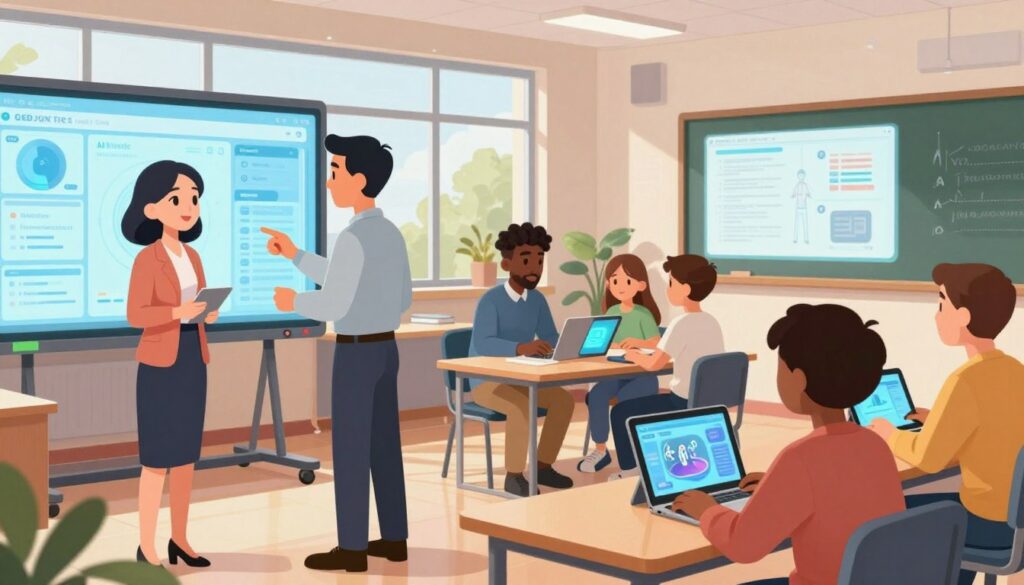
For practical steps to integrate AI into existing systems, explore how to integrate AI tools into an existing tech and plan a phased rollout that keeps learning first.
Comparing Top AI Platforms for Modern Classrooms
District leaders now weigh AI platforms by how fast they turn a raw idea into a usable lesson plan. Practical performance—how a system generates quizzes, slides, and reading materials—often decides adoption.
Leveraging Specialized AI Assistants
Specialized assistants can build a lesson or assignment tailored to a specific grade level. They produce scaffolded text, sample answers, and targeted feedback so a student sees next steps fast.
Utilizing Multimedia Content Generators
Multimedia generators let educators drop a video and get guided questions, a related reading passage, and a quiz. That workflow turns a single clip into a full lesson sequence with minimal planning time.
Exploring Creative Music and Audio Tools
Music and audio generators help make a topic memorable. Short songs, chants, or narrated summaries give students another path to recall key ideas and retain complex material.
| Feature | What it Produces | Best for |
|---|---|---|
| Quiz generator | Formative quizzes with answers | Frequent checks of student understanding |
| Video-to-lesson generator | Guided questions, text analysis, slides | Lessons built around a video topic |
| Audio/music generator | Short songs, summaries, audio prompts | Memory aids and engagement |
| Specialized assistant | Grade-level plans and assignments | Customized plans for each grade level |
When choosing a platform, look for features that save time and support personalized feedback. For a curated list of options, see AI tools for classrooms.
Scaling AI Adoption Across School Districts
Successful scale depends less on tech hype and more on steady support that aligns with school priorities. District leaders must pair clear planning with privacy safeguards and measurable goals.
The Ottawa Catholic School Board rolled out safe, student-facing AI to serve 53,000 students. That program shows how central support and policy produce broad buy-in.
Smaller districts also offer useful lessons. Barbers Hill ISD—serving 8,000 students—made skeptics into advocates by embedding tools into existing teacher workflows.
Hauppauge Public Schools, with 3,200 students, focused on professional development to build capacity and lift learning outcomes for every student and teacher.
- Strategic planning: address local needs and clear rollout steps.
- Ongoing support: professional learning and coaching drive adoption.
- Equitable access: scaling ensures each student benefits from consistent practices.
For practical case studies on district rollout, read how three districts scaled AI across classrooms at how three districts scaled AI.
Conclusion
When planning becomes routine, educators reclaim moments that matter most with students.
FlowScholar.com provides the essential resources modern teachers need to produce high-quality content while saving valuable time. By integrating these features into your classroom, you can deliver personalized feedback and the targeted support every student deserves.
Explore how AI can transform lesson planning and student engagement. Visit https://www.flowscholar.com to learn how the platform can streamline workflows and improve outcomes.
Start your journey toward a more efficient, effective classroom by adopting the right AI tool for your needs—small changes lead to big gains.
FAQ
How does FlowScholar help teachers create more materials with less prep time?
FlowScholar streamlines lesson planning by automating routine tasks—generating slides, quizzes, and reading assignments—so educators spend less time on prep and more on instruction. It integrates with Google Docs and common school platforms to produce editable resources that match grade level and standards, speeding up daily planning and assignment creation.
What makes FlowScholar different from general AI platforms?
FlowScholar focuses on classroom needs: personalized feedback, differentiated activities, and student-facing assignments. Unlike broad AI tools, it offers features tailored to learning—rubrics, formative assessment support, and templates for presentations and assessments—while preserving teacher control over pedagogy and student data.
Can FlowScholar reduce administrative workload like grading and reporting?
Yes. The platform provides automated grading for objective items and generates formative insights for open responses. It compiles student work into reports teachers can review or export, reducing paperwork and freeing time for targeted interventions and lesson refinement.
How does FlowScholar support differentiated instruction and personalized learning?
FlowScholar creates leveled materials and scaffolds based on student profiles. Teachers can generate multiple versions of an assignment or reading, add adaptive prompts, and deliver personalized feedback. This makes it easier to meet diverse needs within one class period.
Is FlowScholar compatible with existing classroom workflows and tools?
Yes. It integrates smoothly with learning management systems and productivity suites like Google Workspace. That allows teachers to import rosters, sync assignments, and push materials directly to students—minimizing disruption to established routines.
What types of multimedia can FlowScholar generate?
FlowScholar supports slides, short videos, audio clips, and interactive quizzes. These multimedia options help diversify instruction and engage students through varied formats, including supports for presentations and short assessments suitable for hybrid or in-person lessons.
How secure is student data within FlowScholar?
FlowScholar follows industry-standard security and privacy practices to protect student information. It supports district-level controls, role-based access, and secure export of student work—ensuring compliance with school policies and protecting classroom data.
Can FlowScholar help scale AI adoption across a school or district?
FlowScholar offers admin features for district rollout: bulk provisioning, shared resource libraries, and analytics to track usage and impact. These tools help instructional leaders implement consistent practices and measure outcomes across schools.
How quickly can a teacher start using FlowScholar effectively?
Teachers can begin generating usable materials within a single planning session. FlowScholar provides templates, sample lesson plans, and guided prompts to shorten the learning curve, enabling immediate gains in efficiency and quality of materials.
Does FlowScholar offer support for creating assessments and rubrics?
Yes. The platform includes assessment generators and customizable rubrics aligned to standards. Teachers can produce quizzes, exit tickets, and project rubrics that simplify evaluation and provide consistent feedback to students.
What role does FlowScholar play in teacher professional growth?
FlowScholar acts as a teaching assistant and coach—offering model lessons, best-practice examples, and analytics that highlight areas for instructional improvement. This supports reflective practice and faster iteration on lesson design.
How does FlowScholar enhance student engagement during lessons?
By offering interactive activities, personalized feedback, and multimedia resources, FlowScholar helps teachers design lessons that connect with students’ interests and learning levels. These features promote active participation and sustained attention.
Are there tools for generating student-facing materials like slides and worksheets?
Yes. FlowScholar generates editable slides, handouts, and worksheets that teachers can adapt quickly. These resources are formatted for classroom use and can be exported to common file types for printing or digital distribution.
Can FlowScholar support creative projects involving audio or music?
FlowScholar integrates with creative audio and music generators to support multimedia projects. Teachers can incorporate soundtracks, audio prompts, or student audio submissions into lessons to expand creative learning opportunities.
How does FlowScholar handle adaptation for different grade levels?
FlowScholar tailors materials by grade band and skill level. Teachers select a target grade, and the system adjusts vocabulary, complexity, and scaffolded supports—ensuring age-appropriate lessons for elementary through secondary students.
What reporting features are available to track student progress?
The platform offers dashboards and exportable reports that summarize assessment results, engagement metrics, and assignment completion. These insights help teachers and instructional leaders make data-informed decisions.
Does FlowScholar support collaboration among staff and departments?
Yes. Shared libraries and collaborative editing enable teams to co-create materials, align curricula, and distribute best-practice lesson plans across departments or grade levels—promoting consistency and efficiency.
What training and onboarding options are available for schools?
FlowScholar provides professional development workshops, step-by-step guides, and responsive support. Districts can schedule training sessions to accelerate adoption and ensure teachers maximize the platform’s benefits.
How affordable is FlowScholar for schools with tight budgets?
FlowScholar offers scalable licensing and tiered plans designed for classroom and district budgets. Pricing focuses on value—reducing prep time, lowering administrative burden, and improving instructional outcomes.
Can teachers customize outputs to match their pedagogy and standards?
Absolutely. Teachers retain full control over generated materials and can edit text, adjust pacing, and align resources to state or district standards—ensuring that outputs reflect their instructional approach and learning goals.