“You do not rise to the level of your goals. You fall to the level of your systems.” — James Clear.
The Daily Boost is framed as a compact ritual for busy minds. It offers one short touchpoint each day that reshapes a week of study, planning, or creative work. The idea is simple: small, repeatable actions build momentum.
In practice this means quick prompts to spark thought, short quotes to refocus attention, and tiny, tangible items that remove friction from learning. These elements fit U.S. back-to-school energy — renewed goals and the search for structure — while serving professionals and families as well.
Readers can adopt this system now. The article previews how an Education AI tool supports steady practice and clearer follow-through. Expect fewer stalled starts, less decision fatigue, and a direct path from daily steps to long-term growth.
Key Takeaways
- One short touchpoint daily can change the pace of a week.
- Micro elements—prompts, quotes, small tools—remove learning friction.
- An Education AI tool makes the ritual repeatable and actionable.
- Adopting the system reduces decision fatigue and boosts consistency.
- Small inputs delivered daily compound into clearer thinking and better recall.
Why a Daily Boost Works for Learning, Even When Time Is Tight
Small, intentional steps make progress possible during commutes and short breaks. Micro-learning lowers the startup cost of practice: when a task fits in a pocket of minutes, people use it. That reduces friction and raises the chance of consistent action.
Pre-decided next steps protect attention. When the next micro-task is clear—a one-line prompt, a short quote, or a tiny tool—execution becomes simpler. Habit replaces decision-making, so follow-through is more reliable.
Keeping content rotating preserves curiosity. Short, varied activities prevent boredom and reduce burnout. Over weeks, fresh cues keep engagement voluntary and steady.
Compounding matters: one brief task can improve a single note page; repeated, it upgrades a full semester of work and builds confidence. Quotes act as rapid cognitive resets—quick reframes that move someone from avoidance to action.
- Friction reducers—small templates, checklists, or tools—make starting effortless.
- Results include better retention, clearer metacognition, and higher-quality output without adding hours.
- Teachers, students, and professionals can all apply the same mechanics.
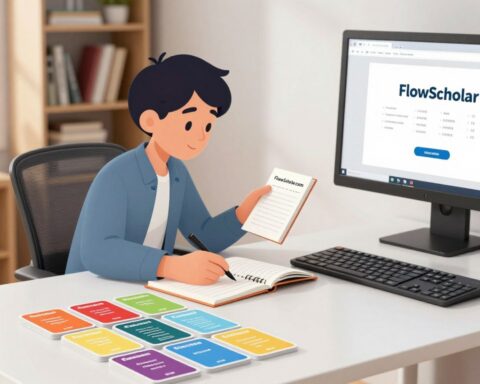
Pairing this ritual with an Education AI Tool sharpens consistency and clarity—visit https://www.flowscholar.com to see an example of how the system supports repeatable, short practices.
FlowScholar Daily Boost: Fresh Prompts, Quotes, and Learning Gifts
A compact daily bundle delivers one short exercise, a crisp line of inspiration, and a small tool to make the next step easier. This trio is built to fit into tight routines so habits form without heavy planning.

What you’ll get each day
The bundle includes three clear parts: a prompt to drive active thinking, a quote to reset focus, and a tiny gift idea that supports follow-through in the real world.
Who it helps in the U.S.
- Teachers: quick starters for planning and classroom culture.
- Younger kids: confidence-building, playful tasks.
- Middle schoolers: organization and identity prompts.
- High schoolers: independence-focused practice for performance.
- Lifelong learners: steady skill-building and consistency.
How the Education AI tool supports study and content creation
FlowScholar acts as an Education AI Tool that turns each cue into structured notes, study plans, summaries, or practice questions. It also helps transform a short idea into usable content—outlines, drafts, or discussion hooks—so a single touchpoint fuels longer work. Learn more at https://www.flowscholar.com.
Ways to use the bundle
- Classroom track: bell-ringer plus 5-minute reflection.
- Home track: a homework ramp with a parent check-in.
- On-the-go track: micro-review and a clear next step.
Guardrail: prioritize consistency over intensity; the aim is to lower cognitive load and raise completion rates, note quality, recall cues, and classroom confidence.
Fresh Prompts You Can Use for School, Study Sessions, and Better Content
Use a compact reflective cue to name emotions, set a goal, and choose one concrete action.
Reflection templates for transitions normalize nerves while turning feeling into a plan.
- “Today I’ll measure success by…”
- “One question I want answered is…”
- “The smallest step I can take next is…”
Study templates for note-taking and recall
Turn notes into study tools with short tasks that fit one page.
- Extract three key concepts; define each in your own words.
- Create one exam-style question per page.
- Write what you remember before checking notes; then correct.
Creative templates for projects and presentations
Use constraints to spark original work: a hook, an alternate viewpoint, or a rule (e.g., explain without the top three common words).
Map prompts to outcomes: reflection → clarity and calm; study → retention and accuracy; creative → originality and communication skill.
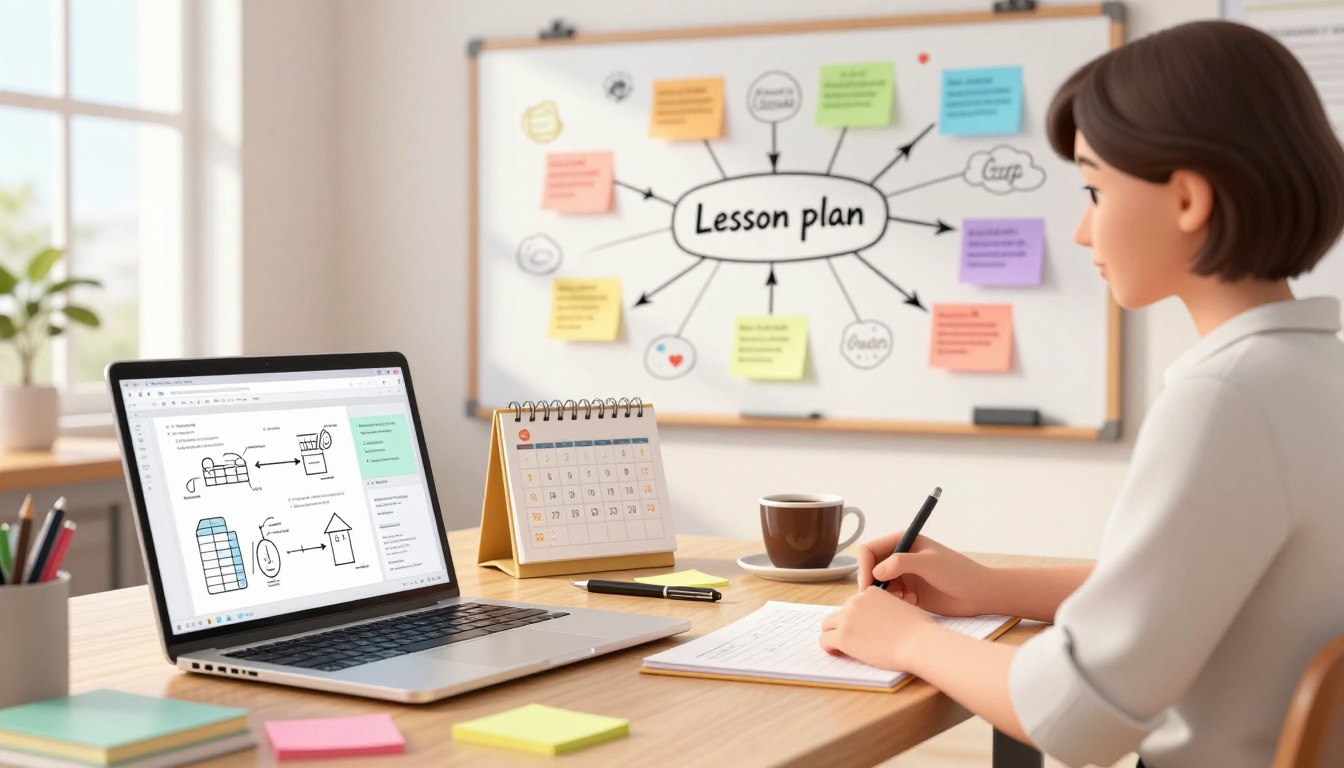
Educators and professionals can scale these by swapping topic nouns while keeping the routine. For tools that transform a single cue into a study guide, flashcards, or a draft, see this note on prompt meaning and back-to-school ideas at gift suggestions.
“Small, repeatable inputs produce tangible outputs when paired with a system.”
Quotes and Learning Gifts Inspired by Back-to-School Season
Concise cues and compact tokens turn a busy week into a sequence of reliable steps. Short lines and small items act as consistent nudges that reduce friction for both teachers and students.
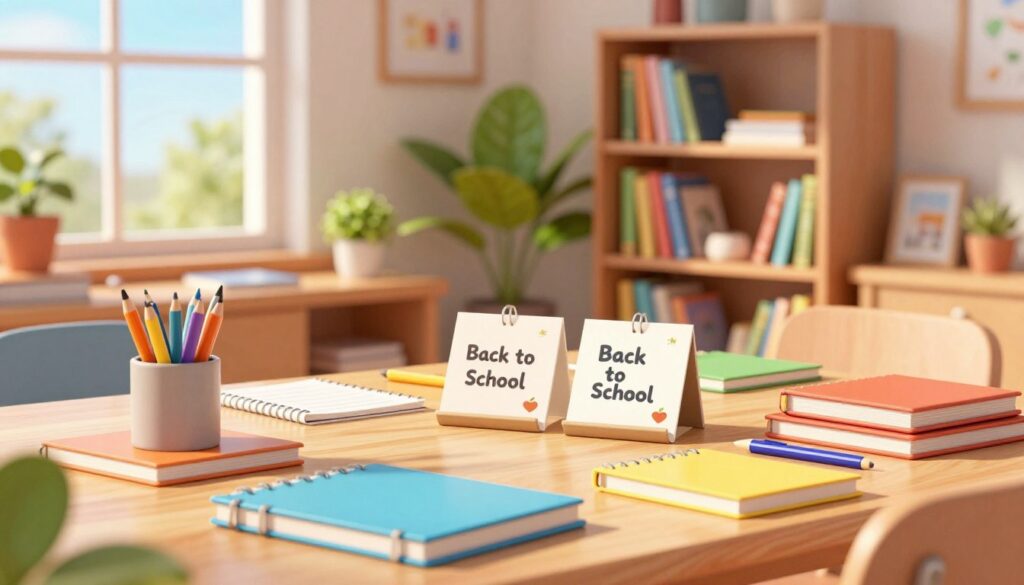
Quote drops that motivate teachers and students through the school year
Quote drops are short, identity-focused lines placed at the top of a page or at class start. Teachers use them to set tone; students use them to calm nerves; professionals use them to refocus before deep work.
Teacher appreciation: practical, high-utility picks
- Flair pens — improve grading and make annotation faster.
- Personalized mugs — support a daily ritual and signal appreciation.
- Personalized tote bags — ease logistics for materials and prep.
Confidence builders for kids and kindergarten
- Emoji bookmarks — spark reading excitement.
- Cartoon stickers — immediate positive reinforcement.
- Alphabet/number puzzles — playful, low-pressure practice.
Organization and self-expression for middle school
- Locker letter boards — visible reminders and personal notes.
- Personalized pencil pouches — reduce loss and boost identity.
Independence enablers for high school
- Mini notepads — capture tasks quickly at any time.
- Custom lanyards — manage IDs and keys with style.
- Book lights and museum vouchers — enable flexible, motivated study.
How to pair a token with a short cue for maximum impact
Match the item to the prompt type: organization items pair with planning prompts; creative items pair with ideation prompts; confidence items pair with reflection prompts.
- Locker letter board + weekly intention prompt — clarifies focus each Monday.
- Mini notepad + “3 priorities for today” prompt — captures action quickly.
- Flair pens + “highlight thesis + evidence” prompt — improves active reading.
“Gifts that reduce friction let learners do more with the same time and less stress.”
| Recipient | Example Item | Main Benefit |
|---|---|---|
| Teachers | Flair pens, personalized mug, tote bag | Efficiency, daily ritual support, easier logistics |
| Kids (K) | Emoji bookmarks, stickers, puzzles | Confidence, positive reinforcement, playful learning |
| Middle School | Locker letter board, pencil pouch | Organization, self-expression |
| High School | Mini notepad, lanyard, book light, museum voucher | Independence, flexible study, enrichment |
Practical intent: these items are not about spending; they are friction reducers that protect attention so small rituals compound into real gains. For ongoing support and curated daily cues, see https://www.flowscholar.com.
Conclusion
One compact routine—reflect, act, use a small aid—turns scattered effort into steady progress.
The core mechanism is simple: short prompts drive action; brief lines reset mindset; tiny tools remove start-up friction. Together they form a sustainable study loop that fits classrooms, households, and busy professionals across the U.S.
Consistency beats intensity: showing up often compounds into clearer notes, stronger recall, and more confident writing and presentations. Start by choosing one prompt type (reflection, study, or creative), one quote cadence (daily or weekly), and one supportive item to use immediately.
Explore the education AI tool at https://www.flowscholar.com to implement this system with guidance and templates. Begin small; scale with evidence.
FAQ
What is the FlowScholar Daily Boost and who is it for?
The FlowScholar Daily Boost is a compact learning resource designed for busy learners—teachers, K–12 students, parents, and lifelong learners in the U.S.—that delivers short prompts, motivational quotes, and small learning gifts to support daily progress. It fits into tight schedules and helps sustain curiosity and study momentum.
How much time does each Daily Boost take to use?
Each boost is built for micro-learning: most prompts or activities take five to fifteen minutes. That makes them ideal for a class warm-up, a quick study break, or a brief creativity exercise between tasks.
What types of prompts and activities are included?
Content includes reflection prompts for first-day nerves, study prompts for note-taking and recall, and creative prompts for writing and presentations. Each item aims to spark thinking quickly and be adaptable for class, home, or individual study sessions.
Are the quotes and gifts suitable for different grade levels?
Yes. Quotes are chosen to motivate across age groups, while gifts are tailored by level—emoji bookmarks and alphabet puzzles for early learners, organization tools for middle schoolers, and independence-focused items like mini notepads or museum vouchers for high school students.
How can teachers use the Daily Boost in class?
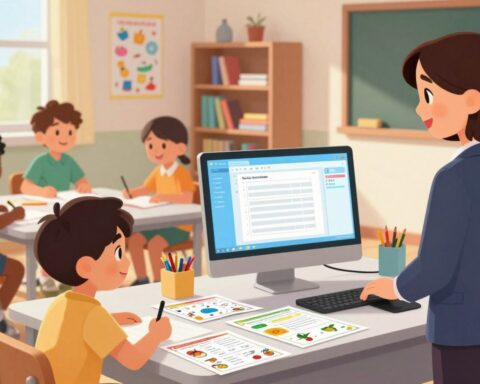
Teachers can use a prompt as a bell-ringer, an exit-ticket reflection, a group discussion starter, or pair a prompt with a small gift to reinforce positive behavior or celebrate progress. Suggestions include quick writes, pair-share, or short formative checks tied to lesson goals.
Can the Daily Boost support content creators or lesson planners?
Yes. Prompts and quotes are crafted to inspire lesson ideas, journal prompts, social posts, and short-form videos. They help creators overcome writer’s block and generate micro-lessons or engaging classroom hooks.
What are “learning gifts” and how should they be paired with prompts?
Learning gifts are small, practical items—pens, personalized mugs, stickers, letter boards—that reinforce learning or recognition. Pair a tangible gift with a prompt as rewards for goal completion, or use gifts to make reflection activities memorable and motivating.
Is there an Education AI tool involved and how does it help?
The offering includes an Education AI tool that helps customize prompts, adapt difficulty, and generate variations for different age groups or lesson objectives. It streamlines content creation and tailors suggestions to classroom or individual learning needs.
How often is content refreshed and why does that matter?
Content is refreshed frequently to prevent burnout and keep curiosity high. Regular updates ensure prompts remain timely, culturally relevant, and aligned with seasonal cycles like back-to-school, which boosts engagement and sustained learning.
Are there privacy or safety considerations for students using the tool?
Yes. The service follows standard educational privacy practices: minimal data collection, secure storage, and options for teacher-managed accounts. Schools and parents should review the privacy policy and configure settings to meet district or household guidelines.
How can parents use the boosts at home to support study habits?
Parents can incorporate a daily prompt as part of a homework routine, use quotes to encourage resilience, and offer small learning gifts as rewards for consistent effort. Short, consistent activities help build study habits without overwhelming family schedules.
Is the Daily Boost adaptable for remote or hybrid learning environments?
Absolutely. Prompts and micro-activities are designed for both in-person and virtual settings. Educators can share prompts in a learning management system, use them during synchronous sessions, or assign them asynchronously for flexible participation.
How do I get started and receive the Daily Boost?
Getting started typically involves signing up through the service portal, selecting age ranges or classroom settings, and choosing delivery preferences (email, app notification, or LMS integration). Setup options let users tailor frequency and content focus.