“Education is what remains after one has forgotten what one has learned in school.” — Albert Einstein.
Teachers plan with care, yet students often forget. Memory fades by design; pressure and time expose predictable gaps.
Mini-assessments act as a practical bridge between learning science and daily instruction. These short, low-stakes retrieval moments help move knowledge from fragile short-term traces into lasting memory.
In this guide, recall means pulling ideas back for real tasks: discussion, writing, problem solving, and application—not last-minute cramming.
The article moves from why forgetting happens, through prompt design, to where quick checks fit in class routines. Expect ready-to-run activities (brain dumps, quick writes, stoplight reading), planning shortcuts, and an option built around the Education AI tool FlowScholar.
Low-stakes promise: these strategies boost long-term memory, deepen connections, and give teachers clearer formative insight—without extra grading stress.
Key Takeaways
- Memory dynamics—not motivation—explain much student forgetting.
- Short retrieval moments make learning more durable and usable.
- Recall here focuses on real-world application, not cramming.
- Includes ready activities and planning shortcuts for classroom use.
- Teachers gain clearer formative data and students gain confidence.
- Further practical examples and research appear in related resources like retrieval strategies for middle and high.
Why students forget and what the science of learning says about memory
Instructional gains frequently slip away unless the brain is asked to retrieve them. Forgetting is normal and functional: the nervous system filters information so learners avoid overload. Exposure alone does not equal durable learning.
The four cognitive steps behind lasting learning
- Attention: what the learner notices first.
- Encoding: how new information is understood and linked.
- Storage: how the brain keeps information over time.
- Retrieval: how learners pull information back for use.
Instruction often overserves encoding—notes, slides, explanations—while underserving retrieval. Yet retrieval practice actively strengthens pathways and builds reliable access for future tasks.
Why retrieval beats rereading
Rereading feels fluent because the material is visible. That ease hides fragility: students may recognize text but fail to produce it. Retrieval forces reconstruction and cements long-term memory.
| Timeframe | Typical loss | Classroom implication |
|---|---|---|
| 1 hour | More than 50% | Insert quick recall within the hour |
| 24 hours | Nearly 65% | Plan a brief review that requires retrieval |
| 1 week | Substantial unless retrieved | Schedule touchpoints across the week |
Research shows retrieval practice supports transfer and metacognition, not just facts. For practical guidance on classroom forgetting and remedies, see why students forget.
What mini-assessments are and how they support retrieval practice
Short retrieval moments give teachers a window into current student understanding. These brief checks—usually one to five minutes—ask learners to pull ideas from memory rather than reread notes.
Definition: Mini-assessments are targeted prompts that reveal what students can recall right now. They function as practice, not high-stakes grading.
Mini-assessments vs. traditional quizzes
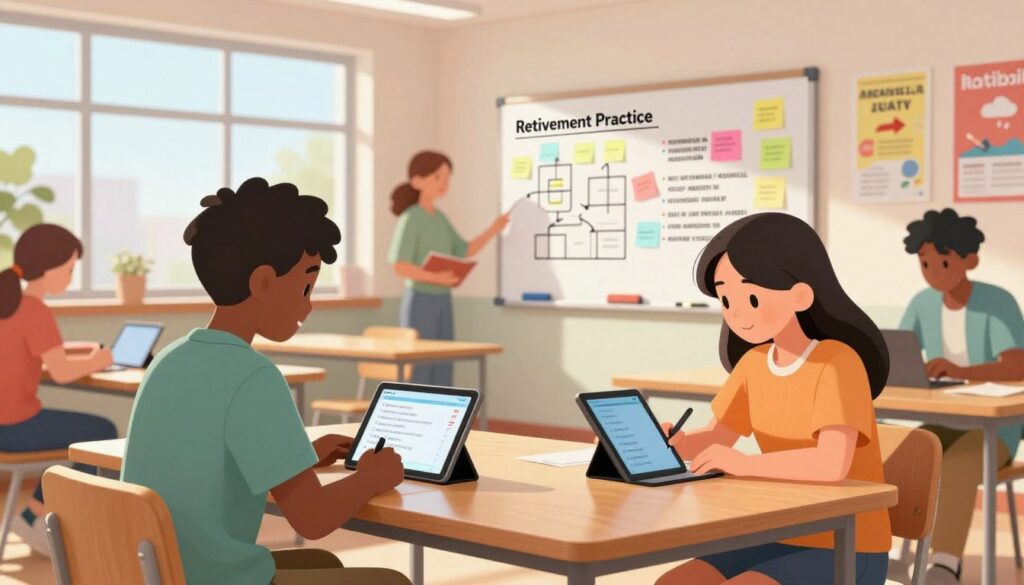
Traditional quizzes often signal ranking and judgment. Mini-assessments instead signal diagnosis and next-step instruction. That framing changes how students engage and reduces anxiety.
Desirable difficulty
Effective prompts strike a balance: enough stretch to require thought, not so hard that students guess. Mix straight recall, applied prompts, and comparisons to build durable understanding.
Low-stakes language and quick feedback
Teachers can say: “This is practice; mistakes are data.” That language, plus fast feedback, prevents misconceptions from sticking and keeps students willing to participate.
- Fast: Designed for real classroom time, not added load.
- Diagnostic: Shows gaps and directs next instruction.
- Scalable: Works as warm-ups, mid-lesson checks, or exits.
For practical examples and templates, see this retrieval practice guide.
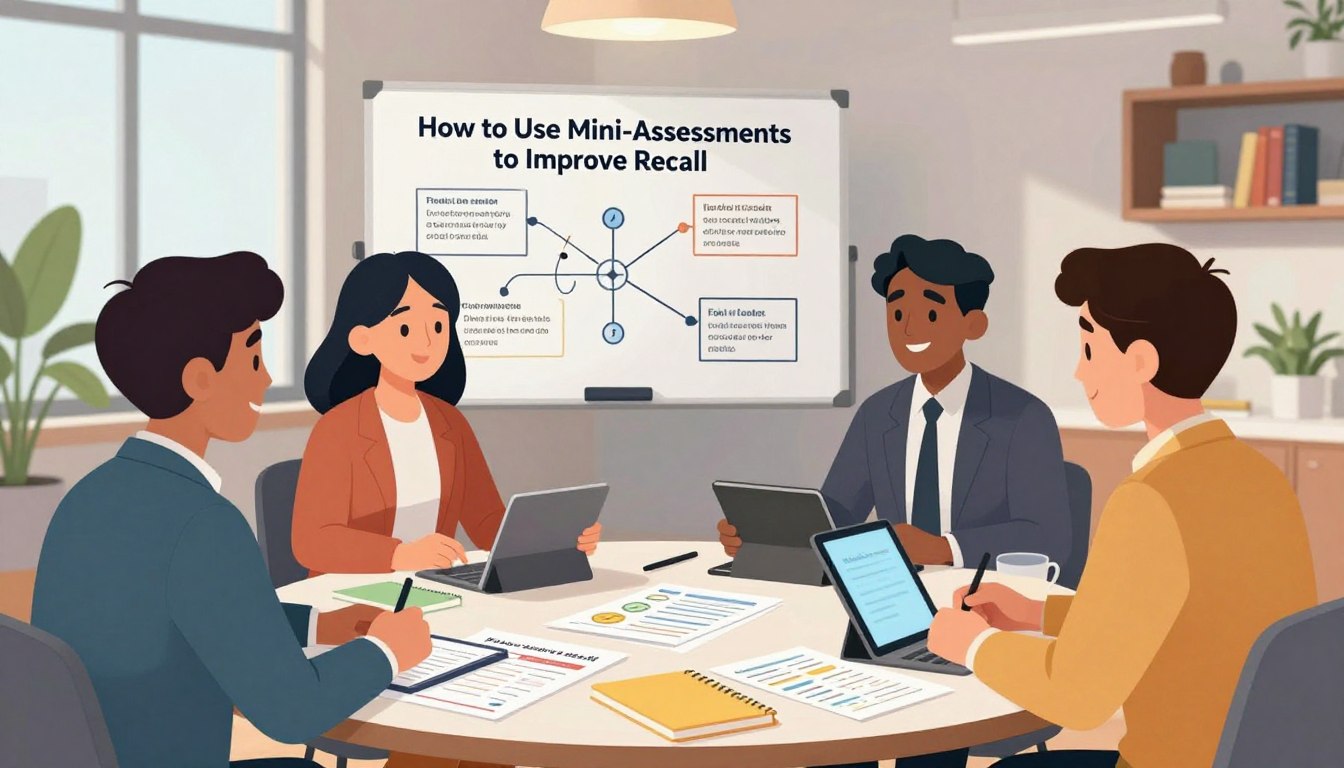
How to Use Mini-Assessments to Improve Recall in daily instruction
Small retrieval checks can be woven into routine class moments so learning stays active across the week. These quick prompts make retrieval predictable and manageable for students while protecting instructional time.
When during class
Place brief checks at three high-impact points: a start-of-class “do now” that reactivates prior learning, a mid-lesson pause that interrupts forgetting, and an end-of-class exit reflection that stabilizes today’s content.
Spacing and interleaving
Space retrieval across minutes, a day, and a week. Revisit yesterday’s key idea, then last week’s anchor, then today’s target. That spacing strengthens connections between concepts and supports long-term retention.
Retrieve first, check notes second
Encourage students to put pencils down for ten seconds, write from memory, then open notes to check. Use partial-credit thinking: write what you do remember, then circle gaps. This routine maintains desirable difficulty and helps students gauge understanding.
Keeping checks short and meaningful
- One clear prompt, three minutes, one follow-up question—”Why?” or “How do you know?”
- Interleave prompts such as: “How is today’s concept similar to or different from ___?”
- Normalize brief struggles: require an attempt, then offer quick feedback.
“Short, well-placed retrieval beats extra lecture time when the goal is durable learning.”
Designing effective mini-assessments that improve retention and thinking
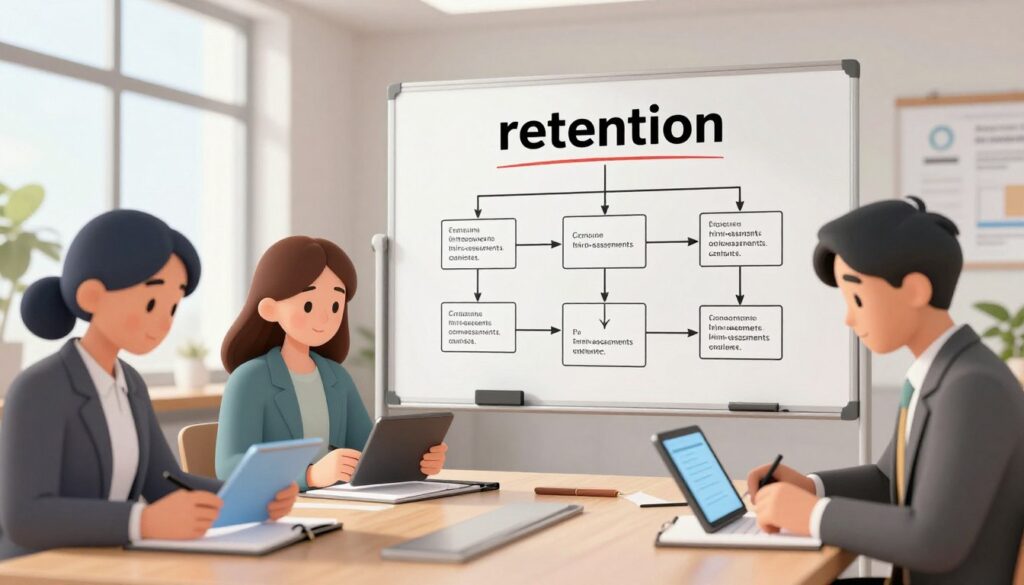
Clear formats and prompt wording turn a minute of recall into lasting learning. Design choices shape whether a quick check reveals gaps or builds durable knowledge. Keep tasks focused, brief, and varied so the mind reconstructs information rather than copies it.
Question formats that work
Rotate question styles to target different cognitive moves. True/false and matching speed discrimination. Short answer demands precise labels. Open response asks students explain reasoning.
Writing prompts that make students write from memory
Use prompts that force retrieval: “Define ___ without your notes,” “Explain why ___ causes ___,” and “Give an example and justify it.” These patterns push writing that tests and builds vocabulary, concept links, and deeper thinking.
Closed-book vs. open-book
Default to closed-book for desirable difficulty; switch to open-book when the goal is sourcing or complex synthesis. Alternating settings trains both recall and verification skills in practice.
Fast, corrective feedback
Feedback must be quick and diagnostic. A 30-second reveal, model answer, or peer check halts encoding errors and prevents misconceptions from sticking. Patterns in errors then guide the next lesson.
| Format | Best use | Example |
|---|---|---|
| True/False | Quick discrimination | One-sentence concept checks |
| Short Answer | Precise recall | Define key vocabulary |
| Image / Venn | Pattern and categorization | Sort items; sketch RAPS mnemonic |
“Well-chosen prompts plus prompt feedback turn brief retrieval into planning intelligence.”
Mini-assessment strategies teachers can run with zero grading load
A set of low-pressure routines gives teachers clear signals about what students remember right now. These strategies require little planning and virtually no grading, yet they produce usable data for instruction.
Brain dumps
After 10–20 minutes of instruction, students write everything they recall. Teachers scan patterns, note gaps, and use that intel for the next minute or the next lesson. This is diagnostic, not punitive.
Read, pause, retrieve
Students read a short passage, close it, and reconstruct key ideas from memory. Then they compare notes and clarify errors. This activity strengthens comprehension and real-time self-monitoring.
No-quiz quick writes
Prompts or sentence stems get students writing brief responses. Focus on vocabulary and connections rather than scores. Track progress with completion checks or target word counts.
Mini-quizzes with peer or self-check
Five rapid items—true/false, matching, image prompts, open response—followed by peer-check give quick feedback. Add a “blast-from-the-past” item to connect current content with prior learning.
Stoplight reading
Students mark red/yellow/green for understanding, then immediately retrieve: summarize, list what they remember, or answer a focused prompt. This links attention cues with metacognition and recall.
Breathe, retrieve, reflect
Students self-rate retrieval: 1 = nailed it, 2 = I’ve got it, 3 = I forgot. Partners then fill gaps. The routine normalizes forgetting and builds confidence in retrieval practice.
Weekly routines
Do-now sheets, short exit reflections, and a Friday free-recall box embed retrieval across the week. Teachers can spot-check samples; the learning gain comes from the act of retrieval, not from grading.
| Routine | Main benefit | Grading load |
|---|---|---|
| Brain dumps | Reveals organization of ideas | None—sample for patterns |
| Read, pause, retrieve | Improves comprehension and monitoring | Low—peer review or checklist |
| No-quiz quick writes | Builds vocabulary and fluency | Minimal—completion or spot-check |
| Mini-quizzes | Fast feedback and connections | Low—self or peer-check |
| Stoplight reading | Combines attention with recall | None—visual signals + quick retrieval |
“Small, repeatable retrieval routines produce more durable learning than extra graded assignments.”
Next step: for teachers who want to scale these activities, consider building quick items with GPT-powered educational tools like the resources on GPT-powered educational tools for teachers.
Make mini-assessments faster to plan with an Education AI Tool
Busy educators need retrieval routines that fit into planning windows, not add to them. FlowScholar automates the planning process and produces classroom-ready content in seconds.
How FlowScholar generates aligned prompts and quick items
Tell FlowScholar a lesson objective and it drafts mixed-format items: short recall prompts, quick writes, and mini-quizzes that match your content. Teachers get multiple versions for differentiation without extra prep time.
Streamlining feedback and tracking understanding
The tool returns instant answer keys, misconception flags, and a teacher-facing summary that highlights patterns in student information over time.
Use these outputs for fast in-class checks, retrieve-then-check routines, or interleaving questions that connect today’s learning with prior lessons.
Quick implementation and next steps
Generate differentiated sets, adjust difficulty, and export copies for students in under five minutes. FlowScholar speeds execution so teachers focus on instruction and responsive reteaching—not manual item writing.
Ready now: build your next mini-assessment with FlowScholar at https://www.flowscholar.com and help students make learning stick.
Conclusion
A brief prompt at the right moment converts short-term traces into tools students can use later. Forgetting is normal, but memory grows when educators build predictable retrieval moments into class routines.
Short, frequent checks—at the start, mid-lesson, and end—fit naturally into a study plan and keep learning active. Keep tasks low-stakes, slightly challenging, and varied; follow with quick feedback that stops errors from sticking.
These strategies raise retention across the week, clarify student thinking, and make prior content available when new ideas arrive. Start with one routine (a brain dump or quick write), run it consistently, and let what the data shows guide pacing and reteaching.
When teachers normalize forgetting and systematize retrieval, students build stronger memory, firmer learning habits, and greater independence.
FAQ
Why do students forget material so quickly?
Memory fades because encoding and storage are incomplete; attention during learning, weak organization of ideas, and few retrieval opportunities accelerate forgetting. Spacing retrieval and prompting active recall rebuilds connections and slows the forgetting curve.
What are the four cognitive processes behind learning?
Learning depends on attention (focus on input), encoding (turning input into mental representations), storage (strengthening those representations), and retrieval (accessing stored knowledge). Mini-assessments target retrieval, which sharpens storage and future access.
Why does retrieval strengthen long-term memory more than rereading?
Attempting recall forces effortful reconstruction of knowledge, which creates stronger retrieval paths than passive review. Retrieval also reveals gaps, prompting targeted feedback that prevents misconceptions from sticking.
How quickly does the forgetting curve affect retention—over an hour, a day, and a week?
Forgetting is steepest soon after learning: much loss can occur within an hour without recall, more by the next day, and further decline by a week. Regular, spaced retrieval significantly flattens that curve and preserves key ideas.
What exactly are mini-assessments and how do they support retrieval practice?
Mini-assessments are brief, targeted prompts—questions, short writes, or quick matches—that ask students to recall or apply content from memory. They create low-effort retrieval events that strengthen neural links and improve long-term retention.
How do mini-assessments differ from traditional quizzes?
Mini-assessments are low-stakes, frequent, and short; quizzes tend to be longer and higher-stakes. Minis focus on practice and feedback rather than grading, which lowers anxiety and increases willingness to try difficult retrieval tasks.
What is desirable difficulty and how should teachers design questions around it?
Desirable difficulty means crafting prompts that require effort without being discouraging. Questions should push students to think—connect concepts or generate examples—while remaining achievable with some struggle to boost learning gains.
How can teachers frame mini-assessments as low-stakes?
Use no-grade policies, anonymous responses, rapid feedback, or participation points. Emphasize learning goals, present errors as data for growth, and normalize forgetting so students view attempts as practice, not punishment.
When is the best time during class to place mini-assessments?
Strategic placement includes the start (do-now retrieval), mid-lesson pauses (check comprehension), and end-of-class exit reflections (consolidation). Each timing serves different goals: readiness, correction, and long-term storage.
How should content be spaced and interleaved across mini-assessments?
Space topics over days and interleave related concepts rather than blocking one idea for long. Mixing content forces discrimination and transfer, strengthening connections between ideas and improving flexible retrieval.
How can teachers encourage students to retrieve before checking notes?
Set a short time limit, prompt low-stakes confidence ratings, require an initial written attempt, and model the habit. Encouraging retrieval first yields truer diagnostics and enhances memory compared with immediate note-checking.
How can mini-assessments stay short without sacrificing depth?
Use focused prompts: one core question, a two-sentence explanation, or a single diagram label. Prioritize quality over quantity—target fundamental concepts or common misconceptions for deeper processing in a compact format.
Which question formats work best in mini-assessments?
Effective formats include short answer, single-concept true/false with justification, matching, image-based prompts, and concise open responses. Each encourages active retrieval and can assess different depth levels of understanding.
How should writing prompts be structured to force recall and explanation?
Ask students to write from memory a definition, a step-by-step process, or a brief argument that connects two concepts. Require a justification or example to ensure they reconstruct ideas rather than copy superficial phrases.
When is closed-book retrieval preferable to open-book practice?
Closed-book retrieval is best for strengthening pure recall and long-term retention. Open-book tasks suit higher-order application or synthesis once base knowledge is secure. Use both strategically across lessons.
What kind of feedback prevents misconceptions from sticking?
Timely, specific feedback that highlights errors, explains the correct reasoning, and provides a brief corrective example is most effective. Follow up with a quick retrieval task that requires applying the corrected idea.
How can teachers run mini-assessments with zero grading load?
Use self-check keys, peer review, automated tools, or quick class discussions. Practices like brain dumps, read–pause–retrieve, and stoplight reflections require no grading but yield rich diagnostic data.
What is a brain dump and how does it strengthen free recall?
A brain dump asks students to write everything they remember on a topic within a set time. It activates retrieval, surfaces organization gaps, and helps students and teachers identify which concepts need reinforcement.
How does read, pause, retrieve support comprehension?
Students read a short passage, pause to recall its main idea, then compare with the text. This cycle builds monitoring skills and reinforces memory by alternating encoding and retrieval in real time.
What are quick writes and how do they build vocabulary and creativity?
Quick writes are brief prompts that ask students to produce a sentence or short paragraph from memory. They promote active use of vocabulary, encourage generative thinking, and strengthen retention through production practice.
How can mini-quizzes be used for peer or self-check?
Provide answer keys or structured peer-pair protocols. Students quiz each other, discuss reasoning, and correct mistakes collaboratively. This approach reduces teacher grading load while preserving feedback benefits.
What is stoplight reading and why does it help metacognition?
Stoplight reading uses color-coded signals: green for understood, yellow for unsure, red for confused. Students retrieve key points, self-assess comprehension, and direct attention to areas needing review.
How does "breathe, retrieve, reflect" normalize forgetting and build confidence?
This ritual begins with a short breathing break, a focused retrieval attempt, and a reflection on progress. It reduces anxiety, frames mistakes as growth opportunities, and reinforces the habit of regular recall.
Which weekly routines embed retrieval most effectively?
Do-now sheets, blast-from-the-past questions that revisit older units, and exit reflections create predictable retrieval opportunities. Routine practice makes recall automatic and reveals trends in student understanding.
How can an Education AI tool speed mini-assessment planning?
AI tools can generate aligned questions, suggest desirable-difficulty prompts, and produce quick-write seeds or image-based items. They reduce planning time and help teachers scale retrieval practice across classes.
What features should teachers look for in a tool like FlowScholar?
Seek content alignment, customizable question banks, quick feedback workflows, and analytics for tracking patterns over time. These features streamline creation and reveal where instruction should pivot.
Where can teachers build a mini-assessment with FlowScholar?
Visit https://www.flowscholar.com to generate recall questions, mini-quizzes, and quick writes aligned to lesson goals. The platform aims to reduce planning time while improving formative practice.