Albert Einstein once observed, “Not everything that can be counted counts, and not everything that counts can be counted.” This wisdom resonates deeply in today’s classrooms. Educators possess more information than ever before, yet transforming this data into meaningful action remains a significant hurdle.
The fundamental challenge is not a lack of effort. Teachers diligently collect mountains of information from assessments, homework, and participation. However, traditional methods often lead to a reactive environment. Problems are identified too late for effective intervention.
This creates a paradox where valuable teaching time is consumed by administrative chaos. Educators find themselves juggling multiple files and reconciling conflicting data instead of focusing on personalized learning support. The system was never built for simplicity.
We now stand at a pivotal moment. The need for a streamlined approach is clear. Intelligent automation and real-time analytics can restore balance. They empower educators to move from simply collecting data to actively driving growth.
Key Takeaways
- Traditional data tracking methods often create administrative burdens for educators.
- An over-reliance on scattered spreadsheets leads to reactive, rather than proactive, teaching.
- The core issue is not the data itself, but the challenge of transforming it into timely insights.
- Valuable teaching time is lost to manual data management and reconciliation.
- Modern solutions focus on intelligent automation to simplify the process.
- The goal is to shift focus from data collection to driving personalized student growth.
- Real-time analytics provide the clarity needed for effective and timely interventions.
Introduction: When Tracking Progress Becomes a Full-Time Job
Educators frequently discover that their dedication to student progress tracking comes with an unexpected price: their own time and energy. What begins as essential assessment work often evolves into overwhelming administrative duties.
The Challenge with Traditional Methods
Traditional approaches rely heavily on manual systems like spreadsheets and templates. Teachers spend countless hours entering grades, attendance, and participation data.
This creates systematic inefficiencies that compound over time. Critical information becomes fragmented across multiple documents. Educators struggle with repetitive data entry instead of focusing on teaching.
Embracing a Data-Driven Approach
Modern solutions represent a fundamental shift from reactive record-keeping. They transform raw numbers into meaningful narratives about each learner’s journey.
Real-time analytics replace outdated spreadsheets, empowering teachers to make informed decisions. This approach enhances the educational experience while reducing manual work. Effective monitoring and evaluation systems provide the clarity needed for timely interventions.
The way forward involves intelligent automation that simplifies the process. It allows educators to focus on what truly matters: supporting student growth.
Understanding the Limitations of Spreadsheet-Based Tracking
Many educators find themselves wrestling with a fundamental paradox: the very tools meant to simplify progress monitoring often create the most significant administrative burdens. The core weakness of many monitoring systems is their inability to synthesize information from the multitude of sources that define a modern educational experience.
Multiple Data Sources and Human Error
Student data rarely lives in one place. Assessment scores, homework completion, and behavioral notes exist across different platforms. Manually combining this information into spreadsheets is a tedious and error-prone task.
Simple mistakes during data entry—a typo or a misplaced decimal—can distort an entire student‘s performance record. These inaccuracies compound over time, making it difficult to trust the resulting reports.
Inconsistent Reporting Across Departments
When each teacher or department uses unique grading scales, achieving a consistent view of progress is nearly impossible. One teacher’s “proficient” might equal another’s “developing.” This inconsistency creates confusion for everyone involved.
Furthermore, static spreadsheets offer only a historical snapshot. By the time the data is analyzed, it may already be outdated. This lag prevents teachers from identifying learning trends and providing timely support.
This fragmented approach to tracking turns a strategic process into a reactive one. It highlights the urgent need for a unified system that offers real-time clarity.
How to Track Student Progress Without Spreadsheet Chaos
Automation now offers educators a clear path forward from the limitations of traditional assessment methods. Intelligent platforms capture performance metrics directly from learning activities, eliminating manual data entry entirely.

This approach transforms raw information into actionable intelligence. Teachers gain immediate visibility into classroom dynamics without administrative overhead.
Automated Data Entry and Real-Time Insights
Modern systems integrate seamlessly with assessment tools and learning platforms. Every quiz and assignment feeds directly into comprehensive dashboards.
Real-time insights enable educators to identify learning gaps within hours rather than weeks. This immediacy allows for timely interventions while content remains relevant.
The transition to automated tracking student development represents a fundamental shift in educational assessment. As highlighted in this comprehensive guide, the benefits extend beyond time savings.
| Aspect | Traditional Methods | Automated Systems |
|---|---|---|
| Data Collection | Manual entry across multiple files | Direct integration from source |
| Update Frequency | End-of-term compilations | Real-time dashboard updates |
| Error Rate | High risk of human error | Automated accuracy validation |
| Intervention Timing | Reactive after problems emerge | Proactive based on live data |
Enhancing Accuracy While Reducing Manual Work
Automation eliminates transcription errors and ensures consistent calculation methods. Educators spend less time on administrative tasks and more on interpreting insights.
These systems identify patterns in student performance that might escape notice in traditional approaches. The result is more accurate assessment of individual progress.
Visual analytics provide color-coded indicators of topic mastery and learning trends. This transforms complex data into immediately understandable information for effective tracking student development.
Implementing Education AI Tools for Smarter Tracking
The evolution of educational technology has reached a pivotal moment with the integration of artificial intelligence. These advanced platforms transform chaotic information into clear, actionable intelligence for educators.
Flowscholar’s Role in Transforming Progress Tracking
Flowscholar represents a significant leap beyond traditional methods. This intelligent software automatically collects and analyzes information from multiple sources.
The platform identifies learning patterns and predicts potential challenges before they escalate. Educators receive personalized intervention strategies based on comprehensive performance analysis.
Features and Benefits of AI-Driven Analytics
Flowscholar’s AI-driven tools provide features that traditional systems cannot match. Predictive insights forecast outcomes while adaptive recommendations suggest targeted resources.
Teachers experience immediate relief from administrative tasks. The tool aggregates data consistently across all assessments.
Visual analytics reveal individual student trajectories and class-wide trends simultaneously. This approach benefits all educational stakeholders by providing transparent, understandable progress information.
The platform integrates seamlessly with existing educational ecosystems. Schools can implement sophisticated progress tracking without abandoning current investments.
Building a Smarter Tracking Workflow: Quick Start Checklist
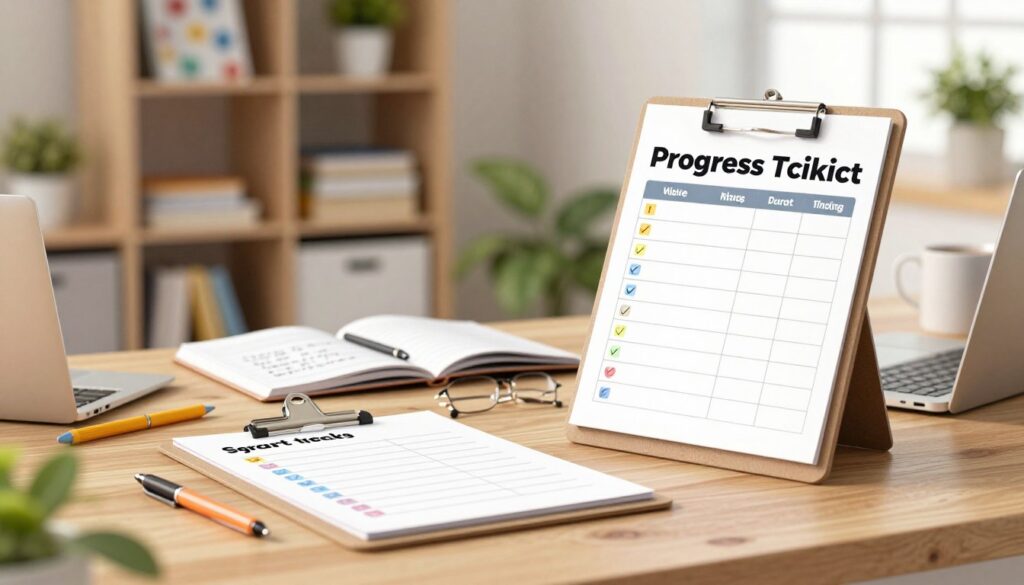
The transition from chaotic record-keeping to strategic insight begins with a structured approach. Educators can implement immediate improvements by focusing on three core components that form the foundation of effective monitoring.
Identifying Critical Data Points
Successful assessment starts with distinguishing between vanity metrics and meaningful indicators. Educators should prioritize information that reveals genuine comprehension and skill development.
Focus on metrics that show concept mastery rather than mere activity completion. This strategic selection ensures every data point serves instructional decision-making.
Developing Consistent Rubrics and Metrics
Establishing uniform evaluation standards across all assignments creates reliable benchmarks. Consistent rubrics allow for accurate comparison of performance over time.
This approach ensures fair assessment of different projects and skill demonstrations. It transforms subjective observations into objective progress indicators.
Centralizing Student Data Efficiently
Consolidating information eliminates the fragmentation that undermines traditional methods. A single accessible system becomes the definitive source for all performance records.
Weekly updates capture emerging trends while content remains relevant. This frequency provides timely insights into individual learning needs.
Smart workflows adapt to different subjects and grade levels. They balance standardization with customization to meet diverse educational requirements.
Optimizing Data Management with Centralized Platforms
The architecture of educational data management is undergoing a fundamental transformation. Institutions are moving beyond fragmented approaches toward unified platforms that serve as comprehensive hubs.
These centralized systems maintain consistent information across multiple departments from a single installation. They eliminate the confusion of maintaining separate records for grades, attendance, and assessments.
Integrating Multiple Data Streams Seamlessly
Modern platforms automatically connect with learning management systems and digital assessment tools. This integration creates a unified view of each learner’s educational experience.
Educators benefit from eliminating the need to log into multiple systems. They access comprehensive dashboards that synthesize information from all connected sources.
The result is coherent, actionable insights rather than fragmented data points. Teachers gain immediate visibility into classroom dynamics without administrative overhead.
Ensuring Data Accuracy with Automated Systems
Automated platforms address persistent problems with traditional tracking methods. They apply consistent business logic and prevent formula errors.
These systems maintain audit trails that document every data point’s origin. This ensures perfect version control across all performance records.
The available options extend far beyond basic grade recording. Customizable workflows match institutional needs while scalable architectures support growing student populations.
Leveraging Visual Analytics and Dashboard Solutions
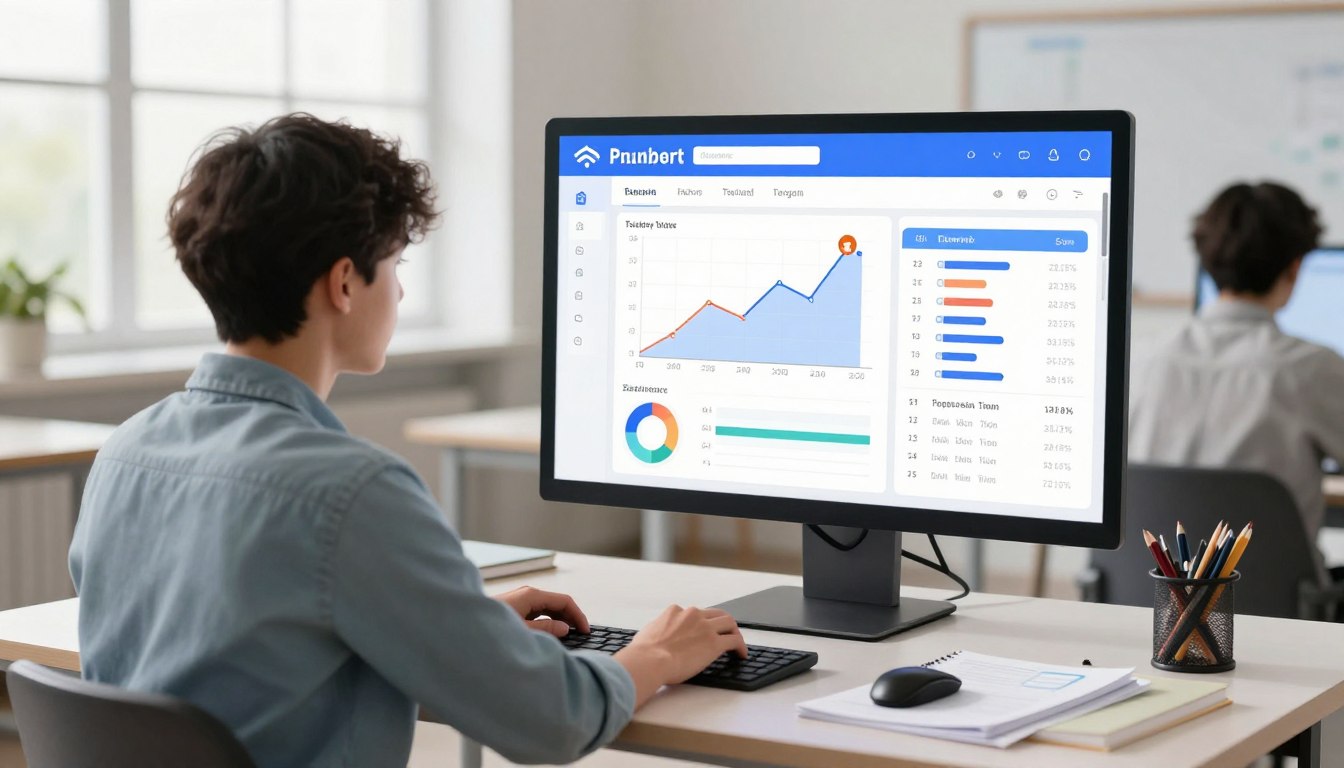
Visual analytics bridge the critical gap between raw numbers and pedagogical action. They transform abstract figures into compelling visual stories that educators can instantly understand and act upon.
This shift moves assessment from a retrospective chore to a forward-looking strategy. It empowers educators with clarity previously buried in spreadsheet cells.
Customizable Dashboards for Real-Time Monitoring
Modern platforms offer dashboards that teachers can tailor to their immediate needs. A single view can toggle between a whole-class overview and an individual student‘s learning trajectory.
This flexibility is crucial for effective instructional planning and personalized support.
Real-time monitoring eliminates the frustrating lag of manual compilation. Educators see performance updates as they happen, enabling interventions within the same instructional unit.
For example, a teacher might instantly notice a widespread struggle with a specific concept on a dashboard. This allows for immediate reteaching, turning a potential learning gap into a teachable moment.
These visual tools are designed for different stakeholders. Teachers get granular detail, students see motivating progress visualizations, and administrators access aggregated metrics.
The power of this approach lies in its accessibility. It equips educators with deep insights without requiring statistical expertise, truly boosting decision-making with data visualization.
Sophisticated dashboards turn complex data into a clear path for supporting every learner’s journey.
Overcoming Common Challenges in Student Progress Reporting
Creating meaningful progress reports presents a unique set of hurdles for even the most dedicated educators. The tension between detail and clarity often results in documents that are either too vague to be useful or too dense to be read.
Inconsistency is another major obstacle. When different teachers or departments use varying scales, the resulting reports send confusing messages. This undermines the entire purpose of tracking a student‘s journey over time.
Strategies for Consistent and Actionable Reporting
The foundation of effective communication is a school-wide standard. Clear performance levels and uniform rubrics ensure every report speaks the same language. This consistency empowers all stakeholders.
Actionable feedback transforms a simple grade into a roadmap for growth. It should highlight specific strengths and pinpoint areas for development. This approach addresses individual learning needs directly.
Timing is critical. End-of-term summaries offer limited opportunity for intervention. More frequent updates allow students and parents to adjust strategies while progress is still achievable.
| Reporting Challenge | Ineffective Approach | Strategic Solution |
|---|---|---|
| Inconsistent Standards | Teacher-defined grading scales | School-wide rubric implementation |
| Vague Feedback | General letter grades | Specific, descriptive comments |
| Infrequent Updates | Term-end summaries only | Regular, brief progress snapshots |
| Audience Confusion | One report for all | Tailored insights for students, parents, teachers |
Systematic solutions automate this process. They standardize progress tracking and generate clear reports. This allows educators to focus on teaching and personalized support for each class.
Conclusion
As we reach the culmination of this exploration, the path forward for effective educational assessment becomes unmistakably clear. Traditional methods have served their purpose, but modern learning demands sophisticated platforms that transform data into actionable intelligence.
Purpose-built solutions eliminate administrative chaos while enhancing the quality of insights. Educators gain precious time to focus on what truly matters: personalized support for each learner’s journey. This shift represents more than convenience—it’s a fundamental improvement in how we understand and respond to educational needs.
The evolution toward intelligent adaptive learning platforms marks a pivotal moment for institutions ready to embrace progress. Flowscholar embodies this transformation, offering educators the tools to move from reactive record-keeping to proactive instructional leadership.
Discover how Flowscholar can revolutionize your approach—visit Flowscholar.com today and join educators who have already transformed assessment from burden to strategic advantage.
FAQ
What are the main drawbacks of using spreadsheets for student progress tracking?
Spreadsheets often lead to data chaos. They require manual entry, which is time-consuming and prone to human error. This can result in inconsistent reporting across different classes or departments, making it difficult to get a clear, unified view of student performance.
How can automated data entry improve the tracking process?
Automated systems streamline data collection. They pull information directly from assignments, quizzes, and other learning activities. This provides real-time insights, reduces manual workload for teachers, and significantly enhances the accuracy of student performance records.
What role do AI tools like Flowscholar play in progress tracking?
AI-driven platforms, such as Flowscholar, transform tracking by offering intelligent analytics. They can identify learning trends, predict student needs, and generate actionable feedback. This moves tracking beyond simple score recording to providing deep, strategic insights into the learning journey.
What should be included in a smarter tracking workflow?
An effective workflow starts by identifying critical data points like skill mastery and project completion. It involves developing consistent rubrics for assessment and using a centralized platform to bring all student data together. This creates a cohesive and efficient management system.
How do centralized platforms help with data management?
Centralized platforms integrate multiple data streams—from grades to attendance—into one system. This eliminates the need to juggle separate files. Automated features within these platforms ensure data integrity, providing a single source of truth for the entire class or school.
Why are visual dashboards important for monitoring progress?
Customizable dashboards turn complex data into easy-to-understand visuals. Teachers can monitor key metrics at a glance, track trends over a term, and quickly identify students who need support. This real-time monitoring empowers educators to make timely, data-informed decisions.
What strategies ensure consistent and actionable progress reports?
Consistency comes from using standardized metrics and a unified platform. Actionable reports focus on growth and specific skill development, not just final scores. By framing data around learning objectives, reports become valuable tools for guiding instruction and providing meaningful student feedback.