“The key is not to prioritize what’s on your schedule, but to schedule your priorities,” Stephen Covey once observed. This wisdom cuts to the heart of a challenge many educators face daily. The struggle isn’t about having enough hours; it’s about protecting those hours for what truly matters.
Educators often feel behind despite meticulous plans. The unpredictable nature of the classroom demands a system that is both structured and flexible. This approach moves beyond reactive task management toward intentional scheduling.
Strategic allocation of hours empowers professionals to make deliberate decisions. It transforms an overwhelming list into a manageable action plan. This method honors both professional responsibilities and personal well-being, creating sustainable work patterns.
This guide explores how a focused weekly session can establish clear goals and reduce cognitive load. The result is mental space for creative, thoughtful instruction and a renewed sense of control.
Key Takeaways
- Strategic scheduling protects time for high-impact activities aligned with core responsibilities.
- A flexible yet structured system accommodates the dynamic classroom environment.
- Intentional planning reduces the mental burden of constant decision-making.
- This method creates a protective boundary between professional duties and personal time.
- Effective management transforms overwhelming lists into sequential, achievable actions.
- The focus shifts from completing every task to prioritizing what delivers the most value.
Getting Started with Time Blocking for Teachers
The transition from reactive task management to intentional scheduling marks a pivotal moment for professionals seeking sustainable productivity. This methodology represents a strategic departure from simply responding to urgent demands.
Understanding the Concept and Benefits
Time blocking involves dividing available hours into specific segments dedicated to particular categories of work. This approach transforms abstract to-do lists into concrete, scheduled commitments.
The fundamental concept centers on allocating specific periods to particular responsibilities. This makes the workload visible and manageable rather than overwhelming.
For educators, the benefits extend beyond simple productivity gains. They include reduced decision fatigue and greater confidence that important work has designated space. This structured approach prevents responsibilities from expanding endlessly into personal time.
Recognizing the Need for a Flexible Schedule
Flexibility stands as a cornerstone principle in educational settings. Teaching inherently involves unpredictable interruptions and shifting student needs.
Effective strategies acknowledge that rigid systems cannot accommodate dynamic classroom environments. The goal is mindful structure that supports better decisions about limited resources.
This approach empowers professionals to match tasks with fluctuating energy levels throughout the day. Deep work requiring concentration aligns with peak mental capacity, while routine activities fit lower-energy periods.
Designing Your Weekly Schedule
Creating a sustainable work rhythm begins with understanding the interplay between mandatory commitments and discretionary activities. This foundational step transforms chaotic workloads into organized frameworks.
Identifying Non-Negotiables and Regular Commitments
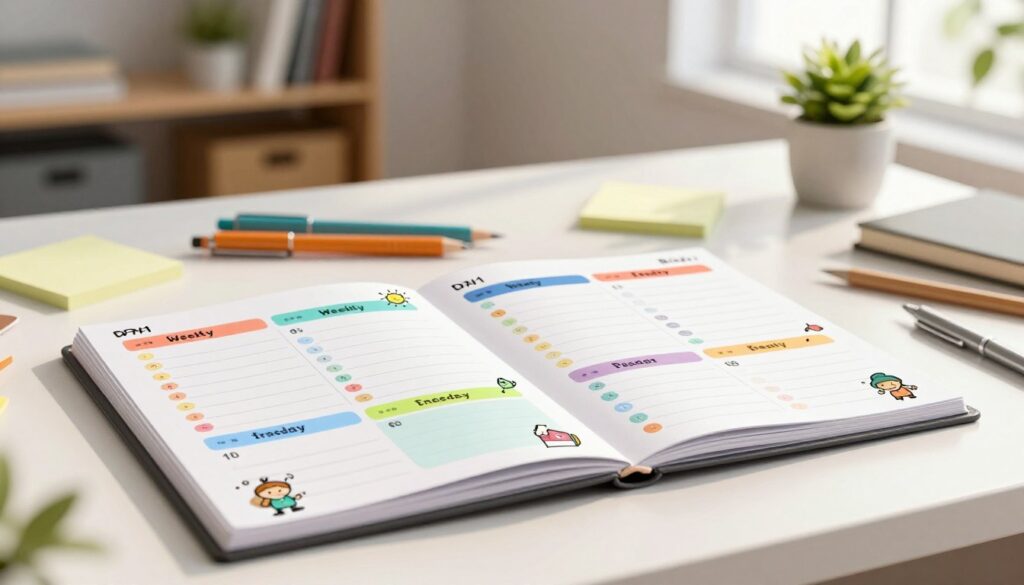
Start by mapping fixed obligations onto your calendar. These include classes, meetings, and personal well-being activities.
This visual representation reveals available hours for variable work. Educators gain clarity about their true capacity.
Documenting Tasks and Estimating Time Accurately
Capture all pending items on paper or digital lists. Comprehensive documentation prevents mental clutter.
Realistic time estimation develops through practice. Overestimate initially, then adjust based on actual experience.
Choosing the Right Balance Between Structure and Flexibility
Effective planning accommodates unexpected demands. Reserve approximately 15 hours weekly for buffer space.
This approach honors both discipline and adaptability. The result is a resilient scheduling system.
| Scheduling Component | Primary Purpose | Typical Examples | Recommended Allocation |
|---|---|---|---|
| Fixed Commitments | Non-negotiable obligations | Classes, meetings, appointments | 40-50% of available hours |
| Flexible Work Blocks | Project completion | Grading, lesson planning | 30-40% of available hours |
| Buffer Space | Unexpected demands | Student needs, emergencies | 15-20% of available hours |
| Personal Well-being | Sustainability maintenance | Exercise, meals, breaks | Non-negotiable inclusion |
Teacher Time Blocking: Plan the Week in 30 Minutes
The most powerful productivity systems are those that translate intention into immediate action. This systematic approach transforms a chaotic workload into a clear, executable blueprint for the days ahead.
To get started, set aside a consistent moment each week. Many find Sunday afternoon ideal for this focused session.
Step-by-Step Implementation Process
- Anchor Your Well-being. First, schedule non-negotiable blocks for personal care. This ensures sustainability.
- Map Fixed Commitments. Add all classes and set appointments. This creates your framework.
- Capture All Tasks. On a separate document, list every item needing attention. Estimate required hours realistically.
- Assign Work to Blocks. This is the core action. Place specific tasks into open time slots. Note location and collaborators for effectiveness.
- Batch Communications. Structure your day by creating dedicated email blocks. A common strategy uses one in the morning, midday, and before leaving.
- Refine and Conclude. Break large projects into smaller steps. Finally, schedule a shutdown ritual to transition to personal time.
This method, as detailed by one productivity coach, brings order to complex things. With practice, the entire planning process can be completed in about thirty minutes.
Adopting this structured method is key to creating a sustainable schedule. It empowers educators to move from being reactive to being strategically proactive.
| Implementation Phase | Core Objective | Key Action | Pro Tip |
|---|---|---|---|
| Foundation (Steps 1-3) | Establish boundaries and visibility | Schedule fixed items and capture tasks | Protect personal time first; it’s non-negotiable. |
| Execution (Steps 4-5) | Translate list into action | Assign tasks to time blocks and batch emails | Use peak energy hours for your most demanding work. |
| Refinement (Step 6) | Ensure follow-through and closure | Break down tasks and schedule a shutdown | A brief end-of-day review sets up tomorrow for success. |
Strategies for Boosting Productivity and Managing Interruptions
The art of sustainable productivity lies in anticipating interruptions rather than being surprised by them. This mindset shift transforms classroom unpredictability from a threat into a manageable variable.
Educators can build resilient systems that withstand daily disruptions while maintaining focus on what truly matters.
Prioritizing Tasks According to Energy Levels
Categorize responsibilities using a simple high-medium-low system. High-priority items demand peak mental capacity and directly impact student learning.
Schedule demanding cognitive work during personal energy peaks. Reserve routine administrative duties for lower-energy periods. This strategic alignment maximizes effectiveness throughout the day.
Track how long activities actually take versus initial estimates. This practice builds accurate mental models for future planning.
Integrating Buffer Time for Unplanned Events
Buffer periods serve as essential insurance against the unpredictable nature of educational environments. Designate 15-30 minutes daily for unexpected demands.
When no urgent needs arise, this space becomes gift time for rest or catching up. Identify interruption-prone moments like transitions or dismissals.
Schedule shallow tasks during these vulnerable windows. Protect deep work blocks for quieter, more focused periods. This approach, detailed in comprehensive time management resources, creates sustainable rhythms.
| Task Category | Energy Requirement | Ideal Timing | Interruption Response |
|---|---|---|---|
| High-Priority (Lesson planning) | Peak cognitive energy | Morning hours | Protect this block rigorously |
| Medium-Priority (Grading) | Moderate focus | Mid-day periods | Can be rescheduled if needed |
| Low-Priority (Organizing) | Low mental demand | Afternoon/end of day | Easily interrupted or moved |
| Communication (Email) | Variable attention | Designated batches | Handle during buffer time |
These advanced approaches help educators accomplish meaningful work within reasonable hours. The goal isn’t to complete every possible task but to achieve what delivers maximum impact.
Modern tools like AI-powered educational platforms can further enhance these productivity strategies.
Tools and Resources to Enhance Your Planning
The right tools transform a good strategy into a sustainable practice. Effective time management relies on selecting resources that match individual preferences and working styles.
Successful educators use various combinations to create systems that feel natural. This personalization is key to long-term adherence.
Leveraging Digital and Paper Scheduling Methods
Digital calendar platforms excel at managing time-specific appointments. They offer automated reminders and easy rescheduling capabilities.
This reduces administrative friction for recurring commitments. Collaborative scheduling with colleagues becomes a seamless process.
Paper-based methods provide tactile engagement that enhances commitment. The physical act of writing creates stronger mental connections.
Many find this way helps visualize the week’s structure more clearly. It offers a break from screen-based work.
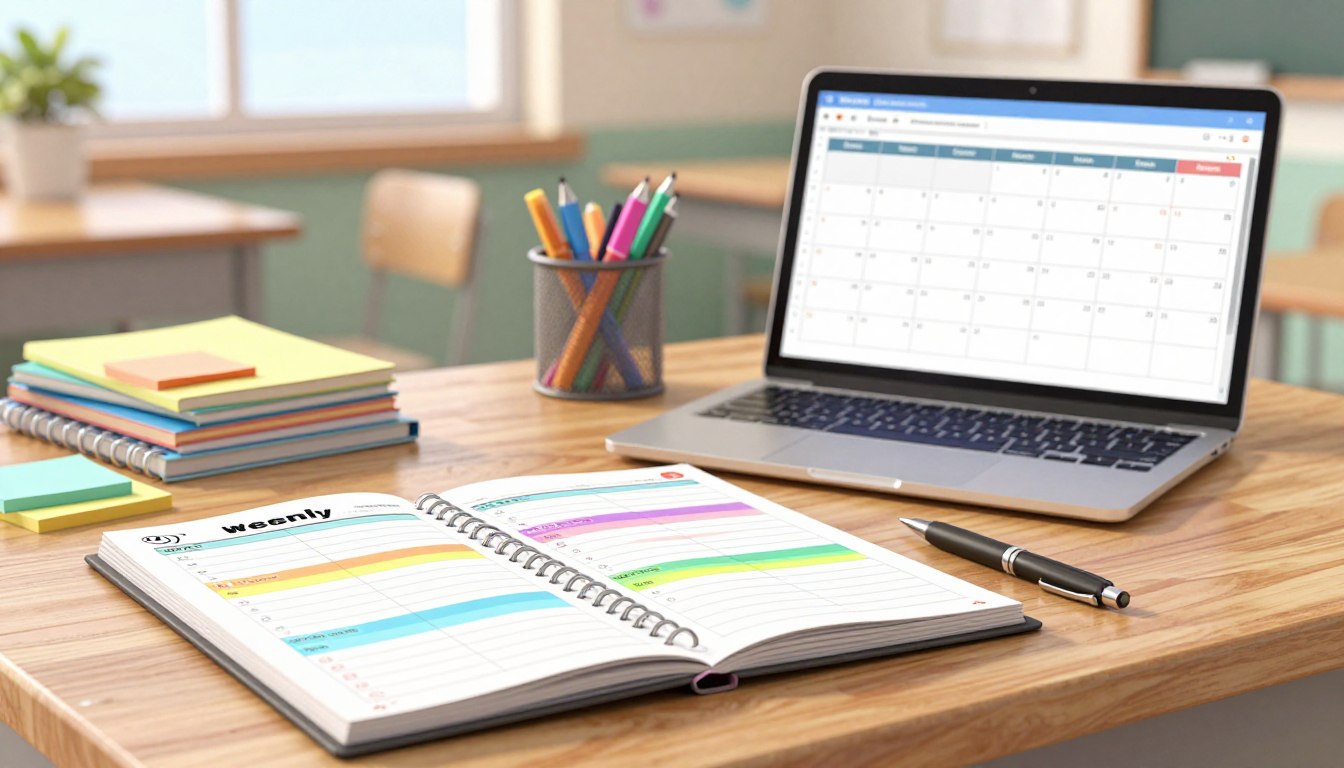
Hybrid approaches often deliver optimal results. Using a digital calendar for fixed appointments and a paper planner for flexible blocks leverages the strengths of each medium.

Using the FlowScholar Education AI Tool for Efficiency
Specialized applications can dramatically streamline the planning process. The FlowScholar Education AI Tool represents an innovative resource designed for educators.
It applies artificial intelligence to reduce the time investment required for effective weekly schedule creation. Intelligent suggestions for task sequencing and priority management are based on educational best practices.
Educators can accomplish in minutes what might otherwise require extended sessions. This intelligent assistance understands the unique constraints of educational work.
For email management, batching strategies benefit from dedicated time blocking. This prevents the productivity drain of constant inbox monitoring.
Templates and structured frameworks further reduce cognitive load. They transform planning from a creative challenge into a systematic routine.
Conclusion
Educators discover true professional freedom through disciplined weekly planning. This approach transforms overwhelming workloads into manageable systems that honor both teaching excellence and personal well-being.
The investment in strategic scheduling yields substantial returns. Educators gain confidence and control, knowing their most important work receives dedicated attention. Flexibility remains essential—the system adapts when unexpected demands arise.
This method isn’t about perfection but mindfulness. It creates sustainable patterns where educators make deliberate choices about their limited resources. The result is reduced guilt and increased trust in professional judgment.
For those seeking enhanced implementation support, FlowScholar Education AI Tool offers specialized assistance. It streamlines the planning process with intelligent insights designed specifically for educational contexts.
Begin your journey toward sustainable productivity today. Experience how intentional scheduling can transform your professional experience and preserve space for what truly matters.
FAQ
What is time blocking, and how can it help educators?
Time blocking is a productivity strategy where you assign specific hours of your day to dedicated tasks or types of work. For educators, this method transforms a chaotic to-do list into a structured schedule. It helps ensure that critical items like lesson planning, grading, and personal time get the focused attention they deserve, reducing stress and increasing overall effectiveness during the work week.
How do I start planning my week if my schedule changes daily?
Begin by identifying your non-negotiable commitments, such as classes and meetings. Then, block out time for your most important weekly tasks. The key is to build flexibility into your calendar by leaving open blocks or buffer periods. This approach allows you to adapt to unexpected events without derailing your entire plan, making your schedule resilient.
What is the best way to estimate how long a task will take?
Accurate time estimation comes with practice. Start by tracking how long common tasks, like grading a set of papers, actually take. Use this data to inform your future planning. It’s often wise to add a small buffer—perhaps 10-15% more time—to your initial estimate to account for potential interruptions or complications, leading to a more realistic daily schedule.
How can I manage interruptions and stay focused during a blocked period?
Communicate your focused work blocks to colleagues and students if possible. Utilize strategies like turning off non-essential notifications and working in a quiet space. Integrating short, scheduled breaks between time blocks can also help you recharge and maintain high energy levels, making it easier to dive back into deep work after a momentary distraction.
Should I use a digital calendar or a paper planner for time blocking?
The best tool is the one you will use consistently. Digital calendars like Google Calendar offer easy adjustments and reminders. Paper planners provide a tangible, distraction-free way to visualize your day. Many educators find a hybrid approach effective. For enhanced efficiency, tools like the FlowScholar Education AI can help automate task scheduling based on your priorities and energy patterns.
What if I don’t complete everything in my planned block?
This is a common experience and part of the learning process. Instead of seeing it as a failure, review what happened. Did the task take longer than expected? Was there an unplanned interruption? Use this insight to adjust future estimates or schedule more buffer time. The goal is progressive refinement of your system, not perfection from day one.