“If you don’t know where you are going, you’ll end up someplace else.” This simple truth from Yogi Berra cuts to the heart of a major challenge in education. Many educators design tasks without a clear link to their ultimate goals, leaving students confused about the purpose of their work.
This guide addresses that disconnect. It explores a strategic framework where every evaluation directly mirrors the intended learning outcomes. This connection transforms teaching from a series of disjointed activities into a cohesive journey.
The approach starts with the end in mind. By first defining clear objectives, educators can build purposeful evaluations. This backward design ensures every instructional moment drives toward specific, measurable goals.
This alignment is especially vital for adult learners. They demand to understand the “why” behind their efforts. When the link between an assignment and a goal is clear, motivation and engagement naturally increase.
We will walk through a practical, step-by-step process. This includes identifying learning outcomes using proven taxonomies and selecting appropriate evaluation methods. We will also explore how modern tools can streamline this entire workflow.
Key Takeaways
- Clear alignment between tasks and goals prevents student confusion.
- A backward design approach starts with defining the desired outcomes first.
- Every assignment should have a direct, visible link to a learning objective.
- Adult learners are more engaged when they understand the purpose of their work.
- Strategic evaluation design turns teaching into a cohesive learning journey.
- Technology can simplify the process of creating meaningful assessments.
Understanding the Importance of Assessment Alignment
Assessment alignment transforms the educational landscape, moving beyond simple checkpoints to become the very backbone of a purposeful learning journey. This strategic connection between what is taught and what is evaluated ensures that education is cohesive and effective.
When properly implemented, this approach yields significant advantages. It fundamentally shifts the focus from covering content to building demonstrable skills.
“Alignment is the key to ensuring that assessments are not just rituals, but meaningful measures of progress.”
Benefits of Aligned Assessments
The power of alignment is revealed through four core benefits. These benefits work together to create a superior environment for student learning.
First, it leads to better lesson planning. Educators design instruction with the end goals in mind. Every activity then directly supports skill mastery.
Second, the process is inherently learner-focused. The entire system guides students toward success. It uses scaffolds and formative assessments to provide timely support.
Third, it establishes a cycle of continuous improvement. Teachers gain actionable data to refine their teaching. Students receive specific feedback for growth, a concept explored in resources on adaptive learning platforms.
Finally, assessments become more authentic and fair. They accurately measure what has been taught, ensuring validity. This builds confidence and motivation among students.
| Benefit | Impact on Teaching | Impact on Learning |
|---|---|---|
| Improved Lesson Design | Focuses instruction on key outcomes | Clarifies the purpose of activities for students |
| Learner-Centered Approach | Enables responsive and supportive instruction | Provides a clear path to skill mastery |
| Continuous Feedback Loop | Offers data for instructional adjustments | Delivers focused guidance for improvement |
| Authentic Evaluation | Creates valid and fair assessments | Measures true understanding and ability |
The Role of Backwards Design in Education
This entire framework is built upon the methodology of backwards design. This approach involves planning the evaluation before developing the lesson.
By first determining how students will demonstrate understanding, educators ensure learning is intentional. This strategic clarity, as outlined in the research-backed framework for alignment, prevents arbitrary instruction. It gives units of work clear purpose, focus, and timing.
Step-by-Step Guide: How to Create Assessments That Align With Objectives
Strategic instructional planning requires a deliberate mapping process between desired outcomes and evidence of mastery. This systematic approach ensures every educational component serves a clear purpose.
Identifying Clear Learning Objectives
Educators begin by defining specific skills students must develop. A practical methodology involves constructing an alignment table with five key columns.

First, list the core competencies students should master. Next, identify the necessary resources and knowledge. Then, specify the evidence that demonstrates skill attainment.
The fourth column explains how these elements interconnect. Finally, transform goals into precise statements using action verbs from Bloom’s Taxonomy. This creates measurable learning objectives like “Students will be able to compare fractions using visual models.”
Selecting Aligned Assessment Methods
Choosing appropriate evaluation tools is crucial for accurate measurement. The assessment must directly reflect the intended learning goals.
When objectives focus on analytical thinking, evaluations should demand critical analysis. For creative skills, assessments might involve project-based demonstrations. This ensures students are evaluated on what they’ve genuinely learned.
| Learning Objective Type | Appropriate Assessment | Student Demonstration |
|---|---|---|
| Knowledge Recall | Multiple-choice quizzes | Fact identification and recall |
| Analytical Skills | Case study analysis | Critical thinking application |
| Creative Application | Project portfolios | Original work production |
| Practical Skills | Performance tasks | Hands-on demonstration |
Clear criteria empower students to understand expectations. This transparency, as detailed in resources on aligning outcomes assessments and instruction, provides the roadmap needed for successful mastery.
Strategies for Integrating Formative and Summative Assessments
The true power of assessment emerges when formative and summative approaches work in harmony throughout the learning journey. This integration creates a comprehensive system that both guides instruction and measures final outcomes.
Using Formative Assessments to Guide Instruction
Formative assessments provide real-time intelligence about student progress. These ongoing checks help educators identify misconceptions before they become significant learning gaps.
Diverse tools accommodate various learning styles. Quick polls and exit tickets offer instant feedback. Think-pair-share activities encourage collaborative processing among students.
A strategic three-step cycle transforms data into action. Educators assess knowledge, measure success using analytics, and reassess after targeted support. This approach, detailed in resources on formative and summative assessments, ensures continuous improvement.
Designing Authentic Summative Evaluations
Summative assessments measure cumulative learning at the end of a unit or course. These evaluations should reflect the full scope of skills students have developed.
Effective designs include performance-based presentations and comprehensive portfolios. Different formats measure various dimensions of mastery. Traditional exams, projects, and reports all have their place in this ecosystem.
The relationship between both assessment types creates a powerful feedback loop. Formative data informs instructional adjustments that prepare students for summative success. Modern AI-powered educational tools can streamline this entire process.
Utilizing Technology and AI Tools for Effective Assessment Alignment
Digital tools transform assessment creation from a time-intensive burden into a strategic advantage. Modern platforms address the complexity that often prevents educators from implementing rigorous alignment practices.

These innovative solutions streamline the entire workflow while maintaining pedagogical rigor. They make sophisticated strategies accessible to educators with varying technical expertise.
Implementing Online Tools like FlowScholar
Platforms like FlowScholar exemplify this technological evolution. This education AI tool helps educators design aligned evaluations efficiently.
The system operates with minimal setup time and effort. It features question banks built to state standards, ensuring accuracy from the start.
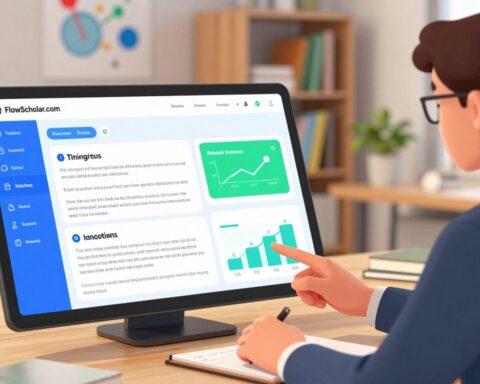
Educators can deploy practice assignments quickly after core instruction. The platform’s analytics dashboard provides live scoring and color-coded graphics.
Case Examples and Practical Implementation Tips
A practical three-step approach demonstrates the power of these tools. First, create formative checks during instruction to gauge understanding.
Next, use interactive dashboards to identify student needs instantly. The visual cues and intuitive charts transform raw data into actionable insights.
Finally, generate reassessment opportunities for targeted groups. This continuous feedback loop supports improved learning outcomes.
Technology should enhance rather than replace human judgment. When selecting tools, consider integration with existing systems and accessibility for all students.
Conclusion
Educators who master the art of assessment alignment unlock a powerful cycle where teaching clarity and student understanding reinforce each other. This approach transforms disconnected activities into a coherent system focused on essential skills and authentic measurement of mastery.
The methodology outlined—from identifying clear objectives using proven frameworks to strategically integrating evaluation types—provides a practical roadmap. Both educators and students benefit tremendously from this alignment, as detailed in resources on assessment alignment principles.
While implementation challenges exist, starting with small steps makes the process manageable. Tools like FlowScholar can streamline this work, transforming theory into classroom reality.
When evaluations truly reflect learning outcomes, students engage more deeply and develop the knowledge and abilities needed for success beyond the classroom. This represents the ultimate goal of all educational endeavors.
FAQ
What is the main difference between formative and summative assessments?
Formative assessments are ongoing checks for understanding used during the learning process to guide teaching and provide feedback. Summative assessments evaluate student mastery of content and skills at the end of an instructional unit, like a final exam or project.
Why is alignment between learning objectives and assessments so critical?
Proper alignment ensures that what is taught is what is measured. It validates that students are being evaluated on the intended knowledge and skills, making the assessment a true reflection of their progress toward the learning goals.
How can teachers ensure their assessments are authentically aligned with their objectives?
Educators can start by using backward design, clearly defining the desired outcomes first. They should then select or design assessment activities that directly require students to demonstrate the specific skills and understanding outlined in those objectives.
What role does student feedback play in the assessment alignment process?
Feedback from formative assessments is essential. It provides real-time data on student progress, allowing teachers to adjust instruction and ensure students are on track to meet the unit’s goals before the final summative evaluation.
Can technology tools like FlowScholar improve assessment alignment?
Yes. Platforms like FlowScholar can help educators design, organize, and analyze assessments. These tools often provide templates and analytics that make it easier to check for alignment between assignment tasks and the core learning objectives.
What is an example of a well-aligned assessment for a complex learning goal?
If a goal is for students to analyze historical cause and effect, a well-aligned assessment would be an essay or presentation where they must argue and support the connections between events, rather than just a multiple-choice test on dates.