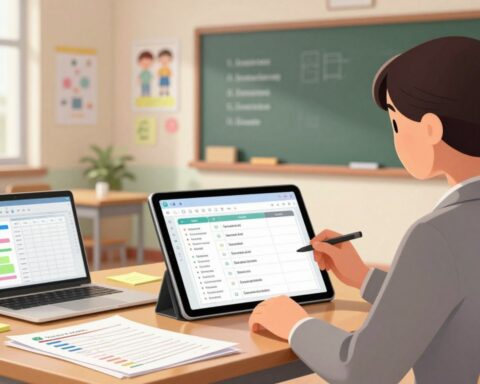
“You don’t have to be great to start, but you have to start to be great.” This quote by Zig Ziglar encapsulates the essence of transitioning to college life, where students are not only expected to adapt to new academic rigor but also to establish a robust support system from the outset.
Navigating the shift from high school to college can be daunting, with new students facing challenges in time management, note organization, and creating effective study habits. A well-structured workflow is crucial for students to excel in this new environment.
By implementing a tailored study workflow, students can optimize their academic performance, reduce stress, and make the most of campus resources. Tools like FlowScholar (https://www.flowscholar.com) can significantly enhance this process, providing a streamlined approach to education.
Key Takeaways
- Establish a structured study routine from the beginning of college life.
- Leverage campus resources to enhance learning outcomes.
- Utilize technology tools like FlowScholar for efficient study habits.
- Improve time management and note organization skills.
- Reduce stress by having a clear academic workflow.
Understanding Your Academic Environment
As new students embark on their academic journey, understanding their institution’s environment is crucial for a successful start. This involves being aware of the various resources and services available on campus, as well as setting up essential academic accounts.
Navigating Campus Resources and Services
Campus resources typically include libraries, writing centers, tutoring services, computer labs, and academic advising offices. These resources can significantly enhance a student’s educational experience. To maximize their benefit, students should take time to physically explore their campus during orientation or before classes begin, locating key buildings, study spaces, and support service offices. Creating a digital organization system for storing important information about these resources will serve as a valuable reference throughout their academic journey.
Setting Up Essential Academic Accounts
Most institutions provide students with a centralized portal that connects to various academic services, including email, learning management systems, registration platforms, and financial services. To access these services, students need to activate their student portal accounts using their personal email address and ID found in their acceptance packets. Setting up and organizing these accounts immediately upon enrollment ensures seamless access to course materials, communication channels, and support services, thereby streamlining their academic workflow.
The “Start Here” Study Workflow for New Students
To excel academically, new students must develop a study workflow that balances their academic and personal life effectively. This balance is crucial for achieving success in college. The “Start Here” Study Workflow is designed to help students establish a structured approach to their academic responsibilities, ensuring they make the most of their college experience.
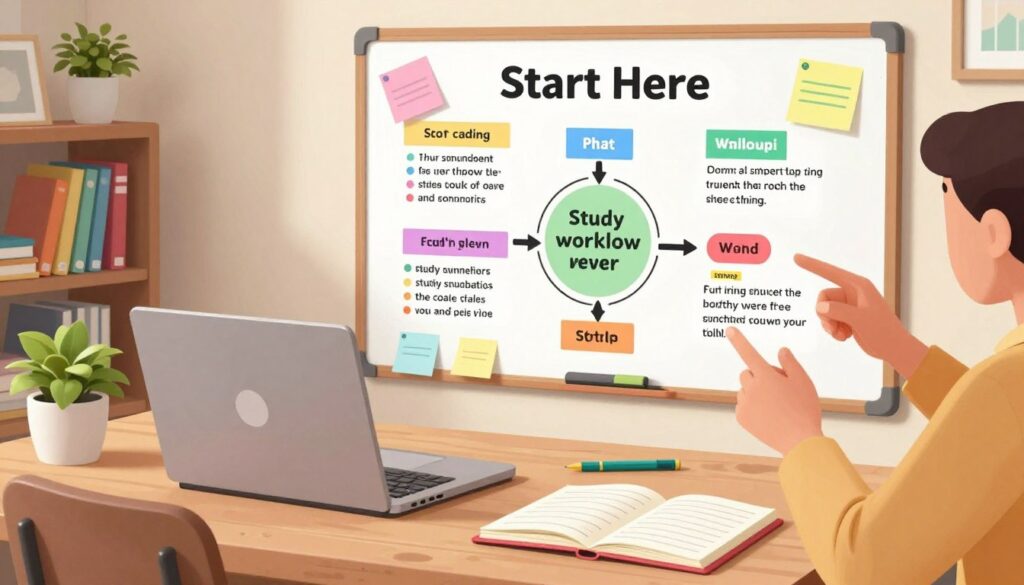
Creating a Structured Daily Routine
Developing a structured daily routine is the foundation of an effective study workflow. Research indicates that consistent daily habits lead to better academic outcomes than irregular study patterns. A daily schedule should include dedicated time blocks for attending classes, completing assignments, reviewing notes, and engaging in self-care activities.
By adapting your routine to your natural energy patterns, you can significantly enhance productivity and learning retention. For instance, if you’re a morning person, you might find it more effective to tackle challenging tasks early in the day.
Establishing Weekly Study Goals
Weekly goal-setting creates accountability and direction, helping students break down larger academic projects into manageable steps. Effective weekly goals should follow the SMART framework (Specific, Measurable, Achievable, Relevant, Time-bound) to provide clear direction and measurable outcomes.
Tools like FlowScholar can help automate this process by organizing your academic schedule and sending reminders for upcoming deadlines and study sessions. By setting SMART goals, students can prevent last-minute cramming and maintain a consistent academic performance.
As emphasized by the importance of orientation programs that help students transition to college life, establishing routines, and connecting with peers, new students can benefit from resources available at their college, such as academic support services and counseling.
Effective Note-Taking Strategies
Effective note-taking strategies are crucial for academic success.Digital toolscan enhance the learning process by providing superior organization and searchability. However, research suggests thathandwritten notescan improve retention through deeper cognitive processing. A hybrid approach that combines both methods can be beneficial. The Cornell Method, Mind Mapping, and Outline Method are proven note-taking frameworks that can be adapted to individual learning styles. By leveraging these strategies, students can optimize their learning outcomes and achieve academic success. FlowScholar is a valuable resource for students looking to enhance their note-taking skills.
Time Management Techniques for Academic Success
As students navigate their academic journey, mastering time management techniques becomes essential for success. Effective time management enables students to balance their academic responsibilities with other aspects of life, including part-time work, extracurricular activities, and personal care.
Balancing Coursework with Other Responsibilities
Balancing academic coursework with other responsibilities is a significant challenge for many students. Time blocking is a technique that involves assigning specific activities to dedicated time slots, creating mental boundaries that enhance focus and reduce decision fatigue. By scheduling their most challenging coursework during their high-energy periods, students can significantly increase their productivity and learning efficiency.
Using Time Management Tools
FlowScholar’s time management features help students visualize their time allocation across different courses and projects, identifying potential scheduling conflicts before they become problematic. By utilizing such tools, students can proactively organize their upcoming week, ensuring they meet assignment deadlines and exam schedules while also making time for personal commitments.
For more information on how AI can support adaptive learning platforms, visit Miloriano’s AI Use Case.
| Time Management Technique | Description | Benefit |
|---|---|---|
| Time Blocking | Assigning specific activities to dedicated time slots | Enhances focus and reduces decision fatigue |
| Pomodoro Technique | Focused 25-minute work sessions followed by 5-minute breaks | Maintains concentration and prevents burnout |
| Weekly Planning | Regular planning sessions to organize the upcoming week | Helps meet deadlines and manage personal commitments |
Leveraging Technology in Your Study Workflow
The strategic integration of technology into academic routines can dramatically improve organization, efficiency, and learning outcomes for students. By leveraging the right digital tools, students can streamline their study processes, making them more effective.
Essential Apps and Tools for Students
Students benefit from a range of digital tools that can enhance their academic experience. These include reference managers like Zotero or Mendeley, productivity apps such as Notion or Trello, and specialized study applications that address specific learning challenges. For instance, when applying for federal student aid, students can utilize digital tools to organize their financial aid applications efficiently.
How FlowScholar Streamlines Your Study Process
FlowScholar is a comprehensive education AI tool designed to streamline academic workflows. It combines note organization, research management, and study optimization in a single platform. By analyzing notes, FlowScholar’s AI-powered features can generate practice questions, identify knowledge gaps, and create customized study plans based on individual learning patterns and course requirements. To explore how FlowScholar can enhance your academic process, visit https://www.flowscholar.com.
Building a Support Network
Building a robust support network is crucial for students to achieve academic success. A comprehensive support system enables students to navigate the challenges of higher education more effectively.
To establish a strong support network, students should start by connecting with key individuals on campus. For more information on getting started, students can visit https://welcome.ucsc.edu/start/.
Connecting with Professors and Academic Advisors
Connecting with professors and academic advisors is a vital step in building a support network. These individuals can provide guidance on course selection, degree requirements, and financial aid, including information about the federal student aid application process. By attending office hours and engaging in meaningful discussions, students can foster positive relationships that enhance their academic experience.
Forming Effective Study Groups
Forming effective study groups is another essential aspect of building a support network. By collaborating with peers, students can share knowledge, discuss challenging topics, and develop a sense of camaraderie. When forming a study group, it’s essential to establish clear goals and expectations, ensuring that all members are working towards a common objective. Utilizing tools like FlowScholar can help streamline the study process and enhance collaboration.

By building a robust support network, students can gain access to valuable resources, guidance, and motivation, ultimately leading to a more successful and fulfilling college experience.
Conclusion: Your Roadmap to Academic Success
Implementing the “Start Here” study workflow provides new students with a comprehensive framework for achieving academic success. This structured approach addresses the multifaceted challenges of transitioning to college life, from navigating campus resources to establishing effective study routines.
As students progress through their academic journey, it’s essential to continuously refine their study techniques, time management strategies, and support networks. Effective academic workflows are personalized systems that should be adapted to individual learning styles, course requirements, and life circumstances.
Regular reflection on workflow effectiveness is crucial. Periodic reviews of grades, stress levels, and time allocation help identify areas for improvement and celebrate successful strategies. Tools like FlowScholar offer integrated solutions to support various components of the academic workflow, from note-taking to exam preparation.
By adopting this comprehensive approach and leveraging resources like FlowScholar, students can develop the skills necessary for academic success and lifelong learning.
FAQ
What is the first step in completing the college application process?
The first step is to submit the Free Application for Federal Student Aid (FAFSA), which determines your eligibility for financial aid.
How do I register for classes in college?
To register for classes, you typically need to log in to your college’s student portal, select your courses based on your program requirements, and confirm your registration. It’s also a good idea to consult with your academic advisor to ensure you’re on the right track.
What is the purpose of orientation for new students?
Orientation is designed to familiarize you with campus resources, academic policies, and support services, helping you transition smoothly into college life.
How can I get assistance with my financial aid application?
You can contact your college’s financial aid office for guidance on completing the FAFSA and understanding your financial aid package.
What should I do if I need help with my course schedule?
Reach out to your academic advisor for personalized advice on creating a schedule that meets your academic goals and program requirements.
Are there resources available to help me with my study skills?
Yes, many colleges offer academic support services, including tutoring, study skills workshops, and online resources to help you succeed.
How do I access my college transcripts?
You can typically request your transcripts through your college’s student portal or by contacting the registrar’s office directly.
What is the benefit of forming a study group?
Forming a study group allows you to collaborate with peers, share knowledge, and stay motivated, enhancing your overall learning experience.
Can I get help with time management and balancing responsibilities?
Yes, many colleges offer resources and workshops on time management and balancing academic and personal responsibilities.
How can I connect with professors and academic advisors?
You can reach out to them via email, attend their office hours, or schedule meetings to discuss your academic progress and goals.