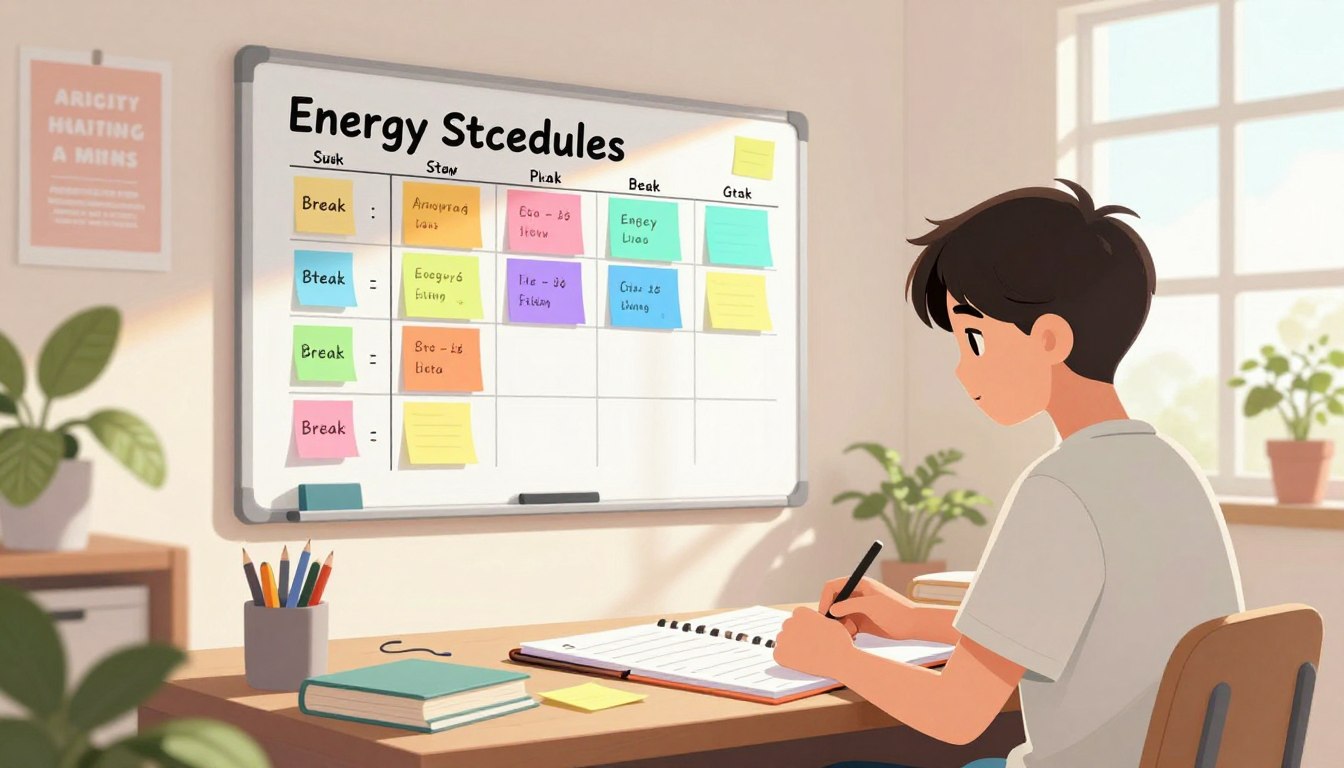
“You can’t pour from an empty cup. Take care of yourself first.” These words by unknown author resonate deeply with today’s teenagers, who are facing unprecedented demands on their time and energy. The modern educational landscape is fraught with stress and pressure to excel academically, extracurricularly, and socially.
As a result, many teens are experiencing burnout, a state of emotional, mental, and physical exhaustion caused by prolonged stress. According to the effort-recovery theory, burnout can be mitigated by managing daily activities and respecting the natural ebb and flow of energy throughout the day.
By adopting an energy-based scheduling approach, teens can optimize their study plans, enhance productivity, and maintain a healthy balance between academics and other aspects of life.
Key Takeaways
- Understand the concept of burnout and its impact on teenagers.
- Learn how to manage energy levels to enhance productivity.
- Discover the benefits of energy-based scheduling for study plans.
- Explore strategies for maintaining a healthy balance between academics and other activities.
- Find out how to utilize innovative tools like FlowScholar to support energy-based scheduling.
Understanding Teen Burnout: Signs and Causes
Burnout has become an increasingly prevalent issue among teenagers, affecting their mental health, academic performance, and overall well-being. It’s essential to understand the signs and causes of burnout to develop effective strategies for prevention and intervention.
Common Burnout Symptoms in Students
Teen burnout manifests through various physical, emotional, and cognitive symptoms. Common signs include:
- Chronic fatigue and disrupted sleep patterns
- Emotional indicators such as irritability, detachment, and anxiety
- Cognitive signs like inability to concentrate, declining academic performance, and memory issues
The developing adolescent brain is particularly vulnerable to stress, with research showing that chronic academic pressure can trigger hormonal imbalances that affect both mental health and cognitive function.
Why Traditional Study Schedules Often Fail
Traditional study schedules often rely on rigid time blocks that ignore biological realities, forcing teens to perform complex cognitive tasks during energy lows and creating a cycle of diminishing returns. The “battery metaphor” helps explain burnout: academic work depletes energy, while certain activities recharge it—when teens consistently deplete without adequate recharging, burnout becomes inevitable.
Environmental factors such as competitive academic environments, parental expectations, college admissions pressure, and digital connectivity create a perfect storm that accelerates burnout in today’s teenagers. Understanding these factors is crucial for developing effective study strategies.
The Science Behind Energy Fluctuations
Understanding the science behind energy fluctuations is crucial for teens to manage their study schedules effectively. The human body’s energy levels are influenced by various biological processes, including circadian rhythms and stress responses. By understanding these processes, teens can better align their study activities with their natural energy peaks and valleys.
Circadian Rhythms and Teen Sleep Patterns
Adolescent circadian rhythms undergo significant shifts during puberty, causing most teens to naturally feel alert later in the evening and struggle with early morning alertness. This biological reality often conflicts with traditional school schedules, leading to chronic sleep deprivation. Research from sleep science reveals that teens require 8-10 hours of sleep for optimal cognitive function. The human brain operates on ultradian rhythms—approximately 90-120 minute cycles of peak performance followed by necessary recovery periods. Ignoring these natural cognitive waves leads to diminished focus and increased mental fatigue.
How Stress Affects Energy Levels
Stress triggers the release of cortisol, which initially increases alertness but, when chronically elevated, depletes energy reserves and impairs the prefrontal cortex function essential for learning, planning, and emotional regulation. Neuroscience research demonstrates that the teenage brain is particularly sensitive to stress hormones, with chronic academic pressure potentially reshaping neural pathways and impairing memory consolidation necessary for effective learning. To mitigate this, teens can adopt strategies to manage stress, such as regular breaks and relaxation techniques, which can help maintain their energy levels. For more information on managing stress and boosting productivity, visit Marie Forleo’s blog.
The Anti-Burnout Study Plan: Energy-Based Scheduling for Teens
By understanding and leveraging their unique energy patterns, teens can create more effective study plans. This approach focuses on aligning study tasks with natural fluctuations in energy levels, rather than adhering to a rigid schedule.
Core Principles of Energy-Based Scheduling
Energy-based scheduling is grounded in several core principles that help teens manage their study tasks more effectively. These include energy tracking, which involves identifying personal peak performance windows; task-energy matching, where appropriate activities are assigned to different energy states; strategic recovery, which involves scheduling intentional breaks; and adaptive flexibility, allowing for adjustments as needed.
By implementing these principles, teens can optimize their study sessions to match their energy levels, leading to improved productivity and reduced burnout.
Why This Approach Works Especially Well for Teens
This scheduling method is particularly beneficial for teens due to the significant energy fluctuations they experience during adolescence. Hormonal changes, growth spurts, and neurological rewiring can all impact energy levels, making a flexible scheduling approach essential.
Moreover, energy-based scheduling empowers teens by giving them agency over their learning process. It teaches valuable self-awareness skills that will benefit them throughout their academic careers and beyond. For more insights on how AI can support adaptive learning, visit Miloriano’s AI Use Case.
Tools like FlowScholar integrate these principles into their design, offering teens intuitive ways to track energy patterns and optimize study sessions based on personal data.
Step 1: Tracking Your Energy Patterns
The first step in developing an anti-burnout study plan involves tracking your energy levels throughout the day. By understanding when you feel most energized and when your focus tends to dip, you can create a study schedule that works in harmony with your body’s natural rhythms.
To start tracking your energy patterns, you’ll need to monitor how your energy fluctuates over time. This can be done using a simple journal, a spreadsheet, or specialized apps designed for energy tracking. Set an hourly reminder to jot down how you’re feeling—both mentally and physically—and what activity you’re engaged in. Over a few days, patterns will start to emerge, giving you valuable insights into your energy landscape.
Creating Your Personal Energy Map
Creating a personal energy map begins with systematic observation and documentation of energy fluctuations throughout the day. This involves tracking not just when energy peaks and dips occur but also their intensity and duration. By doing so, you can identify consistent patterns and note variables that might affect your energy, such as diet, exercise, sleep quality, and stress levels.
- Monitor your energy patterns for at least two weeks, including both school days and weekends.
- Note objective indicators of energy states, such as ability to focus, creative thinking capacity, physical restlessness, and emotional resilience.
- Correlate energy patterns with academic performance to identify which subjects benefit most from high-energy periods.
Tools and Methods for Energy Tracking
There are various tools and methods available for tracking energy patterns. You can use a time audit template to log your activities during the week, figure out what times you’re most productive, and decide whether you’re more focused studying with friends or on your own. For a more streamlined approach, consider using specialized apps or software like FlowScholar, which simplifies the energy tracking process.
Using FlowScholar’s Energy Tracking Features
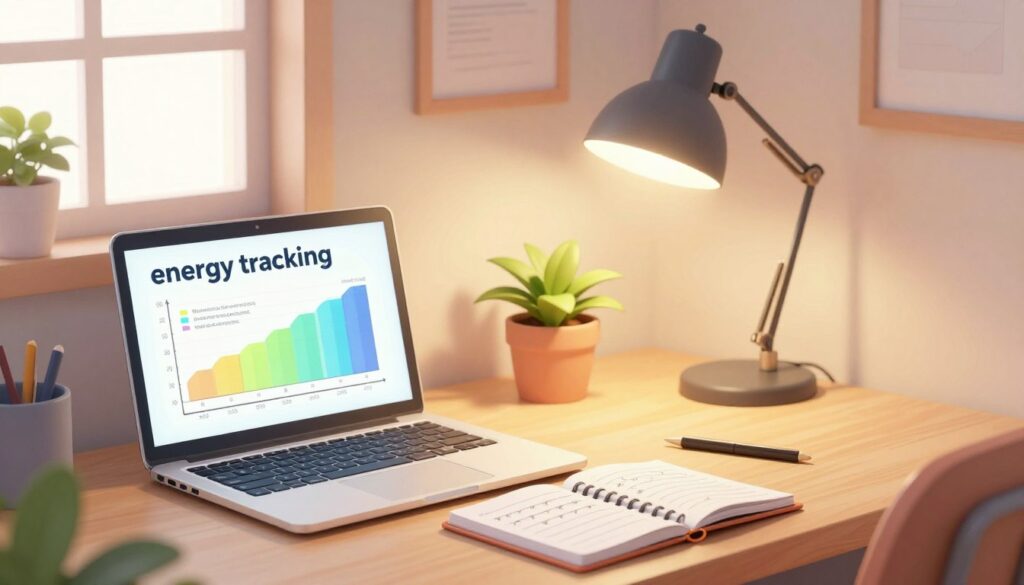
FlowScholar’s Energy Tracking feature provides an intuitive interface where you can quickly log your energy levels on a 1-10 scale at different times throughout the day. This creates visual patterns that reveal your optimal study windows, making it easier to plan your study schedule accordingly. As noted by experts,
“By understanding and working with your natural energy rhythms, you can significantly improve your productivity and reduce the risk of burnout.”
For more insights on building a balanced routine, you can refer to resources likeForbes.
| Energy Level | Study Activity | Recommended Duration |
|---|---|---|
| High | Complex problem-solving, critical thinking | 60-90 minutes |
| Moderate | Reviewing notes, reading | 30-60 minutes |
| Low | Relaxation, light reading | 15-30 minutes |
Step 2: Designing Your Energy-Optimized Study Schedule
By aligning study tasks with natural energy fluctuations, teens can achieve more in less time. The next step in preventing burnout is to match study tasks with the teen’s energy levels.
Matching Study Tasks to Energy Levels
Designing an energy-optimized study schedule begins with categorizing academic tasks based on their cognitive demands. Complex problem-solving and new concept learning require high energy, while review, organization, and simple practice can be accomplished during moderate energy periods.
- High-energy periods should be reserved for the most challenging subjects or concepts, critical thinking tasks, creative projects, and difficult test preparation.
- Moderate energy can be directed toward review, note organization, and straightforward practice problems.
Building in Recovery Periods and Breaks
Strategic implementation of breaks is essential—not just as rewards but as physiological necessities that prevent cognitive fatigue and maintain optimal brain function throughout study sessions.
- The science-backed Pomodoro Technique (25 minutes of focused study followed by 5-minute breaks) works well for many teens.
- Recovery periods should include activities that genuinely replenish mental energy, such as physical movement, brief meditation, hydration, healthy snacks, or brief social interaction.
Sample Energy-Based Study Schedule Templates
Sample energy-based schedule templates provided through FlowScholar demonstrate how to structure a typical study day with alternating high-focus and recovery periods.
| Time | Task | Energy Level |
|---|---|---|
| 8:00-9:00 AM | Complex problem-solving | High |
| 9:00-9:30 AM | Break | – |
| 9:30-10:30 AM | Review notes | Moderate |
For more information on preventing burnout and promoting wellness, visit our blog post on the topic.
Step 3: Implementing and Adjusting Your Plan
As teens embark on their energy-based scheduling journey, flexibility becomes crucial. Life is unpredictable, and even the best-laid plans can go awry. Therefore, it’s essential to approach implementation with a flexible mindset, allowing for adjustments as needed.
Starting Small: The First Week of Implementation
The first week of implementing an energy-based study schedule should be a calibration period. Teens should start by applying their new schedule to just 2-3 days to avoid feeling overwhelmed. This gradual approach helps build confidence in the new system. During this week, teens should track their actual energy patterns against their predicted energy maps, noting any discrepancies and making necessary adjustments.
Using tools like FlowScholar can significantly ease this transition. FlowScholar’s implementation tools guide teens through daily check-ins, adjustment prompts, and visualizations of how closely their actual study patterns match their planned energy-based schedule.
Evaluating and Fine-Tuning Your Schedule
After the initial implementation week, it’s time to evaluate the effectiveness of the energy-based schedule. This evaluation should consider both objective measures, such as assignment completion and test scores, and subjective experiences, like reduced stress and improved focus.
Using FlowScholar to Optimize Your Study Plan
FlowScholar’s analytics feature is particularly useful during this phase, helping teens identify patterns in their implementation success. It highlights which aspects of their energy-based schedule are working well and which need refinement, creating a data-driven approach to schedule optimization.
| Evaluation Criteria | Objective Measures | Subjective Experiences |
|---|---|---|
| Assignment Completion | Number of tasks completed on time | Reduced stress due to better time management |
| Test Scores | Improvement in grades | Improved focus during study sessions |
| Study Session Duration | Effective use of time during study sessions | Greater enjoyment of learning |

By continuously monitoring their progress and making adjustments as needed, teens can refine their study plans to maximize productivity during energy peaks and optimize recovery during energy valleys.
Conclusion: Embracing Sustainable Study Habits for Long-Term Success
Ultimately, the key to long-term academic success lies in understanding and managing one’s energy levels to achieve a balance between work and recovery. The Anti-Burnout Study Plan is more than just a scheduling technique; it’s a fundamental shift in how teens approach their education, prioritizing sustainable practices that preserve mental health while enhancing academic performance. By aligning tasks with natural energy rhythms, teens can unlock more focus, accomplish more, and avoid burnout.
Research shows that students who implement energy-based scheduling report not only improved grades but also greater enjoyment of learning, reduced anxiety, better sleep quality, and stronger relationships with family and friends. The skills developed through this approach—self-awareness, strategic planning, and energy management—extend far beyond academics, preparing teens for success in college and career environments.
Parents can support their teens by respecting their identified energy patterns and helping create environments conducive to both focused work and genuine recovery. For teens experiencing burnout, the energy-based approach serves as both prevention and intervention. Begin your teen’s journey toward stress-free, high-performance learning today by visiting https://www.flowscholar.com and accessing our free energy-tracking tools and personalized scheduling templates.
FAQ
What are the common signs of burnout in teens?
Common signs include persistent fatigue, decreased motivation, irritability, and a decline in academic performance. Teens may also experience physical symptoms like headaches or stomach problems.
How can I identify my energy patterns?
To identify your energy patterns, track your energy levels throughout the day using a journal or mobile app. Note when you feel most alert and focused, and when you experience dips in energy.
What is energy-based scheduling, and how does it work?
Energy-based scheduling involves planning your study sessions around your natural energy fluctuations. By matching tasks to your energy levels, you can optimize productivity and reduce burnout.
How often should I review and adjust my study schedule?
It’s essential to review and adjust your schedule regularly, ideally every week or two, to ensure it remains aligned with your changing energy patterns and academic needs.
Can energy-based scheduling be applied to other areas of life beyond studying?
Yes, energy-based scheduling can be applied to other areas, such as work, exercise, or family activities, to achieve a better balance and reduce overall stress.
What are some strategies for maintaining motivation and avoiding burnout?
Strategies include setting realistic goals, taking regular breaks, practicing self-care, and seeking support from family, friends, or mental health professionals when needed.
How can I balance study time with other activities and responsibilities?
To achieve balance, prioritize tasks based on importance and energy requirements, and allocate time accordingly. Be sure to schedule time for relaxation, exercise, and socializing.
What role does sleep play in energy management?
Sleep plays a crucial role in energy management, as it allows your body to rest and recharge. Aim for 8-10 hours of sleep each night to help regulate your energy levels.
Can exercise help improve energy levels and reduce burnout?
Yes, regular exercise can help boost energy levels, reduce stress, and improve overall well-being. Incorporate physical activity into your daily routine, such as a morning walk or after-school workout.