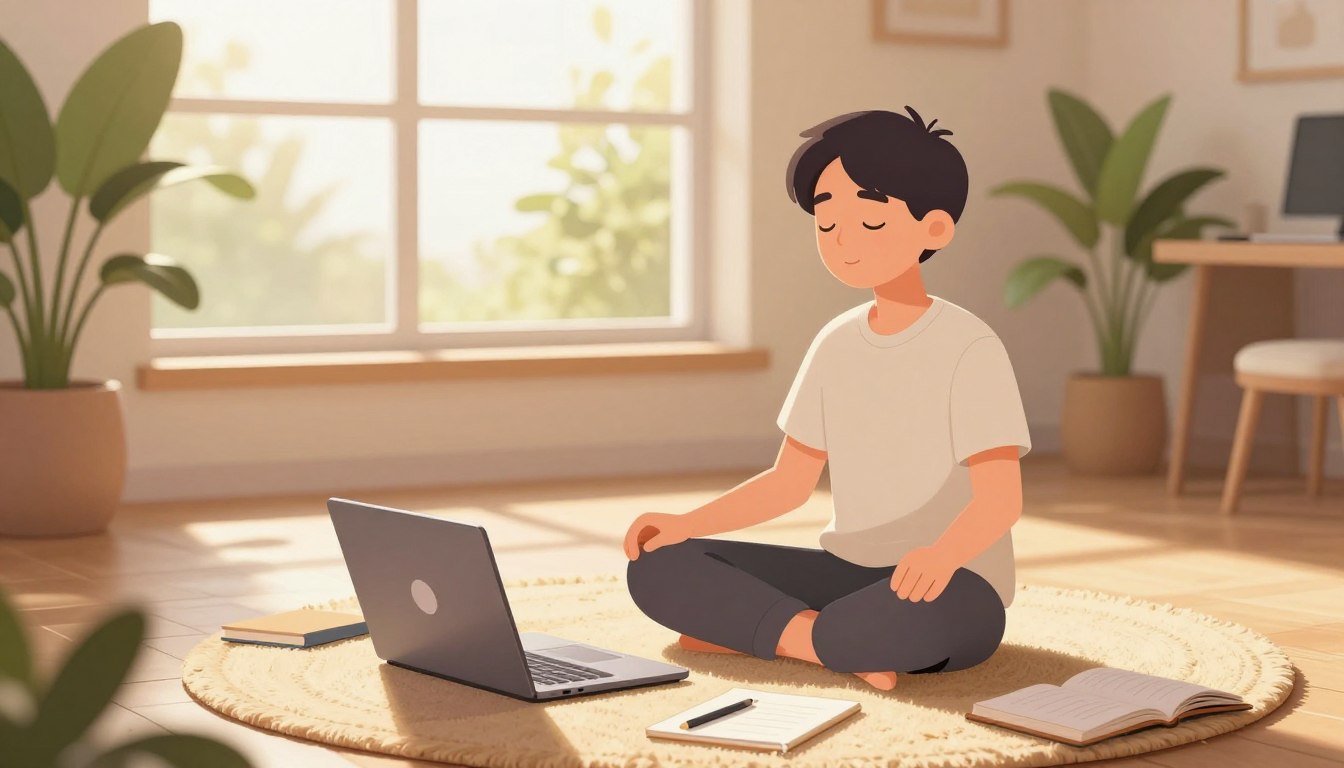
There is a moment when a developer stares at a problem and feels creativity slip away. Modern teams drown in emails, meetings, and shifting priorities; that noise steals time, clouds judgment, and drains imagination.
This guide speaks to that frustration with a clear promise: unite code practice with focused awareness to improve focus, spark ideas, and steady emotion during software development. Short, repeatable meditations act as precision tools—simple breaths, brief scans, and kindness practices that reset the mind before a tough session.
Readers will find science-backed methods and practical routines designed for the flow of real work. We show measurable impact on attention, stress, and divergent thinking so programmers can map techniques directly onto debugging, architecture, and design tasks.
For a deeper dive into applied routines and workplace examples, see this practical primer on using meditation in coding contexts: meditation and mindful practices for developers.
Key Takeaways
- Brief meditation sessions sharpen attention and reduce stress for better problem solving.
- Mindful breathing and body scans are quick on-ramps before focused coding sprints.
- Small, repeated practices compound into lasting creativity and steadier emotion.
- Techniques apply directly to debugging, code review, and architecture work.
- Practical scripts and checklists help move from theory to consistent practice.
Why Mindfulness Matters Now for Software Development Creativity and Focus
Distributed teams, tight deadlines, and endless notifications have made sustained creative focus a rare skill in modern software work. The shift to remote setups intensifies isolation: 66% of engineers now work from home, which removes natural boundaries between personal time and work time.
Context switching fragments attention. Multitasking cuts productivity by an estimated 40%, so moving between messaging, reviews, and coding tasks drains creative energy and increases errors.
Practical user intent here is simple: blend short meditation breaks with focused coding routines to regain attention without adding ritual. Start with basic habits—scheduled email blocks, protected deep-work windows during peak hours, and phone-free coding sprints.
Small, repeatable routines win. Not every developer needs long practices; brief breathing checks or a two-minute pause before a complex task raises signal-to-noise in the mind. Teams that share attention norms reduce interruptions and improve collective productivity.
Quick actions to try today
- Block one or two peak hours for uninterrupted development.
- Reserve a daily hour for inbox triage rather than ad-hoc checks.
- Run short, phone-free sprints for tasks that require deep attention.
The Science Behind Meditation’s Impact on Focus, Stress, and Divergent Thinking
Research ties short meditation practices to clearer thinking during demanding engineering tasks. Practitioners report steadier attention, faster recovery after interruptions, and more frequent creative flashes when they pause and reset.
Improved attention and sustained focus for complex coding tasks
Training the mind strengthens neural systems that support sustained focus. Developers hold complex code paths and edge cases in working memory longer. This boosts the ability to follow long execution flows without losing track.
Reduced stress and anxiety to protect well‑being
Regular practice lowers physiological stress and reduces anxiety. The result: preserved cognitive bandwidth for deep technical work and steadier performance during long sprints.
“Short, repeatable practices change how attention settles; that shift often unlocks the next idea.”
- Greater divergent thinking produces more ideas during design and refactor sessions.
- Fewer attention lapses mean quicker returns after interruptions.
- Benefits compound over weeks — modest routines yield measurable impact.
Meditation Basics for Developers: A Step-by-Step Starting Routine
Developers can build a short, repeatable routine that fits into sprints and review cycles. These micro-tools reset focus, reduce frustration, and make creative problem solving easier during long coding sessions.
Mindful breathing: 5-10 minutes to reset attention before tough tasks
Sit comfortably. Inhale through the nose for a four-count, hold for four, exhale through the mouth for four. Repeat for five to ten minutes before a complex coding task to steady attention.
Body scan: releasing tension to clear the head
Move attention from toes to head. Notice tension in shoulders, neck, jaw; breathe into each spot, then relax it. A quick scan eases physical strain so the mind can hold longer code paths.
Loving-kindness: easing frustration during debugging
Silently offer “May you be happy, healthy, safe” first to a loved one, then to yourself, then to colleagues. This brief practice softens harsh self-talk when tests fail or reviews are tough.
- Place a five-minute session before a feature branch, after meetings, or at natural transitions in the day.
- Use a single cue word like “return” when thoughts wander; redirect attention without judgment.
- Anchor the habit: take three mindful breaths before git commit to link meditation with workflow.
Start small: one short practice per day builds momentum. Guided apps such as Headspace or Calm help during the first two weeks while habit forms.
Mindfulness in the Coding Flow: Practical Techniques You Can Use Today
Short rituals that pair focused breath with intention transform scattered work into reliable creative windows. Start each session with three deep breaths, state a clear intention, then run a 25-minute focused sprint. Use a five-minute break to stretch, reflect, and set the next intention.
Mindful coding sprints
Adopt the Pomodoro with a mindful twist: 25 minutes single-task focus, three breaths before start, five minutes to reset. Repeat across the day to protect attention and boost productivity.
Code review with awareness
Center before a review: notice emotional reactions, then examine one block at a time with curiosity rather than judgment. This lowers stress and raises review quality.
Mindful debugging
Breathe. Adopt a beginner’s mind and test hypotheses stepwise to avoid assumptions. This process reduces tunnel vision and surfaces root causes faster.
Single-tasking over multitasking
Multitasking cuts output by ~40%; counter by batching communications, reserving an hour for email, blocking meeting-free focus time, and keeping phones out of reach.
“Three breaths and one clear aim before a sprint turns interruption into intention.”
- Run mindful sprints: state an intention, do 25 minutes, take a 5-minute break.
- Protect attention: batch messages and hide distractions.
- Measure impact: count sprints, track interruptions stopped, note PR quality gains.
For applied routines and workplace examples, see this short guide for developers: mindful practices for web developers, or explore techniques that blend flow state with vibe coding at Miloriano’s productivity piece.
Code and Mindfulness in Team Culture: Communication, Empathy, and Psychological Safety
Creating explicit communication habits helps teams protect focus while improving collaboration. Small norms reduce guesswork and free attention for deeper software development work.
Open expectations matter: set clear project signals, hold regular one‑on‑ones about capacity and burnout, and address issues early with brief, direct messages. Drafting tough notes with AI can help reduce reactivity.
Active listening and empathy
Train people to pause before replying, reflect what they heard, and ask clarifying questions. This lowers heated emotions and keeps difficult conversations constructive.
Practical team practices
- Stand-up check‑ins: a quick mood or focus barometer at the top of the day.
- Light rituals: a 60‑second breath before demos or a body check before reviews.
- Review norms: curiosity first; specifics over generalities in feedback.
Real-world example
At Hostinger, live sessions, the Balance App, and workshops normalized practice across locations. Leaders report benefits for stress management, focus, communication, and leadership growth.
“Structured practice turns individual calm into collective resilience.”
Design Your Remote Workspace to Support Mindfulness and Deep Work
A remote desk can be tuned to support long stretches of focused work and short restorative pauses. Thoughtful layout reduces friction so productive hours feel natural rather than forced.

Declutter and organize: clear the surface and the downloads folder to lower visual noise. A tidy desk helps the mind enter deep work quickly. Personalize with a plant or photo to make focus time inviting.
Create a dedicated break space: place a cushion, chair, or yoga mat a few steps away from the desk. Stepping into this spot cues a real break and makes short resets consistent throughout the day.
Hydration and movement: adults should aim for 2.7–3.7 liters of water and roughly 7,000 steps. Use a watch to prompt a standing break each hour and to track sips and steps.
Nature breaks: even ten minutes outdoors lowers stress and refreshes attention. Try a loop: 90 minutes of coding, a five-minute walk, then a glass of water to return with sharper focus.
“Make the workspace a partner in productivity; small cues guide behavior without willpower.”
- Use do-not-disturb and app blockers to protect deep work.
- Keep a timer, cushion, and water bottle visible as action cues.
- Align the setup with the part of the day when one does best coding and defend that time.
Applying Mindfulness to Technical Interviews and High-Pressure Moments
Calm focus beats reaction under pressure. A short, repeatable routine before interviews helps candidates center attention and steady nerves. Use a 4-4-4 breathing pattern for three to five minutes to reduce arousal and arrive ready for the first task.
Pre-interview meditation: centering attention and calming anxiety
Sit upright. Inhale four, hold four, exhale four. Repeat until the pulse slows and thoughts settle. This brief meditation is portable and reliable before any live screen or whiteboard session.
Mindful listening and presence when tackling algorithmic questions
Listen first; then repeat the prompt and confirm constraints. Pause before typing; ask for examples. Narrate the process while testing small cases. When stuck, scan assumptions, propose a simpler task, and proceed stepwise.
Post-interview reflection: nonjudgmental review for continuous development
Afterward, reflect without harsh self-criticism. Note what went well, which patterns to practice, and one concrete skill to sharpen the next day. Over cycles, this practice turns anxiety into focused energy for future coding tasks.
“Treat pressure as a routine state change: your prep is a portable anchor you can bring to any high-stakes moment.”
| Stage | Action | Outcome |
|---|---|---|
| Pre | 3–5 min 4-4-4 breathing | Lower arousal; clearer attention |
| During | Repeat prompt, clarify constraints, narrate steps | Fewer mistakes; cleaner problem solving |
| Post | Nonjudgmental review; capture one practice item | Faster learning; reduced replaying thoughts |
From Practice to Mastery: Advanced Mindfulness for Seasoned Developers
Seasoned practitioners turn small habits into reliable levers for creative technical judgment.
Advanced applications extend basic routines into team practices that scale with responsibility. In pair programming, shared attention reduces friction. Set a short session intention, alternate roles deliberately, and name emotions that distract. These moves temper reactivity and improve collaboration.
Open awareness benefits systems design: hold multiple architectures in mind, list trade-offs explicitly, then decide with intention. That habit converts ambiguity into manageable options and raises overall productivity when teams face complex choices.
Practical rituals and support
Protect learning with daily intention setting: pick one skill, log one short win, repeat. Use apps and groups to keep the process consistent. Balance, Headspace, and Calm provide guided depth; communities and a journal provide accountability and insight.
“Mastery is iterative—refine the practice as the role expands from contributor to architect.”
- Micro-rituals in workflows—three breaths before merge, brief scan before long reviews—keep quality steady.
- Use IDE cues or a commit reminder to prompt presence so practices stay embedded during coding.
- Run brief personal retros to note what created flow, remove friction, and adjust inputs.
| Application | Action | Benefit |
|---|---|---|
| Pair programming | Set session intention; swap driver/navigator; name emotions | Clearer collaboration; reduced rework |
| Systems design | Hold alternatives; list trade-offs; decide with intention | Better architecture choices; less bias |
| Personal practice | Daily intention; log progress; use apps for reminders | Faster skill acquisition; sustained focus |
For practical routines and team case studies, see a concise practical guide for developers that helps embed these practices into regular work.
Conclusion
,Small, repeatable pauses reshape how a developer meets hard problems each day. These micro routines—five to ten minutes of breathing, a quick body scan, or a brief kindness pause—deliver steady gains in attention, lower stress, and clearer creative output for coding tasks.
Teams that adopt simple communication norms, guided sessions, or short group practice report higher productivity and better collaboration. Individuals gain real benefits by applying brief resets at key moments: before a pull request, during a sprint, or ahead of a high-pressure interview.
Start with one practice today: pick a short exercise, apply it to one task, measure the change, then build from there. Over time, the cumulative impact improves focus, code quality, and overall well-being across the workday.
FAQ
How can a short meditation session boost programming creativity before a work sprint?
A brief 5–10 minute breath practice resets focus, reduces reactivity, and widens perspective. That mental reset helps developers notice unexpected connections, approach design problems with curiosity, and sustain attention during complex tasks.
Why is mindful practice particularly relevant for modern software teams?
Present-day pressures — tight deadlines, remote work, and constant context switching — increase cognitive load and error risk. Mindful habits reduce stress, improve communication, and create space for clearer thinking, which in turn raises quality and productivity.
What does research say about meditation’s effect on attention and problem solving?
Neuroscience and cognitive studies show meditation enhances sustained attention, working memory, and divergent thinking. These changes support sustained focus on debugging and generate novel approaches in system and feature design.
What are simple meditation techniques developers can start with today?
Start with mindful breathing for 5–10 minutes to center attention, a short body scan to release muscle tension, and a loving-kindness practice to reduce frustration during hard debugging sessions.
How can mindfulness be integrated into a coding workflow without disrupting velocity?
Use intention-setting at the start of a coding sprint, schedule short mindful breaks, adopt single-tasking for critical work, and run code review sessions with curiosity instead of judgment. These small adjustments preserve momentum while improving accuracy.
What practices help teams build psychological safety and empathy?
Open communication norms, regular one-on-ones, active listening practices, and brief shared meditations or breathing breaks foster trust. These habits encourage honest feedback and reduce escalation of conflict.
How should remote workers design their workspace to support deep work?
Declutter digital and physical spaces, create a designated pause corner with simple props, maintain hydration and short movement prompts, and take quick nature breaks outdoors to reset cognitive energy.
What techniques work best for high-pressure moments like interviews or production incidents?
Pre-event centering breathwork calms anxiety. During the event, prioritize mindful listening and deliberate problem decomposition. Afterward, perform a nonjudgmental reflection to extract lessons without self-criticism.
How can experienced developers deepen their mindfulness practice for sustained growth?
Combine daily intention setting with progress tracking, practice mindful pair programming to strengthen shared awareness, apply open awareness during systems design, and use apps or communities for accountability.
Which tools or resources support consistent practice without adding overhead?
Short guided sessions from apps like Headspace or Insight Timer, calendar prompts for micro-breaks, and team rituals such as a two-minute breath before standups provide high impact with minimal time cost.