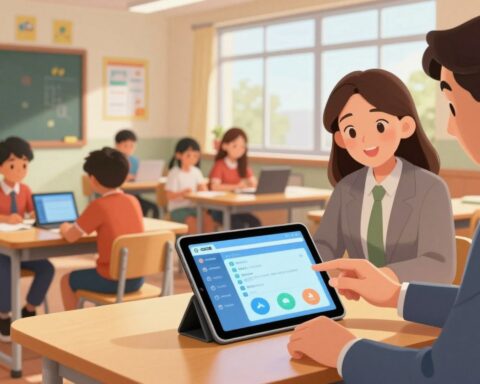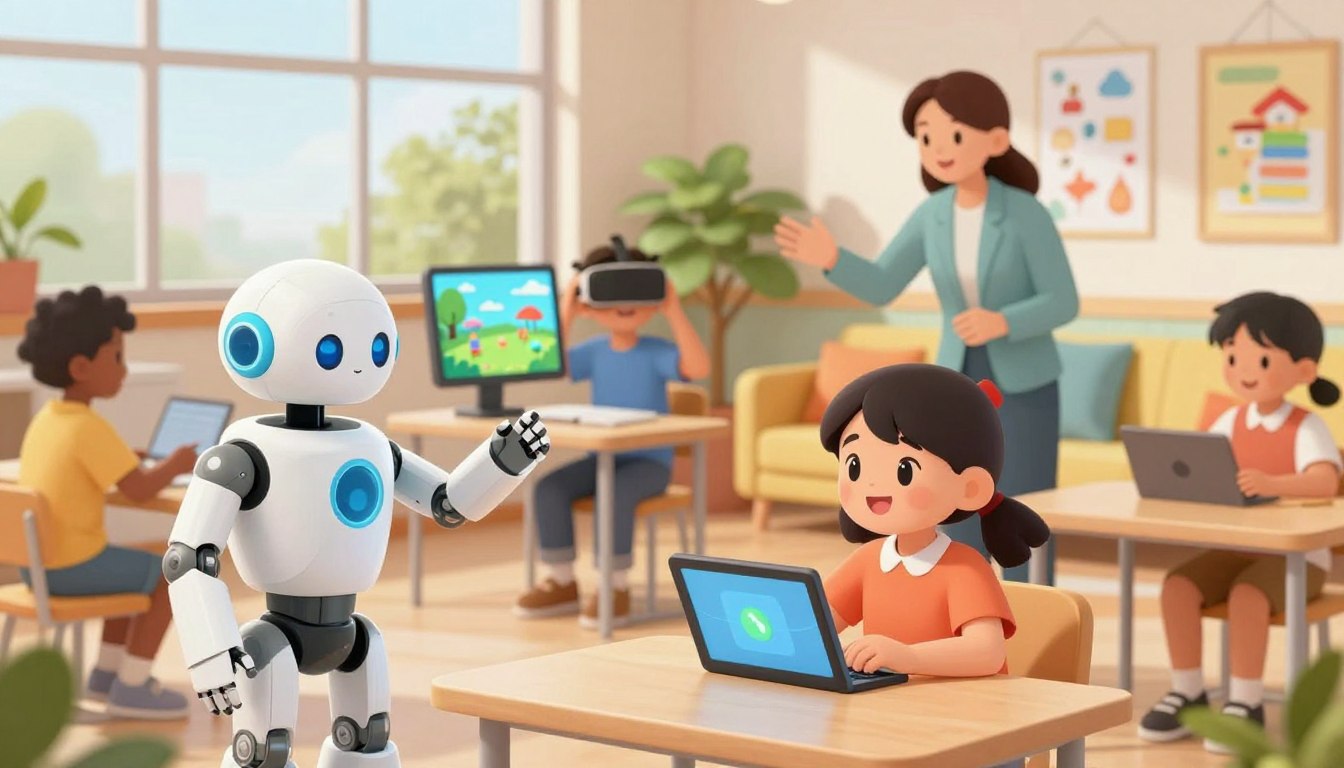
Many parents still remember the late-night scramble over a math problem or an essay due the next day. That fatigue and worry pushed some families to try new solutions. Today, a surge of artificial intelligence tools promises on-demand help when school hours end and work schedules collide.
Families in the United States are exploring this option because digital learning feels familiar and because AI can scope topics, spark ideas, and clarify information quickly. Launched on November 30, 2022, one notable system made instant outlines and answers widely accessible, and educators began weighing trade-offs between shortcuts and personalized support.
Used as a guided tool, an AI chatbot can model step-by-step reasoning, coach language skills, and structure study plans. Yet it needs human oversight: parents and educators must check accuracy, address bias, and keep students doing the hard thinking that builds durable skills.
Later sections will show how to evaluate these tools and when they complement teachers best. For background on smart tutors and practical concerns, see this overview on AI smart tutors.
Key Takeaways
- AI tutors offer 24/7 support and can personalize learning for students.
- They work best as a tool alongside teachers and parental oversight.
- Parents should check the information sources and error rates.
- AI helps with planning, language practice, and consistent practice.
- Balance matters: maintain motivation, accountability, and academic integrity.
What Parents Want From Tutoring Today—and How AI Fits
Parents now expect tutoring to close precise gaps quickly while fitting into busy family schedules. They want targeted learning that matches school goals and avoids adding extra time or cost.
Many families seek a blended way: a human tutor to build motivation and higher‑order development, plus digital tools that extend practice between sessions. AI can suggest the next problem set, summarize progress, and flag misconceptions so educators and tutors act on clear data.
Access matters. Scalable on‑demand help lets students get answers at night or on weekends, which eases scheduling pressure for caregivers and keeps students on task.
Transparency matters too. Parents want plain explanations of how systems adapt, what student data is used, and the research behind suggested steps. One practical resource is this research on AI in learning.
| Family Need | Human Tutor Role | AI / Tool Role |
|---|---|---|
| Close specific gaps | Diagnose misconceptions; coach problem solving | Offer targeted practice sets and quick feedback |
| Manage time | Set goals and review progress | Provide 24/7 access and on‑demand explanations |
| Keep costs reasonable | Deliver focused, high‑impact sessions | Scale practice and reduce need for extra hours |
GPT Tutoring Benefits: Personalization, Speed, and Always‑On Support
Personalized prompts and quick checks help students move past stuck points without losing momentum. Adaptive systems use a student’s past attempts to recommend level‑appropriate steps. This keeps learning focused and raises skills steadily.
Targeted feedback highlights where a student stalls and offers hints rather than full answers. That tightens the practice‑feedback loop and encourages reflection.
The speed of virtual help matters: instant explanations and answers preserve focus when problems appear at night. A chatbot can run short conversations that diagnose misconceptions and suggest the next task.

- Personalization: Adaptive prompts guide practice based on prior data and need.
- Instant support: Quick answers keep students engaged and momentum high.
- Dialog coaching: Conversation‑style cues mirror tutor scaffolding and refine thinking.
Families should apply sensible guardrails: require students to show steps and cross‑check information with class notes. Use artificial intelligence as an informative tool—not a replacement for teacher judgment—and consider short daily check‑ins to boost consistency.
Real‑World Examples Parents Should Know: Khanmigo, Varsity Tutors, and Saga Education
Real platforms reveal how intelligent tools support students and teachers in everyday learning. Below are practical examples that show what these systems do, where they help most, and what to watch for.
Khan Academy’s Socratic chatbot that coaches, not just tells
Khanmigo uses a conversational model tuned to course context. When a student types “I’m stuck,” it asks targeted questions instead of giving answers. This approach nudges students to explain reasoning at the right level and mirrors good tutoring practice.
Teachers piloting the tool use it in class to individualize support and save time while staying present. Khan Academy also collects teacher and student feedback to flag math conversation errors and improve quality.
Lesson planning and progress notes powered by AI on platforms
Varsity Tutors auto‑generates standards‑aligned lesson plans and session notes from transcripts. These AI summaries turn raw data into clear, time‑saving insights so educators can focus their work where it matters most.
AI that analyzes tutor performance to improve session quality
Saga Education applies AI to recorded sessions and scores them against research‑based rubrics. The system gives tutors targeted feedback and is piloting real‑time prompts tailored to student interests—keeping learning relevant and engaging.
“These tools let humans double down on motivation and higher‑order thinking.”
Parents should ask providers how they handle errors, track progress, and incorporate educator feedback. For a deeper guide to AI in school settings, see AI education resources.
Boosting Core Skills: From Language Learning to Writing and Exam Prep
For parents and teachers, the most useful systems help students practice, draft, and test with clear feedback.
Language support can include real‑time translations, quick grammar corrections, and pronunciation practice. These features let students rehearse vocabulary and build confidence before classroom discussion.
Writing assistance that strengthens clarity and structure
AI helps students brainstorm ideas, outline topics, and improve tone. It suggests structure and edits for clarity while teachers focus on voice, originality, and critical thinking.
Practice questions and exam prep
Tools generate level‑appropriate questions and step‑by‑step hints rather than final answers. That approach reinforces understanding and metacognitive strategies for tougher tests.
“Use the tool as a coach—verify facts and preserve the student’s own thinking.”
| Skill | Example Use | Human Role |
|---|---|---|
| Language | Translations, pronunciation drills, grammar checks | Correct nuance, cultural context |
| Writing | Brainstorming, outlines, tone edits | Teach argumentation and citations |
| Exam Prep | Practice questions, timed drills, feedback | Set strategy, review misconceptions |
Best practice: pair short daily drills with longer writing tasks and require students to explain their reasoning. For practical tips on using chatgpt in study routines, see this guide.
Quality and Safety Check: Accuracy, Bias, and the Human Relationship
Mistakes in instant answers are common, so families need clear checks to keep learning on track.
When artificial intelligence gets it wrong—and how adults can spot it
Inaccuracy is real. Systems can miscalculate or offer plausible but incorrect information. Educators and parents should require students to show steps, compare replies with class materials, and consult multiple sources.
Bias in training data and why vetted content matters
Models reflect the patterns in their data. That can bake in narrow viewpoints or gaps in cultural context. Schools should prefer tools that disclose sources, align to standards, and let teachers correct content.
AI can focus information and speed practice, but it cannot replace the empathy and encouragement a teacher or parent gives. A supportive adult fosters persistence, belonging, and deeper thinking—key drivers of skill development.
“AI is powerful, but human judgement and guidance keep learning honest and meaningful.”
- Require citations and ask for counter‑examples to train critical thinking.
- Ban copy‑paste submissions and require drafts or notes for assignments.
- Evaluate tools like any curriculum: privacy, alignment, and ongoing research matter.
| Risk | How to Spot It | Practical Fix |
|---|---|---|
| Incorrect facts or math | Student cannot reproduce steps; answers conflict with class notes | Ask for work shown; cross‑check with textbook and teacher |
| BIASED or narrow content | One‑sided examples; missing diverse perspectives | Choose vetted sources; require multiple perspectives |
| Overreliance by students | Assignments submitted with no process artifacts | Use oral checks, drafts, and teacher moderation |
For schools seeking research on quality checks and ethics, consult rigorous studies and policy reviews such as this article on implementation and evaluation: implementation and evaluation research.
How to Use ChatGPT and AI Tutors Wisely at Home
Practical rules and teacher coordination turn smart assistants into study partners. Start with a short family agreement that defines when and how to use tools for study time. State that AI may clarify concepts and suggest ideas, but it cannot write final homework.
Set rules: use AI as a tool, not a shortcut
Require drafts and reflections. Ask students to submit outlines, notes, and a brief reflection showing their thinking. That protects academic integrity and keeps the focus on learning.
Teach good prompts and demand process
Model how to ask specific questions and request step‑by‑step explanations. Teach how to use chatgpt for practice prompts and for refining ideas, then require work shown from the student.
Combine AI with teachers and vetted resources
Pair tool suggestions with class materials and check with educators when unsure. Save transcripts, label AI‑influenced content, and rotate in oral checks so understanding is visible beyond written work.
“Chat tools can coach persistence, but encouragement and accountability come from caregivers and educators.”
Conclusion
When guided by adults, artificial intelligence becomes a practical extension of a student’s study routine. Used well, this tool offers personalized practice, faster feedback, and flexible access that fit busy family schedules.
Real platforms and research show promise: data‑informed features help teachers plan and free time for motivation and higher‑order instruction. Still, accuracy and bias require active oversight from parents and schools.
The clearest way forward pairs smart tools with human judgment. Verify sources, require process work, and use short feedback loops so students build durable abilities and confidence.
Families and educators who align goals, share transcripts, and track outcomes will turn digital learning into steady development—not a shortcut. We encourage partnership and practical checks to make that progress real.
FAQ
Why are more parents choosing AI tutors for their children?
Many parents seek flexible, cost-effective learning support that fills gaps left by disrupted school years. AI-driven tools offer personalized practice, instant explanations, and on-demand access that help students stay on track outside class time.
What do parents expect from modern tutoring—and how does AI fit?
Parents want targeted instruction, measurable progress, and convenience. AI platforms deliver adaptive learning paths, quick feedback, and 24/7 availability, which together balance cost, time, and access for busy families.
How does personalization work with AI-powered learning?
AI assesses student responses and tailors lessons to each learner’s strengths and gaps. That means practice sets, explanations, and pacing adapt to the student—helping them progress efficiently without one-size-fits-all lessons.
Can AI provide instant answers without harming deeper learning?
Yes—when used correctly. Instant explanations can clarify confusion fast, but educators recommend pairing quick answers with prompts that require students to explain their thinking to build understanding rather than rely on shortcuts.
Is round‑the‑clock virtual tutoring effective for different schedules?
Always‑on support is useful for families with varied routines. Students can review concepts or get help on homework when teachers aren’t available; however, scheduled human-led sessions remain important for motivation and complex feedback.
What real platforms demonstrate responsible use of AI in education?
Examples include Khan Academy’s Socratic coaching approach, Varsity Tutors’ AI‑assisted lesson planning, and Saga Education’s data‑driven tutoring programs. These models combine digital tools with human oversight to improve outcomes.
How does AI help with language learning and writing?
AI offers translations, grammar correction, pronunciation practice, and iterative writing feedback. It helps students refine clarity, structure, and critical reasoning through guided revisions and targeted examples.
Can AI support exam preparation effectively?
Yes—AI can generate practice questions, simulate test conditions, and suggest study strategies. The most effective use pairs these features with teacher guidance to ensure alignment with curriculum and scoring expectations.
What safeguards are needed when AI is used for learning?
Parents and educators should verify accuracy, watch for biased content, and use vetted resources. Regular review of AI outputs, cross‑checking with trusted materials, and maintaining adult oversight reduces risk.
How can adults spot when AI gives incorrect or misleading information?
Look for factual inconsistencies, unsupported claims, or answers that ignore context. Encourage students to cite sources, test solutions manually, and consult a teacher when outputs seem off.
Why is the human relationship still crucial alongside AI tools?
Adults provide motivation, empathy, and nuanced judgment that AI lacks. Tutors and parents set goals, model perseverance, and connect learning to real‑world purpose—elements that drive long‑term growth.
What household rules help use AI wisely for homework?
Set clear boundaries: use AI for explanation and practice, not for copying assignments. Require students to show their work, cite sources, and discuss how they arrived at answers to reinforce learning.
How can families teach better prompts and critical use of AI?
Teach concise, specific prompts and follow‑up questions that probe reasoning. Encourage revision cycles: ask the tool for alternatives, challenge its assumptions, and compare multiple responses to build critical thinking.
Should AI tools replace classroom teachers?
No. AI augments instruction by offering scalable support and personalized practice. Effective programs combine technology with teacher expertise to ensure quality, accountability, and social‑emotional development.
How can parents evaluate an AI tutoring product before trying it?
Review privacy policies, request demos, check third‑party research or testimonials, and pilot the tool with clear learning goals. Prioritize platforms that offer progress reports and teacher integration features.