There comes a moment when an idea feels urgent: a clear need, a small team, and a tight window to prove value. The new era of vibe coding lets founders and developers move from thought to demo in hours, not weeks.
This introduction frames a practical path: describe outcomes in natural language, let AI generate implementation, then guide, test, and refine the result. The approach reframes software development as a guidance-and-review discipline rather than endless typing.
Readers will see how fast prototypes turn into paid offerings—charging for outcomes instead of hours—and how tools from AI Studio to Firebase and Gemini shorten the loop. For a deeper look at startup workflows and tips, consult this short guide from Salesforce: vibe coding tips for startups.
Key Takeaways
- Vibe coding speeds idea-to-demo cycles and boosts early validation with users.
- Charge for outcomes, not hours, to build predictable revenue and a sustainable business model.
- Use the right tools—rapid web studios for prototypes, production stacks for scale.
- Non-technical founders and developers both benefit from AI-assisted workflows.
- Differentiate prototype speed from production controls: security, scalability, observability.
What Is Vibe Coding and Why It Matters Right Now
AI now translates plain-language product goals into runnable applications fast. That shift defines the modern process: describe outcomes, let a model generate the initial code, then refine through conversational feedback.
From prompts to production: In practice, this approach turns natural language into software features. Users give intent; the system returns working components. Builders then test, patch, and own the result rather than handcrafting each line.
Andrej Karpathy’s autonomy slider framed the idea: as the AI’s autonomy rises, it carries more of the implementation load. At the slider’s extreme, the model handles most tasks. Most teams choose a middle path—speed plus human review for accountability.
Two practical modes coexist. One is rapid prototyping—forget the code exists and validate ideas with users quickly. The other is responsible development—AI assists, but developers test and harden outputs for production.
- Why it matters now: modern models and agent platforms collapse build cycles from weeks to hours.
- Who benefits: non-technical founders, developers, and hybrid teams gain faster validation and lower barriers to web and application experiments.
- Tools in the workflow: AI Studio for one-prompt apps, Firebase Studio for backends, and Gemini Code Assist in the IDE.
| Mode | Goal | Typical Tools |
|---|---|---|
| Exploratory prototype | Validate ideas fast with users | AI Studio, one-prompt web builders |
| Responsible development | Deliver production-ready features | Firebase Studio, Gemini Code Assist |
| Hybrid team flow | Balance speed and ownership | IDE pair-programming + agentic platforms |
For a concise primer on how the term entered tech conversations, see this note on the concept and early framing. The natural language interface lowers the barrier to creating applications, but success still depends on clear specs, iterative testing, and product judgment.
How Vibe Coding Works: From Code-Level Loops to Full App Lifecycles
The loop is simple and deliberate: state intent in plain language, let a model generate code, run and observe behavior, then refine with targeted prompts until the result meets acceptance criteria.
- Start with a clear goal and ask the system to draft a function or component.
- Execute the output, note failures or edge cases, and supply precise feedback to fix logic.
- Repeat until unit tests and user flows pass.
At the application level, describe the end-to-end system and allow automatic scaffolding of UI, backend, and file layout. Test with real scenarios, harden with human review, and deploy to a scalable target such as Cloud Run.
Compared with traditional programming, this approach repositions the builder as prompter, tester, and architect of acceptance criteria. It speeds time-to-value for CRUD apps and content-driven products but requires strict reviews to keep generated code maintainable.
Practical prompts include requests for error handling, parameterization for specific domains, and unit tests. As complexity grows, introduce architecture reviews, CI/CD gates, and security audits to move safely into production.
For a compact overview of the idea, see what is vibe coding.
Choosing Your Platform: Tools, Agents, and Developer Experience
Selecting the right platform shapes how quickly ideas become reliable products. Teams must match intent, risk tolerance, and the desired developer experience before committing to a workflow.
For fast web prototypes, AI Studio turns a single prompt into a live, shareable app with an on-page preview and a Deploy to Cloud Run button for instant hosting.
Pair programming and IDE-first workflows
Gemini Code Assist integrates into VS Code and JetBrains to generate functions, refactor code, and create unit tests without leaving the repo. It fits teams that need tight control over code structure and test coverage.
Agentic platforms and alternatives
Platforms like Replit Agent, Bolt.new, Lovable, Riff, and Cursor automate multi-step generation and can orchestrate sub-agents for review and debugging. Use them when you want end-to-end assistance with less hands-on engineering.
When to pick each platform
- Prototype: AI Studio for quick web demos and immediate deployment.
- Production: Firebase Studio for auth, databases, and blueprints before publishing.
- Existing codebases: Gemini Code Assist to respect project structure and speed local development.
For a curated comparison of recommended tools, see this best tool list. If you need starter ideas for apps, consult these project ideas.
Designing a Vibe Coding Business: Models, Markets, and Monetization
Successful teams frame prototypes around measurable outcomes, not technical feats. That focus reveals what to sell, to whom, and how to price it. A clear product scope makes conversations with users concrete and shortens validation cycles.

Productized apps and internal tools target specific verticals: mini-apps for retail ops, dashboards for SMBs, or lightweight enterprise utilities that solve one pain point fast.
Services powered by agents
Offer fixed-fee prototypes, integration sprints, and automation bundles. Frame each offering around a measurable metric—lead time, error reduction, or data quality—so value is obvious to buyers.
Concurrent building and selling
Launch working demos early to gather feedback while iterating. Solopreneurs and startups replace expensive agency quotes with low-cost prototypes to test demand before large investments.
Positioning and pricing
- Price outcomes over hours: sell scope, milestones, and impact.
- Include optional usage-based bundles for inference or hosting costs.
- Build trust with artifacts: blueprints, prompt libraries, tests, and runbooks.
- Templatize auth, data models, and dashboards to speed delivery and protect margins.
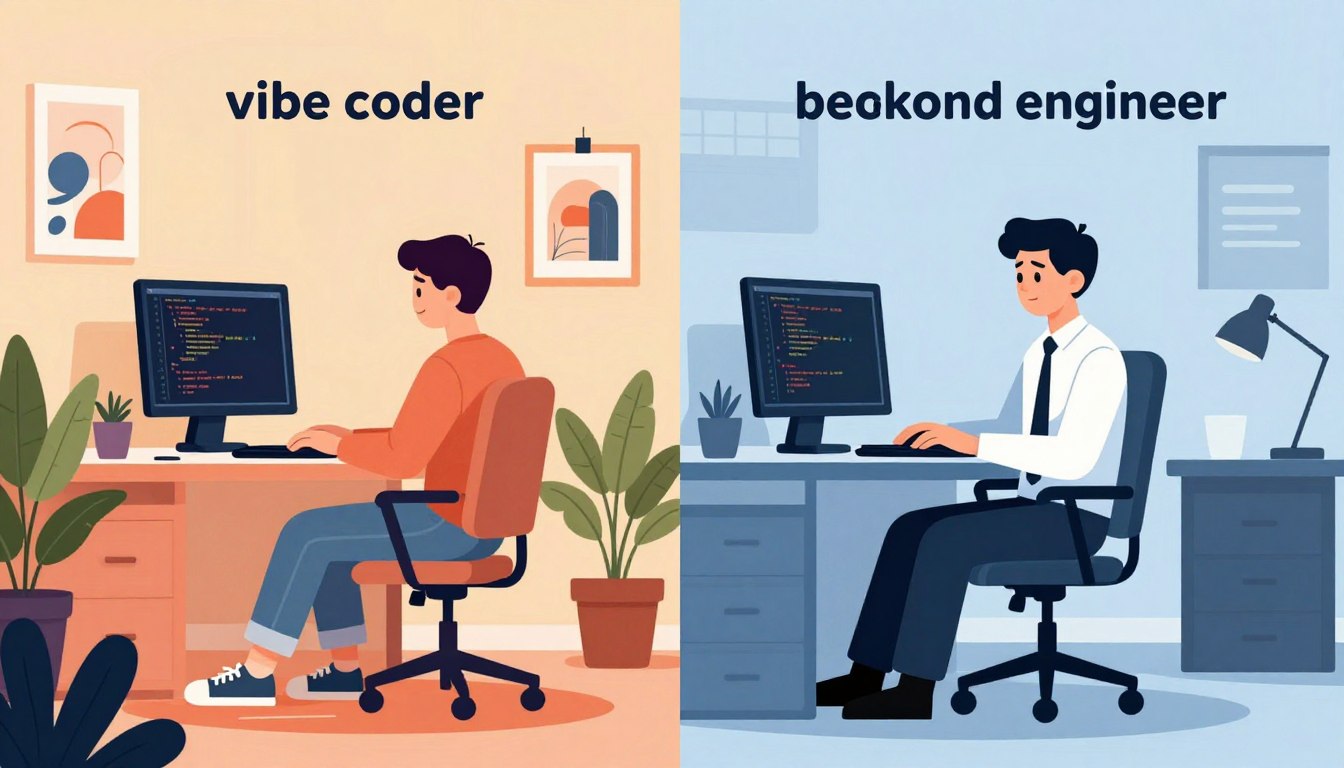
Align roles: a product strategist clarifies goals, a vibe coder orchestrates generation, and QA hardens releases. This structure scales repeatable projects and improves conversion on demos.
The Startup Advantage: Costs, Runway, and Investor Expectations
Startups can test more ideas with less cash by buying discrete outputs instead of hiring full-time engineers.
Capital efficiency: Reallocate spend from salaries to targeted build cycles to expand the number of experiments without increasing burn. This structure extends runway and lets teams take more shots on goal.
Proof over pitch
Investors want working demos and early traction. Prioritize functional prototypes, real-user feedback, and measurable learning velocity. Shorter validation timelines increase the value of quick development loops and clear product metrics.
Due diligence readiness
Document data handling, access controls, testing strategies, and refactoring plans. Prepare answers about security, scalability, and how the team will manage technical debt introduced by rapid generation.
- Run parallel tests and sunset weak signals fast—treat experiments as market research.
- Align budgets to discrete deliverables, inference costs, and periodic security reviews.
- Show process artifacts—prompts, blueprints, QA gates—to build investor confidence.
Enterprise Reality Check: Governance, Security, and Maintainability
When AI accelerates software delivery, governance and clarity must keep pace. Rapidly produced applications can work well early on, but enterprises require explicit rules for ownership, audits, and incident escalation.
Accountability gaps and hidden technical debt
Surface who owns the code: name approvers, reviewers, and maintainers so generated code never becomes anonymous. Without clear responsibility, compliance and user trust suffer.
Scaling safely
Insist on RBAC, strong authentication, and audit trails from the start. Add observability and performance testing to catch inefficiencies before production load increases.
No-code versus conversational development
No-code platforms offer visible workflow structure and schema maps. Conversational generation speeds development but can hide brittle logic and costly queries unless teams export models and tests.
Bridging speed with enterprise controls
Practical bridge: enforce code reviews, exportable blueprints, separate environments, and controlled releases. This keeps the conversational speed while preserving secure, maintainable software for users and ops.
Step-by-Step: Building, Launching, and Scaling a Vibe Coding Business
Pick a single use case that shows value in days and attach one or two clear metrics—activation rate, hours saved, or retention. This step sets the experiment and the acceptance criteria for future work.
Build fast: generate a working web prototype in AI Studio or a blueprinted app in Firebase Studio. Preview changes, gather quick feedback, and iterate until the core flow meets your metric.
Harden and operate
Ask the assistant to generate unit tests, run security checks, and validate performance. Deploy to Cloud Run with separate environments to reduce risk.
Scale sensibly
Specialize in a vertical, templatize common auth and data models, and introduce traditional engineering where complexity grows. Document prompts, blueprints, and runbooks so each new engagement ships faster.
| Step | Tool | Outcome |
|---|---|---|
| Prototype | AI Studio | Live web app from one prompt |
| Blueprint | Firebase Studio | Auth + DB ready |
| Harden | Unit tests & reviews | Safer deployment |
| Scale | Templates & engineering | Repeatable revenue |
Conclusion
A clear playbook—ideate, prompt, test, and harden—keeps rapid generation aligned with long-term maintainability.
The rise of vibe coding shifts the work from manual typing to guiding models with precise language. Teams use AI Studio, Firebase Studio, Gemini Code Assist and agent options such as Replit Agent to move ideas into deployable applications fast.
Startups gain speed and capital efficiency; enterprises add governance, security, and observability to scale safely. Sustainable growth comes when teams capture templates, tests, and runbooks so each project repeats with less risk.
In short: master prompts, enforce reviews, and treat generated code as owned deliverables. That blend of velocity and discipline turns early prototypes into durable products and measurable results.
FAQ
What is vibe coding and how does it differ from traditional software development?
Vibe coding is an iterative approach that blends prompt-driven generation with rapid feedback loops to create production-ready software faster. Unlike traditional development—which emphasizes hand-written code, detailed specs, and longer release cycles—vibe coding uses models and tooling to generate code, run it, gather feedback, and refine. The result is speed in prototyping and early validation while still allowing teams to harden and maintain code for long-term reliability.
Who benefits most from adopting this approach?
Non-technical founders, hybrid teams, solo developers, and startups see immediate gains: faster proof-of-concept builds and lower upfront engineering costs. Enterprises and engineering teams benefit when they adopt controlled workflows that combine generated code with robust QA, security, and observability practices. The method suits anyone focused on rapid learning, product-market fit, and iterative improvement.
What tools and platforms are best for rapid prototyping and production?
Choose based on stage. For prototyping, web-first platforms like Google AI Studio, Firebase Studio, and Cloud Run speed development and deployment. For IDE-integrated workflows, Gemini Code Assist and pair-programming tools improve developer productivity. Agent-capable platforms—Replit Agent, Bolt.new, Cursor, and Riff—help automate tasks and integrate services. Select the tool that matches your need for speed, control, and long-term maintainability.
How does the iterative loop—describe, generate, run, refine—work in practice?
Start by describing desired behavior in prompts or test cases. Generate code with a model or scaffold. Run the code in a sandbox or test environment, observe failures or UX issues, then refine prompts or code. Repeat until behavior meets acceptance criteria. This loop shortens feedback cycles and surfaces design issues earlier than long waterfall-style builds.
When should a prototype be hardened for production?
Harden when validation metrics—user retention, conversion, or revenue—justify investment. At that point, introduce automated tests, security reviews, performance tuning, and deployment pipelines (for example, on Cloud Run). Transitioning earlier wastes effort; transitioning too late creates technical debt. Use metrics and risk assessments to pick the right moment.
What are the main risks of generated code and how can teams mitigate them?
Risks include hidden technical debt, fragile edge-case handling, and gaps in accountability. Mitigate with code reviews, unit and integration tests, static analysis, and clear ownership. Maintain a security checklist, enforce authentication and observability, and plan for technical debt remediation as part of the roadmap.
How should pricing and positioning be structured for a productized offering built with this method?
Position around outcomes—time saved, tasks automated, or revenue enabled—rather than hours. Use usage-based tiers, outcome guarantees, or productized bundles for SMBs and enterprises. Emphasize clear SLAs and integration value for larger customers, and offer fast onboarding for smaller buyers to accelerate validation.
Can agentic platforms replace experienced engineers?
Agents accelerate routine tasks and prototyping but do not replace experienced engineers for architecture, security, and long-term maintainability. Skilled engineers optimize performance, manage governance, and resolve complex domain logic. The best outcomes come from combining agentic tools with engineering oversight.
What due diligence should startups expect from investors when using generated code?
Investors will look for demos, validated user metrics, and a plan for technical risk. Provide security assessments, scalability plans, QA processes, and an explanation of how generated code will be maintained. Demonstrating capital efficiency and compressed validation timelines improves credibility.
How do enterprises reconcile conversational development speed with governance and compliance?
Enterprises can adopt guardrails: standardized templates, approval workflows, automated testing, and observability pipelines. Implement role-based access, audit logs, and secure data-handling patterns. These controls allow teams to move quickly while maintaining compliance and accountability.
What success metrics should teams track when building with this approach?
Track validation metrics—activation rate, retention, conversion—and engineering metrics—lead time, defect rate, and deployment frequency. Monitor cost per experiment and runway impact. Use these indicators to decide when to iterate, pivot, or invest in hardening.
How do you decide which platform to use for a specific project?
Match platform capabilities to project goals. Choose rapid web prototyping tools for early discovery; IDE-integrated assistants for developer productivity; and agentic platforms for automation and integrations. Consider existing codebase complexity and long-term maintainability when selecting a path to production.