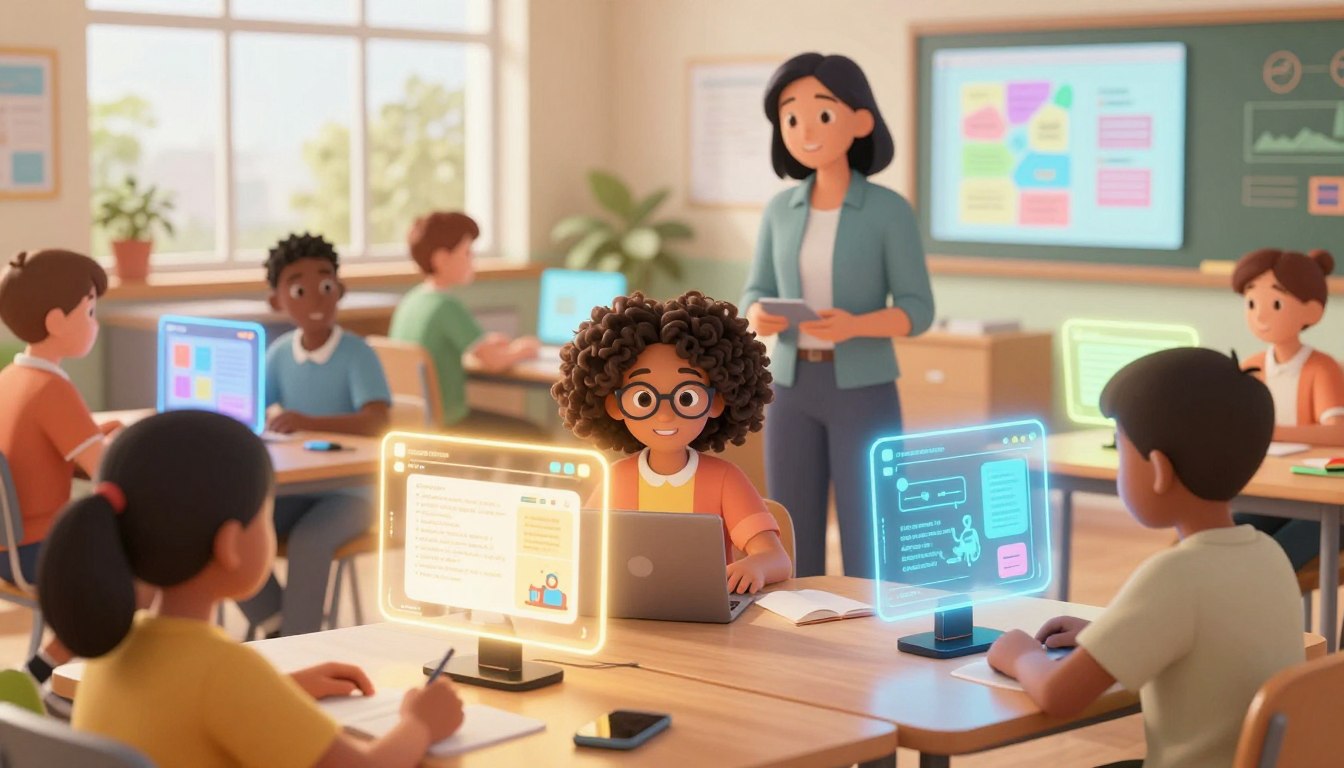
There are moments when a teacher sees a student finally click — the relief, the quiet pride. That instant fuels a hope: education should meet each learner where they are, not force everyone into the same mold.
This guide explains how modern tools tailor content, pace, and supports to real student needs. It connects strategy, classroom practice, and data so leaders can act with confidence.
Adoption is rising fast: more schools and systems are investing in adaptive models and dashboards that boost engagement and improve outcomes. Research shows significant gains on tests and clearer insight into progress; institutions are prioritizing this shift in 2025.
Readers will find practical steps — readiness checks, platform choices, professional development, and measurement — framed with ethical safeguards and teacher empowerment. By the end, leaders will see both the promise and the constraints, and know where to begin.
Key Takeaways
- Tools now adapt content to student pace and needs in real time.
- Evidence links adaptive programs to higher test outcomes and engagement.
- Implementation requires readiness, training, and clear metrics.
- Ethics and privacy are central to sustaining trust in education tech.
- Teachers gain time for instruction when systems handle routine tasks.
Why Personalized AI Learning Matters Now
What began as classroom pilots is now shaping institutional strategy. EDUCAUSE reports 57% of higher education leaders prioritize AI this year, while the market grows at roughly 36% CAGR. Those figures show the shift from experiments to core capability.
Demand from students and employers is changing priorities. Nearly 60% of U.S. K-12 teachers already report individualized learning in their classrooms. Institutions pursue this to lift engagement, improve performance, and streamline operations.
- Scale that matches needs: technology makes targeted practice and pacing feasible across whole cohorts.
- Early insights and intervention: real-time data helps educators act before gaps widen.
- Operational and equity gains: reduced admin work, translation tools, and accessibility features widen access and free teacher time.
In short, measurable outcomes and market momentum are driving executive sponsorship. Institutions that act now build durable analytics and governance—positioning students and staff for long-term success.
Personalized AI Learning
Modern classrooms now adjust pathways so each student progresses by mastery, not seat time. That shift separates individual-focused approaches from scaling them across entire cohorts.
Defining tailored paths versus scale
Personalized learning targets a single learner’s needs: pace, scaffolds, and preferred formats. By contrast, personalization at scale uses systems to extend those pathways across many students.
How systems adapt content, pacing, and instruction in real time
Adaptive models analyze patterns—strengths, gaps, effort—and then sequence content and support. Real time adjustments tune difficulty so students stay challenged without breaking focus.
- Dashboards translate signals into teacher actions: reteach, extend, or regroup.
- Systems blend text, video, and simulations to increase engagement.
- Educators set pedagogical guardrails while platforms handle micro-adjustments.
- Clear mastery criteria let a student advance on demonstrated understanding, not hours spent.
“When systems match tasks to objectives, rigor improves and frustration falls.”
Explore how adaptive platforms work in practice with a focused case study on adaptive learning platforms.
The State of AI in Education, United States, present
U.S. campuses and districts are shifting from pilots to operational roadmaps that embed advanced systems across classrooms. This change is measurable: over 47% of learning management systems are poised to be AI-powered within three years.
What that signals: EDUCAUSE reports 57% of higher education leaders prioritize intelligence projects in 2025, and the market is growing at roughly 36% CAGR. Together, these figures show a move from curiosity to implementation.
Vendors and institutions now focus on practical gains — retention, completion, and student support. Roadmaps favor platforms that integrate with existing systems and protect data quality.
- Institutions shift from pilots to targeted implementation with governance and clear value cases.
- LMS updates emphasize adaptive pathways, automated assessments, and predictive alerts for students.
- Funding concentrates on tools that yield measurable outcomes, not novelty features.
“Momentum in the market favors solutions that combine intelligence with educator-centric design.”
Leaders who align strategy, procurement, and professional development will move fastest. The present moment is less about hype and more about scaled, responsible implementation in education.
Core Capabilities That Power Personalized Learning
Behind every successful pathway are models that map skills, measure progress, and guide next steps. These capabilities turn raw signals into classroom action, helping teachers and students focus on what matters.
Adaptive models and mastery-based progression
Adaptive models map prerequisite skills and adjust pathways so students progress on evidence, not the calendar. Mastery checkpoints confirm understanding before a learner advances.
Real-time feedback loops and instant recommendations
Instant feedback keeps effort aligned with goals. Clear recommendations direct study plans, practice sets, and enrichment with precision.
Predictive analytics for early interventions
Analytics surface early warning signs—attendance, pacing, and performance—so timely interventions can prevent skill loss and drop-off.
Dynamic content delivery across modalities
Systems blend video, simulations, and text to reinforce concepts across contexts. This dynamic content supports varied preferences and strengthens transfer.
“Continuous signals create a feedback loop that refines models and improves learning efficiency.”
- Alignment to standards: systems keep instruction tethered to outcomes while tailoring tasks.
- Teacher tools: analytics guide grouping and target high-leverage skills.
From Data to Insight: Using Student Data Responsibly
When cleaned and contextualized, classroom metrics become a practical tool for day-to-day instruction. Schools convert raw logs into timely signals that guide reteaching, grouping, and extension.
What fuels effective personalization: clean performance metrics, engagement signals, and interaction patterns. These streams tell educators where students struggle and where effort is rising.
Dashboards must translate analytics into clear teacher-facing insights. Visual cues should suggest next steps—reteach, scaffold, or accelerate—so instruction follows evidence, not guesswork.
Governance, trust, and practice
Student data must be minimized, secured, and governed to meet privacy expectations. Systems should log the rationale behind recommendations to support transparency and educator trust.
- Role-based access keeps sensitive records limited to those who need them.
- Training helps teachers interpret visualizations and avoid over-reliance on single metrics.
- Continuous audits verify that data practices improve learning without compromising rights.
“Insight is only useful when it is actionable, explainable, and protected.”
For guidance on responsible governance and public engagement, consult resources on responsible practices.
Accessibility and Inclusion Built In
Making accessibility default shifts the burden from learners to systems that support diverse needs. When accessibility is embedded, classrooms run smoother and students can focus on content, not workarounds.
Text-to-speech, speech-to-text, and translation for equitable access
Built-in tools—text-to-speech, speech-to-text, and live translation—expand access for students with disabilities and multilingual families.
These features remove friction at the point of use and let teachers deliver instruction without constant modification.
Adapting materials to diverse needs and styles
Systems can adjust materials for readability, pacing, and format so learners engage with content that fits their needs.
Educators can tag content to align adaptations with standards, preserving rigor while widening access.
- Default-enabled accessibility reduces setup time and increases uptake.
- Multilingual support helps families understand expectations and join the learning process.
- Monitoring usage lets teachers ensure tools supplement, not replace, instruction.
- Inclusive design strengthens belonging and improves overall student experiences.
“Accessibility that is built in benefits every student and simplifies classroom practice.”
When accessibility is treated as core to education strategy, institutions deliver fairer, clearer experiences for all learners.
AI-Powered Tutoring and Targeted Support
When help arrives the moment a student struggles, misconceptions rarely take root. This section examines tutoring that works like a tutor in the room: immediate, focused, and aligned to class goals.
Cognitive tutoring systems and one-on-one guidance in real time
Cognitive tutoring systems simulate expert guidance and adapt step-by-step to a learner’s inputs in real time. These tools give instant feedback that deepens knowledge and builds durable problem-solving skills.
91% accurate chatbots for personalized student support
Chatbots now answer questions around the clock with roughly 91% accuracy. They guide students to resources, suggest next steps, and escalate complex cases to teachers with context.
- Immediate feedback strengthens skills before errors become habits.
- Usage analytics show which topics need class-wide reteaching.
- Educators retain control: they set boundaries and review tutor transcripts.
- Together, tutoring systems and chatbots extend the school day without overloading teachers.
“Targeted support bridges gaps and turns short interventions into lasting mastery.”
Platforms and Tools: What’s Working in Classrooms
A few well-designed systems now carry the load of routine tasks while teachers focus on high-impact work. In practice, these platforms deliver actionable data, clear recommendations, and timely help so instruction stays precise.
Knewton: focused plans that boost motivation
Knewton acts like a digital tutor: it diagnoses strengths, highlights hurdles, and builds study plans that help students keep focus and momentum. Teachers use Knewton to assign targeted practice and measure where extra support is needed.
DreamBox: performance-informed recommendations
DreamBox continuously analyzes performance and aligns suggestions to standards. The system surfaces specific recommendations so teachers can group students by need and track progress against goals.
SchoolAI: saving time, strengthening engagement
SchoolAI gives quick snapshots of student progress, reduces admin work, and supports deeper engagement through Spaces. Educator reports cite improved grammar scores, renewed confidence, and less burnout.
“Students show stronger engagement and teachers reclaim planning time,” said Priscila Prestes, reflecting common testimonials.
- Small-group instruction improves as platforms deliver individualized lessons while teachers target the most critical needs.
- Timely help ensures students learn concepts rather than merely correcting errors after the fact.
- Integrations with existing systems streamline workflows and cut administrative work.
These tools complement classroom practice: they supply data, reduce repetitive tasks, and create space for higher-quality interactions that change scores where it matters.
Evidence of Impact: Scores, Engagement, and Confidence
Assessment data now tells a consistent story: targeted supports accelerate measurable progress. Students using adaptive programs saw a 62% increase in test scores, a clear indicator of impact at scale.
Educators report faster progress monitoring and stronger engagement. Teachers note that timely feedback and clearer next steps keep students on task and motivated.
Testimonials from leaders and teachers describe improved grammar scores, time savings, and greater student ownership. Confidence rises when a learner sees daily gains tied to specific supports.
- Performance data shows faster gap closure and better retention of skills.
- Usage insights help refine lesson plans and allocate resources more effectively.
- Time saved on routine tasks lets teachers give high-quality feedback and targeted interventions.
“When systems amplify strong instruction, observable engagement and outcomes improve.”
For a practical case study on platforms that drive these results, see adaptive learning platforms. The evidence suggests that, when designed with standards and teacher control, these tools strengthen education without replacing human judgment.
Higher Education’s Shift to Personalized Pathways
Institutions are aligning curriculum, advising, and platforms to create coherent, student-centered pathways. This coordination turns scattered pilots into program-level strategy that centers progress and outcomes.
Digital acceleration and trusted data now drive priorities across campuses. EDUCAUSE reports 57% of institutions prioritized technology projects in 2025; digital acceleration (52%), student engagement (50%), and trusted data and insights (49%) top the list.
Digital acceleration, trusted data, and student engagement priorities
Campuses invest in platforms that link SIS and LMS records to keep data accurate and usable. That integration is essential for timely advising and for measuring program efficacy.
Trusted data fuels dashboards and predictive alerts. When faculty see clear signals, they can intervene early and protect student performance.
Predictive, interpretive, and generative AI in production
Predictive models are in use or testing at about 64% of institutions; over 55% have integrated generative tools into workflows. Interpretive analytics help surface trends that inform course design and resource planning.
- Implementation focus: governance, academic integrity, and transparent model behavior.
- Faculty development: ensures new technology enhances instruction without diluting rigor.
- Momentum: is strongest where analytics and pedagogy are tightly aligned.
“When data and pedagogy move together, pathways become actionable rather than aspirational.”
K-12 Transformation: Small Groups, Big Gains
Classrooms now pivot quickly to short, focused interventions that keep students on track. Nearly 60% of U.S. K‑12 educators report individualized approaches in regular practice. The result: routine time for small-group work and clearer daily goals.
Individualized practice becomes mainstream
Teachers use targeted schedules to meet small groups while platforms assign practice. This arrangement frees teachers to deliver high-impact instruction and reduces busy work for students.
Real-time help to stop errors early
Immediate feedback prevents misconceptions from becoming habits. When real time signals flag a gap, teachers or tools step in with quick interventions that preserve progress.
- Small groups sharpen focus and accelerate skills development.
- Students see progress in bite-sized goals and daily wins.
- Platforms let educators monitor class and group trends without losing sight of individuals.
- Ongoing coaching and PLCs spread practices that sustain gains.
“Timely support turns short interventions into lasting mastery,” report many practitioners.
Designing AI-Enhanced Learning Experiences
Instructional design starts with clear objectives and an assessment blueprint that define what success looks like. From that base, teams create modular content and checks that let systems sequence tasks precisely.
Instructional design for adaptive content and assessments
Designers should tag content by difficulty, skills, and standards to enable fine-grained sequencing.
Formative assessments must be frequent and diagnostic so pathways adjust before gaps widen.
Aligning materials to interests, skills, and goals
Materials that connect to student interests increase motivation and depth. Use NLP tools to summarize texts and generate study aids—flashcards, guides, and quick summaries—that reinforce core concepts efficiently.
Balancing teacher judgment with recommendations
Systems should surface recommendations with clear rationale so educators can review and adapt them. Teachers remain the final authority: they contextualize suggestions and choose which interventions align with classroom priorities.
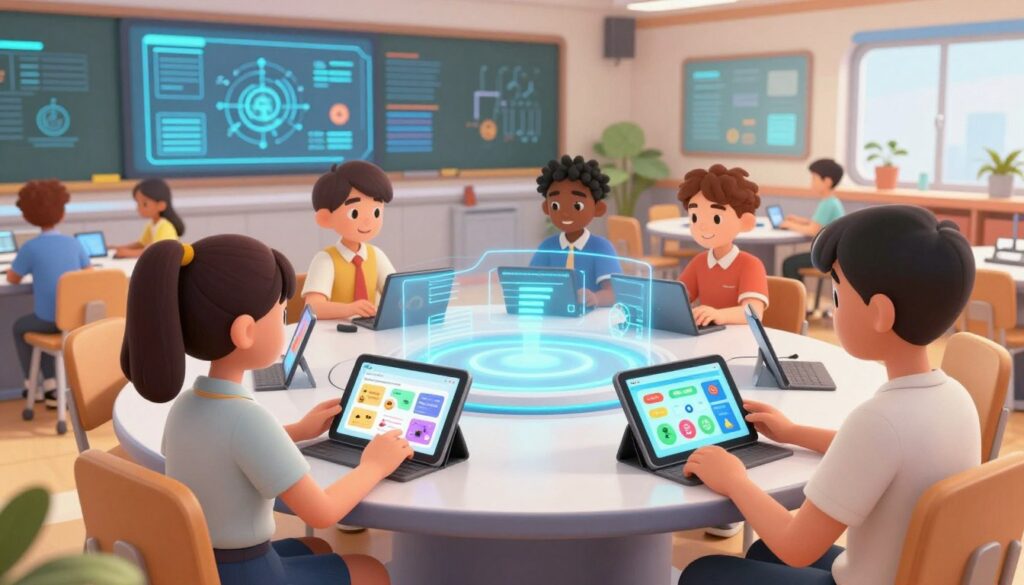
- Start with objectives and assessment blueprints.
- Make content granular and tagged for sequencing.
- Mix individual, collaborative, and applied experiences.
- Keep recommendations transparent and adjustable.
“Design is not a feature; it is the architecture of instruction and transfer.”
Implementation Roadmap for Schools and Districts
Schools succeed when technical readiness meets strong human processes. A clear roadmap reduces risk and keeps focus on outcomes rather than novelty.
Start with a readiness audit: check infrastructure, connectivity, device equity, and staff capacity. Pair that with a data inventory that maps what is collected and why.
Selecting platforms and systems
Choose platforms that integrate with SIS and LMS, support standards-aligned content, and reduce duplicate work. Prioritize tools that surface trusted data and transparent recommendations.
Pilots, professional development, and scaling
Run targeted pilots with clear success metrics and control groups. Invest in development centered on pedagogy; teachers need practice using insights, not just feature training.
Change management and communication
Define roles across IT, curriculum, and leadership to sustain momentum. Communicate purpose and privacy safeguards to families and staff to build trust.
- Establish data governance and privacy policies for collection, access, and retention.
- Use phased scaling plans that reflect budget and lessons learned.
- Track total cost of ownership and plan for change management from day one.
“Implementation succeeds when technology supports teaching and reduces administrative friction.”
For a practical implementation plan, leaders will find step-by-step guidance to align governance, procurement, and classroom practice.
Measuring What Matters: Outcomes and Analytics
Good analytics reveal small trends before they become large problems. Clarity about desired outcomes focuses effort and reduces wasted time.
Tracking performance, engagement, and growth over time
Define outcomes that matter—mastery, persistence, and equitable growth across groups. Use analytics to monitor performance trends and engagement patterns so progress is visible to teachers and leaders.
Using early warning indicators for targeted interventions
Predictive models forecast academic risk and surface early warning signals. When indicators flag students at risk, teams can design rapid, targeted interventions that stop setbacks early.
Continuous improvement with feedback and A/B testing
Build feedback cycles that include student voice and educator reflection. Run A/B tests to validate which supports move the needle; use clean data and routine quality checks to avoid false positives.
- Visual dashboards should prioritize clarity, comparability, and actionability.
- Progress monitoring aligns classroom moves with program goals and resources.
- Share insights across teams to coordinate supports and avoid duplication.
“Measurement is useful only when it leads to timely action.”
For practical guidance on structuring analytics around meaningful measures, see measuring what matters. Continuous improvement is a culture—iterate with evidence and stay student-centered.
Ethics, Privacy, and Fairness
Guardrails for data use turn technical possibilities into responsible practice in education. Clear rules protect learners and preserve trust. Actionable governance makes systems useful and accountable.
Safeguarding student data and ensuring transparency
Protect student data with strict access controls, encryption, and retention limits. Explain what is collected, who can see it, and how long it is kept.
Procurement should require privacy impact assessments and vendor commitments. Systems must log decision rationales and let educators review or override recommendations.
Mitigating algorithmic bias and ensuring equitable access
Audit models for bias using representative datasets and routine fairness checks. Regular testing across areas of potential disparity keeps performance equitable.
Close device and connectivity gaps to support accessibility and opportunity. Insights should inform supports—not stigmatize learners—and escalation paths must be clear.
- Role-based access and encryption
- Transparent data use statements for families
- Regular bias audits and fairness testing
- Vendor privacy commitments and impact reviews
- Independent oversight and clear escalation channels
“Ethical technology succeeds when it is transparent, auditable, and built to expand opportunity.”
The Human Role in an AI-First Learning System
Teachers shape classroom experience by turning data into action and relationships into growth. They remain the core designers of curriculum, mentors for students, and decision-makers who apply insights to instruction.
Teachers as designers, mentors, and data-informed decision-makers
Teaching now blends craft and evidence. Educators use dashboards and reports to form groups, set targets, and craft tasks that fit real needs.
They mentor students through complex problems, give targeted feedback, and refine design choices from daily signals. Professional judgment sets the boundary for any automated recommendation.
Reducing administrative work to prioritize instruction
When tools handle routine work, teachers reclaim time for high-impact instruction. Reports from classrooms using SchoolAI Spaces note less burnout and more focused teaching.
- Teachers remain central—designing experiences and guiding student progress.
- Systems cut repetitive work so instruction and mentoring take priority.
- Data-informed practice supports precise grouping and timely reteaching.
- Clear workflows protect teacher well-being across the school year.
“When automation removes busy work, teachers spend more time where they matter most.”
Conclusion
Sustained focus on goals, people, and data turns potential into measurable gains. Thoughtful implementation and clear governance let systems deliver real outcomes: test gains (62%) and reliable support tools (91% chatbot accuracy) show what is possible when schools act with purpose.
Good strategy pairs technology with teacher expertise and strong training. Start with defined goals, iterative pilots, and partnerships that support staff development. Protect data and equity so trust grows as capability scales.
For guidance on risks and practical steps, consult work on AI for personalized learning. When leaders, teachers, and students collaborate, education systems move from promise to durable development and improved student knowledge.
FAQ
How does AI customize education for each student’s needs?
By combining adaptive models, real-time analytics, and content delivery, systems adjust pacing, difficulty, and modality to match a learner’s mastery and interests. Platforms analyze performance, engagement, and patterns to recommend next steps, provide targeted practice, and surface teacher-facing insights that guide instruction.
Why does personalized AI learning matter now?
Rising demand for efficient outcomes, tight instructional time, and broader access goals make tailored instruction urgent. With tools that scale differentiation and provide instant feedback, schools can improve scores, engagement, and confidence while freeing teachers to focus on mentorship and curriculum design.
What’s the difference between individualized instruction and personalization at scale?
Individualized instruction centers on one learner’s needs; personalization at scale uses models and automation to deliver that same level of fit across many learners. The latter relies on analytics, content libraries, and recommendation engines to maintain quality while serving whole cohorts.
How do systems adapt content, pacing, and instruction in real time?
Systems monitor responses, time-on-task, and mastery indicators. They then modify lesson sequences, suggest scaffolds, or shift modalities—text, video, or practice—instantly. This closed-loop approach uses feedback and predictive signals to prevent frustration and accelerate mastery.
What is the current state of these technologies in U.S. education?
Adoption is accelerating: many learning management systems and platforms plan AI-driven features soon, and higher education increasingly prioritizes data-driven personalization. Market momentum and investment indicate widespread integration across K–12 and postsecondary settings.
Which core capabilities power modern adaptive learning?
Key capabilities include mastery-based progression, dynamic content delivery, real-time feedback loops, and predictive analytics for early interventions. Together, these features create responsive pathways that adjust to skill gaps and strengths.
What student data fuels these systems, and how is it used?
Performance metrics, engagement signals, assessment outcomes, and behavior patterns inform recommendations. Responsible systems translate data into dashboards and teacher-facing insights while supporting targeted interventions and curriculum adjustments.
How do platforms ensure accessibility and inclusion?
Leading platforms embed text-to-speech, speech-to-text, translation, and adjustable interfaces to meet diverse needs. They adapt materials to multiple learning styles and provide equitable access for students with different abilities.
How effective are AI-powered tutoring and chat supports?
Cognitive tutoring systems and conversational supports deliver one-on-one guidance and immediate clarification. When well-designed and integrated, they boost retention and reduce errors; many solutions report high accuracy in routine student support tasks.
Which classroom tools are showing measurable results?
Adaptive platforms such as Knewton and DreamBox have documented improvements in focus and performance by tailoring content and analyzing progress. Time-saving tools that integrate with district systems also drive stronger engagement and reduce administrative workload.
What evidence exists for impact on scores and engagement?
Evaluations of adaptive programs show meaningful test score gains and higher student confidence. Combined quantitative analytics and teacher testimonials highlight improvements in ownership, persistence, and measurable growth over time.
How are higher education institutions adopting personalized pathways?
Colleges are accelerating digital transformation, leveraging predictive and interpretive models to improve retention and course completion. Trusted data and targeted supports help advisors and instructors create clearer, individualized degree pathways.
How is K–12 changing with these approaches?
Many U.S. classrooms now use individualized strategies enabled by real-time help and small-group interventions. Early support prevents misconceptions from becoming habits and amplifies teacher impact during instruction.
What instructional design practices support AI-enhanced experiences?
Successful designs align assessments and content to goals, integrate adaptive pathways, and balance teacher judgment with system recommendations. They map interests and skills to materials and include iterative testing for continuous improvement.
What should schools include in an implementation roadmap?
Start with a readiness audit covering infrastructure, data practices, and privacy. Then select compatible platforms, pilot with clear metrics, invest in professional development, and scale with stakeholder communication and change management.
How do educators measure what matters?
Track performance, engagement, and growth over time with actionable dashboards. Use early warning indicators for targeted interventions and run A/B tests to refine content, ensuring continuous improvement aligned to outcomes.
How are ethics, privacy, and fairness addressed?
Systems must safeguard student data, provide transparent practices, and mitigate algorithmic bias. Policies, audits, and inclusive datasets reduce risk and ensure equitable access to supports and opportunities.
What remains the human role in an AI-first system?
Teachers become designers, mentors, and data-informed decision-makers. By reducing administrative tasks, systems let educators prioritize instruction, build relationships, and interpret insights to shape learning experiences.