Every developer remembers a day when code clicked: long hours vaporized into clear progress, and a quiet satisfaction replaced stress.
The concept behind that feeling has roots in psychology. Mihaly Csikszentmihalyi mapped nine dimensions that explain why focused work feels effortless: challenge-skill balance, clear goals, immediate feedback, and a sense of control.
This short guide frames those ideas for modern software teams and individuals. It explains why aligned challenge and skill boost productivity and satisfaction, and shows practical ways to make this experience repeatable rather than accidental.
Leaders and practitioners—from GitHub engineers to independent authors—stress that clear outcomes, good collaboration, and enjoyment spark deeper focus and cleaner code. We link research to hands-on steps so teams can design uninterrupted work, reduce interruptions, and ship better solutions.
Key Takeaways
- Clear goals and immediate feedback are foundational to sustained focus.
- Match task challenge with skill to unlock deeper concentration.
- Design environments and rituals that limit interruptions and promote heads-down time.
- Team practices like pair work and no-meeting days support repeatable progress.
- Actionable steps link research to real workplace solutions; try one change per week.
- Read more practical tips in this concise guide: achieving flow while coding.
What Flow Looks Like in Software Development Today
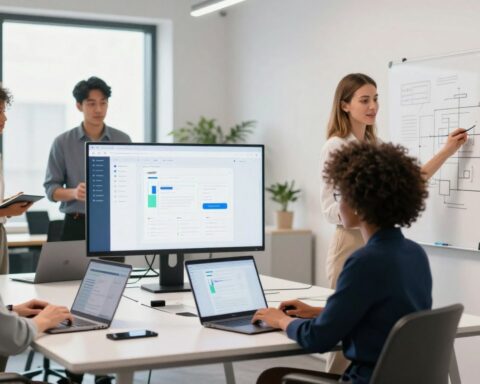
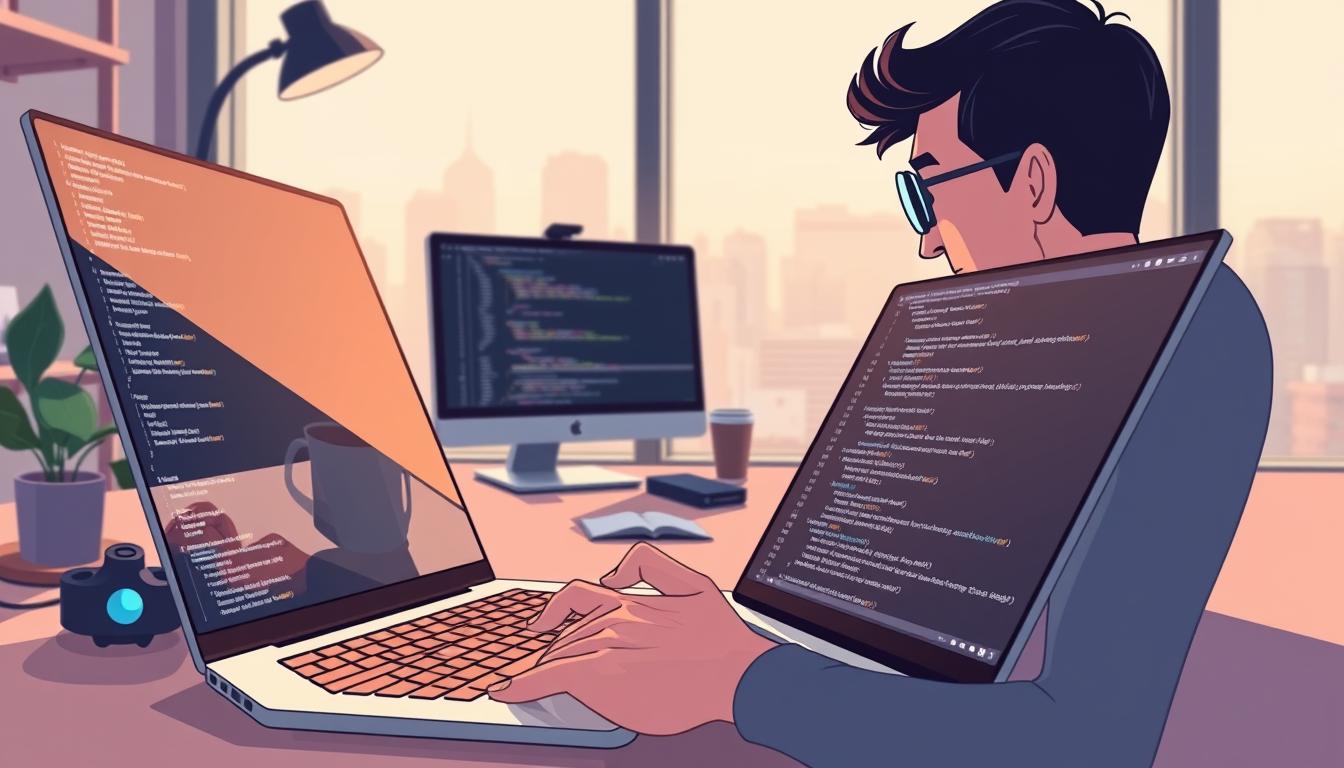
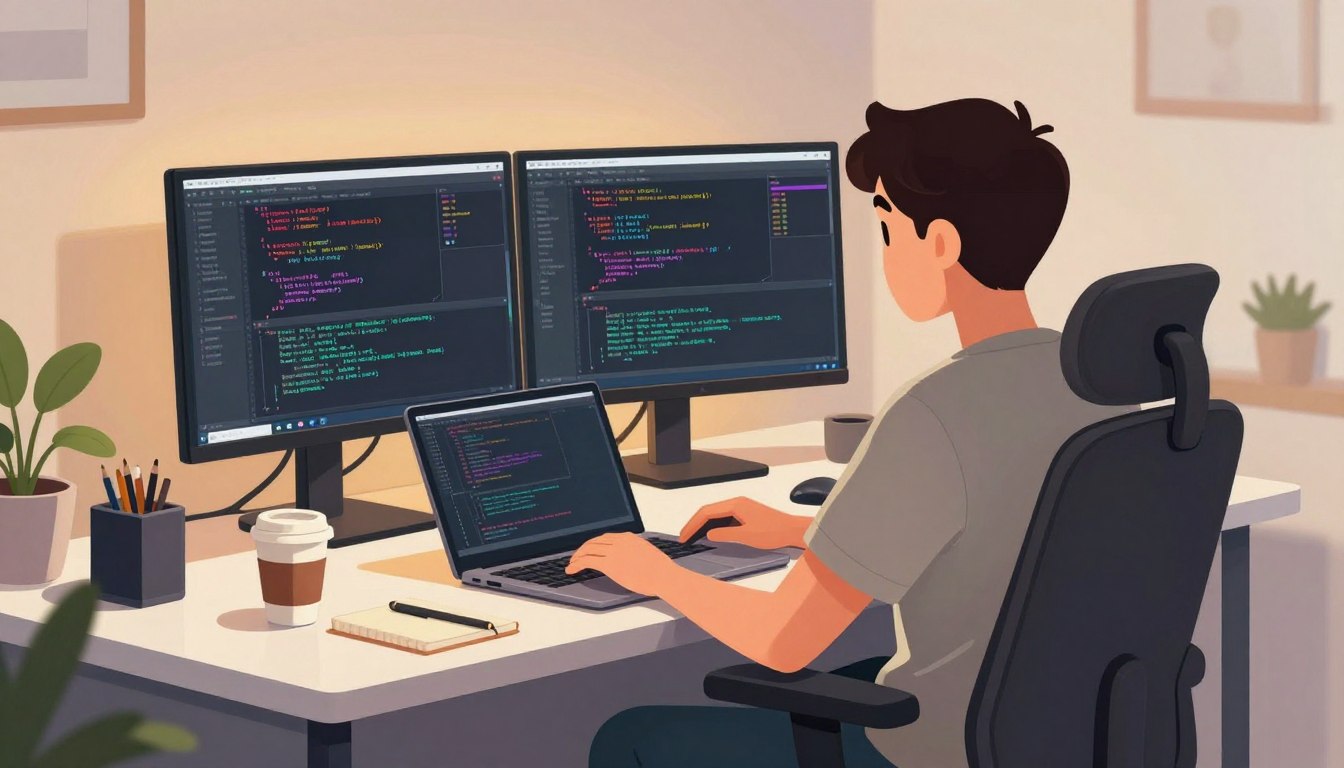
In modern engineering teams, deep focus looks less like magic and more like a repeatable routine. It appears as extended, uninterrupted blocks where an engineer holds a complex mental model and advances a project without frequent context switching.
Research matters. An interruption often costs about 23 minutes to recover, and many teams report only ~41% of the workday in productive focus. Organizations that optimize the environment complete projects roughly 37% faster.
Practically, this looks like 2–3 hour focus windows with batched notifications, clear issue descriptions, and a code path that’s visible. When tools such as GitHub, IDEs, CI, and Slack are set for async-first behavior, the team can preserve momentum and reduce interruptions.
“Sustained attention comes from predictable rituals, clear goals, and guarded time blocks.”
- Outcome-focused issues and scoped tasks keep context tight.
- Pull requests and targeted comments give rapid, respectful feedback.
- Defined response expectations and interruption criteria create repeatable opportunities for flow state.
For teams ready to make this habitual, start by mapping current work rhythms and try one change per week—then iterate. Learn more about designing repeatable flow in engineering practices.
Why Flow State for Developers Drives Productivity, Quality, and Satisfaction
When engineers hit deep focus, the measurable effects show up across velocity, quality, and morale. The data is straightforward: regaining attention after an interruption takes about 23 minutes, and many teams report only ~41% of the day in productive work. Microsoft Research found that optimized environments finish projects roughly 37% faster.
Current research that matters
Those minutes add up. Protecting a single deep block reclaims time and reduces context-switch cost across a project. With more continuous focus, developers move higher-value work forward instead of firefighting small tasks.
The DevEx triangle: flow, feedback, and cognitive load
The DevEx triangle links uninterrupted attention, tight feedback loops, and low accidental complexity. Fast local tests, pair sessions, and clear issue scopes shorten feedback time and keep mental load manageable.
Benefits developers report
Practitioners note cleaner, more secure code, quicker deployments, and more creative solutions when teams protect heads-down time. Frequent flow experiences also raise job satisfaction and accelerate professional growth.
“Frequent deep work improves throughput and reduces decision fatigue.”
- More productive minutes equals more progress on core project goals.
- Tighter feedback raises quality and speeds releases.
- Reducing interruptions is a measurable process improvement with business impact.
Common Obstacles That Break Flow in Modern Engineering Work
Small interruptions accumulate into the largest drag on engineering momentum. They fragment attention, erode progress, and raise the cost of returning to deep focus.
Recovering a train of thought often takes 15–25 minutes. That delay multiplies when meetings, chat pings, and ad-hoc asks arrive during a focused session.
- Constant interruptions from meetings and instant messaging break mental models; minutes are lost rebuilding context.
- Smartphones create passive scrolling and active alerts that magnify distractions and shorten productive blocks.
- Slow tools and feedback loops are silent killers: an IDE or CI wait over ten seconds can derail a chain of thought.
- Delayed code reviews and slow builds leave engineers stranded between tasks and invite more context switching.
- High cognitive load—unclear goals or sprawling code—prevents immersion and raises error rates.
- In a remote-first world, notification overload and time-zone friction add off-cycle interruptions that fragment the workday.
“Diagnose these problems clearly; most are solvable with targeted process and tooling changes.”
Practical next step: map where interruptions happen, measure lost minutes per event, and try one fix per week. Learn more about sustaining reliable developer flow state here.
Personal How‑To Tactics to Enter and Stay in Flow
Intentional habits and smart calendar design turn rare immersion into a reliable daily routine.
Reserve large blocks—book 2–3 hour focus sessions and cluster meetings into separate windows. Protect those blocks like a priority task so context switching drops and productive time rises.
Disable nonessential notifications. Snooze Slack and phone alerts, and batch email into fixed slots. This keeps messages from splitting attention when writing or reviewing code.
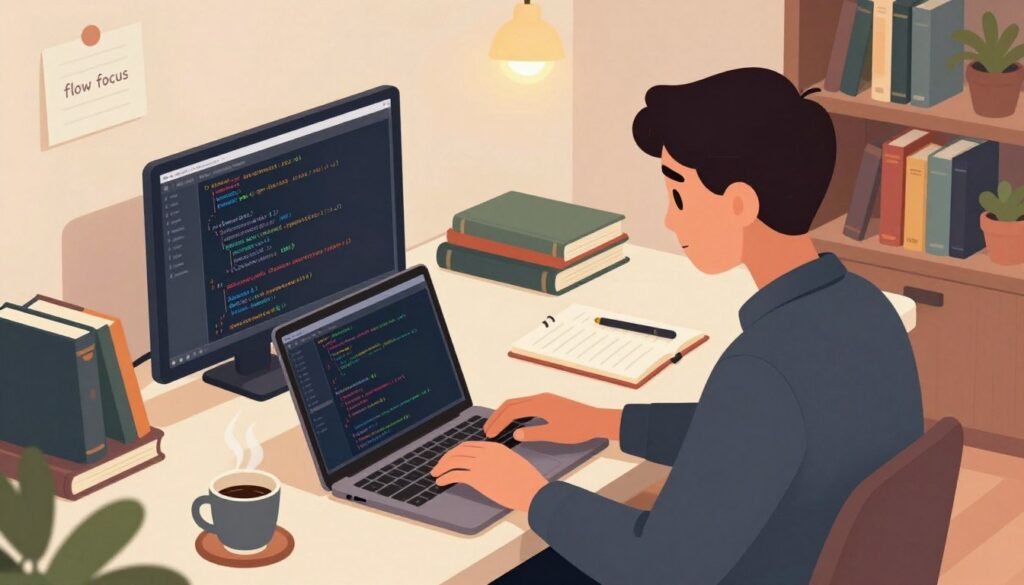
Simple rituals and energy management
Start each block with a clear goal: 10 minutes to set intent, clear the desk, and launch a short pre-flow ritual—coffee, a quick inbox sweep, and activating focus mode.
Schedule short breaks of 15–30 minutes between sessions. These pauses restore mental energy and reduce the risk of mistakes during long stretches of work.
Reduce distractions and optimize the space
- Avoid multitasking: handle one task at a time to preserve working memory.
- Use noise-canceling headphones and an ergonomic setup to lower sensory strain.
- Keep a parking-lot note for intrusive thoughts—capture and defer, then return to the primary task.
“Small, repeatable rituals and protected calendar time are the most reliable ways to increase deep focus.”
For further practical guidance, see this short guide on how to get in the flow while and consider books like Stolen Focus and Make Time to build lasting attention habits.
Team and Leadership Practices to Engineer Flow Across the Organization
Strong leadership choices and team norms shape whether focused work becomes routine or rare. Clear management signals and predictable schedules cut needless interruptions and let engineers preserve long blocks of work.
Adopt async-first communication and define what truly merits an immediate reply. Set interruption criteria so teams choose when to engage and when items can wait without stalling progress.
Cluster meetings into predictable windows and limit unplanned work. This protects heads-down time and raises overall productivity.
- Accelerate feedback: use pair or mob programming to shrink review latency and keep context shared.
- Fast local tests: invest in IDE automation so a change verifies in seconds and momentum stays intact.
- Clarify goals: write outcome-focused issues and acceptance criteria so each task starts with a clear definition of “good.”
Calibrate challenge and skill when assigning work. Grant autonomy, batch Slack questions, and collect periodic DevEx surveys to measure how well practices support progress and satisfaction.
Result: consistent rituals, visible wins, and short feedback loops that help engineering teams sustain deep, repeatable flow.
Designing the Development Environment for Deep Work
A development environment that removes friction lets engineers solve problems instead of fighting tools.
Standardize and automate the system. Use containerization and infrastructure-as-code to guarantee parity across machines. One-command builds and automated provisioning cut setup time and eliminate “it works on my laptop” problems.
Fast feedback in the IDE
Keep validation local and instant. Fast, automated tests in the IDE give near-instant verification. This reduces context switches and preserves flow during iterative changes.
Organize code for discoverability
Design modular repositories with clear conventions and documentation. Modularity narrows the mental scope; consistent layouts speed information discovery and reduce cognitive load.
Consolidate tools and automate processes
Reduce tool overlap and adopt integrated platforms with SSO and centralized knowledge. Automate builds, deployments, formatting, linting, and docs so the team spends time on meaningful engineering work.
“Small environment improvements compound into major gains in sustained focus.”
- Use IaC and automated provisioning to remove variability.
- Enable one-command builds and fast local tests to keep work inside the IDE.
- Centralize information in searchable repos to prevent time sinks.
- Measure environment friction and refine the process iteratively.
For a practical checklist and deeper guidance, see this short guide on designing environments that support flow.
Measuring Flow to Improve It Over Time
Start by measuring what actually happens during a typical workday rather than relying on impressions. Baseline data turns vague issues into clear targets and creates a repeatable path to better focus.
Focus time percentage, context switching frequency, and meeting load
Track the percentage of the day spent in uninterrupted blocks and how often context shifts occur. Measure what portion of the day meetings consume.
Baseline metrics: response expectations, after-hours notifications, information discovery time
Quantify communication overhead: expected message response time and frequency of after-hours notifications. Record average time to locate key documentation—the hidden drag on quality and progress.
Iteration cadence: assess, target quick wins, and scale what works
Pair delivery metrics like velocity and project predictability with quality signals such as defects and rework. Add developer satisfaction surveys to capture lived experience and highlight opportunities missing in raw numbers.
- Establish a baseline: measure uninterrupted blocks, context switches, and meeting load.
- Monitor feedback latency: reviews, builds, and tests that add minutes of delay.
- Iterate: pilot changes, measure minutes saved and progress gains, then scale successes.
Use metrics as a guide, not a hammer; the goal is to make sustained focus a normal part of development management.
Conclusion
strong, A deliberate approach to focus converts fragmented hours into meaningful progress.
Frequent experiences of flow and a clear flow state correlate with higher productivity, cleaner code, and more satisfying careers. Practical playbooks align challenge and skill, tighten feedback loops, and reduce context drag so teams deliver faster with fewer defects.
Leaders amplify results by setting interruption criteria, adopting async norms, and measuring progress. Invest in tooling, test speed, and code organization to unlock sustained deep work across software projects.
Choose one lever this week—time blocks, local fast tests, or a meeting-free window—and track the difference. For guidance on automating process and scaling gains, see this primer on automated workflow optimization.
FAQ
What does "achieving flow while coding" mean in practical terms?
It means entering extended, focused work periods where a developer loses track of time while producing high-quality code. Practically, this looks like uninterrupted blocks of 2–3 hours, minimal context switching, fast feedback from tools, and clear goals that match skill level. Teams support this by clustering meetings, limiting notifications, and providing reliable dev environments.
How long does it take to recover focus after an interruption?
Research and field reports indicate recovery often takes about 23 minutes on average. That time includes reloading context, reopening files, and mentally reconstructing the problem. Reducing interruptions and batching communication significantly shortens effective recovery time.
How much of a developer’s day can realistically be productive deep work?
Typical measurements show about 41% of the workday can be productive focused time when systems and processes support it. This share rises with protected focus blocks, async communication, and faster feedback loops from CI and local tests.
What are the main benefits teams report from enabling flow?
Developers and managers report cleaner code, faster delivery cycles (often cited as up to 37% faster in certain teams), more creative problem solving, higher job satisfaction, and fewer regressions. Those gains come from reduced context switching and clearer goals.
What common obstacles break developer focus?
Frequent disruptors include meetings, chat pings (Slack, Teams), constant notification noise, slow builds and tests, unclear goals, and excessive cognitive load from complex systems. Remote work adds time-zone friction and notification overload if expectations are not set.
Which personal tactics help a developer enter and maintain focused work?
Effective tactics include scheduling 2–3 hour focus sessions, batching messages and email, turning off nonessential notifications, creating a pre-task ritual, taking scheduled breaks, using noise-canceling headphones, and optimizing ergonomics to reduce physical friction.
What team and leadership practices support engineering focus at scale?
Leaders should adopt async-first communication, define clear interruption criteria, shorten feedback loops with pair programming and fast local tests, set clear outcomes for tasks, and protect autonomy to maintain a challenge-skill balance. These practices create predictable, focus-friendly rhythms.
How should development environments be designed to reduce friction?
Environments should be standardized and containerized, support one-command builds, provide fast automated tests in the IDE, and include clear documentation and discoverability. Consolidating tooling and automating mundane tasks—builds, formatting, deployments—minimizes context switches and cognitive load.
What metrics help measure and improve focus over time?
Useful indicators include percentage of focus time, frequency of context switches, meeting load, response-time expectations, after-hours notifications, and time to discover information in a codebase. Track baselines, run short experiments, and scale practices that deliver quick wins.
How can teams balance meetings with the need for uninterrupted developer time?
Cluster meetings into agreed blocks, declare focus hours, use async updates for status, and require clear agendas and outcomes for synchronous sessions. Teams that protect core development hours and limit ad-hoc interruptions see measurable gains in throughput and morale.
Are fast feedback loops really that important?
Yes. Fast build, test, and review cycles reduce cognitive load and help developers validate ideas quickly. This supports continuous learning and keeps momentum—essential elements for sustained productive work and higher code quality.
What role does tooling consolidation play in supporting deep work?
Consolidating tools reduces cognitive switching costs and lowers the time spent remembering multiple interfaces. When developers use consistent, integrated tools, friction falls and focus windows lengthen—improving both velocity and satisfaction.
How should organizations set expectations around notifications and response times?
Define clear escalation paths and response SLAs for different channels (e.g., urgent vs. async). Encourage status indicators, use Do Not Disturb during focus blocks, and document when quick responses are needed. Explicit rules prevent ambiguous expectations that fragment attention.
Can pair or mob programming coexist with individual focus time?
Absolutely. Pair and mob programming accelerate feedback and solve complex problems quickly, but they should be scheduled purposefully. Balance collaborative sessions with protected solo focus blocks to maximize both learning and deep work.
How should managers measure the impact of changes aimed at improving focus?
Use a mix of quantitative and qualitative measures: focus-time percentage, cycle time, defect rates, developer satisfaction, and feedback from retrospectives. Run time-boxed experiments, compare baselines, and iterate on what produces clear improvements.