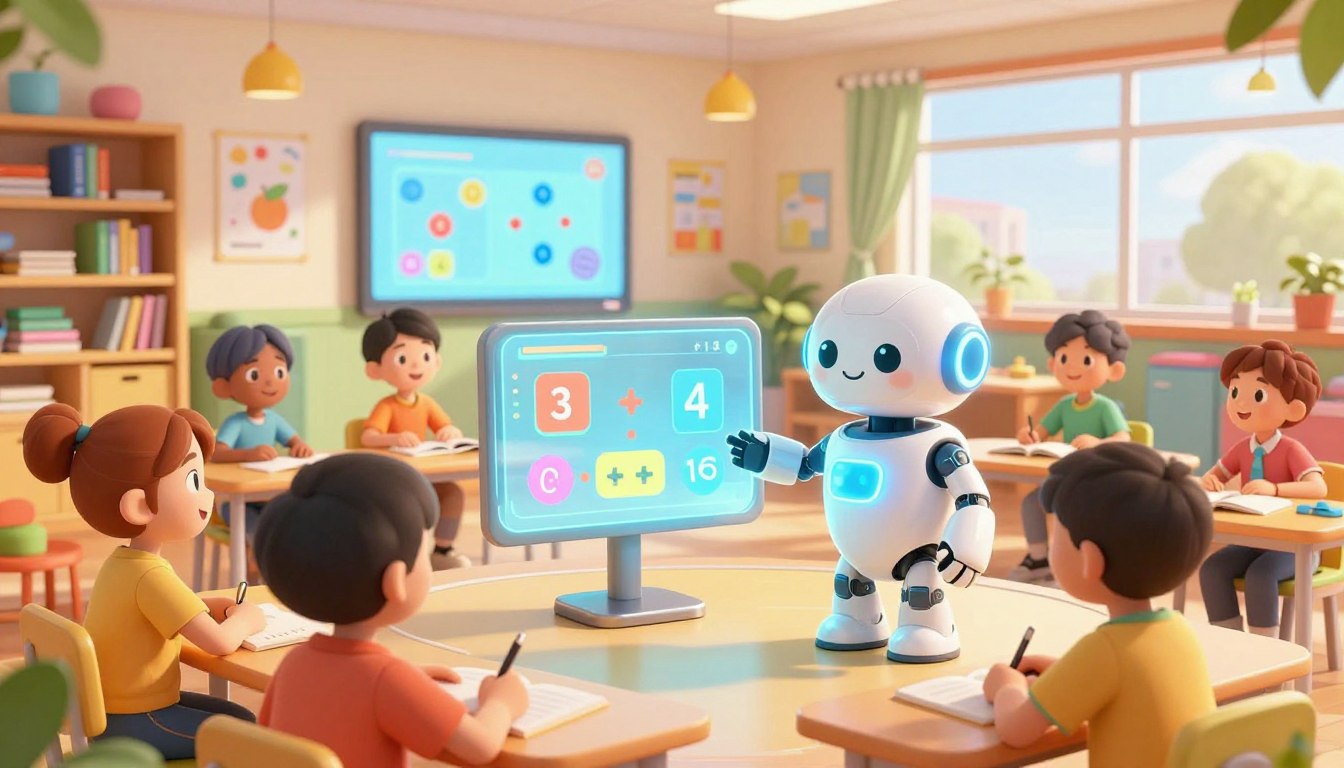
Parents remember the nights of pacing, trying to explain a concept one more time. They watched their children struggle, then discover a new path: fast answers, drafts, and practice that fits a busy life.
Since late 2022, accessible tools like chatgpt and classroom-focused platforms have shifted how families approach education. Early research and pilots suggest real promise when adults stay involved.
The appeal is clear: personalized help at odd hours, steady support for writing and language, and extra practice that complements teachers rather than replacing them.
At the same time, parents weigh concerns—errors, bias, and shallow content—so oversight and fact-checking remain vital. This guide translates that development into practical ideas for safe, smart use.
Key Takeaways
- AI tools can give students tailored practice and immediate feedback to speed learning.
- Evidence points to gains when human guidance and teacher oversight stay central.
- Use the tool for drafting, pattern practice, and concept checks—not as a full substitute for instruction.
- Watch for inaccuracies and bias; verify important information before using it in school work.
- Start small: pilot one responsible idea at home and measure how it supports learning.
What’s Driving Parents Toward AI Tutors in the First Place
Rising homework loads and limited after-school options pushed families to look for faster, reliable ways to help students.
Parents face a simple gap: schools and tutors can’t always meet every student’s needs at every hour. Many turn to digital tools that convert questions into step‑by‑step guidance when teachers are not available.
Early research and pilot studies show this approach can speed feedback and scaffold study habits. Educators caution that accuracy and bias must be checked, but families appreciate instant answers during evenings and weekends.
“AI lowers the activation energy of learning by making on-demand support practical for busy households.”
| Practical Gap | What Families Need | How AI tools help |
|---|---|---|
| After‑school availability | Immediate help with homework | 24/7 answers and step guidance |
| Variable learning pace | Personalized practice | Adaptive prompts that match student work |
| Teacher bandwidth | Curriculum-aligned support | Extensions that preserve classroom roles |
- Parents value targeted support that fits a student’s time and needs.
- Some students ask more when using a neutral interface, revealing key misconceptions.
- Schools and edtech development now link tools to classroom workflows, delivering timely information to the right student.
GPT Tutoring Benefits: The Biggest Wins for Kids’ Learning
Students now access tailored practice plans that match past performance and speed up progress. These changes shape how families approach homework and long-term learning.
Personalized support that adapts
Modern tools reference prior attempts to suggest bite-sized steps. This turns broad goals into clear tasks and helps a student focus on weak topics.
Always-on help for homework and projects
Availability after school means students get timely answers when confusion strikes. That time-saving support keeps momentum for assignments and test prep.
Immediate, tailored feedback and writing help
Quick feedback lets learners iterate fast and build skills. For writing, the tool offers brainstorming, outlines, and edits that preserve student voice.
Targeted practice and language assistance
AI can generate practice questions, study guides, and translation prompts that aid multilingual classrooms. Families should pair the tool with adult oversight and fact-checking.
For a hands-on review of study features, see this study mode review.
Accessibility Gains: How AI Tutoring Expands Opportunities
Technology now helps families and schools make content more reachable for students with diverse needs. Small interfaces and instant translation let learners join discussions without waiting for specialist support.
Lowering language barriers: Real-time translation and grammar scaffolds let English learners follow class tasks and produce stronger work. These features give learners practical language assistance during reading and writing.
Adaptive aids and inclusion
Multimodal supports—audio narration, visual cues, and alternative input—expand ability for students with disabilities. Educators can deliver parallel materials at varied reading levels without singling students out.
- Families report clearer explanations and step-by-step learning that reinforce classroom instruction.
- Usage data helps educators spot struggle areas early, if handled responsibly.
- Equity remains a concern: device and internet access plans are essential so gains reach all students.
Research on equity and access highlights the uneven reach of these tools — a reminder that thoughtful rollout matters for real, lasting benefits in education.
The Human Factor: Balancing AI Strengths with Real Tutor Relationships
A human coach still shapes motivation and trust in ways a machine cannot replicate. Relationships drive engagement: students respond to encouragement, accountability, and emotional reading that only people provide.
High-impact tutoring depends on repeated sessions and a warm rapport. Research shows strong tutor–tutee bonds increase time on task and persistence. AI can supply drills and quick answers, but human coaches create meaning, frame challenges, and sustain effort.
Why relationship, motivation, and engagement still require people
Motivation is relational. A teacher or parent notices small gains and builds confidence. That attention keeps students returning to hard work.
Recognizing and mitigating bias and inaccuracies in AI-generated answers
AI outputs may be wrong or biased. Pairing drafts with adult review trains critical thinking and healthy skepticism. Educators should set norms: verify sources, explain reasoning aloud, and ask why a step makes sense.
Math “shakiness” and the need for teacher/parent oversight
Multi-step math explanations can be fragile. Adults help spot flawed logic, show alternate methods, and ensure a student grasps concepts—not just answers.
“AI is all brain and no heart.”

| Role | Strength | When to Use |
|---|---|---|
| Human tutor | Motivation, adaptive pacing, emotional cues | New or complex skills; formative feedback sessions |
| AI practice tools | Routine drills, quick formative checks, extra practice | Homework practice and spaced repetition between sessions |
| Teachers / Educators | Curriculum alignment, assessment, judgment | Setting norms, verifying answers, guiding critical thinking |
- Use AI for drills; reserve people for engagement, metacognition, and judgment.
- Set oversight routines: regular check-ins, error-flagging, and reflection prompts.
- For a deeper look at real-person approaches, see research on real-person tutoring.
Inside Today’s AI Tutoring Tools: What Parents Should Know
Parents should know these platforms play different roles. Some act like a questioning coach, others power lesson workflows, and a few focus on developing human tutors.
Khan Academy’s Khanmigo
Khanmigo functions as a Socratic guide. It uses course, unit, and skill mastery data to ask probing questions rather than just giving answers.
In school pilots it supports students while teachers stay present. Parents should expect occasional math shakiness and use explanation prompts and feedback flags as checks.
Varsity Tutors
Varsity Tutors applies AI behind the scenes to produce standards‑aligned lesson plans and consistent session notes. That creates coherent materials and clearer visibility into which skills students improve and where they stall.
Saga Education
Saga uses AI to analyze tutoring recordings against rubrics, giving targeted coaching feedback to site directors. This tool helps develop tutors efficiently without sitting in every session.
- Practical takeaway: look for transparent data practices, explainable feedback, and close alignment with school teaching and classroom goals.
- Prioritize tools that strengthen skills, keep humans in the loop, and convert data into useful experience for students.
| Approach | Primary Use | Strength |
|---|---|---|
| Khanmigo | Socratic student guide | Interactive questioning |
| Varsity Tutors | Lesson & notes workflow | Consistent materials |
| Saga Education | Tutor development | Targeted coaching |
Safety, Ethics, and Smart Use at Home and School
When families and educators set clear rules, technology supports learning without replacing judgment. Short, shared norms protect students and keep adults in charge of assessment and growth.
Set norms: prompting, fact-checking, and progress monitoring
Establish simple rules: require students to cite sources, record prompts, and note how a tool shaped their writing or solutions.
Teachers can limit cheating with in-class drafts, oral explanations, and staged assignments that reveal authentic work.
Track progress with weekly reviews of artifacts and compare AI-assisted outputs to prior work using clear metrics and data.
Equity, access, and screen-time boundaries for healthier learning
Vet tools for privacy, bias, and transparent error reporting before school-wide use. Districts should address device and connectivity gaps so all students benefit chatgpt safely.
Balance screen work with pen-and-paper tasks. Ask students to challenge outputs, pose questions, and practice critical thinking aloud.
| Policy | Why it matters | Action |
|---|---|---|
| Prompt logs | Show AI contribution | Students save prompts and edits |
| Authenticity checks | Prevent over-reliance | Use oral defenses and drafts |
| Equity plan | Equal access | Provide devices and training |
How to Try AI Tutoring with Your Child Without Replacing Teachers
Begin by choosing one clear goal. Pick a subject and a small task where the tool can provide assistance—brainstorming ideas for a project, outlining an essay, or creating practice questions. Start small to protect classroom routines and teacher authority.
Co-pilot the first sessions. Sit with the student, refine prompts together, and compare outputs to class materials. Decide which materials to keep and which to discard.
Set clear boundaries: let the tool handle routine tasks and time-saving edits, while the student keeps core reasoning and final explanations. That preserves ownership and teacher roles.
Use checkpoints. Set weekly goals, review saved artifacts, and note where the tool saved time versus where human explanation was essential. Prioritize durable skills: have the student explain steps aloud and rewrite outputs in their own words.
“Treat AI as a practice partner—not a replacement for teachers.”
- For projects: ask the tool to propose options, then have the student choose and justify a plan.
- Build a resource library: store effective prompts, rubrics, and reusable templates.
- If needs persist, combine AI assistance with a human tutor or teacher conference for hybrid support.
| Step | Example Use | Why It Helps |
|---|---|---|
| Start small | Brainstorming ideas for writing | Saves time and focuses work |
| Co-pilot | Refine prompts with a parent | Teaches prompt craft and keeps accuracy checks |
| Set checkpoints | Weekly review of progress | Measures impact on skills and time |
| Protect teacher role | Student explains final solution to teacher | Maintains classroom accountability |
For a structured way to build materials and replicate what works, explore this guide on creating an AI-powered course: how to create an AI-powered online.
Conclusion
Momentum in K–12 trials points to clear gains when adults guide use and verify outcomes.
Parents and schools can extend learning beyond the bell without replacing teachers. Start small: test one tool, monitor data, and solve problems together.
Research and ongoing development show strengths for students—faster answers, help with writing, and targeted practice. Yet adults must check information and keep human judgment central to teaching.
Balanced adoption improves content quality and builds durable skills in the classroom and at home. Save and share this blog post; we will track new findings so education leaders can capture benefits chatgpt responsibly.
FAQ
Why are more parents choosing AI tutors for their children?
Many parents seek supplemental support that adapts to each child’s pace and schedule. AI-driven tools offer personalized instruction, on-demand homework help, and targeted practice that can reinforce classroom learning. For busy families, the combination of consistent feedback and flexible access often makes these tools an attractive complement to teachers and tutors.
What is driving the recent surge in parental interest in AI tutoring?
Improved accuracy, better user experiences, and endorsements from established education platforms have boosted trust. Schools and services like Khan Academy and Varsity Tutors integrate intelligent coaching and lesson planning, which signals legitimacy. Additionally, the need for remediation after disrupted school years and the desire for more individualized learning paths fuels demand.
How do these tools personalize support for students?
Modern platforms analyze responses and learning histories to adjust difficulty, suggest review topics, and scaffold explanations. That means practice sets, writing feedback, and study guides can align with a child’s strengths and gaps, helping build skills progressively rather than offering one-size-fits-all lessons.
Are AI tutors available around the clock, and how does that help?
Yes—many services provide 24/7 access for homework, project guidance, and test prep. This always-on support helps students meet deadlines, explore topics outside class hours, and maintain momentum during study sessions. It also eases scheduling pressures for working parents and busy households.
Can these tools give immediate, tailored feedback that improves learning?
They can. Instant feedback on problem-solving steps, writing drafts, and concept checks helps students correct errors and understand reasoning in real time. That timely guidance supports confidence and skill retention when combined with deliberate practice and teacher oversight.
How effective are AI tools for writing and language development?
Intelligent assistants can suggest clearer phrasing, point out grammar issues, and model stronger structure—useful for essays and communication skills. They also support English learners by offering translations and language scaffolds, lowering barriers to participation while building vocabulary and fluency.
What kinds of targeted practice do these platforms provide for exams and quizzes?
Platforms generate practice questions, spaced-review schedules, and exam-style prompts tailored to curriculum standards. These targeted materials help students focus on weak areas and simulate test conditions, improving readiness for classroom quizzes and standardized assessments.
How do AI tools improve accessibility for diverse learners?
They offer personalized pacing, multimodal explanations, and language support that make content more reachable. For students with varied learning needs, adaptive aids and scaffolded instruction can increase inclusion and reduce the need for constant one-on-one human intervention.
Why do human relationships still matter in learning alongside AI tools?
Motivation, emotional support, and deep engagement come from real people. Teachers and parents interpret context, celebrate progress, and nurture curiosity in ways algorithms cannot. Combining AI with human mentorship yields better outcomes than relying on either alone.
How should parents and educators handle AI inaccuracies and bias?
Treat AI output as a starting point: prompt for sources, verify facts, and cross-check math or claims. Regular oversight from teachers or tutors helps catch errors and biases. Encouraging critical thinking skills in students reduces overreliance on any single tool.
Are there common weaknesses in AI support for subjects like math?
Some systems still show “shakiness” in multi-step reasoning or novel problem types. That makes teacher or parent review essential—especially for proofs, complex calculations, and conceptual misunderstandings where human explanation and correction add clarity.
What should parents know about specific tools like Khan Academy’s Khanmigo and Varsity Tutors?
Khanmigo emphasizes Socratic guidance to help students discover solutions rather than just giving answers. Varsity Tutors blends AI with human-led sessions, offering generated lesson plans and consistent session notes that support continuity in instruction.
How do AI-powered programs support human tutors, such as those at Saga Education?
AI augments coaching by supplying performance analytics, suggested feedback, and targeted practice items. This allows human tutors to focus on relationship-building, motivation, and higher-order instruction while AI handles repetitive diagnostics and routine exercises.
What safety and ethical practices should families adopt when using AI at home and school?
Establish norms for prompting, require students to fact-check answers, and monitor progress. Set clear screen-time limits and ensure equitable access so benefits reach all learners. Prioritize platforms with transparent data policies and strong privacy protections.
How can parents try these tools with their child without replacing teachers?
Use AI as a supplement: align activities with classroom goals, share insights with teachers, and use generated materials to reinforce lessons. Focus on scaffolding—short, targeted sessions that build specific skills—and maintain open communication with educators about progress and concerns.