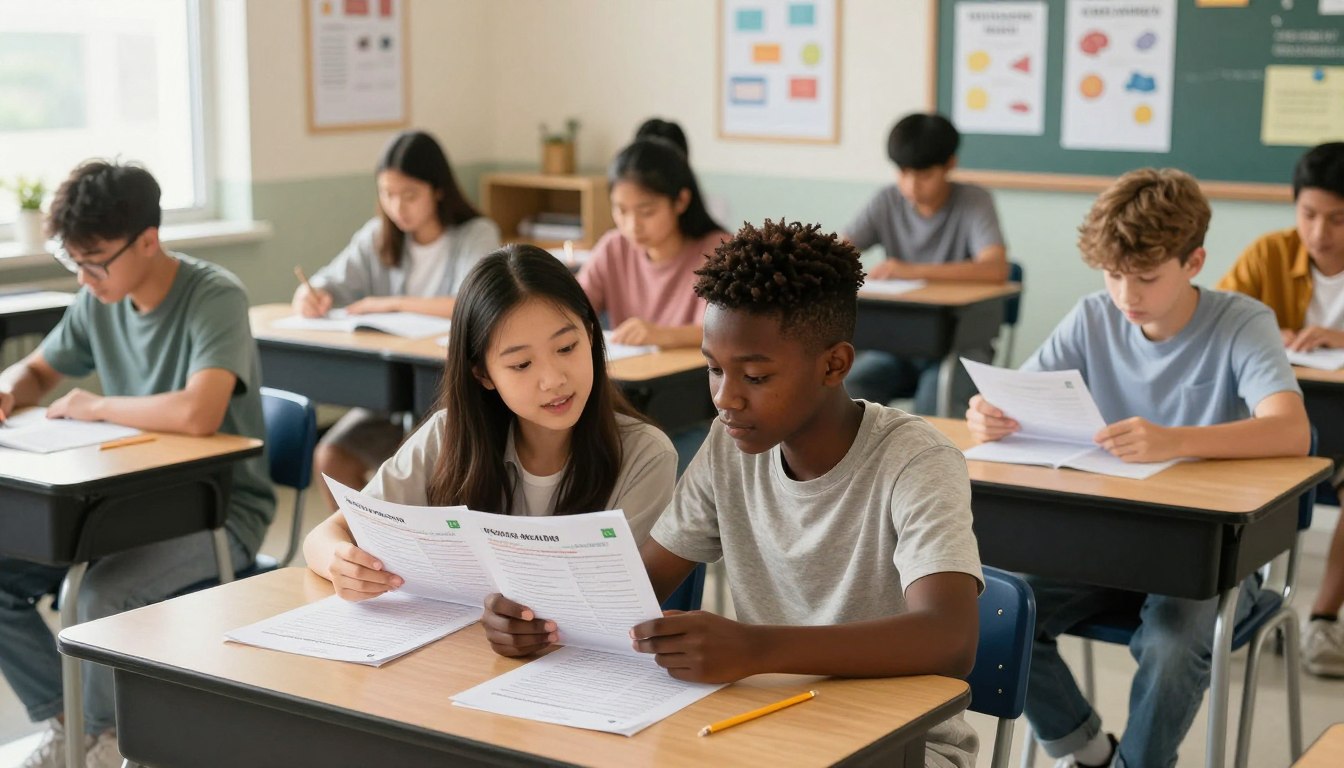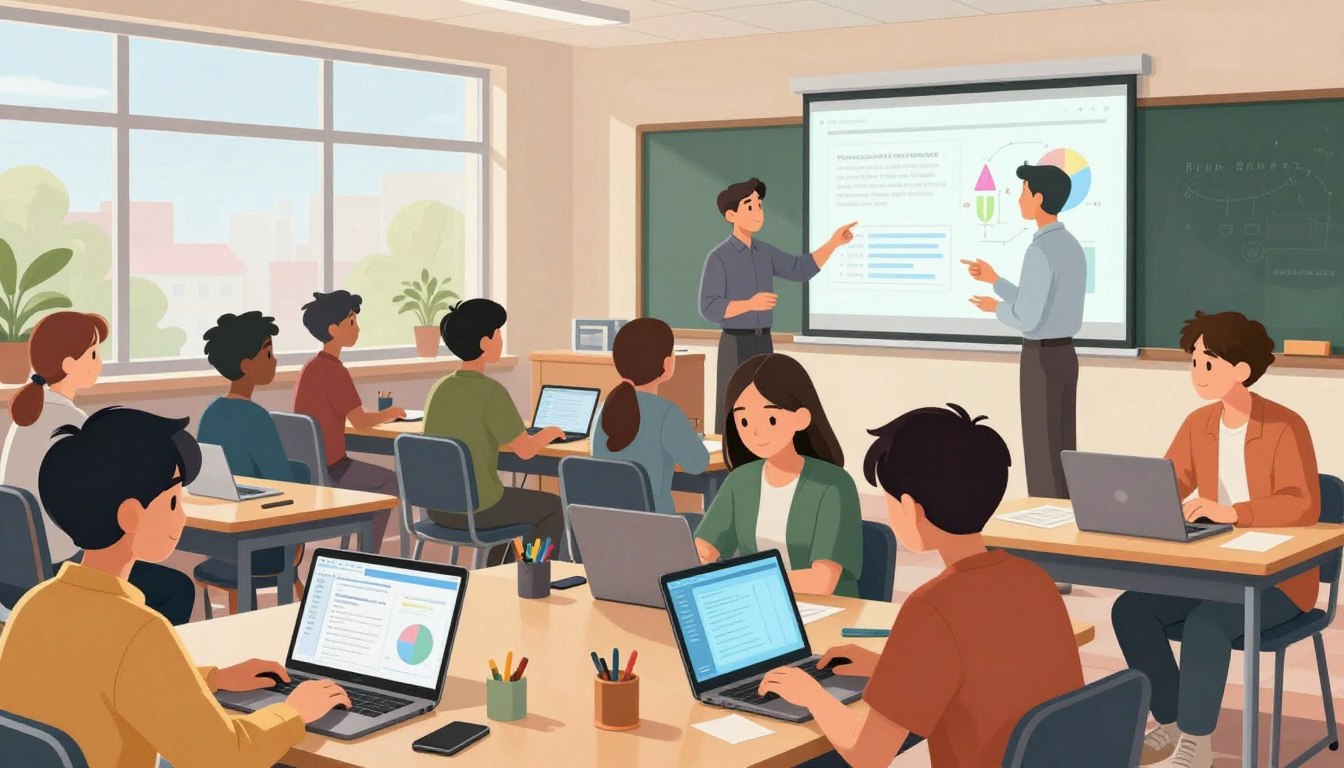
There are moments when a single classroom choice feels larger than a lesson plan. Teachers and students at Upper St. Clair recall one full day devoted to responsible use, where discussions covered plagiarism, deepfakes, bias, and critical analysis.
The district’s leaders—including Brad Wilson and Assistant Principal Dan Beck—framed the session as a practical pause: a chance to teach staff and pupils how to use technology thoughtfully while keeping academic integrity central.
That balance matters: teachers like Christina Guarnaccio and Ben Edwards urged students not to outsource thinking, and student Dante Courey described using a tool as a tutor for step-by-step help and repeated clarification.
This overview sets the national conversation in a concrete classroom context. It traces how a school district applies research and policy to protect learning, support teachers, and guide districts toward smarter, fairer evaluation practices over time.
Key Takeaways
- Upper St. Clair models a full-day approach to teach responsible use and risks.
- Practical training helps teachers keep instruction focused on learning outcomes.
- Leaders pair research and local practice to shape fair evaluation policy.
- Students benefit when technology supplements—not replaces—critical thinking.
- Districts can adopt low-disruption steps that protect integrity and equity.
What’s happening now: School districts weigh AI’s promise and pitfalls in classrooms and evaluations
Districts across the United States are piloting new detection and productivity tools while drafting policy that protects students and preserves academic standards.
Why it matters for students, teachers, and school leaders
Leaders face a trade-off: allow technology that helps teachers save time, or restrict use to avoid unfair grading. Broward County spent more than $550,000 on a Turnitin contract to guide conversations about suspected use. Shaker Heights bought GPTZero licenses for 27 teachers. Prince George’s County warns against overreliance on detectors after a questionable flag.
“Detection tools can give a fast signal, but human judgment and conversation remain essential.”
| District | Action | Practical concern |
|---|---|---|
| Broward County (FL) | Turnitin contract — $550,000+ | Use for teacher conversations, not final verdicts |
| Shaker Heights (OH) | GPTZero licenses for 27 teachers | Screen essays; accuracy questions remain |
| Prince George’s (MD) | Guidance cautioning against sole reliance | False positives and due process concerns |
- Policy is shifting: districts must define acceptable use and appeal steps.
- Teachers use technology for lesson design and differentiation while teaching proper citation.
- Families and students need clear information on how tools affect work and evaluation.
For a closer look at how teachers are using tools to write individualized plans and the concerns that follow, read this detailed report: teachers using tools to help write.
Classroom adoption with guardrails: Upper St. Clair School District’s approach to artificial intelligence
Upper St. Clair carved out a full day to teach students and teachers how to use emerging tools while guarding academic integrity.
The goal was simple: pair hands-on practice with media literacy so learners spot plagiarism, deepfakes, and bias rather than accept outputs without question.
Teaching with tools while teaching about tools: plagiarism, deepfakes, bias, and critical analysis
Teachers led lessons that required students to cite sources, show drafts, and write reflection notes about how they arrived at answers.
That structure gives teachers usable data and helps protect honest work. It asks students to explain their reasoning, not just submit a finished product.
Educators’ perspectives: directors, assistant principals, and teachers on responsible use
Leadership mattered: Brad Wilson, the director of strategic initiatives, and Assistant Principal Dan Beck framed the day as a districtwide effort that created consistent expectations.
English teacher Christina Guarnaccio warned against “no human critical thinking,” while Ben Edwards modeled prompts and evaluation steps for class activities.
Student experience: a personal tutor to deepen learning and save time
Students found practical benefit. One student described asking targeted questions that break a tough subject into steps and repeating explanations until the idea clicks.
“It helps me get the steps I need and saves time when I need another explanation,” said Dante Courey.
- Practical guardrails: drafts, revision histories, and reflection notes make work traceable.
- Skills gained: prompt quality, bias spotting, and verification transfer across subjects.
- District approach: test, gather data, and refine classroom norms while keeping human judgment front and center.
Safety tech in schools: Hempfield’s Wi-AI “Sense Pods” and the boundary between security and privacy
A doorway-first pilot at Hempfield translates tiny Wi‑Fi signal shifts into non-identifying visual cues that can flag potential weapons. The district installed Curve Point’s Sense Pods at every entrance to Hempfield High School. The system measures refraction, reflection, and distortion of radiofrequency waves to create instant renderings—no cameras, no biometrics, no device scraping.
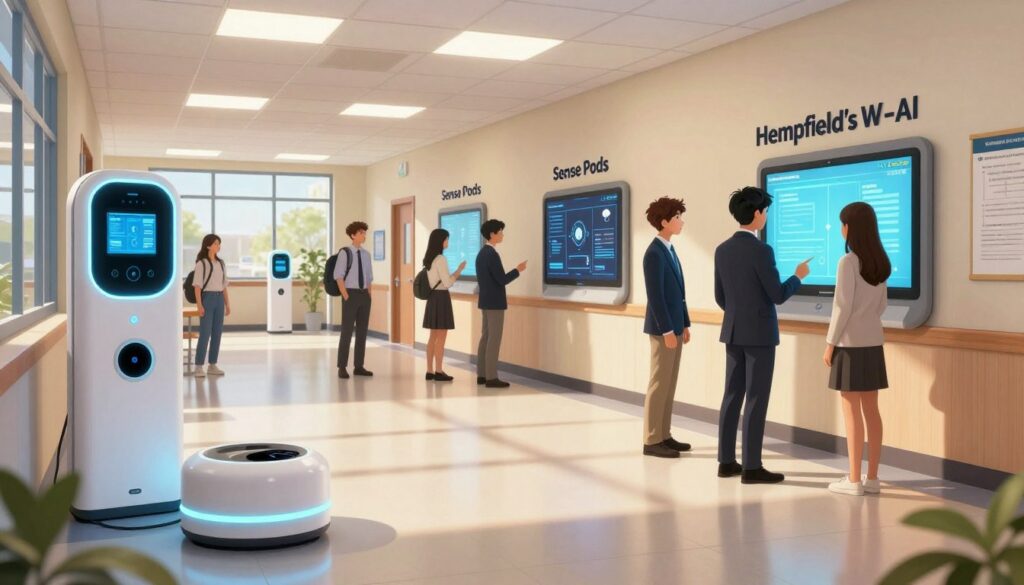
How the technology works
The pods analyze radiofrequency distortions to highlight shapes that may indicate a handgun or other threats. Curve Point reports about 95% accuracy with a roughly 4% false-positive rate so far.
This approach focuses on doorways only—a choke point strategy that aims to limit data collection and reduce campus-wide surveillance.
District process and oversight
Alerts go to designated district people for verification, not to law enforcement by default. Superintendent Mark Holtzman and Safety Director Jamie Schmidt call the system an extra layer that supports existing protocols rather than replacing them.
- Funding comes from the general fund with performance-based refunds if the software fails to meet expectations.
- Piloting at the high school limits exposure while producing research-grade data to guide next steps.
- Round-the-clock monitoring covers after-school events; the roadmap includes vape detection and iterative tuning to reduce problems.
AI in ISD News: the ethics of AI detection tools in student evaluations
Detection software has become a common classroom signal—useful, but far from decisive.
Across several districts, teachers treat detector outputs as a starting point. They gather context, review drafts, and then talk with the student before any grade changes.
From Miami to Maryland to Ohio: Turnitin, GPTZero, and district policies on software use
Broward County bought a three-year Turnitin contract for more than $550,000 and uses scores as conversation starters, not final evidence. Prince George’s cautions staff against sole reliance after a 30.76% flag affected a student’s grade. Shaker Heights purchased GPTZero licenses; one teacher, John Grady, treats >50% likelihood as a cue to review revision history and hold a meeting.
Reliability and bias concerns: research findings, non-native English writers, and “smoke alarm” framing
Research by Mike Perkins finds many detectors struggle to distinguish generated from human text, and accuracy drops when content is edited to seem more natural.
Equity worries are real: non-native language writers and students who use assistive tools can be flagged more often. We should view detections as smoke alarms—signals to investigate, not verdicts.
Teacher workflow: using probability scores, revision histories, and conversation before grading decisions
Practical steps that schools are adopting:
- Use a probability score as an informational cue, not a final judgment.
- Check revision history and drafts for process evidence.
- Hold a conversation with the student to clarify expectations and next steps.
This process protects students, supports learning, and gives teachers a defensible workflow that relies on judgment and evidence rather than a single software output.
For broader context on classroom technology and policy choices, see a local technology report and guidance for building practical educational tools.
Implications for schools: policy, training, data practices, and equitable learning
Clear policy and steady training give districts a practical path to protect learning while using new tools. Schools need accessible rules that map a first signal to a final decision. Policies should require evidence of process—drafts, revision histories, and a recorded conference—before any academic action.
Professional learning matters: districts should provide model lessons on bias, deepfakes, and critical evaluation so educators and teachers can verify student thinking and document outcomes.
- Human-in-the-loop: software must inform, not decide; leaders should build timelines that include review meetings.
- Responsible data practices: limit collection, protect privacy, and scope safety technology narrowly.
- Equity checks: monitor flags for disparate impact and ensure supports for non-native English students are not treated as misconduct.
“Treat detection as a signal to investigate; the teacher remains the final arbiter,”
Practical playbooks can save time: templates for parent communication, student reflection prompts, and teacher checklists standardize fair practice. Over time, districts refine thresholds using classroom information and feedback.
For guidance on broader consequences and training options, consult this report on classroom trade-offs and a practical teaching skills workshop guide.
Conclusion
This year has shown that careful pilots and teacher-led workflows can make technology a classroom aid rather than a replacement for judgment. Districts and educators learned from Upper St. Clair’s guardrails, Hempfield’s targeted safety pilot, and varied approaches in Broward, Prince George’s and Shaker Heights.
When teachers lead follow-up conversations, a detection signal becomes a chance to teach. Students gain clarity when drafts, revision histories and brief conferences shape grading. This preserves student dignity and supports honest learning.
Schools should scale practices only with evidence and adjust often. For a concise overview of national cases and practical lessons, see this NPR report on schools and teachers. Leaders who codify clear workflows and keep people at the center will protect equity and strengthen education across the school district.
FAQ
What is happening now with schools and artificial intelligence in student evaluations?
School districts across the United States are weighing the promise of generative intelligence tools for tutoring, drafting, and assessment against risks such as bias, privacy, and misuse. Leaders are debating policies that balance innovation with ethical safeguards, while educators pilot software like Turnitin and GPTZero to inform classroom practice and grading.
Why does this matter for students, teachers, and school leaders?
Decisions about adoption shape learning opportunities, workload, and fairness. Thoughtful policy can protect student data, support teachers with workflow tools, and ensure assessments reflect genuine learning. Poorly designed rules can harm non-native English writers, widen equity gaps, and erode trust between families and schools.
How are some districts approaching classroom use responsibly?
Several districts adopt a teach-and-use model: instructors show how tools work, discuss plagiarism and deepfakes, and require citation or drafts alongside AI-generated content. Training for teachers, clear classroom rules, and pilot programs help scale use while monitoring impact on learning and academic integrity.
What do educators say about responsible deployment?
Directors, assistant principals, and classroom teachers emphasize guardrails—transparency with students, professional development, and human review. They view these tools as time‑savers for feedback and differentiation, provided staff retain final judgment and students learn critical evaluation skills.
How can these tools benefit students directly?
When used well, tools act as personal tutors: they scaffold revision, provide targeted practice, and free teacher time for higher‑value interactions. That can deepen learning, accelerate feedback cycles, and support individualized instruction for diverse learners.
What safety technologies are schools testing and what privacy issues arise?
Some districts trial sensor systems that analyze radiofrequency distortions to detect movement near doorways. Vendors claim high accuracy, but concerns focus on scope creep, surveillance, funding transparency, and the balance between safety and student privacy rights.
How do districts oversee pilots and technology purchases?
Best practices include transparent procurement, independent validation of vendor claims, limited pilot scopes, stakeholder review panels, and clear communication about data retention, access, and opt‑out options for families.
Are detection tools reliable for grading and academic integrity?
Detection software can flag probable machine‑generated text but is imperfect. Research shows false positives, especially for English learners or certain writing styles. Educators are advised to treat outputs as indicators—“smoke alarms”—and combine them with revision histories and in‑class conversations before taking disciplinary action.
How should teachers use probabilistic scores from detection software?
Use scores as one input among many: examine drafts, ask students to explain their process, and offer revision opportunities. District guidance should discourage automatic penalties and require teacher discretion, context, and appeals procedures.
What policy and training steps should districts take next?
Districts should craft clear policies on acceptable use, data practices, and disclosure; invest in ongoing professional development; convene families and students for input; and monitor outcomes to ensure equitable access and minimize bias.
How can schools protect equity when using these tools?
Protect equity by validating tools on diverse student populations, offering alternatives for students with limited access, tailoring training for multilingual learners, and auditing systems for disparate impacts before district‑wide rollout.