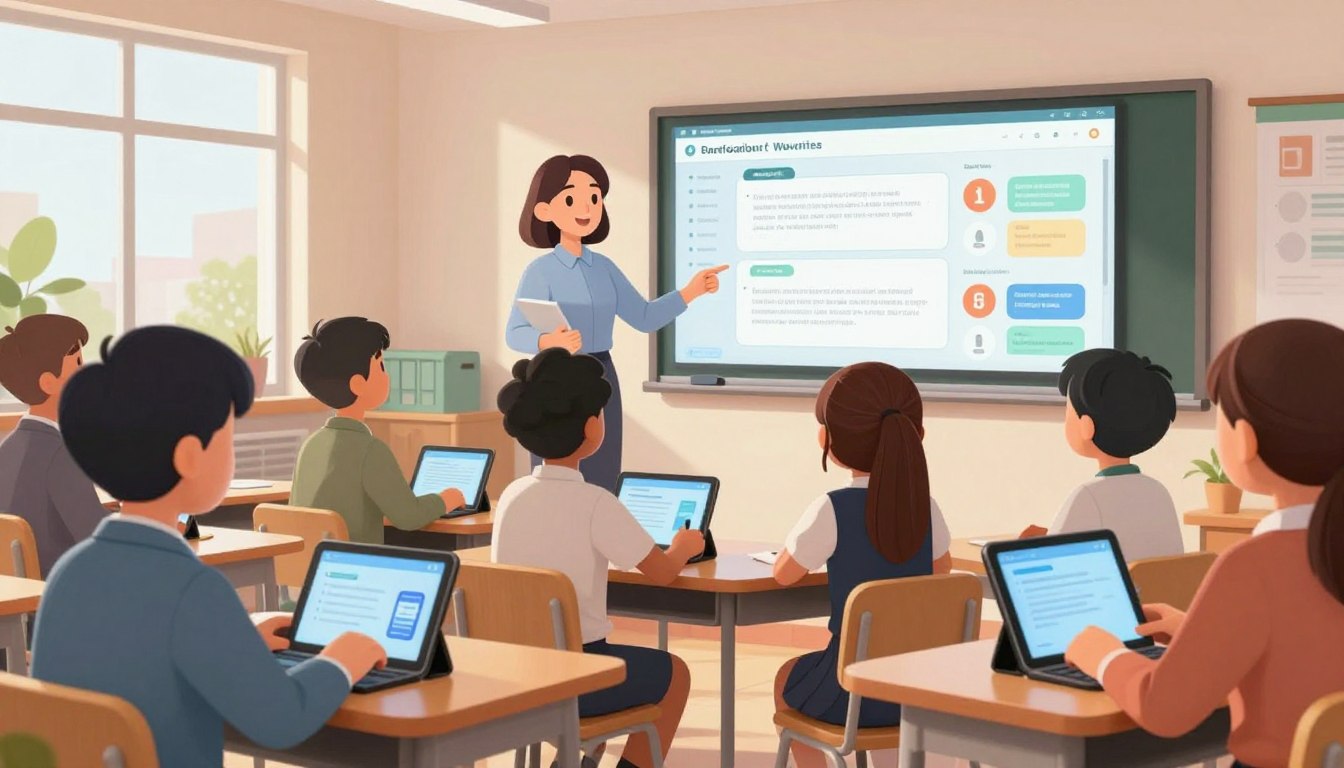
It begins with a quiet moment in a classroom: a teacher watching a single student hesitate, and wondering what would unlock that spark. That human pause is the starting point for a new approach to education. Over the next years, technology will help scale responses that once needed one-on-one time.
Market growth shows momentum: over 47% of management systems may run on artificial intelligence soon, and the sector expanded rapidly in recent years. This shift lets systems interpret data to adapt content, pace, and support so learners meet the right challenge at the right time.
Practitioners see real impact: platforms like DreamBox and Knewton prove tailored paths raise engagement and outcomes. Educators gain time for mentoring while systems handle routine adjustments. Strategic use of data and clear metrics make this practical, measurable, and future-ready.
Key Takeaways
- Personalized AI Learning scales tailored instruction across classrooms and organizations.
- Adaptive systems use data to match content and pacing to individual needs.
- Market trends and technology maturity make adoption timely and practical.
- Educators can reclaim time for higher-order teaching by offloading routine tasks.
- Explore implementation notes and case studies—see an overview of adaptive platforms here.
Why Personalized AI Learning Matters Now
Campuses and classrooms are shifting fast as data-driven systems let instructors tailor pathways at scale.
EDUCAUSE data shows the trend: 57% of colleges plan to prioritize artificial intelligence in 2025, up from 49% the year before. Institutions cite digital acceleration, student engagement, and trusted data as drivers.
From one-size-fits-all to learner-centric: the shift underway
Schools move away from standardized instruction because systems now match content and support to each learner’s preferences and needs. That shift makes individualized guidance operational rather than aspirational.
- Time and focus: Tools reduce routine tasks so instructors spend more time mentoring.
- Data and analytics: Governed streams unlock early intervention and link choices to performance.
- Access and equity: Scaled support and inclusive strategies help more learners benefit across devices.
For a concise overview of how these technologies enable tailored pathways, see the role of AI in personalized learning.
How Personalized AI Learning Works: Data, Models, and Adaptive Systems
Classroom systems now translate student actions into clear signals that guide next steps.
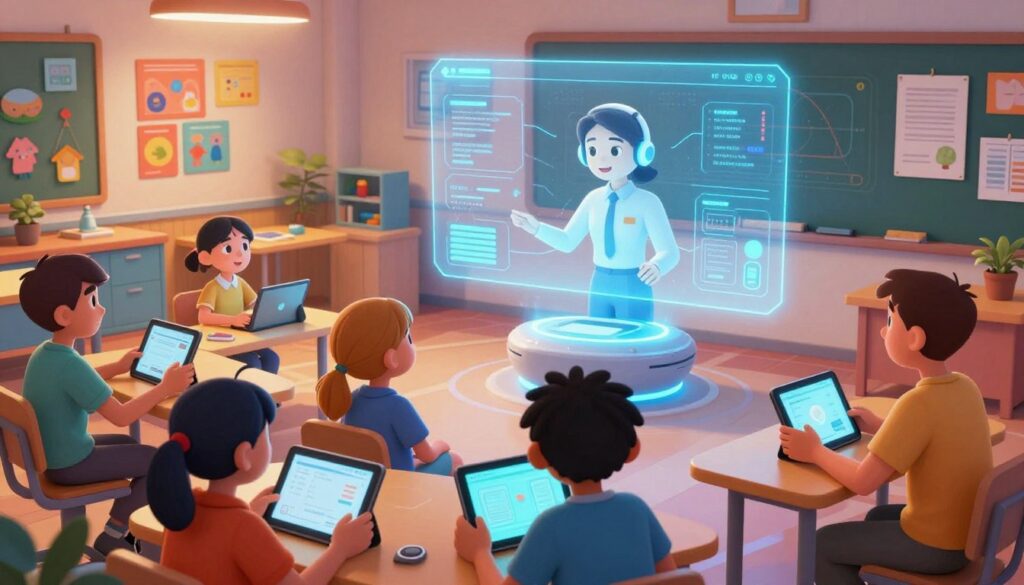
Data pipelines collect response accuracy, time-on-task, hint use, and attempt patterns. Models ingest those signals to infer mastery, misconceptions, and likely next moves.
Learning analytics and predictive indicators driving real-time adjustments
Analytics and indicators forecast risk and trigger support in real time. Schools using adaptive learning programs reported a 62% increase in test scores, a clear sign that targeted changes work.
Adaptive learning engines and cognitive tutoring delivering tailored difficulty
Adaptive engines tune difficulty—scaffolding when needed and pushing forward when ready. Cognitive tutoring simulates an expert tutor, probing thinking and reinforcing strategies to boost durable knowledge.
Dynamic content delivery across formats for diverse preferences
Systems assemble content dynamically: short readings, interactive simulations, and video. This mix meets different needs and keeps progress steady across areas of study.
“Better signals mean clearer interventions; the loop from data to adaptation creates measurable gains in performance and progress.”
| Component | Primary Signals | Role |
|---|---|---|
| Data pipelines | Accuracy, time, hints | Feed models that infer mastery |
| Predictive models | Patterns over time | Forecast risk and recommend remediation |
| Adaptive engines | Response behavior | Tune difficulty and pacing |
| Cognitive tutoring | Interactive responses | Simulate one-on-one coaching |
- Transparency: Teachers should see why a suggestion appears.
- Orchestration: LMS and assessments must share signals for coherent paths.
- Continuous improvement: Models refine recommendations as cohorts produce new patterns.
The Impact on Outcomes: Engagement, Feedback, and Accessibility
Faster feedback loops make small adjustments that compound into major gains. Immediate insights help students act quickly and keep momentum. Educators receive early-warning signals that focus their time on high-impact coaching.
Instant, targeted feedback and early intervention at scale
Instant feedback narrows the response gap—students correct errors sooner and consolidate knowledge faster. Adaptive assessments give real-time metrics and chatbots deliver tailored guidance with ~91% accuracy.
Boosting engagement with individualized paths
When recommendations match goals and interests, engagement rises. Paths that respect a student’s pace and needs sustain motivation and improve performance over time.
Expanding access with language and inclusive design
Text-to-speech, speech-to-text, and translation tools increase access for diverse learners. Multimodal content and clear support reduce barriers and widen participation in education.
“Better feedback and coherent experiences create a cycle of improvement: clearer steps, more confidence, and deeper mastery.”
| Outcome | Signal | Benefit |
|---|---|---|
| Feedback quality | Step-by-step reports | Clear next actions to grow knowledge |
| Early intervention | Predictive flags | Targeted support before decline |
| Accessibility | Language and audio tools | Broader access and equal participation |
Personalized AI Learning Across Contexts: K-12, Higher Ed, and the Workplace
Across classrooms, campuses, and corporate floors, tailored systems now shape how people acquire skills and knowledge.
K-12: targeted platforms and classroom fit
In K-12 settings, platforms such as DreamBox and Knewton adapt content to student strengths and gaps. These systems use light-touch tutoring and progressive mastery to adjust difficulty and build confidence.
Nearly 60% of U.S. K-12 educators report using individualized approaches. That traction helps teachers allocate time where it matters most.
Higher education: priorities and real-time progress
Colleges prioritize digital acceleration (52%), engagement (50%), and trusted data (49%). More than half—57%—plan to prioritize these tools in 2025.
Institutions apply recommendations and progress tracking to personalize support and target resources to students who show early indicators of risk.
Workplace learning: role-based paths and ROI
In industry, role-based paths speed onboarding and focus development on job-relevant skills. Booking.com cut program administration by 80% with Docebo—reclaiming 800+ team hours.
L&D teams use systems to reduce administrative load and to produce evidence of improved performance and faster time-to-competency.
Real-world results
Measured outcomes matter: adaptive programs report 62% test score gains and clear efficiency wins. Across sectors, consistent data and progress metrics let designers refine content and grow what works.
- K-12: platforms tune difficulty using response patterns and indicators.
- Higher ed: recommendations and dashboards focus student support.
- Workplace: role-aligned paths cut time and show measurable ROI.
Challenges and Ethics: Privacy, Bias, and the Digital Divide
As systems gather more classroom signals, governance and equity become urgent priorities. Schools and vendors must treat privacy as foundational: that means clear rules about what student data is collected, how it is used, and how long it is retained.
Protecting student data and ensuring transparent, ethical governance
Transparent processes let educators and families audit decisions and challenge outcomes. Vendor security aligned with SOC-2 practices—encryption, role-based access, and incident response—reduces risk.
Mitigating algorithmic bias and ensuring equitable access
Bias mitigation is continuous: diversify training sets, test models across groups, and monitor drift. Without devices, connectivity, and assistive tools, access gaps widen and promising tools fail to deliver results.
- Privacy controls: define retention, consent, and data minimization.
- Human oversight: keep educators in the loop for high-stakes decisions.
- Documentation: publish model intent, data sources, and limits.
- Phased rollout: start with low-risk areas and expand with audits and feedback.
“Ethics must be operational: audits, clear processes, and support for staff turn policy into practice.”
For guidance on governance and practical steps, see this primer on responsible governance and ethics. Institutions that pair design safeguards with educator training will protect students while unlocking the benefits of modern education tools.
The Future of AI in Education: Predictive, Generative, and Agentic Capabilities
A new wave of capabilities blends forecasting, content generation, and agents to speed how learners progress. Predictive models already run in many campuses; they turn patterns into early warnings and clear recommendations that reduce lag between insight and action.
Generative and agentic systems compress content development cycles. They draft course modules, tailor content to specific needs, and iterate based on performance patterns. Those tools free staff to focus on skill development and high-value support.
Predictive and interpretive systems
Predictive analytics synthesize data to flag risk and guide interventions in near real time. When models surface clear recommendations, educators make faster, smarter decisions.
Generative and agentic capabilities
Agentic systems can autonomously optimize training paths across platforms. That capability shortens development and helps teams measure progress against skills and outcomes.
Voice and real-time assistants
Voice interfaces and real-time assistants provide just-in-time help. They answer questions, coach strategies, and nudge learners—improving engagement without adding work for instructors.
“Smarter systems should make decisions transparent and keep educators in control.”
- Interoperable systems ensure content, recommendations, and progress travel with learners.
- Robust analytics verify development, performance, and skill acquisition.
- Responsible design and process discipline keep equity and trust aligned with capability growth.
Conclusion
A clear strategy that blends human judgment with smart systems turns promise into measurable results.
Start with outcomes: define performance, knowledge growth, and time-to-competency goals, then align content and platforms to those targets.
Invest in educator capacity and governance so teams interpret signals, refine design, and sustain improvement cycles. Real cases show big gains—62% higher test results and 80% admin time savings—when systems and staff work together.
Prioritize tools that protect data, integrate reliably, and adapt experiences to student preferences. For a practical take on risks and implementation, see this overview of practical considerations and challenges for tailored approaches.
Measured, ethical development will compound impact: better experiences, stronger knowledge, and more time for the human work that matters.
FAQ
How does AI customize education for every student’s needs?
Intelligent systems collect performance data, preferences, and engagement patterns to map each learner’s strengths and gaps. Models then adapt content difficulty, sequence, and format in real time—offering targeted practice, scaffolding, or enrichment. The result is learner-centric paths that reduce wasted time and improve mastery.
Why does personalized AI learning matter now?
Modern classrooms and workplaces demand efficiency and measurable outcomes. Advances in analytics, cloud platforms, and model capabilities make scalable, tailored support practical. Institutions see faster onboarding, better retention, and stronger skill development when instruction aligns with individual needs and pace.
What role do data and predictive indicators play in adaptive systems?
Learning analytics surface patterns—mastery trends, question-level errors, and engagement drops—that feed predictive indicators. Those signals trigger interventions such as targeted reviews, adjusted challenge levels, or instructor alerts. Predictive insights enable earlier, more precise support than periodic assessments alone.
How do adaptive engines and cognitive tutoring deliver the right difficulty?
Adaptive engines use item-response and reinforcement models to estimate a learner’s current ability. Cognitive tutors model problem-solving steps, then present tasks that stretch skill without causing overload. Continuous feedback loops update those estimates, keeping difficulty aligned with progress.
Can content be delivered in different formats to match preferences?
Yes. Systems can switch among text, video, simulations, and interactive assessments based on user preference and accessibility needs. Dynamic content delivery improves comprehension and engagement by matching format to topic and learner profile.
How does AI provide instant, individualized feedback at scale?
Automated grading, detailed rubrics, and model-generated hints allow rapid, specific feedback on tasks and submissions. When combined with dashboards, instructors can focus on high-impact coaching while the system handles routine corrections and scaffolding.
In what ways does this approach boost engagement?
Personalized paths, timely rewards, and clear progress markers increase motivation. Recommendations for relevant projects or micro‑credentials connect learning to career goals, keeping learners invested and reducing drop-off.
How does technology improve accessibility for diverse learners?
Tools like text-to-speech, automated translation, adjustable fonts, and multimodal content support varied needs. Inclusive design and configurable interfaces make materials usable for learners with disabilities and those who speak different languages.
What examples exist across K–12, higher ed, and the workplace?
In K–12, platforms such as DreamBox and Knewton adapt math paths to student readiness. Universities use analytics for real-time progress tracking and targeted advising. Employers deploy role-based learning paths and micro‑courses to speed onboarding and measure ROI.
What measurable results should organizations expect?
Typical outcomes include higher assessment scores, increased LMS engagement, reduced remediation time, and administrative savings from automated workflows. Results vary by implementation but are strongest when systems are paired with teacher or manager coaching.
How are privacy and data protection handled?
Responsible implementations follow data-minimization, encryption, and clear consent practices. Governance frameworks and vendor contracts should specify retention limits, access controls, and compliance with laws like FERPA or GDPR where applicable.
How do systems mitigate algorithmic bias and ensure equity?
Teams perform bias audits, use diverse training sets, and maintain human oversight for high-stakes decisions. Ongoing monitoring and transparent reporting help detect disparate impacts and guide corrective action to preserve fairness.
What are the main ethical and digital‑divide risks?
Risks include unequal access to devices and connectivity, opaque decision-making, and overreliance on automation. Addressing these requires investment in infrastructure, transparent policies, and blended models that keep educators centrally involved.
What future capabilities will shape education?
Predictive systems will provide earlier warning signals; generative models will accelerate content creation and assessment; and agentic assistants will support just-in-time tutoring via voice and chat. Together, these tools will scale personalization while demanding strong governance and design.
How should organizations prepare to adopt these tools?
Start with clear learning outcomes, pilot narrowly, and measure impact. Invest in instructor training, data governance, and accessible design. Prioritize interoperability with existing LMS and analytics platforms to protect investment and speed adoption.