Parents, teachers, and leaders know the weight of a single school decision: it shapes days, budgets, and futures. In Texas, a set of school districts is testing new classroom and campus tools to make learning safer and schedules fairer. This moment feels personal because it touches how students experience each school day.
The pilots range from safety software that watches campus flows to scheduling systems that save hours for principals and staff. One district’s scheduling example reduced weeks of work and saved campuses thousands; readers can learn specifics in a detailed report on a recent pilot.
Practical gains matter: teachers gain time for instruction, students get more consistent class placement, and districts align technology with safety and learning goals. We present these developments as careful experiments—measured, human-led, and focused on results this year.
Key Takeaways
- Texas districts are piloting tools that improve safety and classroom personalization.
- Scheduling pilots showed time and cost savings, easing administrative burden.
- Teachers are positioned as partners; technology handles routine tasks at scale.
- District rollouts emphasize training, software integration, and local needs.
- Families and leaders can expect measured, evidence-driven results this year.
Present-day snapshot: Texas school districts roll out artificial intelligence across safety and learning
Across Texas, districts are deploying real-time systems aimed at both campus safety and faster classroom feedback.
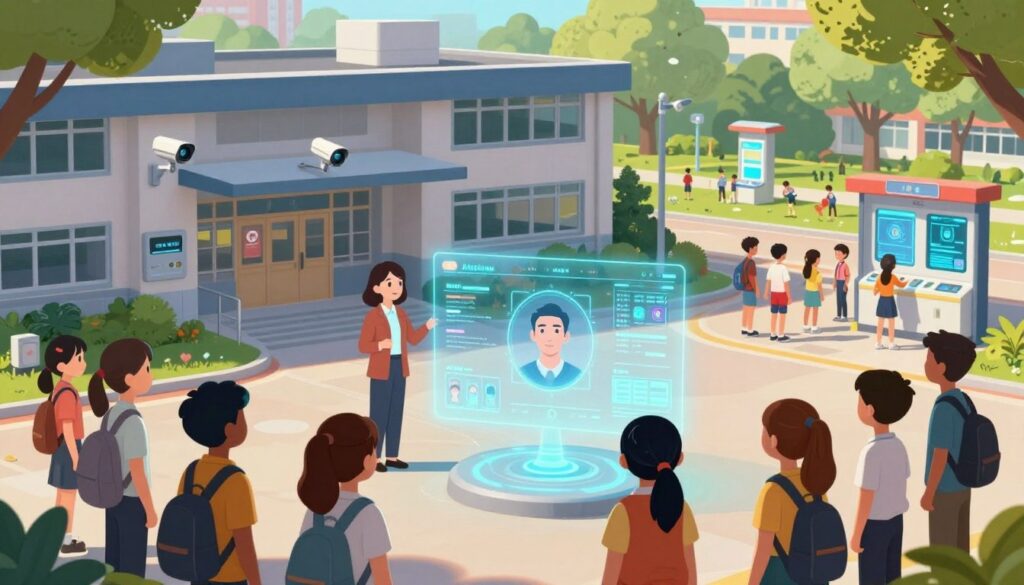
Gun violence has shifted the urgency of safety choices. One platform, ZeroEyes, scans existing cameras for visible weapons and routes images to a 24/7 ops center staffed by veterans and former law enforcement.
The system typically alerts officers in three to five seconds—often before a potential attacker reaches screening points. Angleton’s district has relied on these verified alerts for three to four years; staff receive snapshots, clothing descriptions and locations to track suspects through buildings. A recent elementary incident ended with suspects detained after the system detected individuals pulling weapons from a bag.
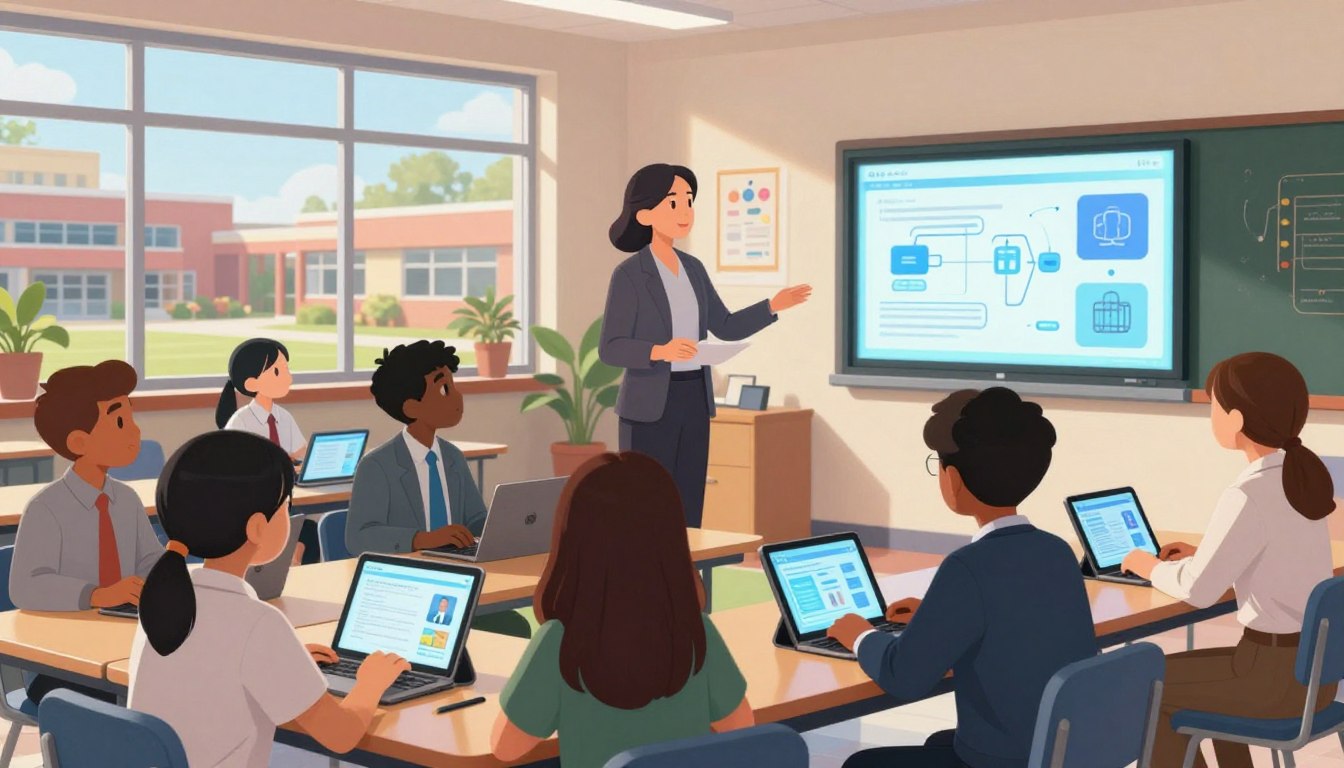
Classroom technology is evolving in parallel. Cedar Hill deploys Snorkl for math inquiry, plus Canva and Google Gemini. Leaders vet apps and train teachers to position tools as guides for inquiry—not shortcuts.
- Districts focus on seconds for safety and minutes for instruction.
- School strategies pair verified alerts with software that gives immediate feedback to students.
- Training and guardrails keep teachers central while tools speed personalization.
For a more detailed analysis of pilot outcomes, see this detailed report, and for guidance on classroom tools consult this classroom tools guide.
ISDs Using AI: district-by-district look at pilots shaping K-12 education
District pilots pair rapid-response security with classroom tools that nudge deeper student thinking.
Angleton runs weapon-detection software on its existing camera network. The system has operated three to four years and routes images to a 24/7 operations center staffed by military and law enforcement veterans.
Alerts typically arrive in three to five seconds with texted snapshots, clothing details and location data that let staff track suspects through buildings. One elementary incident ended with apprehensions after detection of individuals carrying an AK-47.
Classroom pilots in Cedar Hill
Cedar Hill blends Snorkl in math, plus Canva and Google Gemini across subjects. Snorkl shows steps without giving the final answer so the student reasons through problems.
Dr. Charlotte Ford stresses teacher training and vetting apps so technology supports instruction rather than replaces it. Teachers remain central to feedback and classroom judgment.
Mesquite’s AVID experiment
Mesquite uses AYO in AVID classes to track study time, homework and progress toward goals like graduating in the top 10%.
Students set academic and career targets; teachers call AYO a virtual assistant that lightens monitoring so they can focus on relationship-driven work. The Walton Family’s support ties the pilot to workforce-readiness goals and possible expansion into core classes.
“Personalization that nudges—like a recommendation—can help students stay on a clear path toward goals.”
- Security: ZeroEyes compresses alert cycles to seconds and gives responders actionable detail.
- Instruction: Snorkl, Canva and Gemini speed feedback while preserving teacher control.
- Progress: AYO helps high school students set and track tangible targets.
For guidance on how pilots often inform district purchases, see this pilot procurement analysis.
Impact and challenges: what AI means for students, teachers, and classrooms this school year
Practical pilots are producing clear benefits and honest constraints for the current school year. Districts report faster responses, clearer progress data, and hours returned to educators. Those gains come with questions about equity, data privacy, and change management.
Student outcomes and examples
Cedar Hill’s Snorkl gives step-by-step guidance without revealing final answers, so students work through problems and get immediate formative feedback in the classroom.
In Mesquite’s AVID class, AYO helps high school learners track study habits and visualize progress toward goals like top-10% class rank. That visibility turns habits into measurable momentum over the year.
Teacher workload, training, and campus safety
Teachers call these tools force multipliers: systems surface patterns in work so educators focus interventions where they matter most.
Angleton’s ZeroEyes routes verified alerts to a 24/7 operations team and typically reaches law enforcement in three to five seconds—an operational layer that supports human decision-making.
- For students: faster feedback shortens the gap between confusion and clarity.
- For teachers: training and clear policies let time saved translate into richer instruction.
- Challenges: access, data governance, and steady training remain central.
Conclusion
District experiments in Texas point to practical, measurable gains for classrooms and campuses.
Careful pilots matter: when a system is purpose-built, vetted, and aligned to instruction, it can lift routine burdens and strengthen safety without replacing human judgment.
Start small and measure: targeted pilots, clear metrics, and teacher training form a reliable playbook for expansion. Early results show that a modest, well-scoped tool can save time and improve student feedback.
The path forward is collaborative—district leaders, educators, and families refine deployments together so that artificial intelligence enhances outcomes while preserving the human core of the school.
FAQ
What Texas districts are piloting artificial intelligence in K-12 schools?
Several large Texas districts are testing targeted tools. Examples include Angleton ISD, which piloted ZeroEyes for weapon detection; Cedar Hill ISD, which introduced classroom tools such as Snorkl, Canva, and Google Gemini for student inquiry and feedback; and Mesquite ISD, which deployed AYO in AVID classes to help students track goals and study habits. These pilots focus on safety, instruction, and student supports.
Why are districts moving quickly to adopt these technologies now?
Districts are responding to time-sensitive drivers: rising concerns about school safety, demand for faster formative feedback, and the need to streamline teacher workload. Advances in software and cloud services also lower the barrier to entry, enabling pilots that can show quick classroom impact while districts assess policy and training needs.
How does weapon detection software like ZeroEyes work in a school setting?
ZeroEyes pairs video analytics with monitoring to flag potential threats in real time. Cameras feed encrypted video to a secure service that analyzes imagery for weapons and alerts campus administrators and first responders when a threat is detected. The goal is faster response times while preserving privacy controls and human oversight.
What classroom benefits have districts seen from tools such as Canva, Snorkl, and Google Gemini?
Teachers report faster delivery of feedback, richer multimedia projects, and improved student engagement. Canva supports visual assignments; Snorkl enables interactive student responses; Google Gemini offers generative assistance for lesson planning and tailored feedback. When implemented with clear guidelines, these tools help personalize learning and speed formative assessment.
How does AYO support student goal setting and study habits in AVID classes?
AYO provides a structured interface for students to set academic goals, monitor progress, and log study behaviors. In AVID classes, teachers use the platform to coach students, review data trends, and intervene early. The result is clearer goal ownership, measurable habit formation, and better preparation for college-level work.
What evidence exists that these pilots improve student outcomes?
Early results are promising but mixed. Districts cite faster feedback cycles, increased student engagement on project-based work, and better goal-tracking metrics. However, measurable academic gains require longer-term study and careful control for other variables. Pilots are primarily designed to surface best practices and inform scale decisions.
How are teachers trained to integrate these technologies without increasing workload?
Effective rollouts pair short, practical professional development with in-class coaching. Districts schedule hands-on sessions, model lesson plans, and provide release time or stipends for planning. The emphasis is on embedding tools into routines that replace—not add to—existing tasks, such as automating routine feedback or simplifying project design.
What privacy and safety safeguards should districts put in place?
Districts should require vendor security certifications, data-use agreements, and strict access controls. For camera-based systems, policies must address storage, retention, and human review of alerts. For instructional platforms, districts should limit student data collection, obtain parental notifications, and conduct periodic audits to ensure compliance with state and federal law.
How do schools balance technology with the need for human judgment and equity?
Successful programs position technology as an augmenting tool—one that supports teachers and counselors rather than replaces them. Districts should monitor for bias, ensure equitable access to devices and connectivity, and involve educators and families in pilot design. Human oversight remains essential for disciplinary decisions, nuanced feedback, and socio-emotional support.
What are common challenges districts face when scaling pilots to full programs?
Scaling hurdles include securing sustainable funding, aligning procurement with privacy policies, training enough staff, and integrating tools into existing systems. Technical interoperability, ongoing vendor management, and measuring long-term impact are additional obstacles. Clear pilots with defined success metrics help districts make informed scale-up choices.
How can parents and community members learn about and influence these pilots?
Districts should publish pilot summaries, host public forums, and invite stakeholder feedback during review periods. Parents can request demonstrations, ask about data practices, and participate in advisory committees. Transparency builds trust and improves implementation quality.
What should district leaders consider first when evaluating a new tool?
Leaders should start with a needs assessment: identify the problem to solve, determine success metrics, and evaluate existing capacity for training and support. Next, assess vendor security, cost, and evidence of efficacy. Pilot with a small cohort, collect data, and iterate before committing to district-wide adoption.