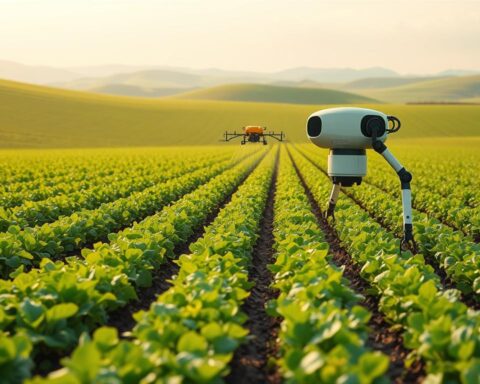
Standing at the edge of a field, many feel a mix of hope and worry. They hope for a good season but fear hidden soil problems. This is why soil analysis AI is so important.
Farmers, agronomists, and tech leaders want quick answers without harming the soil. They need fast, accurate results.
This AI Use Case – Soil-Nutrient Analysis Using Spectral AI shows how to turn uncertainty into clear actions. It uses satellite and drone data with AI to guess soil health without taking samples.
It can guess things like nitrogen, phosphorus, and potassium levels. It can also guess soil organic carbon and moisture levels.
Experts say AI could make farming 30% better by 2025. More than half of big farms might use AI to watch their soil. With tools like Farmonaut, they can apply the right amount of fertilizer and save money.
Key Takeaways
- Spectral technology for nutrient analysis offers non-destructive, rapid estimates of N, P, K, soil organic carbon, and moisture.
- Soil analysis AI scales traditional testing, enabling variable-rate fertilizer application and lower input costs.
- AI-based soil nutrient testing integrates satellite imagery, drones, and IoT sensors for continuous monitoring.
- Adoption trends point to significant yield gains and stronger decision accuracy in precision farming by 2025.
- Combining spectral AI with platforms like Farmonaut improves sustainability and traceability across operations.
Introduction to Soil-Nutrient Analysis
Soil-nutrient analysis is where farming meets technology. It helps decide when and where to use fertilizer. It also guides how to handle organic matter and protect water and air.
The move from old ways to new tech changes how we care for the land. Now, we can watch over our soil in real-time.
Importance of Soil Health
Healthy soil is key for growing crops, keeping water, and storing carbon. It also helps us deal with weather changes. Keeping soil organic and balanced helps crops grow better and longer.
Understanding soil health means watching nutrients and life in the soil. Farmers and experts can plan better. They can manage soil in specific areas, keeping yields high and reducing waste.
Historical Methods of Analysis
Old ways of testing soil included lab work and field tests. These gave good chemistry results but were slow and covered small areas.
Slow results and limited checks made management uneven. High costs made frequent checks hard. So, many fields were not checked often, leading to decisions based on averages.
New digital tools like remote sensing and IoT are changing this. They use AI and machine learning to understand soil better. This way, we can map soil health faster and apply fertilizers more precisely.
Studies and tests show AI and machine learning help a lot. They give us detailed, timely info. This info lets us apply fertilizers right and keep an eye on carbon and nutrients in fields.
What is Spectral AI?
Spectral AI uses light and machine learning to read soil like a map. It looks at light across different wavelengths to find out about soil’s health. This method makes checking soil fast and easy, unlike old lab tests.
The core of Spectral AI is light sensing and machine learning. Sensors pick up light in many colors. Then, computers turn this light into useful information about the soil.
Definition and Explanation
Spectral imaging looks at soil with light in different colors. It shows what’s in the soil, like organic matter and minerals. This helps farmers know what their soil needs at different times.
Machine learning connects light signals to soil data. This makes it easier for farmers to get detailed maps of their soil. It helps them know where nutrients are and how to improve the soil.
Key Technologies Used
Hyperspectral imaging gives a lot of detail. Multispectral sensors from planes and drones are cheaper but also useful. LiDAR adds depth and shape to the data, helping understand how water moves in the soil.
Proximal sensors and field spectrometers check the data against real soil. Edge computing and cloud services make predictions fast. This lets farmers adjust their plans as needed.
By combining light data with sensors and LiDAR, we get a better view of soil. This helps farmers tailor their plans to their specific soil and crops. It makes farming more accurate and effective.
The Role of AI in Agriculture
AI is changing how we farm. It turns messy data into clear plans. This helps farmers make better choices for their soil and crops.
This change is good for farmers, experts, and companies wanting to grow food in a green way.
Enhancing Precision Farming
AI and spectral analysis mix data from above and below the ground. They create maps that help farmers use water and fertilizer wisely. This leads to more food and less waste.
Studies show AI can increase crop yields by 20-40%. It also saves water and cuts down on harmful chemicals. Tools like Farmonaut help farmers make smart choices based on data.
Automating Data Collection
AI needs data from sensors and satellites to work well. It uses this data to make quick decisions. For example, it can turn on irrigation or spray crops in minutes.
AI helps machines work better. It makes farming safer and more efficient. This helps farmers grow food in a way that’s good for the planet.
To learn more about how AI can help farming, check out AI-powered sustainable agriculture. It talks about how AI can save money and make farming better.
| Capability | Typical Data Sources | Operational Benefit |
|---|---|---|
| Targeted fertilization | Hyperspectral imagery, soil sensors, yield maps | Reduced fertilizer use; improved nutrient balance |
| Precision irrigation | Soil moisture probes, weather forecasts, UAV data | Up to 30% water savings; timely irrigation events |
| Early stress detection | Multispectral satellites, drone sensors | Faster interventions; lower crop loss risk |
| Autonomous application | Prescription maps, RTK GPS, robotics | Lower labor costs; precise chemical placement |
More farmers are using AI to improve their soil and crops. This makes farming better and greener. It’s a smart way to grow food.
Spectral AI Techniques for Soil Analysis
Spectral AI uses advanced sensors and machine learning to read soil and crops. It shows how to map soil and guide decisions. This is done with remote sensing and field tools.
Remote sensing platforms and workflows
Satellites, drones, and ground spectrometers monitor soil. Satellites cover large areas for trends. Drones give detailed field maps.
Ground sensors help make models more accurate. Each tool has its own strengths. Together, they offer a full view of soil nutrients.
Hyperspectral imaging and preprocessing
Hyperspectral sensors capture many bands to find soil and plant secrets. This technology is great for finding small changes in soil and plants.
Before using the data, it needs to be cleaned. This includes removing bad data and making sure it’s correct. This way, models can learn from real data.
Machine learning and model design
AutoML and ensemble methods help make models better. They use special neural networks to find patterns in data. This turns data into useful information about soil.
Models are made for specific crops. This makes them more accurate. It also helps account for how different crops react to the environment.
Comparative advantages by platform
| Platform | Primary Strength | Key Use | Limitations |
|---|---|---|---|
| Satellite (multispectral/hyperspectral) | Large-area, frequent revisit | Regional nutrient trends, NDVI time series | Coarser spatial detail, atmospheric effects |
| UAV with hyperspectral sensor | High spatial resolution | Within-field nutrient mapping, precision zones | Limited flight time, regulatory constraints |
| Proximal ground spectrometer | Direct reflectance calibration | Model validation, lab-grade soil property estimates | Point-based sampling, labor intensive |
Empirical insights and applications
Studies show hyperspectral imaging can predict nitrogen levels. It works best for certain crops and growth stages. UAVs have also shown how fertilization affects crops.
This shows a good way to work. Use remote sensing for big pictures, spectral tech for details, and update models with real data.
Benefits of Soil-Nutrient Analysis
Spectral AI changes how farms make decisions. It turns complex soil data into clear actions. This improves yield, lowers costs, and protects ecosystems.
Targeted nutrient management supports precise timing and custom rates for each field. This approach helps achieve improved crop yields while cutting waste. Platforms such as Farmonaut show how spectral analysis links field measurements to economic outcomes and traceability.
AI-based soil nutrient testing increases water use efficiency and reduces inputs. Models that blend remote sensing and on-the-ground samples can boost water efficiency by about 40% and lower water use near 30%.
Improved Crop Yields
Spectral tools detect nutrient stress early so interventions arrive before yield loss occurs. Trials and commercial use suggest crop monitoring and health assessment tools can raise yields by 20–30% when adopted at scale.
Precision agriculture with AI and spectral analysis refines fertilizer placement. That cuts over-application and supports steady nutrient availability across growth stages. Farmers see better uniformity in harvest performance and higher net returns.
Sustainable Farming Practices
Spectral AI reduces nutrient runoff and greenhouse gas emissions by guiding exact application. Less leaching into waterways lowers environmental harm and keeps regulatory risks down.
Soil organic carbon mapping enables verified carbon credits and access to green finance. Combining AI-based soil nutrient testing with blockchain traceability creates a credible record for sustainability programs.
| Benefit | Typical Impact | How Spectral AI Delivers |
|---|---|---|
| Yield uplift | 20–30% possible increase | Early stress detection and tailored nutrient plans |
| Water efficiency | ~40% improvement | Soil moisture mapping and irrigation scheduling |
| Input reduction | 20–70% less fertilizer and pesticide use | Zone-based application guided by spectral signatures |
| Environmental gains | Lower runoff and emissions | Precise application and soil organic carbon monitoring |
| Market access | Verified sustainability metrics | Traceability platforms and carbon footprint reporting |
How Spectral AI Works in Soil Analysis
Spectral AI turns raw data into useful insights. It starts with a data pipeline from many sources. This includes satellites, drones, and ground sensors. 
Data Collection Process
Getting good data is key for Spectral AI. Satellites and drones cover large areas. Ground sensors give detailed readings at specific points.
Moisture and nutrient sensors send in real-time data. This data is checked against lab tests. A study at this link explains more.
Analysis Algorithms and Models
Algorithms turn data into maps and advice. They use random forests and deep learning. These methods find patterns in data.
Using many models together works best. AI can handle different types of data. This makes it useful for many places.
Machine learning gets better with more data. It needs to know about the soil and the plants. This makes the results more accurate.
Case Studies in Soil-Nutrient Analysis
Real deployments show how spectral AI and IoT platforms change farm decisions. Pilot projects report measurable gains in yield, input savings, and risk reduction. These case studies soil nutrient analysis help translate research into field-ready practices for growers.
Commercial operations using satellite-fed models and on-farm sensors reported 30–40% yield improvements and 20–25% reductions in water and fertilizer use. Platform vendors such as Farmonaut and Jeevn AI illustrate how AI-based soil nutrient testing becomes an operational tool for irrigation scheduling and fertilizer prescription.
Success Stories from Farmers
Growers who adopted spectral tools saw clearer, zone-specific recommendations for nitrogen, phosphorus, and potassium. That precision reduced the Soil Nutrient Variability Coefficient and improved nutrient uptake metrics. The documented success stories farmers spectral AI offer practical evidence of return on investment.
Farmers in diverse regions leveraged variable rate technology to apply inputs precisely and adaptively. This approach reduced waste, supported financial resilience, and simplified compliance with sustainability standards.
Research Collaborations
Academic teams and industry partners worked together to validate spectral models across crops and seasons. Studies such as UAV nitrogen mapping in blueberries, stacked-ensemble improvements to MODIS GPP, and multi-season potato models show the pathway from experiment to field use. These research collaborations spectral AI confirm scientific rigor and operational feasibility.
Cross-disciplinary projects combined LiDAR, hyperspectral imagery, and machine learning to improve canopy and nutrient assessments. Those efforts informed carbon inventories, resilience metrics, and fertilizer-response thresholds for Mediterranean and U.S. cropping systems.
Continuous ground truthing and modular data frameworks emerged as common lessons. Cultivar- and stage-specific models produced better predictions, while MQTT and Sigfox-enabled networks supported reliable, near-real-time telemetry. An applied synthesis of these methods appears in a detailed conference study available through a focused report on integrated systems: integrated spectral and IoT approaches.
- Measured outcomes: higher nutrient uptake efficiency and lower variability across zones.
- Operational tools: satellite NDVI, farm advisory platforms, and VRT for adaptive fertilization.
- Technical enablers: multispectral and hyperspectral analysis, Sigfox for long-range links, and MQTT for continuous data streams.
These illustrations of applied research and farmer adoption deepen understanding of AI-based soil nutrient testing. They define practical steps that innovators can test, refine, and scale for stronger, more sustainable cropping systems.
Challenges Facing Soil-Nutrient Analysis
The use of spectral imaging and AI in soil health faces real-world problems. Models struggle with unreliable data, changing field conditions, and the gap between research and farm use. These issues slow down progress and adoption.
Data Quality Issues
Spectral sensors gather a lot of data but need careful handling. Steps like calibrating, correcting for the atmosphere, and removing noise are key. But, not enough ground truth and different lab methods make models less reliable.
Different crops and growth stages change how data looks. This makes it hard to use data from one place in another. Models need to be updated often to stay accurate.
Experts say we should mix spectral data with good field and lab work. For more on soil’s complexity and data needs, see this review. It talks about how things like texture and moisture affect predictions.
Technological Barriers
Expensive equipment is a big problem. Things like hyperspectral sensors and drones cost a lot and need skilled people. This makes it hard for small farmers and cooperatives to use them.
Also, areas without good internet and power can’t use these systems online. They need to work offline too. Systems should be able to handle bad connections and use less power.
It’s not just about the tech. People need to understand and use AI tools well. The tools should give farmers clear advice they can trust.
| Challenge | Core Issue | Mitigation Strategy |
|---|---|---|
| Data preprocessing | Noise, sensor drift, atmospheric effects | Standardized calibration, automated pipelines, quality flags |
| Ground-truth scarcity | Insufficient labeled samples across zones and stages | Stratified sampling, citizen science programs, federated datasets |
| Model transferability | Crop- and region-specific spectral signatures | Domain adaptation, temporal retraining, modular model design |
| Hardware costs | Expensive sensors and UAV logistics | Leasing, service models, lower-cost multispectral alternatives |
| Connectivity and power | Limited edge/cloud operations in remote farms | Edge optimization, offline-first apps, solar power nodes |
| User adoption | Low literacy in data tools and complex UX | Training programs, simplified dashboards, extension services |
| Governance and trust | Privacy, security, unclear data ownership | Secure storage, consent frameworks, transparent contracts |
| Research-to-practice gap | Academic prototypes not production-ready | Modular architectures, commercial models, continuous validation |
Fixing these problems needs teamwork from vendors, researchers, and policy makers. Solving data quality and tech barriers will help more farmers use spectral imaging and AI. This will make soil health better.
Future of Soil-Nutrient Analysis with AI
New tools will change how farmers and experts read the ground. Advances in sensors, satellite coverage, and AI will make monitoring soil easy for more farms. This change will make spectral AI better for both research and farming.
New tech will mix different data types for better insights. Cheap hyperspectral sensors on drones, more satellite missions, and AI on tractors will help. This will make decisions faster and cheaper.
Emerging Technologies
LiDAR, spectral images, IoT soil probes, and weather models will map soil and crops better. Genomics will link spectral signs with crop performance, speeding up trait selection.
5G and better drones will help make decisions in real-time. Open APIs and AI frameworks will make tools ready for fields. This will help research reach farms faster and support local needs.
Potential Market Growth
Farms are quickly adopting AI for soil monitoring. Many are testing new ways to manage data and reports.
Things like traceability, carbon credits, and sustainability reports will drive demand. More investment in digital tools will make it easier for everyone to use.
| Driver | Near-Term Impact (1–3 years) | Mid-Term Impact (3–7 years) | Relevant Technologies |
|---|---|---|---|
| Sensor Cost Decline | More drones; projects grow | Many farms use UAV hyperspectral | UAV hyperspectral sensors, IoT soil probes |
| Connectivity | Uploads faster; updates more often | AI works fast at the edge | 5G networks, edge AI, cloud platforms |
| Analytics Platforms | Try SaaS and subscriptions | AI and spectral analysis in farm systems | Precision agriculture with AI and spectral analysis, developer APIs |
| Policy & Markets | Start carbon-credit and verification | Markets for soil services grow | Traceability platforms, carbon accounting tools |
| Research Translation | AutoML tests in controlled sites | AI works well in real farms | emerging technologies soil analysis AI, modular AI frameworks |
Those who match tech with farm needs will lead. Companies like Deere & Company and climate tech will help scale AI tools.
Tools must show clear value to grow. Things like saving money, better yields, and green outcomes will drive growth. This will make soil analytics key in farming.
Ethical Considerations in AI Applications
AI in soil health is both helpful and raises big questions. Farmers, experts, and leaders must think carefully about the benefits and risks. They need clear rules and fair access to build trust or avoid trouble.
Data ownership and consent are key topics. Collecting data from fields is valuable but also risky. It’s important for platforms to protect data with strong encryption and access controls.
Data Privacy Concerns
Geolocation makes farm data very sensitive. When companies or platforms analyze this data, farmers worry. They want to choose who gets their data and how it’s used.
Independent checks and clear data-use policies help. Companies like Trimble and Corteva are starting to share their privacy practices. This helps everyone work together better.
Environmental Impact
Spectral AI can help use less fertilizer and reduce emissions. But, it also has environmental costs. We need to think about the whole process, from making sensors to using the cloud.
Using edge computing and cloud wisely can save energy. Choosing long-lasting sensors and sharing drones can also help. We need partnerships to make these solutions affordable and green.
It’s important to do research the right way. We should be open about who funds us and share our findings. This helps avoid biased advice and lets others check our work.
- Responsible data governance: opt-in sharing and anonymization build trust.
- Equity and access: subscription or pay-as-you-grow options lower cost barriers for smallholders.
- Policy balance: rules must allow innovation while protecting privacy and the environment.
By focusing on ethics, we can make AI in soil health work for everyone. Good management turns promising ideas into reliable, trusted practices.
Conclusion and Best Practices
Spectral AI makes soil analysis better by using special sensors and smart learning. It helps farmers make better plans for their land. This leads to more food, less waste, and a healthier planet.
To start using AI for soil, begin with small tests. Make sure these tests match lab results. Then, use the best technology you can afford.
It’s important to check your data often. Use different tools to make sure your plans are right. Keep your data safe and use AI to help with farming.
Farmers should work together with experts. This way, AI can help everyone. With the right steps, AI can change farming for the better.
FAQ
What is Spectral AI and how does it apply to soil-nutrient analysis?
Spectral AI uses special sensors to read soil. It then uses smart learning to guess what the soil needs. This helps farmers know exactly where to add fertilizer and water.
Why is soil-nutrient analysis important for farm productivity and sustainability?
Knowing what’s in the soil helps crops grow better. It also helps keep water and carbon in the soil. This makes farming better for the planet and helps crops grow strong.
How did traditional soil testing work and what are its limitations?
Old ways of testing soil took a long time and cost a lot. They only tested a few spots and didn’t show the whole picture. This made it hard to make good decisions fast.
What sensing platforms are used in Spectral AI pipelines?
Spectral AI uses many tools like satellites and drones. It also uses ground sensors and weather stations. Each tool helps in different ways.
How do hyperspectral and multispectral sensors differ for soil analysis?
Multispectral sensors look at a few colors and are easy to use often. Hyperspectral sensors see more colors and find tiny details. But they cost more and need more work.
What role do machine learning models play in converting spectra to nutrient estimates?
Machine learning helps turn sensor data into useful info. It uses many models to get the best results. But it needs good data and to learn over time.
How accurate is Spectral AI for estimating soil N, P, K and soil organic carbon?
How well Spectral AI works depends on the sensors and how it’s set up. Studies show it gets better with more data and the right models.
Can Spectral AI provide real-time or near-real-time insights for management decisions?
Yes. By using many tools together, Spectral AI can give farmers quick advice. This helps them make fast decisions.
What measurable benefits can farmers expect from adopting Spectral AI?
Farmers can expect faster, cheaper soil tests. They can use less fertilizer and water. This can make crops grow up to 40% better.
How does Spectral AI integrate with platforms like Farmonaut and blockchain traceability?
Farmonaut uses Spectral AI to help farmers. It helps with water and fertilizer use. It also helps with carbon tracking and keeping records.
What are the main data-quality challenges when using spectral data for soil analysis?
Getting good data is hard. Things like the weather and sensor quality can mess it up. Without careful checking, the data might not be right.
Are there technological or economic barriers to adopting Spectral AI widely?
Yes, it can be expensive to start. But, there are ways to make it more affordable. This helps more farmers use it.
How transferable are spectral models across crops, cultivars and regions?
Models don’t always work in different places. They need to be made for each area. Using local data makes them better.
What governance and privacy concerns should farms consider when sharing spectral and geolocated data?
Farms need to think about who gets their data. They should use strong security and clear rules. This builds trust.
How can smallholders or resource-constrained farms access Spectral AI benefits?
Small farms can use satellite data or join groups. There are also affordable plans. Training and partnerships help too.
What environmental trade-offs exist with Spectral AI deployment?
Using Spectral AI can help the planet. But, it also uses resources. Making it more efficient helps.
Which best practices should farmers follow when piloting Spectral AI for soil-nutrient management?
Start small and check the data often. Use many tools together. Make sure to protect the data and choose trusted services.
What emerging technologies will shape the future of Spectral AI in agriculture?
New satellites and cheaper drones will help. So will faster computers and better data use. This will make farming smarter.
How can Spectral AI support carbon accounting and access to carbon finance?
Spectral AI can track carbon in the soil. This helps farmers get credits. It also helps with green finance.
Are there documented success stories of Spectral AI improving farm outcomes?
Yes. Farms have seen big improvements. They use less water and fertilizer. Crops grow better too.
How should policymakers and stakeholders support equitable Spectral AI adoption?
Governments should help with costs and training. They should also support small farms. This makes Spectral AI fair for everyone.