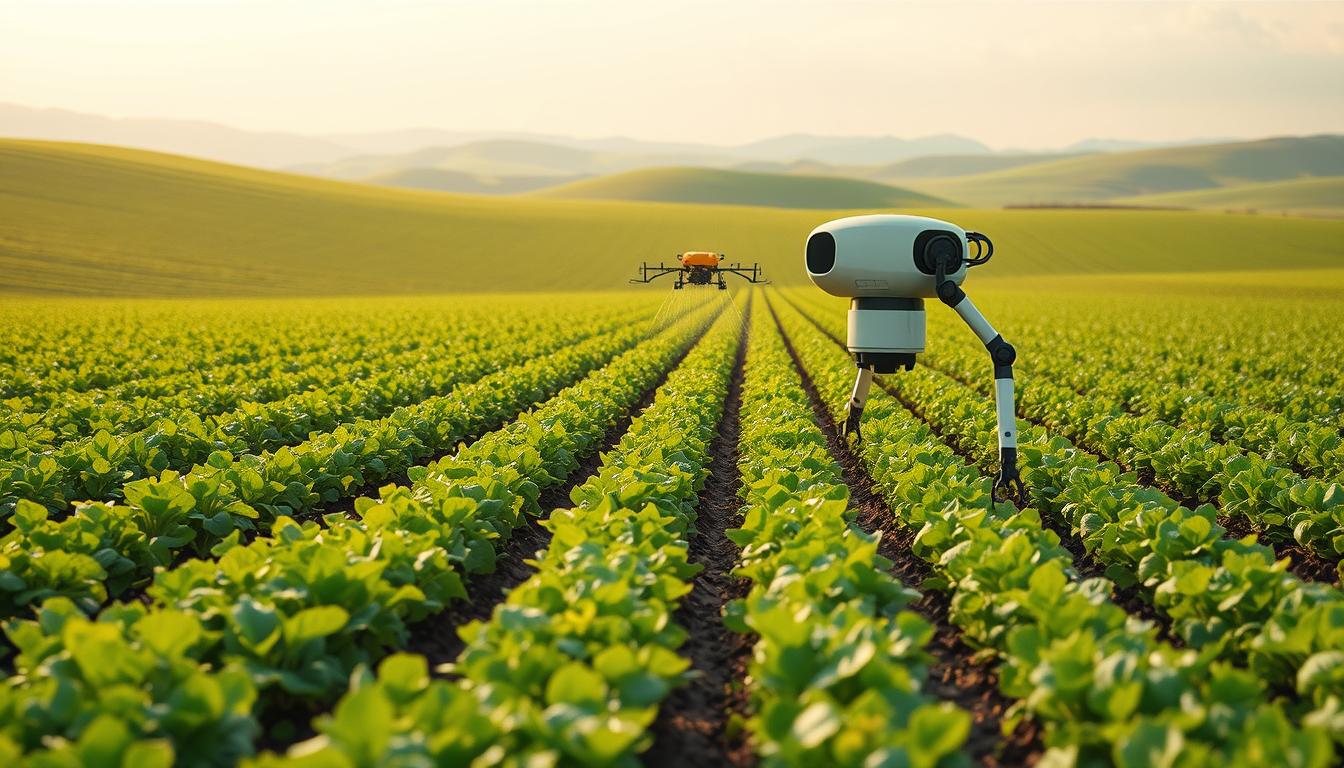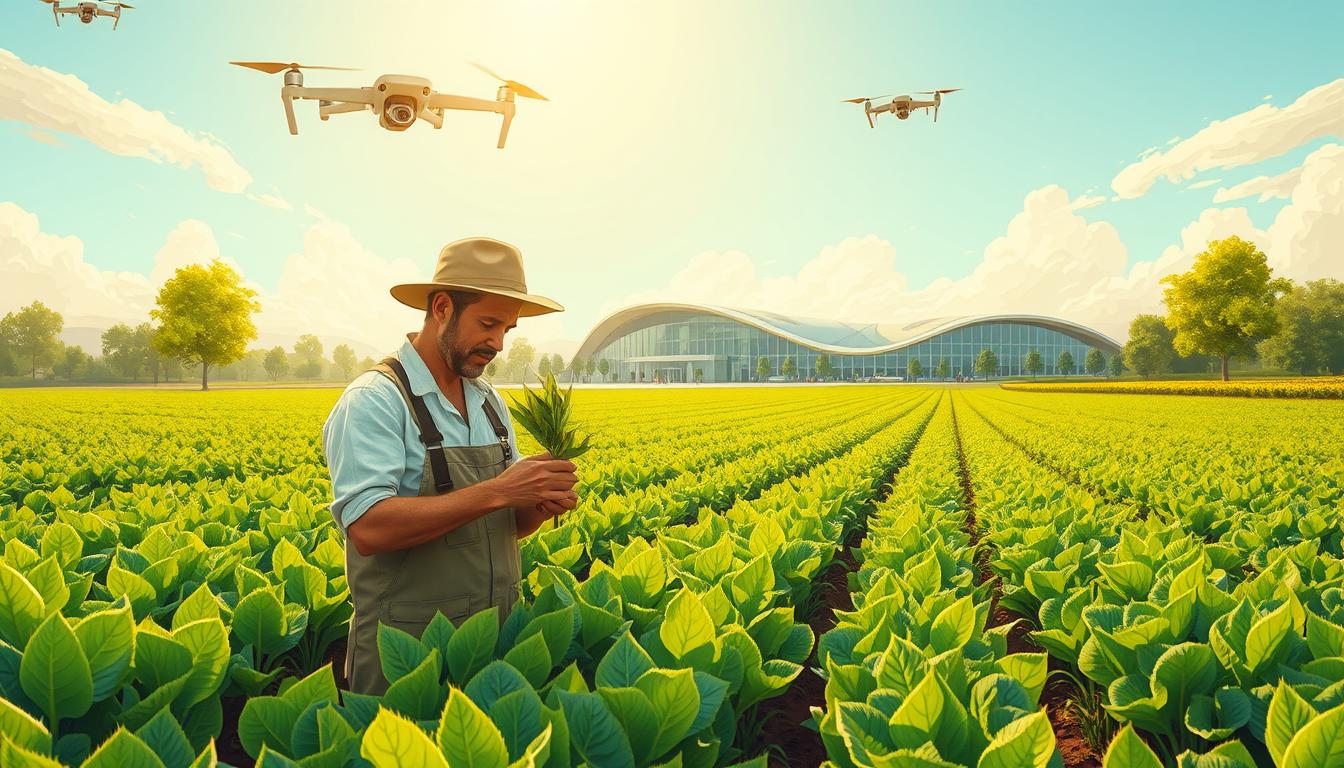
There are moments on a farm that feel both hopeful and uncertain. Standing at the edge of a field at dawn, feeling the soil, is one of them. This is where AI in agriculture comes in. It helps farmers, cooperatives, and policymakers make better choices.
This AI Use Case is about using data to make decisions. It uses old yield records, remote sensing, IoT sensors, and weather to predict how much will be harvested. Machine learning helps learn from past data, making predictions better.
Studies show that certain AI models are very good at predicting. They use data from different sources. These models are better than old methods at guessing how much will be harvested.
These AI models are not just good at guessing numbers. They help farmers grow more and use less. By 2025, they could make farming more efficient. Real-world tools like Farmonaut already use AI to help farmers.
Key Takeaways
- Machine learning for crop production turns diverse data—satellite, sensor, and weather—into actionable forecasts.
- Ensemble and deep-learning models often outperform traditional methods for yield and weather-linked predictions.
- Predictive analytics in agriculture helps optimize planting, irrigation, and input allocation at multiple scales.
- Commercial platforms such as Farmonaut demonstrate practical deployment of yield-prediction models.
- Improved forecasts can reduce errors, inform markets and policy, and support sustainable yield gains.
Introduction to Machine Learning in Agriculture
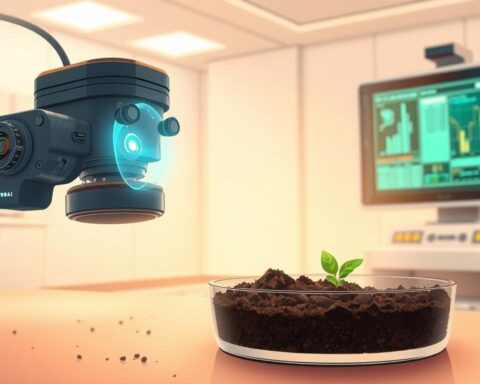
Machine learning has become a real tool for farmers. It helps them make better decisions. Farmers use data from the soil, satellites, and sensors to guide their work.
This change helps keep food supplies steady. It also makes sure resources are used wisely as more people need food.
The significance of crop-yield prediction
Knowing how much crops will grow is very important. It helps plan food, set prices, and figure out insurance. A good model helps avoid waste and makes sure food gets where it needs to go.
As the world’s population grows, we need to predict better. Farmers in the U.S. and other countries can use this info to plan better. They can use water, seeds, and labor more wisely.
How AI is transforming farming practices
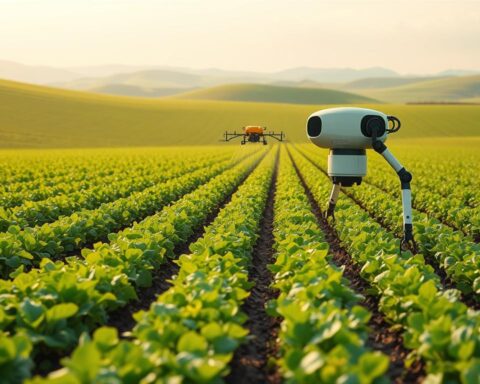
AI is changing farming by using satellites, drones, and sensors. These tools give farmers real-time feedback. They help with watering, fertilizing, controlling pests, and knowing when to plant.
Big companies and startups are helping farmers use AI. They offer tools that don’t cost a lot at first. This makes it easier for small farmers to use AI.
But, there are challenges. There’s a risk of AI being unfair, and not everyone has access. Governments are working to make sure AI is fair for everyone. They want to help farmers use AI without causing harm.
Understanding Crop Yield Prediction
Crop yield forecasting uses data and algorithms to guess how much will grow. Farmers and others use these guesses to plan. They look at weather, soil, and more to make good guesses.
What is crop yield prediction?
It’s guessing how much will grow by looking at past data and current conditions. It uses weather and soil info. It also looks at how farmers manage their land.
Remote sensing adds more details. Farm management logs and sometimes genetic data help too. This way, predictions get better over time.
Importance of accurate predictions in agriculture
Being right is key. It helps feed more people and saves money. It also helps the planet by using less water and fertilizer.
Good guesses help markets stay stable. They help farmers get better loans and insurance. This way, farmers can plan better and avoid big problems.
Studies show some methods are better than others. They use numbers to show how well they do. Adding more details about soil and farming helps make better guesses.
Machine Learning Techniques for Prediction
Predictive models for farming range from simple to complex. Farmers pick methods based on data, features, and computer power. This section talks about different algorithms, common picks, and trade-offs for predicting crop yields.
Overview of machine learning algorithms
Simple models are key for predicting yields. Random Forest, Gradient Boosting Machines, and Support Vector Regression work well with small data. They handle data like weather and soil types well.
Deep learning is great for big data and images. Convolutional Neural Networks work with satellite images. Recurrent models like LSTM handle long data sequences. New models like Transformer networks are also being used.
Ensemble learning combines different strengths. For example, using an SVM with RF and a neural network improves results. Unsupervised methods help group similar fields together.
Commonly used algorithms
Random Forest often does well for predicting yields. Gradient Boosting Machines are good for forecasting droughts. These models work well even with missing data.
CNNs are best for images, while RNNs and LSTMs are good for time series data. Mixing CNNs with LSTMs or DNNs improves accuracy. This lowers error rates and increases R2 scores.
Evaluating models is important. Metrics like R2 and RMSE are used. For detecting pests or diseases, precision and recall are key. Testing models across seasons helps avoid bias.
Choosing algorithms depends on data and scale. Small datasets are better with ensembles and Random Forest. Big datasets need Deep learning and transformers. GPU power, feature selection, and data resolution are important.
For a detailed look at crop-yield modeling, check out this review: AI Use Case – Machine-Learning Crop-Yield.
| Algorithm Family | Typical Inputs | Strengths | When to Use |
|---|---|---|---|
| Random Forest (RF) | Soil metrics, weather, NDVI | Robust, interpretable, low tuning | Limited data or missing values |
| Gradient Boosting Machines (GBM) | Tabular climate and management data | High accuracy, handles heterogeneity | Medium-sized datasets with mixed features |
| Support Vector Regression (SVR) | Engineered features, small datasets | Good for small-sample generalization | High-dimensional, low-sample problems |
| Convolutional Neural Networks (CNN) | Satellite imagery, NDVI/EVI layers | Captures spatial patterns and textures | Large labeled imagery datasets |
| RNN / LSTM | Time series: daily weather, yield history | Models temporal dependencies well | Seasonal forecasting, crop growth sequences |
| Hybrid / Ensemble (Stacking) | Multimodal inputs | Combines complementary model strengths | Complex problems needing high accuracy |
| Transformer-based Spatial–Temporal | Large multimodal archives | Flexible attention across space and time | Advanced Deep learning crop yield prediction at scale |
Data Collection for Crop Yield Prediction
To predict crop yields well, we need to collect data carefully. We must gather weather records, soil tests, and remote sensing data. We also need management logs and market indicators.
Types of data needed for accurate predictions
Weather like temperature and rainfall is key for short-term forecasts. Soil tests tell us about soil health. Remote sensing shows how plants are doing.
Management records help us understand why yields change. Things like planting dates and fertilizer use matter. Market data helps predict when to harvest and how much to sell.
Methods of data collection
Satellites and drones take pictures of fields. They help us see how plants are doing. Companies like Sentinel and Planet send us these pictures often.
Drones give us close-up views of fields. IoT sensors measure soil and weather in real time. Weather stations and old data help us understand past conditions.
Mobile apps and farmer groups share local knowledge. In Kenya and India, mobile alerts help small farmers. Working together, we can get more data to farmers.
Integration and quality control
Combining data from different sources is tricky. We use special techniques to make sure it fits together right. We also check for errors and make sure data is complete.
We keep data safe and make sure it’s used fairly. This builds trust in using AI in farming.
| Data Category | Typical Sources | Key Use in Models |
|---|---|---|
| Meteorological variables | Weather stations, reanalysis datasets, satellite estimates | Seasonal trends, stress events, feature lags and cumulative metrics |
| Soil attributes | In-field sensors, lab tests, soil surveys | Root-zone water balance, nutrient availability, management recommendations |
| Remote sensing indices | Satellites (Sentinel, Planet), drones, Farmonaut analytics | Vegetation health, canopy cover, anomaly detection |
| Management records | Farmer logs, cooperative databases, extension services | Practice-driven yield variance, timing of inputs, cultivar effects |
| Socio-economic indicators | Market reports, census data, mobile surveys | Adoption likelihood, harvest timing, price-driven decisions |
| Access and governance | Subscription platforms, NGO programs, data trusts | Equitable data sharing, privacy protection, model transparency |
Role of Weather Data in Predictions
Weather and climate data are key for growing crops. They help predict stress periods and how much crops will grow. This section talks about why these data are important and how they help make better decisions in farming.
Importance of climate data
Good climate data makes yield forecasts more accurate. Long-term data helps models understand seasonal patterns. Short-term data makes predictions better for the next few weeks.
Farmers and advisors can plan better with this data. They know when to water, apply fertilizers, and manage risks.
AI Use Case – Machine-Learning Crop-Yield Prediction relies on weather data. Without it, models can’t make good predictions. Good data helps models work well for different crops and places.
How weather impacts crop yields
Weather affects how much water crops get. Enough rain helps crops grow well. But droughts can hurt, making crops less productive.
Temperature changes and heat waves can also harm crops. They can lower the quality and amount of grain. Weather also affects diseases and pests.
Solar radiation is important for photosynthesis. Extreme weather events like late frosts or hail can greatly reduce yields. AI helps predict these effects.
Modern models use special algorithms to understand weather patterns. They combine forecasts to make predictions more accurate. This helps farmers make better decisions.
These forecasts help farmers water wisely and plan for droughts. They also help control pests. This way, farmers can save resources and protect their crops.
| Climate Variable | Primary Crop Impact | Operational Use |
|---|---|---|
| Precipitation | Maize, wheat, rice, cassava | Irrigation timing; drought alerts |
| Temperature | Cereals, fruits, tubers | Heat-stress warnings; planting date adjustment |
| Solar Radiation | All photosynthetic crops | Yield estimates; fertilization timing |
| Relative Humidity & Wind | Vegetables, legumes | Pest/disease risk models; spray scheduling |
| Extreme Events | All crops | Insurance triggers; reserve and supply planning |
Case Studies of Successful Implementations
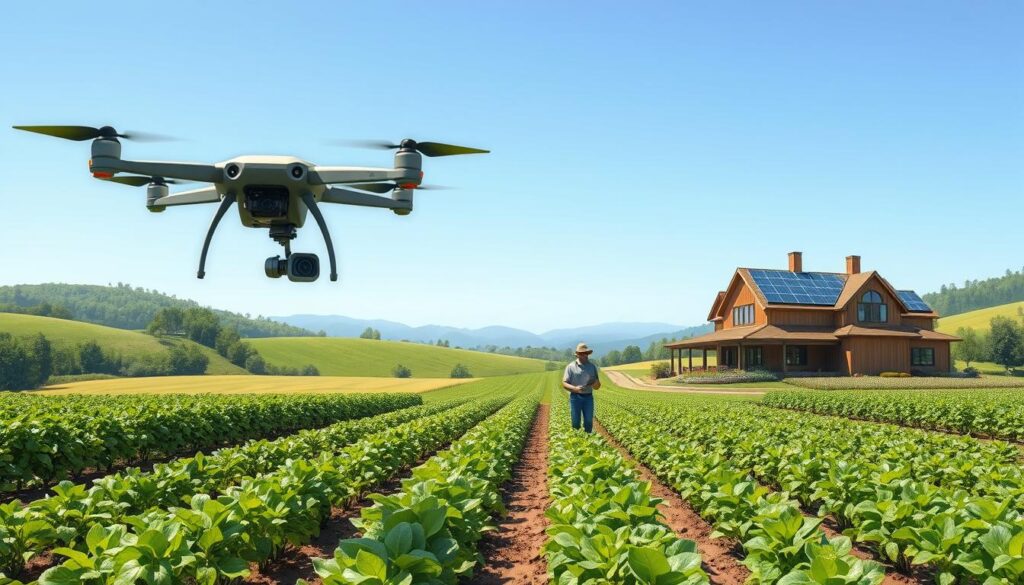
Here are some real-life examples of Smart farming with AI. They show how AI can change farming from small tests to big changes. Each story shows how AI helps with planning, using resources, and making quick decisions in different farming places in the U.S.
Example 1: Midwestern row-crop operations
Farms in Iowa and Illinois used satellite images, soil probes, and weather data. They built a model to predict crop yields. This model helped them know where to use more fertilizer and water.
Managers said they could plan better for water and nutrients. This saved money and helped crops grow better. They also timed harvests better and got more from crop insurance.
Example 2: California specialty crops and orchards
Vineyards and orchards in California used drones, soil sensors, and AI to predict yields. They made detailed plans for water and pest control. This helped save water and make fruit better.
Growers got alerts for hot weather and changed harvest times. This helped them deal with drought and heat. It shows AI helps in places with little water and high-value crops.
Commercial platform and global pilots
Services like Farmonaut offer tools for small farms. They help with monitoring and advice without a big cost. Farms in India, Kenya, Colombia, and the Netherlands saw better forecasts and less loss.
These stories show AI’s benefits: saving money, planning labor, and managing risks. They are guides for using AI in different farming places and climates.
Challenges in Machine-Learning Crop-Yield Prediction
Machine learning can make farming smarter. But, real-world use shows big gaps in data, tech, and rules. This section talks about the main problems and how to fix them.
Data quality and integrity issues
Good data is key for accurate predictions. But, bad data and missing records make models less reliable.
Also, different data formats and sensor issues slow down work. This makes it hard for farmers to get the help they need.
Models trained in one place don’t always work in another. This makes farmers doubt the data’s quality.
Technological barriers
Buying new tech is expensive. Small farmers often can’t afford it.
Also, bad internet and power issues make it hard to update models. Cloud computing helps, but it’s costly.
Not everyone understands AI. Clear explanations and training can help build trust.
Governance, equity, and scientific limits
Some farmers can’t afford new tech. But, sharing costs and government help can make it more accessible.
Keeping data safe is also important. Clear rules and open data help build trust.
It’s hard to predict long-term changes and short-term weather. Using many sources of data is key to solving this problem.
Mitigation strategies
Sharing costs and using modular tools can help. Companies like Farmonaut and Deere offer affordable options.
Testing models in different places and explaining how they work can build trust. This helps more farmers use AI.
| Challenge | Core Impact | Practical Mitigation |
|---|---|---|
| Data sparsity and noise | Reduced model accuracy; biased predictions | Standardize collection, use data fusion, apply imputation |
| Heterogeneous data formats | Long preprocessing; integration errors | Adopt common schemas, use ETL pipelines, open APIs |
| Lack of connectivity and power | Delayed updates; limited real-time use | Edge computing, offline-capable tools, solar power kits |
| High compute and hardware costs | Barriers for smallholders; slow scale-up | Shared cloud credits, subscription models, co-ops |
| Algorithmic bias | Poor transferability across regions | Cross-regional validation, domain adaptation methods |
| Trust and literacy gaps | Low adoption; skepticism of AI outputs | Explainable models, farmer workshops, local demos |
Future Trends in Crop-Yield Prediction
Soon, we’ll see better data mixing and easier-to-use tools for farmers. These tools will use satellite images, weather data, and sensors to make accurate forecasts. This change will make AI a big part of farm planning.
More farms will use systems that work together well. Services like Farmonaut make it easier for small farms to use AI. Studies show AI is becoming a regular tool for planning.
Emerging technologies in agriculture
New tech like spatial–temporal attention networks and Transformer models are getting popular. They understand time and space better than old models. Studies show they make predictions more reliable.
Genomics and management data will help pick the right seeds and practices. Robots will use these predictions to help with watering, spraying, and harvesting. This creates a loop where predictions lead to action.
Potential advancements in machine learning
We’ll see new models that mix different types of data. These models will make predictions more accurate and timely. This is good for farmers.
Making AI easier to use is important. Better interfaces and natural language will help more people use it. Rules for fair data use will build trust.
For those interested in AI for crop yield, check out this guide: AI crop-yield prediction guide.
| Trend | Short-term Impact | Expected Accuracy Gains | Practical Outcome |
|---|---|---|---|
| Multimodal data fusion | Faster adoption by regional farms | 10–20% improvement over single-source models | Hyper-local forecasts for management |
| Transformer models in agriculture | Better spatial–temporal modeling | Up to 30% reduction in prediction error in trials | More reliable seasonal planning |
| Genomics + field analytics | Long-term breeding optimization | Varies by crop; significant for targeted traits | Seed choices matched to predicted conditions |
| Autonomous action systems | Operational efficiency gains | Indirect yield gains via timely interventions | Automated irrigation, spraying, and harvest |
| Subscription analytics platforms | Lower cost of entry | Consistent accuracy of 85–95% in quality deployments | Accessible forecasting for SMB farms |
Benefits of Utilizing AI in Agriculture
AI tools change farming for the better. They help farmers make smart choices with data. This leads to better forecasts, more efficient use of inputs, and a greener planet.
Economic benefits for farmers
AI helps farmers predict market trends and cut down on waste. This leads to more stable income. It also helps in planning labor and logistics better.
Using AI for irrigation and fertilizers saves money. Farms can use less water and fertilizer, which increases profits. Studies show this can really boost farm income.
AI also makes it easier for farmers to get loans and insurance. This is because AI makes farming look less risky. Farmers can then invest more and grow their businesses.
Environmental impact and sustainability
AI helps farmers use resources wisely. It uses satellite images and sensors to target treatments. This reduces chemical use and protects the soil.
AI makes farming more sustainable. It cuts down on pollution and saves water. It also helps farmers earn money by reducing carbon emissions.
AI helps farmers prepare for bad weather. They can choose the right crops and plan better. This makes food more secure and reduces risks.
For a quick look at AI’s benefits in farming, check out this list: 11 benefits of machine learning in.
| Impact Area | Example Metric | Business Advantage |
|---|---|---|
| Yield prediction accuracy | Up to 30% yield increase | Better harvest planning and market positioning |
| Water use efficiency | ~40% improvement with AI irrigation | Lower irrigation costs and drought resilience |
| Chemical application | 60–70% reduction in targeted treatments | Reduced input spend and improved biodiversity |
| Post-harvest loss | Reduced via improved forecasts | Higher sellable output and stable pricing |
| Risk and insurance | Lower risk profiles for lenders | Cheaper credit and insurance premiums |
Conclusion
Machine learning has changed how we predict crop yields. It uses weather, soil, satellite images, and farm data. This method is more accurate than old ways.
It helps farmers use resources better, save money, and manage risks. It also helps plan for markets and policies.
Tools like Farmonaut make these predictions useful for farmers. They offer ways to check on crops and plan better. This shows how AI helps farmers make smart choices.
AI in farming leads to better crops and taking care of the environment. It’s a win-win for farmers and the planet.
The future of AI in farming looks bright. We’ll see even better predictions with new technologies. More people will get to use these tools.
But, we face challenges like not enough data and unequal access. We need to work on these issues. This includes making sure everyone can use AI in farming.
Studies show AI is a big help in farming. If we invest in the right things, farming can get better. For more on AI in farming, check out this article: AI-powered sustainable agriculture.
FAQ
What is “AI Use Case – Machine-Learning Crop-Yield Prediction”?
This uses old yields, satellite images, and weather data to guess how much crops will grow. It helps farmers plan better and make more money.
Why is crop-yield prediction significant for agriculture?
It helps keep food safe, keeps prices stable, and helps plan better. It also helps farmers use less water and fertilizer.
How is machine learning transforming farming practices?
Machine learning helps farmers plan better. It uses satellite images and weather data to help farmers water and fertilize their crops better.
What data types are required for reliable yield prediction models?
Good models need weather data, soil info, satellite images, and farm records. They also need data on how much water and fertilizer is used.
What are the common machine-learning algorithms used?
Farmers use many algorithms like Random Forest and deep learning. These help guess how much crops will grow.
Which algorithms tend to deliver the best performance?
Models that mix different algorithms work best. They guess how much crops will grow more accurately.
How does weather data influence model accuracy?
Weather is very important for growing crops. It affects how much crops grow and how healthy they are.
What data-collection methods are typical?
Farmers use satellites and drones to collect data. They also use weather stations and sensors in the field.
How do practitioners handle multisource data integration?
They make sure all data fits together right. They also clean and prepare the data for use in models.
What performance metrics are used to evaluate models?
Models are checked with R2, RMSE, and MAE. These show how well the model guesses crop yields.
Can you give real-world performance examples?
Yes, some models guess crop yields very well. They can be up to 90% accurate in some cases.
What are notable use-case examples at regional and farm scale?
In the Midwest, farmers use models to guess crop yields. This helps them water and fertilize better. In California, drones help farmers protect their crops from disease.
How do commercial platforms make these tools accessible?
Platforms like Farmonaut offer tools for farmers. They make it easier for farmers to use advanced technology.
What are the main technical and infrastructural challenges?
There are many challenges like finding enough data and having enough money for computers. These make it hard to use these tools everywhere.
How do data gaps and bias affect model deployment?
Models need data from different places to work well everywhere. Without this, models can be biased.
What governance and privacy considerations should be addressed?
It’s important to keep farm data safe. Laws and rules help make sure data is used the right way.
What operational benefits do farmers and agribusinesses realize?
Farmers can plan better and save money. They can also get better prices for their crops.
Are there documented impacts from field pilots and country programs?
Yes, pilots have shown great results. They have helped farmers grow more and save water.
What are practical strategies to overcome adoption barriers?
Making tools affordable and easy to use helps. Training farmers and making rules for data use also helps.
What future trends will shape crop-yield prediction?
More use of advanced models and tools will happen. This will help farmers grow more food and use less water.
How will these technologies affect sustainability and climate resilience?
These technologies will help farmers use water and chemicals better. They will also help farmers deal with bad weather.
What should organizations consider when selecting a modeling approach?
Think about the data you have and what you need to do. Choose a model that fits your situation.
How should organizations measure success when implementing crop-yield prediction?
Look at how much money is saved and how much more food is grown. Also, see how happy farmers are with the results.
What immediate steps should a farm or agribusiness take to pilot these tools?
Start by getting data and working with a platform. Then, test the models and keep improving them.