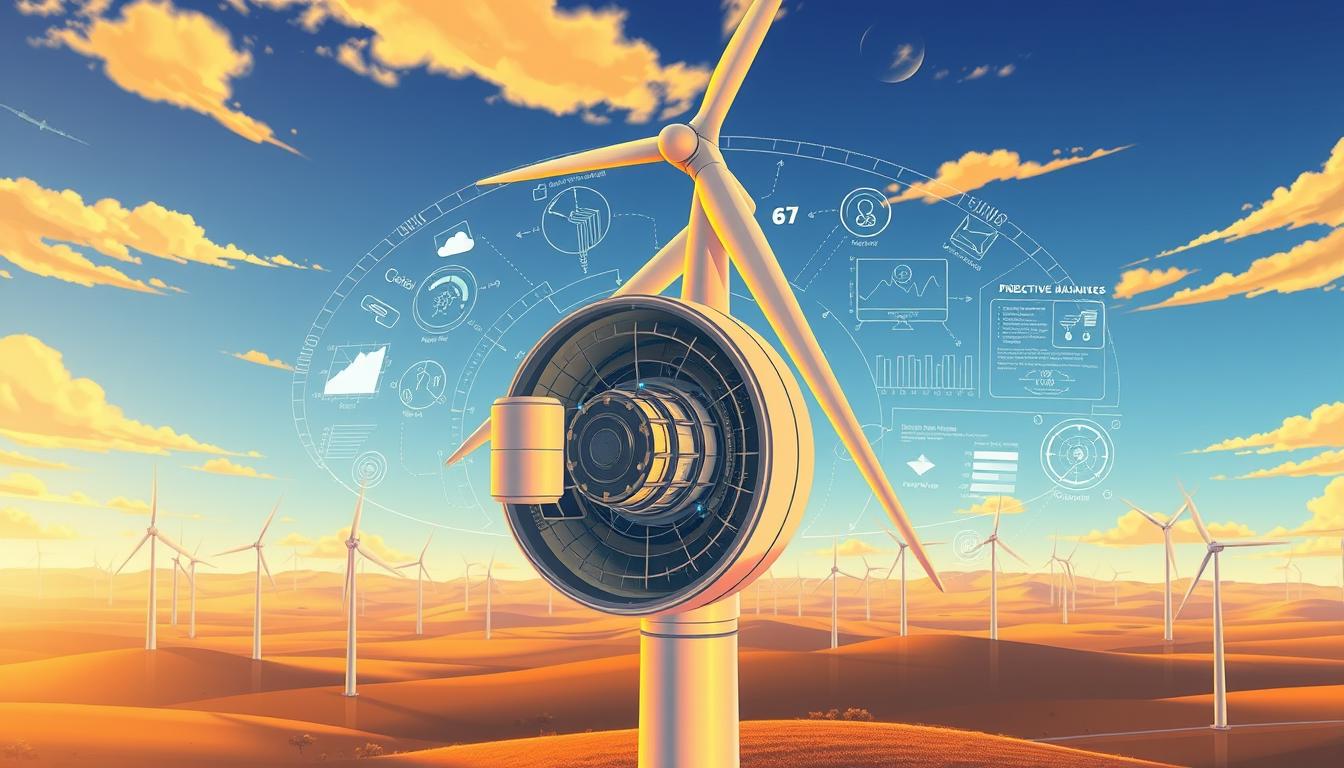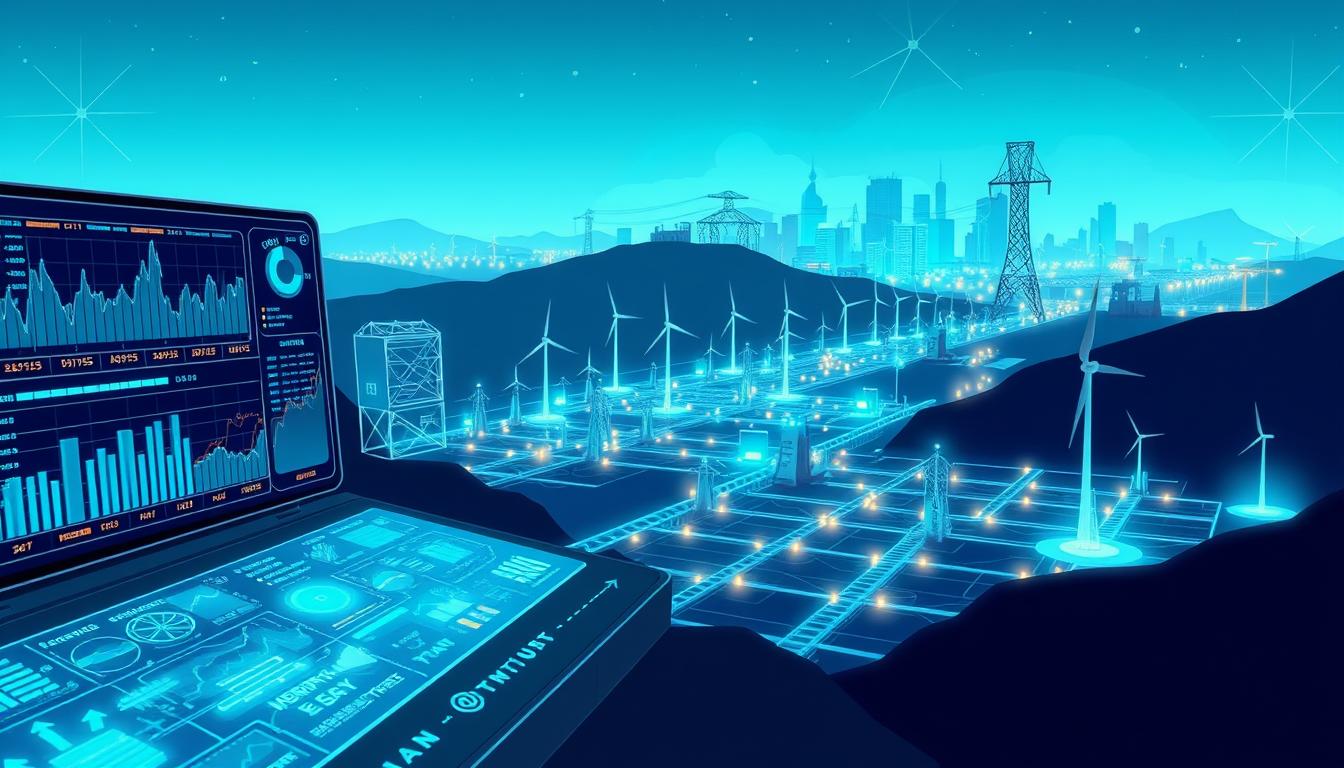
Ever felt worried when the lights go out? It’s not just about the dark. It’s about the servers, data centers, and power needs. This is why AI in demand-response management is so important today.
AI is changing how we use electricity. Boston Consulting Group says U.S. data centers might need 130 GW by 2030. That’s a lot of power, almost as much as 12% of the U.S. uses. It shows we need smart ways to manage power.
People are starting to notice. Salesforce Ventures and others are investing in energy and data centers. Companies like Emerald AI and Piclo Energy are working on AI for power management.
This part talks about how AI helps with three main things: predicting needs, controlling power, and buying smart. It looks at how AI works and why it’s good for saving money, following rules, and keeping things running smoothly.
Learn how AI changes demand-response and why leaders need to pick the right tech for their grids and goals.
Key Takeaways
- AI-driven demand-response strategies are critical as AI compute increases electricity needs.
- Demand-response management AI enables predictive load shaping and faster, automated controls.
- Investment activity from firms like Salesforce Ventures highlights market momentum for AI applications for demand-response.
- Technical solutions must align with business drivers: cost savings, compliance, and resilience.
- Scalable DR solutions reduce stress on grids and support lower-emission energy procurement.
Understanding Demand-Response Management in Energy
Demand-response helps keep the power grid balanced and reliable. It involves changing how much electricity is used. This can include turning off appliances or using batteries to store energy.
This approach helps avoid expensive upgrades to the grid. It also supports the use of renewable energy sources.
Definition of Demand-Response Management
Demand-response management changes how people use electricity based on grid needs. It uses prices, rewards, or direct control to do this. For example, it might turn down air conditioners or delay charging electric cars.
Many use smart systems and sensors to manage these changes. This helps keep the grid running smoothly.
Importance in the Energy Sector
Lowering peak demand saves money and delays the need for new grid upgrades. It also makes the grid more reliable during hot weather or storms. But, growing demand from new technologies could cause problems.
Energy managers look for AI solutions to manage demand without building new power plants. This approach is attractive because it can make money for both companies and utilities.
How It Works in Practice
Real-world programs use signals, central control, or local management to act. They often use smart devices and energy storage to respond quickly. Companies and utilities work together to manage these resources.
Utilities and companies use special platforms to coordinate efforts. This helps them meet grid needs. By using AI, they can shave peaks, shift loads, and save money.
For more details on how demand-response works, see this guide: Automated Demand Response. Using AI and predictive models is key to making demand-response more effective.
The Role of AI in Modern Demand-Response Systems
AI is changing how we manage energy. It uses sensors, cloud platforms, and models to match energy use with supply. This section talks about the main technologies, their benefits, and the need for quick processing.
AI Technologies Used in Demand-Response
Machine learning helps predict energy use and understand patterns. Supervised models forecast energy needs soon. Reinforcement learning makes decisions for flexible assets better.
Neural networks help find hidden links in data from smart meters and IoT sensors. Optimization engines decide when to use batteries, HVAC, and EVs. Agent-based systems work together to act on their own during events.
Edge AI makes decisions faster by being close to the devices. Cloud-based ML platforms handle big training and model management. Companies like Rune, Panthalassa, and Crusoe show how to use AI well.
Benefits of AI Integration
AI makes forecasting better, saving money for utilities and big users. This reduces the need for expensive plants and keeps budgets steady.
AI makes it easier for customers to join programs. It sends precise signals that match what the grid needs. This makes money from flexibility.
AI helps use assets better, like charging batteries and using solar power. This supports clean energy goals and makes systems more sustainable.
Real-Time Data Processing
Systems use data from smart meters, SCADA, and sensors. They also use weather forecasts, market prices, and schedules. This data helps make decisions every minute.
Fast processing is key to avoid using dirty energy and to ease grid pressure. Salesforce Ventures and research say it’s about the compute power, not just the algorithms. Good data and strong infrastructure are key for AI in demand-response.
| Capability | Primary Benefit | Representative Technologies |
|---|---|---|
| Short-term Forecasting | Reduced procurement costs and tighter scheduling | Supervised ML, neural networks, time-series models |
| Autonomous Dispatch | Faster response and higher program participation | Reinforcement learning, agent-based control, edge AI |
| Optimization & Orchestration | Better asset utilization and monetized flexibility | Optimization engines, cloud ML platforms, orchestration APIs |
| Real-Time Ingestion | Minute-level control to avoid peak events | Stream processing, IoT telemetry, SCADA integration |
| Infrastructure Efficiency | Lower carbon intensity and resilient compute | Modular data centers, hydro-powered centers, sustainable compute |
Using AI in demand-response helps make systems better. When models, data, and infrastructure work together, systems become more reliable, profitable, and green.
Key Benefits of AI-Driven Demand-Response Solutions
Intelligent demand management changes how we use energy. AI helps cut costs and makes things run better. It predicts when we’ll need more energy and turns things on and off automatically.
Enhanced Efficiency and Cost Savings
AI mixes short-term forecasts with smart controls. Stores and factories use it to save on energy bills. They turn off lights and air conditioning when it’s not busy.
Studies show big savings. One factory saved 18% on energy costs with AI. Companies like Leap make money by sharing energy.
Improved Grid Stability and Reliability
AI makes the power grid stronger. It predicts when the grid might get too busy. This helps avoid power outages.
During hot weather, AI helps the grid handle more solar power. This makes the grid more reliable.
Additional System Impacts
AI helps make more money from energy. It lets companies work together to save on big projects. This means less money spent on the grid and a more reliable system.
AI is becoming a key part of energy management. It brings clear savings, better equipment, and new ways to make money.
Challenges in Implementing AI for Demand-Response
Using AI for demand-response is promising but tricky. Energy teams face many challenges. They need to solve technical, organizational, and regulatory problems to use AI well.
Data Privacy and Security Considerations
Demand-response systems collect detailed data. This data can show how people use energy and what’s important. It’s a big privacy and security issue.
Companies must protect this data well. They need strong rules for who can see it and how. They also need to keep it safe and track who looks at it.
Rules from regulators and auditors are strict. Not following them can hurt profits and trust. It’s important to think about privacy when using AI for demand-response.
Integration with Existing Infrastructure
Old systems make it hard to start using AI. Many systems don’t have the right connections. This slows down the use of AI for demand-response.
Starting small and adding more can help. This way, you can improve efficiency without changing everything at once. It’s good to have a plan for how to add new AI models.
The Need for Standardization
For AI to grow, we need common ways to share data and work together. Without standards, systems can’t talk to each other well. This makes them weak and hard to use.
Having the same rules for AI helps everyone. It makes it easier to use AI for demand-response in different places. This is good for everyone involved.
There are also people problems. There’s a lack of skills in data and AI, and not enough checks on AI use. We need to hire the right people and make rules for using AI.
| Challenge | Risk | Mitigation |
|---|---|---|
| Granular consumption telemetry | Privacy breaches and regulatory fines | Encrypt data, apply access controls, perform privacy impact assessments |
| Legacy control systems | Integration delays and operational disruption | Use API gateways, phased pilots, edge inferencing |
| Lack of standards | Vendor lock-in and poor interoperability | Adopt common schemas, engage in standards bodies, require certification |
| Talent and governance gaps | Fragile models and biased outcomes | Invest in MLOps teams, dual-control approvals, cross-functional training |
| Market participation rules | Inconsistent revenue streams for DR programs | Work with regulators, model market scenarios, align contracts |
For those looking for help, there are guides and plans for using AI. These guides show how to save money and get more people involved. Check out this article on using AI for better energy management: smarter energy future.
Case Studies: Successful AI Implementations
Real deployments show how AI changes how we work and play in the market. Many companies have moved from testing to using AI on a big scale. They use AI to manage energy in places like data centers, utilities, and homes.
Overview of Leading Companies
Emerald AI works on making data centers use less energy. They use AI to predict and control energy use. Piclo Energy runs a marketplace for energy trading, helping companies make more money.
Leap combines small energy sources into one big one. Texture helps different energy sources work together. Gridware uses AI to find and fix problems fast.
Urbint and Arcadia clean and organize energy data. Crusoe and Rune make computers use less energy. Base Power and WeaveGrid help use less energy by charging cars and using backup power.
Metrics of Success
These projects show real results from using AI. Some companies saved up to 18% on energy costs. Others saved about 15% on electricity costs in just six months.
Working with old systems made things 25% more efficient. AI also made forecasting 10–16% more accurate. Some projects even cut energy use by 40–75%.
Lessons Learned from Case Studies
Start with small tests to see if AI works for you. These tests help find problems before you use AI everywhere. Moving from testing to using AI everywhere takes time and effort.
It’s important to keep AI updated and work with people. Companies that do well align goals and use experts. They also use weather and market prices to help make decisions.
Going from testing to using AI everywhere needs clear goals. It also needs a plan that balances using AI and human help.
Predictive Analytics: A Game Changer for Demand-Response
Predictive analytics changes demand-response from fixing problems to planning ahead. Utilities and big energy users can see when demand will go up. They can also spot when equipment might fail or when prices will change.
This lets them control energy use better. They can use storage, change how much they use, or plan flexible workloads before problems happen.

These abilities make things run better and help with the market. Here’s how.
Role of Predictive Analytics in Performance
Predictive analytics helps make things reliable and cheaper. It lets people make smart choices before problems start. Stores, factories, and data centers use forecasts to adjust their energy use minute by minute.
When they see a demand spike, they can send energy from batteries or adjust the air conditioning. This helps keep energy use steady.
It also helps them buy energy better. They can avoid fines and make more money by bidding smartly. Teams have to fix things less often, and equipment lasts longer because it’s not stressed as much.
Algorithms and Models Used
Advanced models make these improvements possible. Time-series neural networks like LSTM and Transformer-based forecasting handle complex patterns. Ensemble methods mix tree-based and neural forecasts to get better results.
Reinforcement learning helps figure out the best ways to manage energy and bids. Probabilistic models add uncertainty, helping make safer choices. MLOps keeps models working well by updating and checking them regularly.
Federated learning lets sites improve shared models without sharing sensitive data. This is important for keeping information safe.
Future Trends in Predictive Demand-Response
Soon, generative models will create detailed scenarios for planning and testing. Industry 4.0 and digital twins will give even more data from factories. This will make AI for demand-response even better and faster.
Edge inference will help make quick decisions at substations and on-site. Federated learning will grow, keeping data safe across companies. Companies are spending more on AI for demand-response, showing they see its value.
The Future of Demand-Response Management with AI
The next decade will change how we manage power. New storage, renewables, and AI will create new ways to work. Companies using AI will save money and help the planet.
Emerging technologies in the field
Offshore wind and AI will make power flow better. Solar and edge storage will add flexibility. Fleets will help manage power with AI.
Blockchain will let people trade power directly. AI will make choosing the right place for data centers easier. This will make AI work better for managing demand.
Potential market growth and opportunities
More people want to invest in AI and energy. Companies like Salesforce are funding green startups. AI needs more power, which means more jobs for managing demand.
New ways to make money will come from optimizing data centers. Companies will offer advice on using AI for demand management. Winners will make money by being green and reliable.
| Opportunity | Drivers | Potential Beneficiaries |
|---|---|---|
| AI-enabled EV charging orchestration | Fleet electrification, smart charging APIs, vehicle-to-grid tech | Fleet operators, utilities, charging platform providers |
| Distributed renewables + storage aggregation | Falling battery costs, interconnection limits, local resilience needs | Aggregators, community energy projects, retail energy providers |
| Data-center power optimization tools | Concentrated AI workloads, site selection complexity, carbon targets | Hyperscalers, colocation providers, enterprise IT teams |
| Blockchain-enabled flexibility markets | Need for transparent settlements, distributed asset monetization | DER owners, independent system operators, fintech platforms |
| Specialized AI power advisory services | Complex procurement decisions, regulatory change, emissions pressure | Consultancies, corporate energy buyers, utilities |
Consumer Engagement and Participation
Getting customers involved is key for demand-response programs to work. It’s important to show them the benefits and make it easy to join. Building trust through pilots is also vital.
Strategies for Engaging Customers
Focus on the right groups for the best results. Commercial sites, EV fleets, and big homes can offer the most flexibility. Start with pilot programs that show real savings and less stress during peak times.
Be clear about how AI helps manage demand without much trouble. This makes it easier for people to understand and join.
Importance of User-Friendly Interfaces
Make it easy for people to use. Dashboards should be simple, with clear alerts and easy actions. Working with popular apps and building systems makes it even simpler.
APIs and modular systems speed up getting started. This makes it easier for companies to join in.
Incentives for Participation
Money talks: offer discounts, payments, and credits for taking part. Companies also like to show they’re helping the planet. Platforms like Piclo Energy make it easier for everyone to get involved.
AI makes it easy to join in by handling things automatically. This means less effort for everyone. It’s all about making things better and easier.
Studies show big wins: 20% less grid overload and 97.71% better data protection. Efficiency and transparency also get a big boost. For more info, check out this research link.
Good programs use AI to make things easy and valuable. This way, more people can join in and benefit. It’s a win-win for everyone involved.
Regulatory Landscape Affecting AI in Demand-Response
The rules we follow shape how we use AI in demand-response. Clear rules help us work together better. This makes projects start sooner and helps everyone invest more.
Key Regulations Impacting Implementation
Rules about how we use resources matter a lot. They decide how much money we can make. Laws about keeping data safe and protecting against cyber attacks are also key.
Getting permits can slow down big projects. But, if rules are clear, we can work faster. This means we can use AI to help the grid sooner.
Government Initiatives and Support
Government programs help us make the grid better. They fund projects that use AI to help the grid. This makes it easier to start new projects.
Groups that talk about climate change help too. They bring money and ideas together. This helps us grow in a way that’s good for the planet.
Compliance, Governance, and Operational Readiness
We need to follow rules closely when using AI. This means being open about how our models work. It also means keeping records safe.
Being clear about how we work helps everyone trust us. When we follow rules well, we can try new things. This helps us make more money and grow.
Conclusion: The Path Forward for Demand-Response Management
AI-driven demand-response is real and works. It saves money, improves forecasts, and makes grids stronger. Companies like Salesforce Ventures and Boston Consulting Group see its value.
They find it cuts down on forecasting mistakes, saves money on buying things, and makes operations better. This AI helps meet both business goals and green targets.
Real benefits come from using predictive analytics and MLOps. It’s also important to work well with old systems. AI for demand-response needs good rules, safe data, and standards to grow.
Success stories show it’s not just about the tech. It’s also about working together and changing how things are done.
Everyone should focus on starting small and investing in AI for demand-response. Leaders should team up with experts and use consultants to fix integration issues. This way, demand-response fits with company goals for safety and being green.
It’s time to take action. Making AI work well is as important as making it fast. Focus on starting small, setting standards, and keeping data safe. This will unlock AI’s full power and make our energy system better.
FAQ
What is demand-response management and why does it matter?
Demand-response management helps change how much electricity people use. It’s important because it lowers the peak load. This saves money and helps the environment.
It also lets more renewable energy be used. With more AI and data centers, it’s key to avoid delays and power problems.
How is AI applied in modern demand-response systems?
AI helps predict demand and prices. It uses machine learning to do this. It also helps figure out the best way to use storage and flexible loads.
Edge AI and cloud platforms control things minute by minute. This makes load-shedding and load shifting easier.
Which AI technologies are most effective for demand-response?
LSTM and Transformer-based forecasting are good for predicting. Ensemble and probabilistic models help with uncertainty. Reinforcement learning is great for dynamic bidding.
Agent-based systems work well for distributed control. MLOps practices keep models working well.
What measurable outcomes can organizations expect from AI-driven DR?
Organizations can expect to shave peaks and shift loads. They can also save money on energy. Some have seen up to 18% savings.
They can also cut electricity costs by double digits. Forecasting errors can drop to 10–16%. They can make more money from markets and stay strong during bad weather.
How do real-time data streams factor into DR automation?
Real-time data helps predict and control. It comes from smart meters and IoT sensors. It also includes market prices and weather.
High-frequency data lets assets be controlled minute by minute. This reduces the need for old power plants and avoids grid problems.
What business drivers push companies to adopt AI-enabled DR?
Companies want to save money and meet rules. They also want to be more resilient and green. AI helps data centers and companies grow without power problems.
Which companies are leading in AI for demand-response and related markets?
Companies like Emerald AI and Piclo Energy are leading. Leap, Texture, and Gridware are also at the forefront. Crusoe, Rune, Base Power, and WeaveGrid are making a difference too.
Arcadia is helping with utility data platforms.
What implementation challenges should organizations anticipate?
Organizations might face data privacy and security issues. Integrating with old systems can be hard. They might need more people with MLOps skills.
Standards and rules are also important. Not following them can cause problems.
How can organizations address data privacy and security in DR systems?
Organizations should use strong data governance. This includes access controls and encryption. They should also follow privacy laws and cybersecurity standards.
How do AI-driven DR programs integrate with legacy infrastructure?
AI programs use phased, API-driven approaches. They use middleware to connect old systems. Starting with small pilots helps reduce disruption.
Working with partners can speed up the process and lower risks.
What standards and governance are necessary for scaling DR solutions?
Standards are needed for telemetry, protocols, and market rules. Governance is key for managing models and ensuring compliance. This prevents problems and keeps systems working well.
Which metrics define success for AI-enabled DR initiatives?
Success is measured by cost savings, better forecasting, and peak load reduction. Revenue from markets and asset use are also important. Case studies show savings and better forecasting.
What lessons emerge from successful case studies?
Start small and focus on clear goals. Use external signals and keep models updated. Aligning teams is important for success.
Having clear rules and oversight is key to avoid problems.
How does predictive analytics change DR performance?
Predictive analytics makes DR proactive. It helps predict demand and prices. This lets operators prepare and save money.
It also makes participation in markets more reliable.
What algorithms and modeling approaches power predictive DR?
Time-series neural networks and ensemble models are used. Probabilistic forecasting and reinforcement learning help make decisions. These models ensure good bidding and dispatch.
What future trends will shape predictive demand-response?
Expect more use of generative models and federated learning. Digital twins and edge inference will also play a big role. More investment in AI and Industry 4.0 will help improve DR.
What emerging technologies complement AI-driven DR?
New technologies include advanced storage and AI for EV charging. Modular and renewable data centers are also important. Marketplace platforms for flexibility are key.
Blockchain could create new ways to make money from distributed assets.
How large is the market opportunity for AI-enabled DR?
The market is growing fast as AI workloads increase. Investors are funding companies in this space. BCG and IEA projections and growing spending on AI show big opportunities for DR.
How can utilities and enterprises improve consumer participation in DR programs?
Make programs clear and offer good incentives. Use simple interfaces and automate controls. Target high-value participants and show savings to build trust.
Why are user-friendly interfaces important for DR adoption?
Clear dashboards and easy controls help people join DR. They make complex signals simple. Integrating with existing systems makes it easier to start.
What incentives encourage customers to join DR programs?
Time-of-use pricing and direct payments are incentives. Bill credits and sustainability benefits are also attractive. AI makes it easier to join and participate.
Which regulations most affect AI deployment in DR?
Rules for market participation, interconnection, and data privacy are key. Cybersecurity standards are also important. Clear rules help more resources join the market.
How do government initiatives support AI-driven DR?
Governments fund grid modernization and storage. They also support clean energy pilots. Policy incentives and public-private efforts help innovation and growth.
What governance and compliance practices should organizations implement?
Use strong data governance and model transparency. Keep audit trails and follow rules. This ensures safety and meets expectations.
What strategic steps should stakeholders take now?
Start with pilots and invest in analytics and MLOps. Partner with experts and focus on interoperability and security. Align DR with sustainability goals to save money and grow.