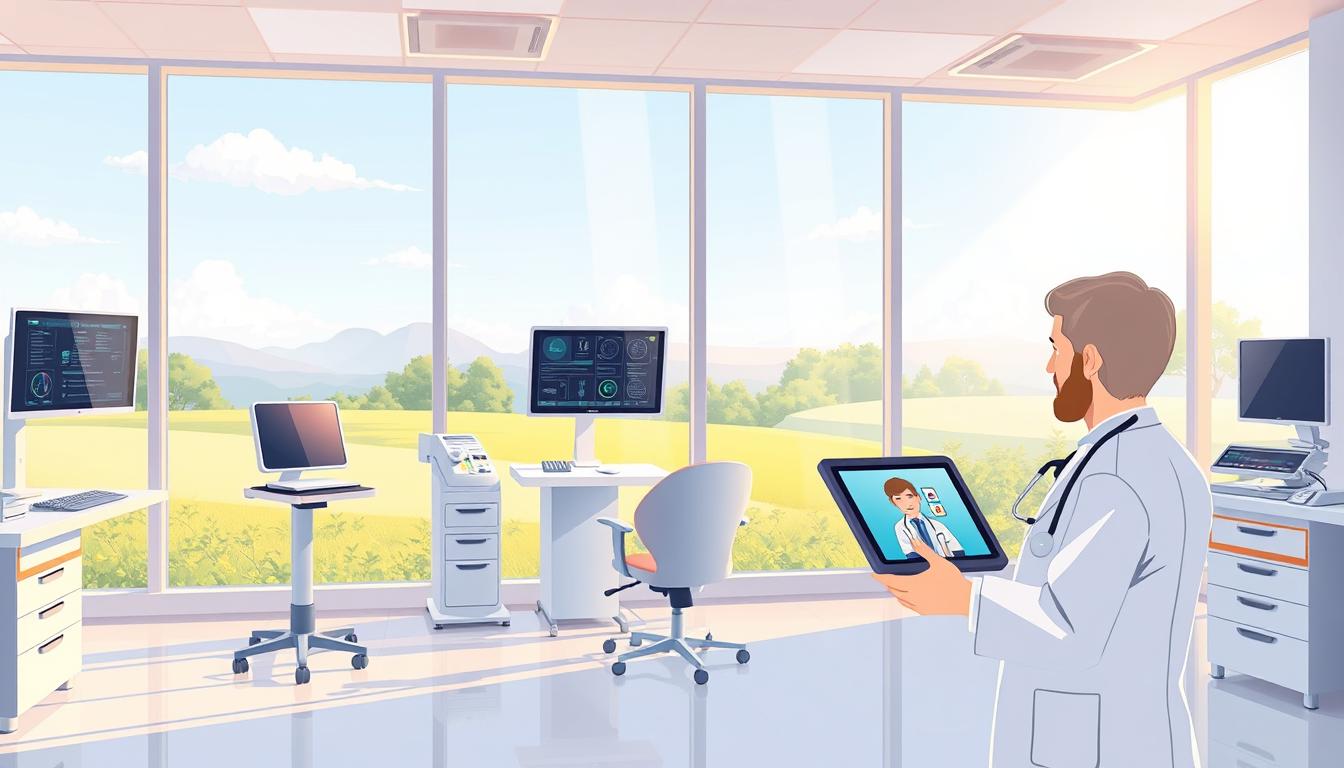
Missing a dose can be a small mistake or a big deal. It can be risky for someone with heart failure or a parent with a child’s inhaler. This worry makes people look into telemedicine for remote medication monitoring.
Remote patient monitoring (RPM) is now a useful link between doctor’s offices and homes. It lets doctors get data, teach patients, and change treatments based on what they see. For those who want to do more, using telehealth and digital health means better care and clearer choices.
Rules and payment for RPM have changed. Medicare now pays for it with clear rules. These include having a doctor-patient relationship, collecting data for a while, using approved devices, and using specific codes. The Centers for Medicare & Medicaid Services (CMS) explains how to bill and what makes a good RPM program.
Telemedicine for remote medication monitoring is where virtual care meets real care. It works well with secure devices and careful plans. It lowers hospital visits, helps patients stick to their plans, and lets them help with their care. This guide will show how to use telehealth and digital health wisely.
Key Takeaways
- Remote patient monitoring supports ongoing medication adherence and timely treatment changes.
- Medicare reimburses RPM and RTM under specific rules: device standards, data frequency, and billing codes.
- Telemedicine for remote medication monitoring enhances patient engagement through education and connectivity.
- Successful programs combine secure devices, clear workflows, and clinician oversight.
- Virtual healthcare and digital health solutions offer measurable benefits for chronic and acute conditions.
Overview of Telemedicine in Healthcare
Telemedicine has changed how doctors and patients talk. It uses technology to help care reach more people. Clinics and home health agencies use it to keep care going and reach more people.
Definition and Key Concepts
Telemedicine uses video calls and tools to replace face-to-face visits. The Centers for Medicare & Medicaid Services say it’s about real-time or recorded visits. It’s about keeping data flowing and doctors helping patients from afar.
Benefits of Telemedicine
It helps people in rural areas or those who can’t leave home. It cuts down on travel and wait times. During health crises, it keeps care going and lets doctors teach from a distance.
Role in Chronic Disease Management
It lets doctors check on patients’ health between visits. This helps them adjust treatments early and work better together. It helps manage diseases better over time.
Importance of Remote Medication Monitoring
Remote medication monitoring changes how doctors help patients. It uses new devices and plans to watch how patients take medicine. This helps doctors make sure patients are taking the right amount at the right time.
Enhancing Patient Compliance
Remote patient monitoring helps patients stay on track. It sends reminders and alerts. Doctors can also talk directly to patients.
Short lessons and help with setting up devices make it easier for patients. Seeing their own data motivates them to stick to their plans.
There are special codes for this work, like CPT 99457 and 99458. These codes help doctors get paid for helping patients stay on track.
Reducing Hospital Readmissions
Monitoring things like blood pressure and glucose helps catch problems early. This lets doctors act fast to prevent emergencies. It can also lower the chance of patients needing to go back to the hospital.
A good RPM program includes education and reliable devices. It helps patients smoothly move from the hospital to home. This makes both doctors and insurance companies happy because it saves money.
Improving Health Outcomes
Good data helps doctors make better choices for patients. Virtual monitoring lets them adjust treatments quickly. This can prevent bad side effects and drug problems.
Studies show that using remote monitoring in chronic care improves patient care. You can read more about this in a study on telemonitoring.
How Telemedicine Works for Medication Monitoring
Telemedicine uses devices, platforms, and doctors to watch over medicines outside of clinics. It captures health signals and helps patients talk to doctors. This way, doctors can see patterns, change plans, and keep patients safe at home.
Technology and Tools Involved
Remote patient monitoring uses FDA-approved devices. These devices track things like blood pressure and blood sugar. They connect to apps and cloud services that are key to digital health.
Telehealth services are the bridge: they offer video calls, messages, and data uploads. They make sure data is safe and meet rules.
Patient and Provider Interaction
Doctors use telehealth for visits and quick checks. Nurses and assistants help under doctor’s watch. Patients agree to use devices and get help setting them up.
Video calls let doctors see how patients use their medicines. They can talk about side effects and how well patients stick to their plans. Messages and online entries help between visits.
Data Collection and Analysis
Data is collected often or at set times and sent for review. Some plans need data for a certain number of days in a month. Platforms show trends and patterns.
Doctors look at the data to make decisions. They use tools to find unusual readings and make reports. This helps them change doses or refer patients.
| Component | Purpose | Typical Example |
|---|---|---|
| Connected Device | Collects physiologic metrics automatically | Bluetooth blood pressure cuff |
| Patient App | Onboards patients and uploads data | Mobile app paired with a glucose sensor |
| Telehealth Platform | Enables visits and secure messaging | Two-way video session with a clinician |
| Cloud Analytics | Aggregates trends and triggers alerts | Dashboard highlighting hypertension trends |
| Care Team Workflow | Assigns tasks and documents actions | RN triage with physician oversight |
Types of Remote Medication Monitoring Systems

There are many tools for patient care. These tools help with dosing, tracking, and understanding how medicines work. Each tool has its own role in helping patients and doctors.
Automated Medication Dispensing
These devices help by giving out doses on time. They also send alerts if a dose is missed. This saves time for caregivers and helps doctors see if patients are taking their medicine.
Companies like MedMinder and Philips make these devices. They can send data to care platforms. This way, doctors and payers can get important information.
Mobile Health Apps
Mobile apps send reminders and confirm when patients take their medicine. They also let patients and doctors talk securely. Apps like MyChart and Mango Health help doctors see how well patients are doing.
Apps work well with telehealth visits. They help doctors have better conversations with patients. For more on remote patient monitoring, see this summary from the National Library of Medicine: remote patient monitoring overview.
Wearable Devices
Wearable devices track important health data like heart rate and activity. They help doctors see how well medicine is working. Devices like Fitbit and WHOOP give useful information.
These devices work with other tools to give doctors more information. A recent study showed how they can help. See more about wearable devices and their benefits: wearable AI sensor use cases.
Each system has its own strengths and weaknesses. Dispensing devices track medicine use well. Apps help patients stay on track and talk to doctors. Wearable devices give doctors more health data. Together, they make medicine safer and more effective.
Regulatory and Legal Considerations
Providers need clear rules to use telemedicine for remote medication monitoring. They must balance making care easy for patients with their legal duties. The rules change, so teams must be ready to adapt.
HIPAA compliance in telemedicine
Platforms and apps must keep patient info safe. They use encryption and secure login. Teams must also have agreements with vendors and check their work often.
State licensure requirements
Doctors must check if they can see patients in other states. Some rules are temporary, but others last longer. Teams should keep track of these rules to avoid trouble.
Prescribing regulations
Doctors must follow rules for prescribing medicine online. They need to get consent and show why they are prescribing. Clear rules help doctors make safe choices online.
Medicare has rules for billing for remote monitoring. Doctors must get consent and show that monitoring is needed. Changes in rules affect how doctors bill for services.
Doctors can only bill for remote monitoring if they are allowed. They can bill for one patient at a time. Teams must plan how to bill and use devices to meet rules.
| Area | Key Requirement | Action for Providers |
|---|---|---|
| Privacy | Encryption, access controls, BAAs | Perform risk assessments; execute BAAs; schedule audits |
| Licensure | State-specific practice rules and renewals | Create licensure matrix; verify before treating across state lines |
| Prescribing | DEA, SAMHSA, and state limits on controlled substances | Obtain informed consent; document medical necessity; check state rules |
| RPM Compliance | Secure data uploads; FDA device definitions; billing limits | Use compliant devices; document uploads; coordinate billing |
| Medicare Rules | Consent, POS coding updates, expiring flexibilities | Monitor CMS updates; adjust policies by Oct 1, 2025 |
Challenges in Implementing Telemedicine
Telemedicine is changing how we get medical care. It’s promising but also has challenges. Leaders in health systems face many hurdles.
Technological Barriers
Good internet is key for remote patient monitoring. But, some places don’t have fast internet. This makes it hard to use telemedicine.
Another problem is that different devices don’t talk to each other well. This includes systems from Philips, Medtronic, and Apple Health. Without special software, they can’t share data easily.
Staff also struggle with rules for billing and collecting data. Some rules require specific counts of days and detailed records. This adds work and can make programs hard to keep going.
Patient Resistance to New Technologies
Getting people to use new tech is hard. Older adults and those not tech-savvy often find it hard to use. This makes them not want to use telehealth.
But, clinics that teach people how to use it well see better results. Simple instructions and support help more people stick with it.
Data Security Concerns
Keeping patient data safe is very important. There are many things to worry about, like how data is sent and stored.
Health systems need to follow strict rules to keep data safe. They must encrypt data and have regular checks to keep trust.
Operational and Policy Challenges
Changes in rules make planning hard. New rules from CMS can affect how much money programs make and who can use them.
Teams working together also face challenges. Only one person can bill for some services. This means teams have to work differently to get paid.
Practical Remedies and Next Steps
Good programs need the right tech and training. They also need clear ways to pay for things. Making things easy to use and understand helps too.
Teams should look at research and guidelines to make sure their programs work well. This review can help.
| Challenge | Impact | Practical Mitigation |
|---|---|---|
| Connectivity and bandwidth | Interrupted monitoring; missed visits | Hybrid models, offline data caching, ISP partnerships |
| Device interoperability | Fragmented records; workflow delays | Standards-based APIs, vendor selection, middleware |
| Patient resistance to telehealth | Low engagement; poor adherence | Onboarding sessions, caregiver training, simplified UIs |
| Data security concerns | Risk of breaches; regulatory penalties | Encryption, BAAs, routine security audits |
| Billing and policy shifts | Revenue instability; administrative load | Dedicated billing teams, scenario planning, policy monitoring |
| Workforce readiness | Poor use of telehealth tools; training gaps | Continuing education, competency frameworks, vendor-led training |
Best Practices for Telemedicine Medication Monitoring
Telemedicine works best when everything clicks together. Clear rules and roles help turn data into safer choices. Teams that follow the same steps for setup and tracking do better.
Establishing Clear Communication
Start by teaching patients in simple terms. Make sure they know how to use the device. Use secure messages and set times for updates.
Assign someone to watch the data and answer questions. This way, you meet rules for billing and keeping things safe.
Regular Follow-Ups and Assessments
Have short, regular meetings online. Use data to change meds and track progress. This helps meet goals and keeps things running smoothly.
Tailoring Approaches to Individual Patients
Match tech and talk style to what patients like. Offer special options for older folks or those with less tech. Training family members helps too.
- Standardize: onboarding scripts, consent forms, device inventories.
- Assign: monitoring roles and escalation pathways under general supervision.
- Document: device approvals, connectivity checks, and telehealth encounters.
- Measure: use objective RPM data to inform medication plans.
Using telemedicine right makes patients safer and programs stronger. When teams follow the same steps and check in often, everyone wins.
Case Studies and Success Stories
Real-world examples show how remote care changes medication management. These case studies highlight how remote patient monitoring works for two common conditions. They share steps to follow and mistakes to avoid.
Case Study: Diabetes Management
A clinic used glucometers that uploaded data to a cloud. Nurses set up devices and taught patients during RPM visits. This helped during telemedicine visits for medication review.
The program used remote monitoring for adherence checks and had a billing model. Over six months, HbA1c improved, hypoglycemic events decreased, and ED visits went down.
Case Study: Heart Disease Monitoring
A cardiology practice gave out blood pressure cuffs and scales. These devices uploaded data automatically. The team used this data for medication changes and had a plan for urgent readings.
The billing followed RPM rules, needing patient consent and data collection. Results showed fewer heart failure readmissions and better blood pressure control. These stories show how telemedicine can help.
Lessons Learned from Successful Implementations
Successful teams focus on training, device choice, and data security. They also have clear plans for when to escalate care. Following CMS rules helps avoid billing problems.
Choosing FDA-cleared devices and streamlining workflows helps staff. Clear protocols make care safer and easier to scale. This leads to more success stories in telemedicine.
| Area | Diabetes Telemedicine Approach | Heart Disease Remote Monitoring Approach | Key Outcome Metrics |
|---|---|---|---|
| Devices | Continuous glucometers with auto-upload | FDA-cleared BP cuff and digital scale | Reliable, automated data streams |
| Onboarding | In-clinic setup and education; RPM consent | Home device setup with protocol review | Higher adherence; fewer tech issues |
| Clinical Workflow | Telemedicine medication-review visits; RTM for adherence | Protocol-driven titration; escalation triggers | Timelier med adjustments |
| Billing | 99454 for device; 99457 for provider time | RPM codes with 16-day documentation when required | Reimbursement aligned with clinical activity |
| Outcomes | Lower HbA1c, fewer hypoglycemic events, less ED use | Fewer heart failure readmissions, improved BP control | Improved clinical metrics and utilization |
| Operational Lessons | Invest in training and select cleared devices | Define escalation and clarify billing roles | Sustainable program scale-up |
Future Trends in Telemedicine and Medication Monitoring
The next big thing in remote care is using data from devices and apps. Places like Mayo Clinic and Kaiser Permanente are testing how to use this data. They want to make care better and safer for everyone.
Advancements in AI and Machine Learning
Machine learning will help find problems with medication and watch for small changes. Companies like Philips and Boston Scientific are working on smart systems. These systems will help doctors and nurses focus on the most important cases.
AI can also suggest changes to medication or when to call a patient. This helps doctors avoid wasting time on things that aren’t urgent.
Increased Integration with Electronic Health Records
Telemedicine will work better with electronic health records. This means less work for doctors and better care for patients. Systems like Epic and Cerner make it easier to share information.
This integration also helps with billing and tracking health trends. It shows how telemedicine can lead to better health outcomes.
Predictive Analytics for Better Outcomes
Predictive analytics will use data to forecast health problems. This way, doctors can act early to prevent big issues. It’s like having a crystal ball for health.
These tools need clear rules and must be approved by the FDA. They also need to fit with how insurance companies pay for care. When everything is in place, telemedicine will make care smarter and safer.
Conclusion and Key Takeaways
Telemedicine helps a lot with medicine tracking. It makes patients take their medicine better and keeps doctors and patients in touch. It also helps doctors catch problems early and keeps patients out of the hospital.
Using special devices and keeping data safe is key. This way, doctors can see how patients are doing and make better plans. It also saves money for the hospital.
Summary of Benefits
Keeping an eye on patients all the time helps them stick to their medicine plan. Medicare pays for this service if it follows certain rules. Using the right codes is important for getting paid.
Using devices that are okay with the FDA and keeping patient data safe is important. It makes patients trust the service more.
The Future of Medication Management
New tech like AI will make tracking medicine better. Rules for telehealth are changing, so doctors need to stay updated. This way, they can be ready for new rules.
Encouragement for Adoption in Practice
Starting small with programs for diabetes and heart failure is a good idea. Make clear plans for who does what and get patient okay. Follow Medicare rules to get paid.
Planning carefully and following rules helps. This way, doctors can give better care and save money. It’s a smart way to improve health and save money.
FAQ
What is telemedicine for remote medication monitoring?
Telemedicine for remote medication monitoring uses devices and apps to collect health data. Clinicians use this data to adjust treatments and check in with patients. This helps manage medications and keep patients healthy.
How does remote patient monitoring (RPM) support medication adherence?
RPM helps patients stay on track with their treatments through real-time feedback. It lets clinicians spot any issues early. This way, patients get the right care and stay healthy.
What core components make an RPM medication-monitoring program effective?
An effective program needs three things. First, patients must learn how to use the devices. Second, devices must send data securely. Third, clinicians must review the data and talk to patients regularly.
Which technologies are commonly used for virtual medication monitoring?
Many tools are used, like glucometers and mobile apps. These help track health data and send reminders. Telehealth platforms also help with video visits and data review.
What Medicare reimbursement options exist for RPM and RTM?
Medicare pays for RPM and RTM through specific codes. These codes cover setup, data transmission, and treatment management. Programs must meet certain rules to get paid.
Are there specific data-collection rules for RPM billing?
Yes, there are rules for RPM billing. Data must be collected for at least 16 days in 30. Only one practitioner can bill for a patient in 30 days. Patient consent is also required.
What are telehealth technology requirements under CMS guidance?
CMS says telehealth must be interactive. It can be audio-video or audio-only for now. Devices must send data securely, and providers should follow CMS updates.
What privacy and security measures are required for RPM platforms and apps?
RPM solutions must protect health data. They should use encryption and access controls. Devices must meet FDA standards, and organizations must follow HIPAA rules.
How do state licensure and prescribing rules affect telemedicine medication monitoring?
Providers must follow state laws for telemedicine. They need to get consent and follow DEA rules for prescriptions. It’s important to know the rules for each state.
What clinical conditions benefit most from remote medication monitoring?
Conditions like diabetes and heart failure do well with RPM. It helps track health data and adjust treatments. This leads to better health outcomes.
Can auxiliary personnel perform RPM tasks and meet Medicare rules?
Yes, auxiliary staff can help with RPM under supervision. They must follow Medicare rules and document their work. This helps with workflow and compliance.
What are common operational challenges implementing telemedicine medication monitoring?
Challenges include device issues and patient connectivity. There are also billing complexities and policy changes. It’s important to have clear workflows and trained staff.
How should organizations prepare for Medicare and CMS policy changes affecting telehealth and RPM?
Start with a pilot program for a specific condition. Use FDA-cleared devices and follow HIPAA. Keep up with CMS updates and adjust as needed.
What best practices improve patient adoption and engagement?
Make onboarding easy and educate patients well. Use technology that patients like, and schedule regular check-ins. Clear communication builds trust and improves adherence.
How do automated dispensers and mobile apps differ in supporting medication monitoring?
Dispensers track doses and send alerts. Apps send reminders and track symptoms. Many programs use both for better tracking and care.
Can RPM and RTM be used together for a single patient?
Yes, RPM and RTM can work together. They provide a full picture of a patient’s health. But, Medicare billing rules are different for each.
What measurable outcomes can organizations expect from successful RPM medication-monitoring programs?
Good programs see better health outcomes and lower costs. They also see fewer hospital visits and better medication use.
How will AI and predictive analytics change remote medication monitoring?
AI will help spot issues and suggest treatments. Predictive analytics will help prevent problems. These tools need to be tested and meet rules.
What are recommended first steps for a practice launching an RPM medication-monitoring pilot?
Start with a specific condition and choose the right devices. Make sure to follow billing rules and track results. This will help improve care.
Where can providers find authoritative guidance on telehealth and RPM billing and policy?
CMS MLN materials have the latest on RPM and billing. Medicare rules and state boards also provide important information. Stay updated to follow the rules.